• KGS/USD = 0.01144 0%
  • KZT/USD = 0.00207 0%
  • TJS/USD = 0.10415 -0.19%
  • UZS/USD = 0.00008 0%
  • TMT/USD = 0.28571 0%
  • KGS/USD = 0.01144 0%
  • KZT/USD = 0.00207 0%
  • TJS/USD = 0.10415 -0.19%
  • UZS/USD = 0.00008 0%
  • TMT/USD = 0.28571 0%
  • KGS/USD = 0.01144 0%
  • KZT/USD = 0.00207 0%
  • TJS/USD = 0.10415 -0.19%
  • UZS/USD = 0.00008 0%
  • TMT/USD = 0.28571 0%
  • KGS/USD = 0.01144 0%
  • KZT/USD = 0.00207 0%
  • TJS/USD = 0.10415 -0.19%
  • UZS/USD = 0.00008 0%
  • TMT/USD = 0.28571 0%
  • KGS/USD = 0.01144 0%
  • KZT/USD = 0.00207 0%
  • TJS/USD = 0.10415 -0.19%
  • UZS/USD = 0.00008 0%
  • TMT/USD = 0.28571 0%
  • KGS/USD = 0.01144 0%
  • KZT/USD = 0.00207 0%
  • TJS/USD = 0.10415 -0.19%
  • UZS/USD = 0.00008 0%
  • TMT/USD = 0.28571 0%
  • KGS/USD = 0.01144 0%
  • KZT/USD = 0.00207 0%
  • TJS/USD = 0.10415 -0.19%
  • UZS/USD = 0.00008 0%
  • TMT/USD = 0.28571 0%
  • KGS/USD = 0.01144 0%
  • KZT/USD = 0.00207 0%
  • TJS/USD = 0.10415 -0.19%
  • UZS/USD = 0.00008 0%
  • TMT/USD = 0.28571 0%

Viewing results 523 - 528 of 831

Montana Farmer Pleads Guilty to Cloning Endangered Kyrgyz Argali Sheep

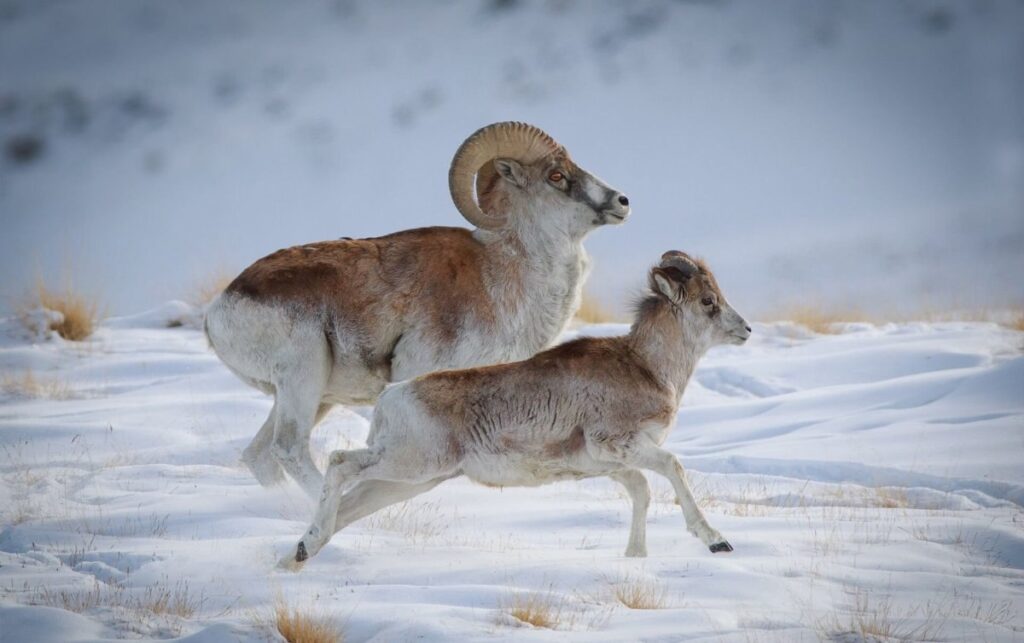
As reported by the Daily Montanan an 80-year-old farmer from Montana, Arthur "Jack" Schubarth, has pleaded guilty to federal charges for violating the Lacey Act, which prohibits the sale, transportation and purchase of wild animals between American states. In 2013, Schubarth illegally brought part of an argali sheep which had been killed in the Kyrgyz mountains into the U.S. and paid a laboratory to create cloned embryos from the animal's DNA. The embryos were then implanted into sheep on his farm and in time, he succeeded in raising a genetically pure argali, which he named Montana's Mountain King. Used to impregnate other sheep, the ram's sperm produced fairly large hybrids. In a statement to the paper, assistant U.S. Attorney General Todd Kim said, "It was a bold plan to create large hybrids of sheep for sale and hunting as trophies... By implementing this scheme, Schubarth violated international law and the Lacey Act, which protect the viability and health of local animal populations," According to investigators, Schubarth conspired with five individuals to sell hybrid offspring to Texas and Minnesota under the guise of domestic sheep from New Mexico. The sheep hybrids led to healthy profits in the field of hunting. In 2020, a farmer sold one of Mountain King's sons and 11 sheep containing a quarter of his genetics for $23,000 after obtaining a fake export license. The plea agreement states that the market value of all such sheep sold by Schubarth reached half a million dollars. The Argali, also known as a Marco Polo, is the largest ram on earth. Reaching up to two meters in length, with a height at the withers of 120 centimetres, an adult can weigh 180 kilograms. The breed is also valued for its large, curled horns and in Kyrgyzstan, is protected as an endangered species. However, once a year, authorities issue about 70-80 licenses to cull the population; an activity popular with foreign hunters and a lucrative source of income for the state. Whilst the fine for illegal killing of an argali is around $15,000, the official rate charged to licenced hunters is around $10,000. Speaking to the Times of Central Asia, Askar Davletbayev, an ecologist with the Kyrgyz National Academy of Sciences, stated, "According to the law, one percent of the total argali population can be shot but we try to shoot no more than 0.5 percent. According to the data, there are now about 19,000 of these animals in the country. Since the situation isn't critical, the current level of hunting can be maintained." During the autumn hunting season, many argali living on the Sarychat-Ertash Nature Reserve in the Issyk-Kul region migrate to areas around the nearby Kumtor gold mine. Scientists explain this as a way in which the animals try to protect themselves from both hunters and predators. Because the gold mine's territory cannot be accessed without approval, hunting is forbidden. Furthermore, since the local dump provides ample food for predators, the argali are left in peace. On more than one...
Kazakhstan, Uzbekistan Agree to Improve Ecology of Aral Sea Basin 

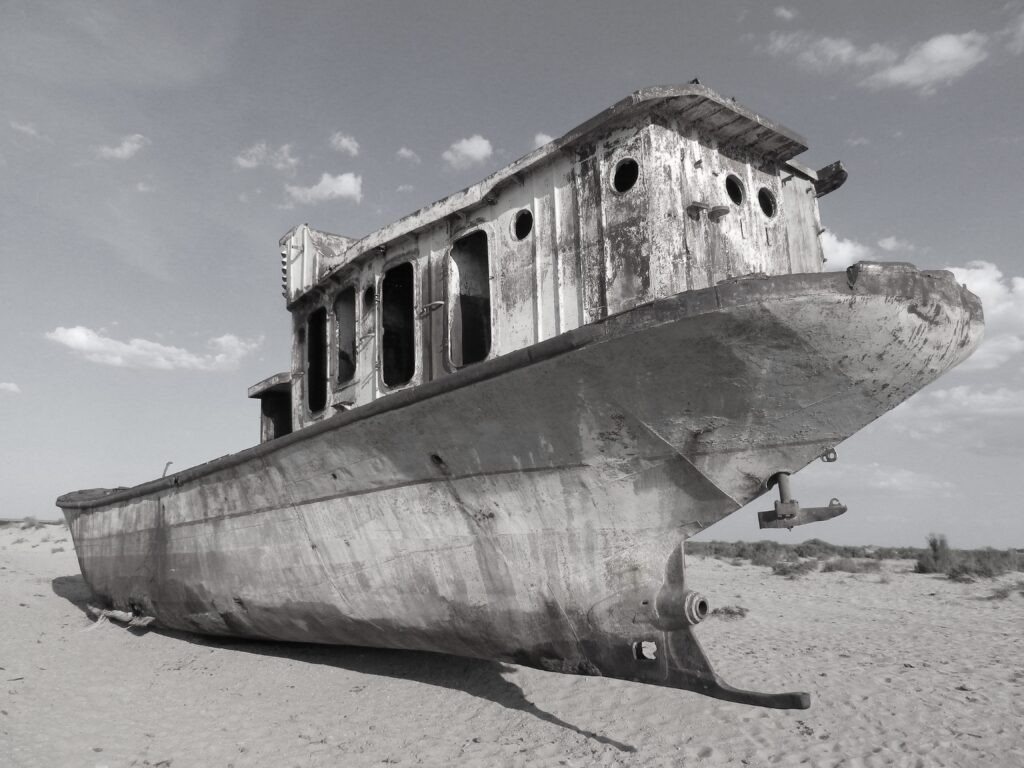
Kazakhstan and Uzbekistan will jointly improve the ecological situation in the Aral Sea basin, according to members of the Mazhilis of the Parliament of Kazakhstan. At a plenary session they adopted the corresponding bill on ratification of the agreement between the Government of the Republic of Kazakhstan and the Government of the Republic of Uzbekistan on cooperation in the field of ecology and environmental protection.   The document states that cooperation between the countries will be carried out in several areas. The most important is the prevention and control of pollution affecting the air and water of the Aral Sea, as well as the Amu Darya and Syr Darya rivers. Also included are the management of solid domestic waste and the preservation of biological diversity. In addition, Kazakhstan and Uzbekistan will jointly carry out measures to improve the ecological situation and environmental monitoring in the Aral Sea basin. The agreement between the countries also implies the creation of joint educational institutions, training of personnel, and the commitment that both states will do everything necessary to avoid environmentally harmful emergencies.   Parliamentarians report that in order to comply with this agreement, Kazakhstan and Uzbekistan will create a special commission that will monitor the implementation of the bilateral agreement.

World Bank Group Landmark Visit to Central Asia

The World Bank Group Board of Executive Directors has concluded a landmark visit to Kazakhstan, Kyrgyzstan, and Tajikistan. The Board reported that it had welcomed the opportunity to observe first-hand, Central Asian developments in tackling climate change within the prism of the water-energy nexus, the private sector’s growing address of green issues, and gender equality. Ten executive directors met with high-ranking officials and local stakeholders to discuss ongoing and future support provided by the International Development Association (IDA) to Kyrgyzstan and Tajikistan, and in Kazakhstan, focused on the World Bank Central Asia regional program. In Kyrgyzstan, the delegation attended a meeting with President Sadyr Japarov, Akylbek Japarov the Cabinet of Ministers chairman, and other officials. Visits were made to World Bank-funded project sites for water and sanitation, education, and disaster risk management, as well as a MIGA-guaranteed smart farm of hydroponic greenhouses and IFC agri-food processing projects. In addition to discussions with Tajikistan’s president Emomali Rahmon and his cabinet, the delegation toured the Rogun hydropower plant site and World Bank-financed projects on early childhood development and the improvement of health services. A meeting also took place with IFC investment beneficiaries in Dushanbe. The visit to Kazakhstan, included a World Bank-financed oncology centre, and a tour of the Almaty Airport, an IFC project site. The World Bank Group's key objectives in Central Asia are fostering robust recovery from recent crises, enhancing climate resilience, creating jobs, and protecting the countries’ most vulnerable populations. Dominique Favre, the World Bank’s Executive Director for Switzerland, who also represents the constituencies of Azerbaijan, Kazakhstan, the Kyrgyz Republic, Poland, Serbia, Tajikistan, Turkmenistan, and Uzbekistan, praised the regions’ progress and reiterated the company's commitment to helping Central Asian countries tackle ongoing challenges, particularly concerning water, energy, and agriculture.

The Price of Liquefied Petroleum Gas Falls Below Production Costs in Kazakhstan

In a report on March 5th, Almasadam Satkaliev, Kazakhstan’s Minister of Energy, stated that in 2023 consumption of liquefied petroleum gas (LPG) by the country’s domestic market rose to 2.2 million tons; an increase of 400 thousand tons (or 28%) compared to 2022. Cheaper than gasoline, LPG is understandably the fuel of choice for vehicle owners and a sharp hike in the cost of LPG was met with nationwide objection. Mass protests staged in the western Kazakh town of Zhanaozen in January 2022 soon spread across the country and turned violent in the cities of Almaty and Astana. According to the energy minister, the current maximum wholesale price for LPG established by the state is lower than its production cost. While production varies from 60 thousand to 70 thousand tenge per ton, the wholesale price for manufacturing plants is set at 40,320 tenge/ton excluding VAT. “Due to the unprofitability of liquefied petroleum gas production, manufacturers are running at a loss and are unable to invest in either the maintenance or modernization of their plants,” stated the minister. The price of LPG in Kazakhstan, between 54-86 tenge per litre depending on the region, is the lowest among former Soviet states. For comparison the price per litre in Russia is equivalent to 165 tenge; in Kyrgyzstan, 159 tenge; in Azerbaijan, 171 tenge, and in Tajikistan, 273 tenge. To meet the immediate demands of the country's vehicle owners, a formal agreement has been made between the Ministry of Energy and Tengizchevroil for the monthly supply of 20 thousand tons of LPG. The national company QazaqGaz and shareholders of the North Caspian project are also poised to sign an agreement for the supply of up to 700 tons of LPG per annum from the Kashagan oilfield by the end of this year.

Kazakhstan to Build New Power Generation Facilities

To ensure Kazakhstan’s energy security and increase its export potential, the Ministry of Energy has adopted a development plan for the country’s electrical power industry. On March 5th, the Minister of Energy, Almasadam Satkaliev reported that under the new plan, scheduled to run until 2035, existing power generating facilities are to be modernized alongside the commission of new facilities with a total capacity of 26 GW. In the southern regions of Kazakhstan, gas, and steam generation projects with an installed capacity of about 2.3 GW are due for completion in 2025-2026. The projects comprise combined cycle gas turbines in Turkestan and Kyzylorda with a capacity of 926.5 MW and 240 MW, as well as combined cycle power generation units at two heating plants in Almaty with a capacity of 544 MW and 557 MW. Another combined cycle power plant with a capacity of 1.1 GW will be constructed in the Kyzylorda region. The plans also include new gas and coal-fired power generation projects in Kazakhstan with a total capacity of 6.7 GW and the conclusion of an agreement with Russia for the construction of coal-fired thermal power plants in the cities of Kokshetau, Semey, and Ust-Kamenogorsk. To achieve a 15% share of electricity generation by renewable energy sources by 2030, annual auctions will be held for a total capacity of over 6 GW (1,270 MW in 2024). Renewable energy projects with a total capacity of 3 GW are currently progressing in collaboration with Total Energies (France), Acwa Power (Saudi Arabia), and Masdar (UAE). Eleven renewable energy facilities with a total capacity of 259 MW are to be commissioned this year. Last month, Energy Minister Satkaliev reported that in 2023, Kazakhstan consumed 115 billion kWh of electrical energy, compared with 112.9 billion kWh in 2022, and produced 112.8 billion kWh, the same amount as in 2022. Last year Kazakhstan imported 3.4 billion kWh, and exported 1.4 billion kWh. In 2024, the country plans to generate 115 billion kWh. Last year, the volume of electricity generated by renewable energy facilities amounted to 6.675 billion kWh, including 3.8 billion kWh from wind power plants, 1.8 billion kWh from solar plants, and 993.8 million kWh from hydropower plants. The generation of electricity from renewable sources in 2023 thus amounted to just 5.9% of the country’s total. Looking to a greener future, Kazakhstan’s new goal is to achieve a 15% share of renewable energy sources in power generation by 2030, and a 50% share by 2050.

Centre for Environmental Diagnostics of Vehicles Opens in Tashkent

On March 5th, Uzbekistan’s President Shavkat Mirziyoyev visited a new centre for environmental diagnostics of motor vehicles in Tashkent. Environmental issues have become a major concern in Uzbek’s capital city, especially air pollution caused by harmful emissions from traffic. In a measure to stall the sharp increase in air pollution, the centre first assesses the level of harmful substances emitted by motor vehicles and depending on results, attaches color-coded stickers with chips to vehicles’ windshields. Plans are in place to divide the city's territory into several ecological zones. Entry will be limited in accordance with the level of pollutants emitted by vehicles, identified by their red, yellow, or green stickers. Drivers of vehicles that violate the rules will be automatically fined and the resulting revenue, invested in incentives to further improve the environment. The government plans to expand the initiative by installing some 100 automatic air monitoring stations and creating 84 registration and diagnostic centres for vehicles across the country. In a move towards tackling air pollution, the government will also encourage the purchase of greener, electric vehicles by reducing the fee for state license plates.