• KGS/USD = 0.01144 0%
  • KZT/USD = 0.00208 0%
  • TJS/USD = 0.10442 0.19%
  • UZS/USD = 0.00008 0%
  • TMT/USD = 0.28530 0%
  • KGS/USD = 0.01144 0%
  • KZT/USD = 0.00208 0%
  • TJS/USD = 0.10442 0.19%
  • UZS/USD = 0.00008 0%
  • TMT/USD = 0.28530 0%
  • KGS/USD = 0.01144 0%
  • KZT/USD = 0.00208 0%
  • TJS/USD = 0.10442 0.19%
  • UZS/USD = 0.00008 0%
  • TMT/USD = 0.28530 0%
  • KGS/USD = 0.01144 0%
  • KZT/USD = 0.00208 0%
  • TJS/USD = 0.10442 0.19%
  • UZS/USD = 0.00008 0%
  • TMT/USD = 0.28530 0%
  • KGS/USD = 0.01144 0%
  • KZT/USD = 0.00208 0%
  • TJS/USD = 0.10442 0.19%
  • UZS/USD = 0.00008 0%
  • TMT/USD = 0.28530 0%
  • KGS/USD = 0.01144 0%
  • KZT/USD = 0.00208 0%
  • TJS/USD = 0.10442 0.19%
  • UZS/USD = 0.00008 0%
  • TMT/USD = 0.28530 0%
  • KGS/USD = 0.01144 0%
  • KZT/USD = 0.00208 0%
  • TJS/USD = 0.10442 0.19%
  • UZS/USD = 0.00008 0%
  • TMT/USD = 0.28530 0%
  • KGS/USD = 0.01144 0%
  • KZT/USD = 0.00208 0%
  • TJS/USD = 0.10442 0.19%
  • UZS/USD = 0.00008 0%
  • TMT/USD = 0.28530 0%

Viewing results 541 - 546 of 837

World Bank to Help Increase Kyrgyzstan’s Resilience to Climate Change

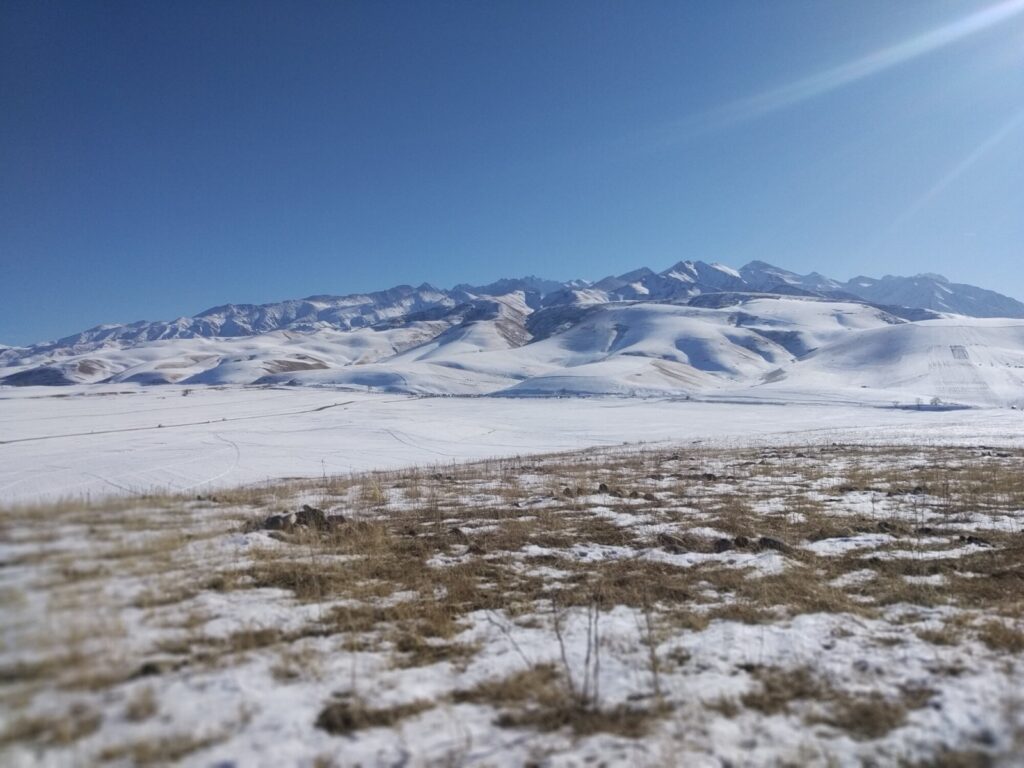
A $45 million financing package for the Kyrgyz Republic Resilient Landscape Restoration Project, to be implemented until 2029, was approved by the World Bank’s Board of Executive Directors on February 27th. Complemented by a $5 million grant from the Global Partnership for Sustainable and Resilient Landscapes (PROGREEN) and a $2.4 million grant from the Korea–World Bank Partnership Facility (KWPF), the project aims to increase sustainable landscape management in selected locations in Kyrgyzstan and promote regional collaboration among Central Asian countries on transboundary landscape restoration. “We are pleased to assist the Kyrgyz Republic's Cabinet of Ministers in increasing the resilience of landscapes and communities to climate-induced hazards, and by enhancing the government’s capacity to monitor glaciers, snow cover, and mudflows, implement measures to adapt to and mitigate climate change,” announced Naveed Hassan Naqvi, World Bank Country Manager for the Kyrgyz Republic. “This project is an important step towards building a more resilient future for the people of the Kyrgyz Republic and will also have a positive impact on neighbouring countries.” The World Bank has affirmed that once in place, the project will directly benefit over 50,000 individuals in the most vulnerable, targeted rural areas of Jalal-Abad, Osh, Issyk-Kul, and Naryn, and communities located upstream of transboundary rivers. According to a 2018-19 study by the Central Asian Institute of Applied Geosciences, Kyrgyzstan’s glaciers have decreased by 16% over the past 50 years. The Ministry of Natural Resources earlier warned that many of the country’s 6,500 glaciers — which cover over 8,000 square kilometres and contain an estimated 650 cubic kilometres of freshwater — could shrink by 50% by 2050 and even completely disappear by the end of the century.


Environmental Violations at Kashagan Oil Field Cost NCOC a Billion Dollars

The North Caspian Operating Company (NCOC) has been issued a billion-dollar fine, after it was found to have violated environmental laws at its Kashagan field. Last spring the Department of Ecology for the Atyrau region, where the field is located, conducted an investigation at Kashagan that uncovered a number of violations of environmental legislation. These include the storage of 1.75m tons of sulfur at the field, twice as much as the permitted 730,000 tons. NCOC was also found to have failed to implement environmental protection measures, discharged waste water without the necessary permit, and other infringements. The operator denied all charges, and filed an appeal at a court in Astana to challenge the results of the inspection. After lengthy proceedings the court found that the results of the inspection by the Department of Ecology were legitimate. The judicial panel concluded that restrictions on the volume of sulfur storage annually cannot be considered cumulatively. NCOC can now either appeal this decision in an international arbitration court, or admit its guilt and pay the state the billion-dollar fine.

Development Plan for Astana Agglomeration Approved

The plan for the agglomeration of Astana through to 2028 was approved by the government of Kazakhstan on February 27th. The country’s capital since 1997, Astana has since grown and developed into one of the most modern cities in Central Asia. In addition to the city, the agglomeration will include more than 40 nearby towns and villages. Over the past 10 years, the population of Astana has increased by 46%. Records show that in January 2024, it exceeded 1.43 million and by 2035, is expected to grow to 2.3 million people. The key aims of the Astana agglomeration are the improvement of urban development, the modernization of social, engineering and transport infrastructures, environmental sustainability and safety, and safeguarding against emergencies. A unified urban planning policy will enable the synchronization of plans for the development of the capital and adjacent Akmola region, including the creation of eco-towns on an area of over 940 hectares. The new transport and logistics infrastructure will comprise six logistics complexes, a service centre for the maintenance of electric locomotives, and subsidies for suburban routes. Over 400 km of existing roads will be repaired, and 300 km of new roads and four bridges built in agglomerated towns and villages. To attract investment and supply food, 25 facilities to produce food and 12 for industrial goods will be built in an industrial zone covering 300 hectares. At the meeting, Kazakhstan’s Prime Minister Olzhas Bektenov highlighted the fact that the main problem to be addressed by the agglomeration is the sharp population increase in the suburbs and the daily migration to the capital and back, which significantly impacts the entire infrastructure of Astana, its ecology and safety. In recognition of ongoing problems faced by many suburban villages, such as water supply, waste disposal, a stable electricity supply, and the condition of roads, the prime minister stated: "I believe that the implementation of the plan should solve these pressing issues. Moreover, we need to create permanent jobs in the suburbs. Astana as the core of the agglomeration creates prerequisites for sustainable development of the adjacent territories. This will help smooth out the existing imbalance between the living standards in the capital and neighboring settlements."  

Kazakhstan to Increase Use of Groundwater for Irrigation

On 27th February, Kazakhstan’s Ministry of Water Resources and Irrigation announced plans to increase the volume of groundwater used for agricultural irrigation by tapping into local reserves. The country and especially its dry southern and eastern regions, has long been dependent on water from its upstream neighbors, Kyrgyzstan and China. Kazakhstan’s groundwater reserves exceed 43,000 tons per day, 19,000 tons of which could effectively be used in irrigation. Agriculture currently uses more than 40 thousand tons, equivalent to 60%, of water collected per day. Of this, groundwater makes up just 1.2%. Under the first stage, this is due to increase to 10-15%, initially from reserves in Almaty, Pavlodar, East Kazakhstan, and Zhambyl. In 2023, of the 1.8 million hectares of irrigated land in Kazakhstan, water-saving technologies were employed on as little as 17% (312,000 hectares), with drip irrigation used on only 84,000 hectares. As an added incentive to implement the expansion of areas of irrigated land through a greater use of groundwater and water-saving technologies, the state will introduce subsidies and reduced tariffs for users.

Two Hydrometric Stations Open On Uzbekistan, Tajikistan Border

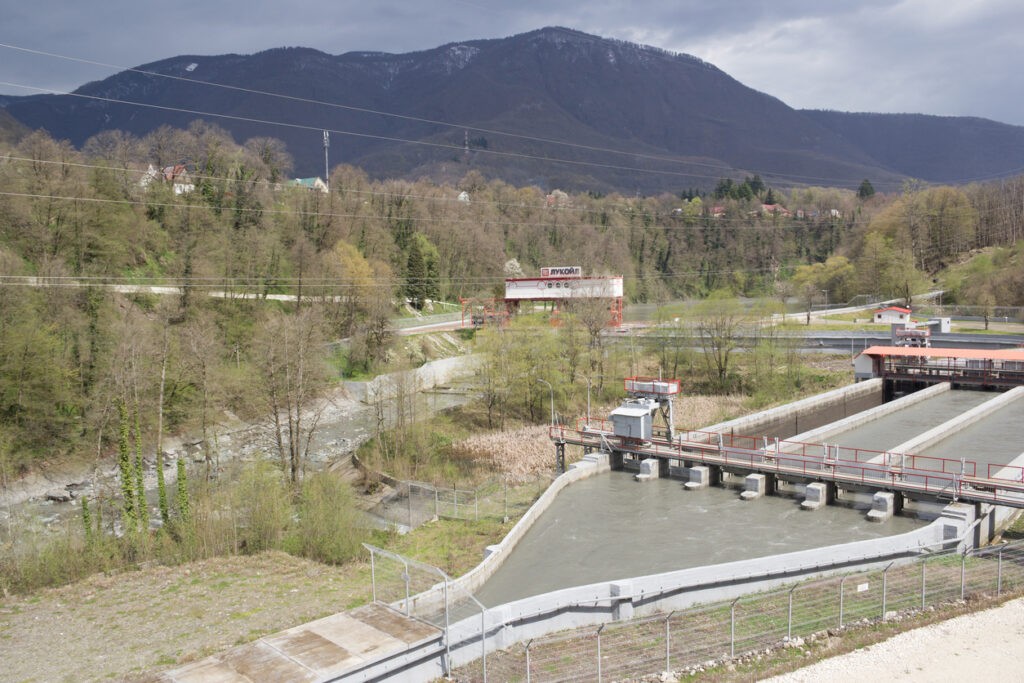
Two hydrometric stations have been opened along the cross-border Great Fergana Canal and North Fergana Canal, according to a report by news portal Gazeta.uz. Construction of the stations was facilitated by the Swiss government’s Blue Peace Central Asia initiative. The project was started in 2017 in response to the need for a cross-border strategy for water management in Uzbekistan and Tajikistan. The hydrometric stations were opened as part of the sixth meeting of the Uzbekistan-Tajikistan working group on the coordinated use of the transnational rivers’ water resources in Central Asia. The two countries signed a protocol on the automated computations and real-time transfer of cost data to Tajikistan and Uzbekistan from the two stations. The Gazeta.uz report claims that Switzerland has been assisting water reform initiatives in Tajikistan and Uzbekistan for nearly 20 years, employing an integrated approach to national water resources management. Blue Peace Central Asia supports the creation of guidelines for regional cooperation aimed at ensuring water security for the entire population of Central Asia. Recently, the data source Meteojurnal released statistics regarding the use of Amudarya water by Central Asian nations in 2023, based on information from the scientific information center of the Central Asian interstate water management coordination commission (Afghanistan was not taken into account). The largest user of river water was Turkmenistan, which diverted 42% of river water (20 cubic kilometers) to its own country. In second place was Uzbekistan, which used 38.4% of the river’s water (about 18.3 cubic kilometers). The next largest user, Tajikistan, accounted for 19.8% of water (more than 9.4 cubic kilometers).

Smog in Bishkek Decreases by 10-15%

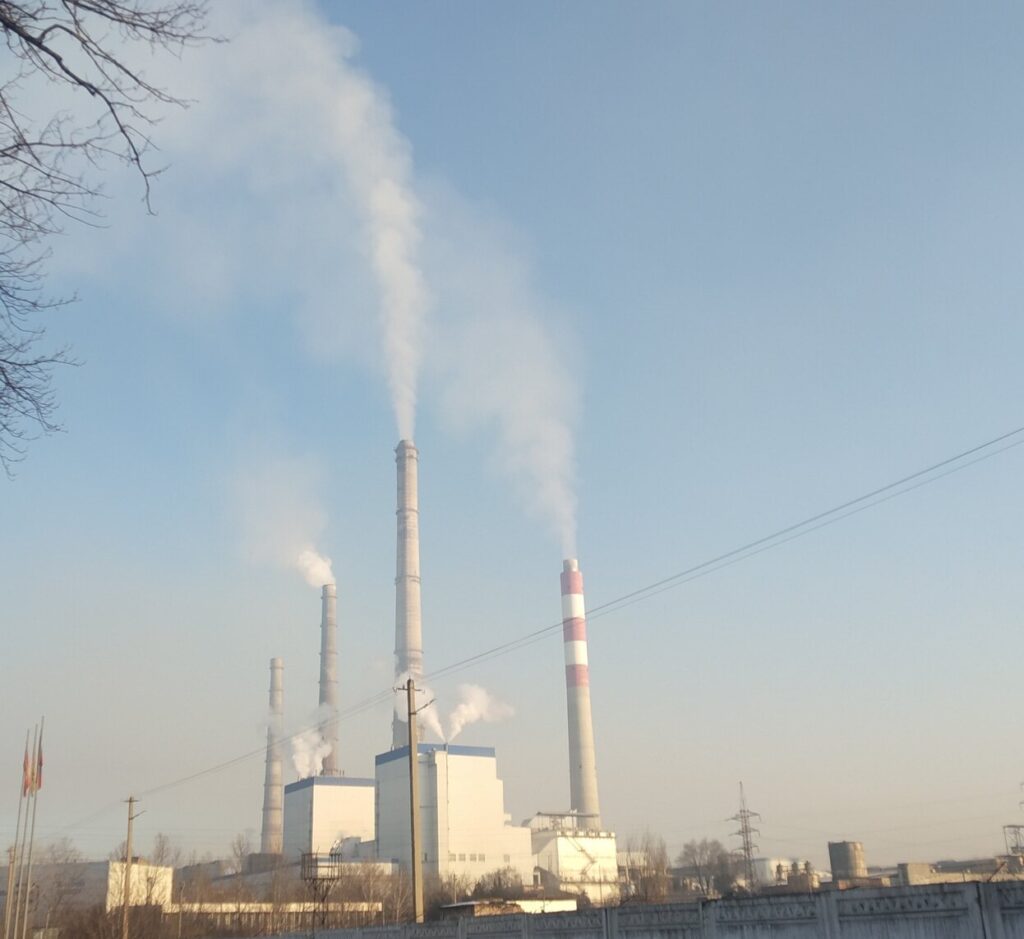
Kyrgyzstan’s Ministry of Natural Resources, Ecology and Technical Supervision has announced that smog in Bishkek has decreased by at least 10-15% resulting from the government's efforts to improve the air quality in the capital city. Welcome news at a time when pollution had reached a critical level. In recent years, IQAIR has frequently ranked Bishkek among the worst cities in the world for the highest levels of air pollution. The Asian Development Bank’s (ADB) brief, “Tackling Air Pollution in Bishkek: A Road Map to Cleaner Air,” released in November 2023, stated that air pollution in Bishkek exceeded the WHO air quality guidelines by up to 30 times in winter. The brief referenced several studies on the main sources of air pollution. A UNICEF report showed PM2.5 concentrations are highest where households rely on coal for heating, in areas around the city's coal-fired thermal power plant and where solid waste is burned. UNDP-UNEP similarly cited coal as the primary source of pollution, followed by road transport. Transport was estimated by ADB to contribute around a third of annual emissions, particularly diesel trucks and minibuses. In conclusion, the ADB report recommended that to arrest air pollution, top priority be given to phasing out coal and investing in clean public transport. According to government reports, in 2023, nine residential neighborhoods comprising over 14 thousand households were supplied with natural gas. Today, 31 of the 47 residential suburbs, previously reliant on coal for heating, are connected to gas. The ministry also stated that the Bishkek landfill, which had been burning for decades adding to the city’s air pollution woes, was completely extinguished last year. Its territory is currently being reclaimed, with 850 tree saplings planted so far on an area of 2.3 hectares. In addition, 850 new environmentally friendly buses running on liquefied gas have been purchased for Bishkek. Mild weather and heavy rainfall were contributory factors but the decrease in smog this winter bodes well for the city's environment.