• KGS/USD = 0.01143 0%
  • KZT/USD = 0.00216 0%
  • TJS/USD = 0.10684 -0.28%
  • UZS/USD = 0.00008 0%
  • TMT/USD = 0.28571 0%
  • KGS/USD = 0.01143 0%
  • KZT/USD = 0.00216 0%
  • TJS/USD = 0.10684 -0.28%
  • UZS/USD = 0.00008 0%
  • TMT/USD = 0.28571 0%
  • KGS/USD = 0.01143 0%
  • KZT/USD = 0.00216 0%
  • TJS/USD = 0.10684 -0.28%
  • UZS/USD = 0.00008 0%
  • TMT/USD = 0.28571 0%
  • KGS/USD = 0.01143 0%
  • KZT/USD = 0.00216 0%
  • TJS/USD = 0.10684 -0.28%
  • UZS/USD = 0.00008 0%
  • TMT/USD = 0.28571 0%
  • KGS/USD = 0.01143 0%
  • KZT/USD = 0.00216 0%
  • TJS/USD = 0.10684 -0.28%
  • UZS/USD = 0.00008 0%
  • TMT/USD = 0.28571 0%
  • KGS/USD = 0.01143 0%
  • KZT/USD = 0.00216 0%
  • TJS/USD = 0.10684 -0.28%
  • UZS/USD = 0.00008 0%
  • TMT/USD = 0.28571 0%
  • KGS/USD = 0.01143 0%
  • KZT/USD = 0.00216 0%
  • TJS/USD = 0.10684 -0.28%
  • UZS/USD = 0.00008 0%
  • TMT/USD = 0.28571 0%
  • KGS/USD = 0.01143 0%
  • KZT/USD = 0.00216 0%
  • TJS/USD = 0.10684 -0.28%
  • UZS/USD = 0.00008 0%
  • TMT/USD = 0.28571 0%

Viewing results 541 - 546 of 958

Chinese Invest in Solar Power for Kyrgyzstan

On April 12, the Chairman of the Cabinet of Ministers of the Kyrgyz Republic, Akylbek Japarov unveiled plans for the construction of a solar power plant near Balykchy in the country’s northern Issyk-Kul region. Financed with an investment of $400 million by a Chinese company, the plant will have a capacity of 400 megawatts and should be operational by the end of 2025. At the celebratory launch, Japarov stated that the Cabinet of Ministers has made the harness of solar energy, wind, and biogas technologies a key priority, and applauded progressive initiatives which over the past two years, include large-scale hydroelectric power plants Kambarata (HPP)-1, Kulanak HPP and Bala-Saruu HPP, as well as hundreds of smaller hydroelectric power stations nationwide. “Our goal is to achieve energy independence. The first stage of work on Kambarata HPP-1 has been completed, and work is currently underway to update its feasibility. Once in operation, it will become the largest hydropower nation in the region.”

USAID Oasis Project on Course to Restore Aral Sea Ecosystem

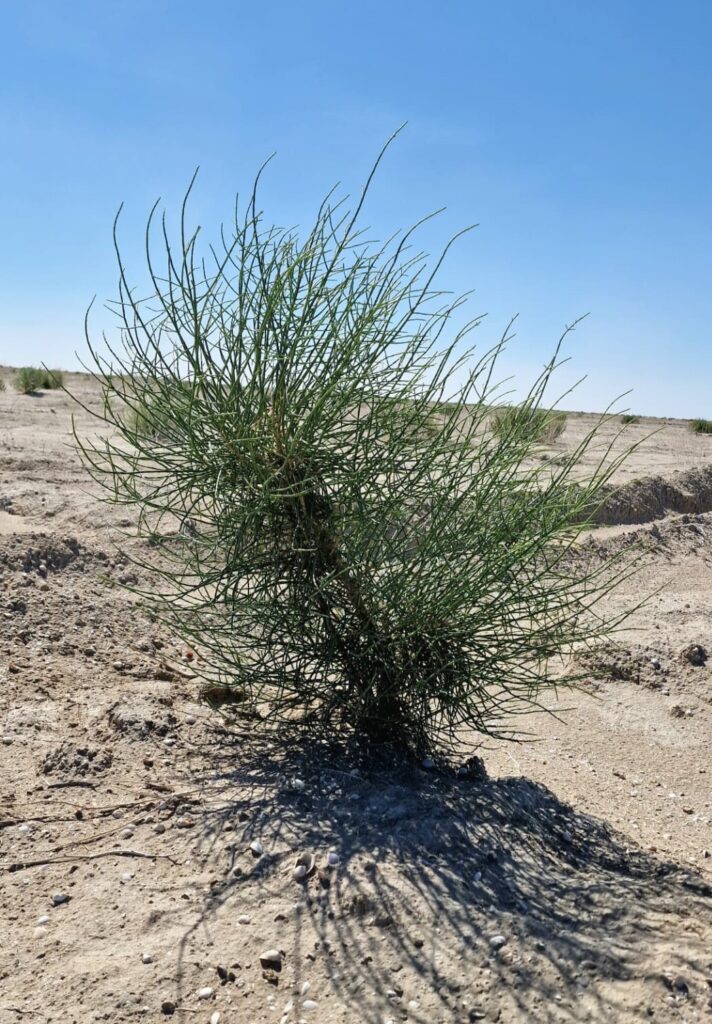
The U.S. Embassy in Kazakhstan has announced that from 12 – 16 April, the United States Agency for International Development (USAID) will visit the Oasis project on the former shores of the Aral Sea in the Kyzylorda region of Kazakhstan. Launched in 2021, the Oasis is integral to Environmental Restoration of the Aral Sea Activity (ERAS-I); a larger initiative spawned by USAID in cooperation with the Executive Directorate of the International Fund for Saving the Aral Sea. Comprising a 500-hectare demonstration site for testing black saxaul shrubs, the project represents a first step in restoring the local ecosystem and demonstrates the willingness of governments, NGOs, and local communities to collaborate on building resilience against environmental threats to Central Asia. In advance of the expedition to commemorate the project’s success and celebrate the efforts of those who contributed to its realization, U.S. Ambassador to Kazakhstan, Daniel Rosenblum, stated: “The testing and research at the Oasis will benefit not only Kazakhstan communities in this region, but will also inform ecosystem restoration efforts throughout the Aral Sea region. Working together with national and international partners, we are proud to be part of this mission to find collaborative solutions to build climate resilience in Central Asia.” The Aral Sea disaster is one of the worst ecological catastrophes in human history. Formerly the fourth largest lake in the world, the Aral Sea began shrinking in the 1960s when water from the rivers that fed it was redirected for agricultural irrigation. Today, the Aral Sea is only 10% full. The subsequent birth of the Aralkum Desert and the sand and dust storms rising from the world’s newest desert have both polluted the environment and severely affected the health in local communities.

Turkmenistan Using Almost All Available Water Resources With No Additions in Sight

Meteojournal has reported that Turkmenistan's State Statistics Committee has published a voluntary national review of its progress in implementing the global agenda for sustainable development until 2023 on its website. According to MeteoJournal, in 2021, almost all water resources in the country – 92% – went to agricultural needs. Another 5% was used by industry, and only 3% went to household needs. At the same time, Turkmenistan used almost all available fresh water resources, and due to increasing consumption, the country has no additional water sources. In 2016, the utilization rate of water resources reached 97.5%; in 2018, it had dropped to 89.9%, then in 2020 it reached 85.2%, and in 2021 -- 87.1 percent. Meteojournal stated that the increase in demand for fresh water can be met only through its rational use. According to the review, 95% of the population has access to clean and safe water, whilst 99.9% of the population uses water supply services organized in compliance with safety requirements. The share of safely treated wastewater in 2022 was 57.4%. Meteojournal, which familiarized itself with the review, noted that Turkmenistan - which possesses huge potential for using renewable energy sources such as solar and wind energy - is currently not harnessing its potential. The review mentioned the construction of a 10-megawatt (MW) hybrid power plant using solar and wind energy in Kyzil-Arvat. The project was planned to be completed in January 2024, but has yet to open, and local media haven't reported any updates on the pace and status of the work.

Uzbekistan to Host Eco Race in Support of Aral Sea Region

On April 18 in Moynaq, Karakalpakstan, organizers Prorun will host an Aral Sea Eco Race with a total distance of two kilometers. Participants will run one km to the location of a tree planting, plant a tree, and then return. At the finish line, each participant will receive a medal in the form of a symbolic tree for partaking in the restoration project. As organizer Andrey Kulikov told the Times of Central Asia, "the run is being held to draw the world's attention to the environmental problems of the region and inspire everyone to take actions to protect it. Twelve participants have already registered, and about a hundred runners are expected. The run will be held at the experimental site next to the nature museum in Moynaq. The three fastest runners will receive commemorative prizes. In every race organized by the Prorun movement, we aim to attract as many people as possible to a healthy lifestyle and to dedicate the races to environmental protection and environmental issues. Our biggest event will be a 42-km marathon on the dried-up Aral Sea bed, which will take place on June 17. A hundred people will take part in the race dedicated to the International Day to Combat Desertification and Drought. In addition, Prorun practices 'plogging' races, during which participants collect rubbish along their route." The Aral Sea Eco Race is being held as part of the Aral Sea Tourism Week, which will run from April 16-19 in the Nukus and Moynaq districts of Karakalpakstan. During the week, there will be an international scientific and practical seminar "Goodwill Ambassadors of the Aral Sea," an exhibition and an art exhibition entitled "The Aral Sea Through the Eyes of Artists," where paintings of the Aral Sea will be presented. The participants will also enjoy a gastronomic festival called 99 kinds of fish dishes of the Aral Sea, and a trip to historical monuments. Last autumn, Uzbekistan planted 28,000 hectares of greenery in the Moynaq district and the desert areas of the Aral Sea basin as part of a nationwide greening campaign called Yashil Makon (Green Edge). In 2024, Kazakhstan plans to plant on 275,000 hectares of the former Aral Sea bed. In total, according to the Ministry of Ecology and Natural Resources of Kazakhstan, 544,500 hectares of forest were sown between 2021-2023.

Kazakhstan Faces Unprecedented Threats from Floods, Droughts, Locust Infestations

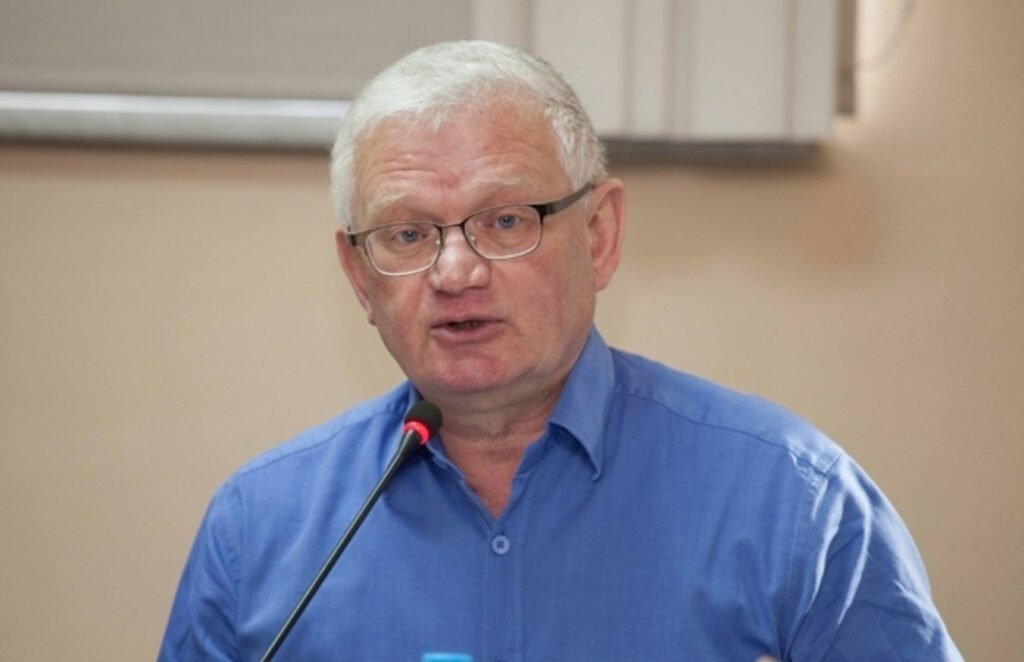
Experts are predicting a severe drought in Kazakhstan. Additionally, locusts are expected to invade the country, and the flood situation will be even worse next year. That's according to Kazakhstani ecologist, Dmitry Kalmykov, who further explained to the Times of Central Asia in an interview that climate change in the region is already irreversible. "There is an increase in the frequency and intensity of all extreme weather events, including drought, floods, catastrophic precipitation, storms, downpours. Simply put, there are, unfortunately, going to be more of these phenomena. In addition, the weather patterns relative to the seasons are changing. Precipitation falls at a different time of the season than we have come to expect. For example, last year in August rains destroyed up to 30% of the harvest in some regions of Kazakhstan. Already now, there are disappointing forecasts going forward. But it's good to have time to prepare," Kalmykov told TCA. Today's floods are an indicator of a lack of clear forecasting, Kalmykov said, stating that the government had information about the amount of snowfall, ground freezing, and moisture reserves. Yet no conclusions were drawn on the severity of the risks of high groundwater levels. "All over the world, even in Kazakhstan's environmental laws, this is called the need to adapt the economy to climate change that has already occurred. This is declared by Kazakhstan at the international level, but it is not fulfilled. Literally everything needs to be changed, including agricultural practices, water management, construction and emergency preparedness. This is an evolutionary law - if a species does not adapt to changed conditions, it does not survive. It is time for us to act," he warned. Dmitry  Kalmykov   Kazakhstan and China are expected to create a research center to combat drought. The two countries' academies of sciences will jointly study problems of ecology and land resources. However, Kalmykov is skeptical about this initiative, as he doesn't believe in the authorities' ability to apply practical science in real life. Earlier, climate change expert Kirill Pavlov released a drought forecast for Kazakhstan, which he attributes to the El Niño effect. Yesterday, TCA published an interview with Dr. Petr Svoik, a Kazakhstani economist and former head of the Anti-monopoly Policy Committee, in which he emphasized the need for a supranational structure to combat climate change, so that each state cannot arbitrarily come to “its own truth… There is only one interstate structure - the Supreme Eurasian Economic Council - where ministers of the Eurasian Economic Union (EAEU) countries can, among other things, make decisions regarding water resources, but these decisions are made by consensus. There is no center that adopts arbitration and final order. That is, this body cannot resolve a water dispute between, say, Kazakhstan and Kyrgyzstan, and there is no economic effect," he stated. In an earlier interview with TCA, despite admitting that this could be “potentially the most severe disaster in over 80 years,” Deputy Foreign Minister of Kazakhstan, Roman Vassilenko, stated that Kazakhstan is “effectively handling the...

No Central Asian Country Can Cope With Floods, Droughts On Its Own, Expert Tells TCA

Lack of funds, the predominantly commodity-based nature of their economies, and the inability to reach agreement at a national level make the Central Asian republics vulnerable to natural disasters, Dr. Petr Svoik, Ph.D, a Kazakhstani economist and former head of the Anti=monopoly Policy Committee has told the Times of Central Asia.   Between Low Water and Flood Last year was marked by a drought in Kazakhstan, and at a critical moment for farmers, neighboring Kyrgyzstan stopped supplying water from the Kirov reservoir to the Zhambyl region, with the Kyrgyz authorities explaining that they were forced to cut off the water supply because of a severe shortage of water resources in the Chu and Talas Rivers for their own agricultural producers. Additionally in 2023, experts stated that the entire Eurasian region is entering a period of low water levels, which means agricultural and livestock sectors are threatened with permanent damage from drought. For Kazakhstan, the water problem is particularly acute, as many of the main water arteries are trans-boundary. This is true not only of the southern regions, but also along the Caspian Sea, which is supplied by Russia's Volga River, and the regions dependent on the Ural River in northwest Kazakhstan, which are at risk of drying up. However, the spring of 2024 has been marked by historic flooding. As of today, according to Kazakhstan's Ministry of Emergency Situations, ten regions of Kazakhstan are subject to flooding, with even multi-story buildings flooded in the regional centers of Kostanay, Aktobe and Atyrau. In a few days, according to the Ministry of Emergency Situations, a "wave" from Russia, where the major cities of Orsk and Orenburg are in danger, will come to Kazakhstan. Such a natural disaster hasn't happened in about 80 years, President Tokayev said. Drought and floods carry extraordinary costs, not to mention social damage. Every year, Kazakhstani villagers claim they are on the brink of ruin, and the state budget allocates significant funds to support them. As for floods, according to the World Bank, more than 1.1 million people have been affected in the five Central Asian states alone since the collapse of the Soviet Union. Each year, natural disasters in the region cause more than $10 billion in losses and affect the lives of nearly 3 million people. In Kazakhstan alone, 1.5 million people are at risk from river overflows, according to the Ministry of Emergency Situations. The country has allocated 7 billion tenge ($15.653 billion) for flood control in 2024 - but these funds are inadequate.   Political and Economic Losses  According to Petr Svoik, floods represent reputational losses for the authorities. The population loses property and faith in the authorities' ability to do something. Moreover, floods by definition have a high degree of predictability because of meteorological forecasts. "What is the problem of predicting the volume of water discharge in a couple of weeks, taking into account which reservoirs will overflow, and which ones need to be strengthened? For some reason, the authorities do not use...