• KGS/USD = 0.01144 0%
  • KZT/USD = 0.00212 0%
  • TJS/USD = 0.10456 0.19%
  • UZS/USD = 0.00008 0%
  • TMT/USD = 0.28490 0%
  • KGS/USD = 0.01144 0%
  • KZT/USD = 0.00212 0%
  • TJS/USD = 0.10456 0.19%
  • UZS/USD = 0.00008 0%
  • TMT/USD = 0.28490 0%
  • KGS/USD = 0.01144 0%
  • KZT/USD = 0.00212 0%
  • TJS/USD = 0.10456 0.19%
  • UZS/USD = 0.00008 0%
  • TMT/USD = 0.28490 0%
  • KGS/USD = 0.01144 0%
  • KZT/USD = 0.00212 0%
  • TJS/USD = 0.10456 0.19%
  • UZS/USD = 0.00008 0%
  • TMT/USD = 0.28490 0%
  • KGS/USD = 0.01144 0%
  • KZT/USD = 0.00212 0%
  • TJS/USD = 0.10456 0.19%
  • UZS/USD = 0.00008 0%
  • TMT/USD = 0.28490 0%
  • KGS/USD = 0.01144 0%
  • KZT/USD = 0.00212 0%
  • TJS/USD = 0.10456 0.19%
  • UZS/USD = 0.00008 0%
  • TMT/USD = 0.28490 0%
  • KGS/USD = 0.01144 0%
  • KZT/USD = 0.00212 0%
  • TJS/USD = 0.10456 0.19%
  • UZS/USD = 0.00008 0%
  • TMT/USD = 0.28490 0%
  • KGS/USD = 0.01144 0%
  • KZT/USD = 0.00212 0%
  • TJS/USD = 0.10456 0.19%
  • UZS/USD = 0.00008 0%
  • TMT/USD = 0.28490 0%

Viewing results 1693 - 1698 of 3334

UN: Central Asia’s Big Youth Population is Key to Progress

U.N. Secretary-General António Guterres shook hands with presidents and addressed dignitaries in ornate halls during a tour of Central Asia last week. But he also spent a lot of time with young people, saying “their potential is largely untapped” in a region where, by United Nations estimates, people under 30 years old make up more than 50% of the population. Guterres, a former prime minister of Portugal, met young climate activists in Kyrgyzstan and students in Turkmenistan. In Tajikistan, the U.N. chief said 70% of that country’s population is under 30 and told young people at a school there to hold elders to account on the pressing challenge of climate change. “You have the moral authority to talk to others - as those that suffered the impacts of climate change and are not contributing essentially to it,” Guterres said at a school established by UNICEF with funding from the European Union. “You are the victims of climate change. So, you have the right to tell the others, ‘Behave.´ Because they are not behaving.” Think globally, Guterres told the students. “It’s not Tajikistan or Uzbekistan,” he said. “No, it’s everything together.” The U.N.’s focus on young people having a say in Central Asia stems from a sense of possibility in what could shape up as an increasingly strong labor and leadership pool, as well as concern that young people with few prospects drift into unemployment and disenchantment, fueling social pressures and instability. The fertility rate in the wider region comprising Europe, North America and Central Asia has dropped in numerous countries in the last decade, while the “five Central Asian countries, Georgia, Israel and Monaco are the only countries in the region with a total fertility rate at or above replacement level,” the United Nations Economic Commission for Europe said in a report in October. At the same time, the report said, the Central Asian states are among the countries in the region that have “experienced negative net migration” since 2015, while countries receiving the largest numbers of migrants in that period were the United States, Russia, and Germany. The total population of the five Central Asian countries is about 76 million. Some of those countries, especially Tajikistan and Kyrgyzstan, rely heavily on remittances from nationals who struggle to find work at home and seek opportunities abroad, particularly in Russia. The alleged involvement of several Tajiks in a deadly terror attack in the Moscow area in March led to a backlash of harassment and intense scrutiny aimed at many Central Asian migrants in Russia. At a regional health forum in Kyrgyzstan last month, the Europe director of the World Health Organization, a U.N. agency, noted that Central Asia has a “significant young and educated population” at a time when European populations are aging. “This will – if the youth potential is maximized – give Central Asia an edge in the decades ahead,” the director, Dr. Hans Kluge, said.

Kazakh Art Abroad: Interview with Saida Sheikhova

Saida Sheikhova  is a well-established artist from Kazakhstan, now living in Prague, whose work has garnered an international following. In conversation with TCA, Saida shares her creative path, sources of inspiration, and the challenges and opportunities faced in promoting her art abroad. TCA: What inspired you to take up painting? I started drawing at the age of three. There was an art class at day-care and I spent all my time there. My drawing teacher, Elvira Saparbayevna, noticed something unique in me. By way of encouragement, she introduced me to different materials, techniques, as well as work by famous artists, and I became more and more immersed in the art world. Hearing stories about what inspired people in the past to create art, I found it strange that most were motivated by religious or historical subject matter and determined to follow a different path. TCA: How did your career develop? I enrolled in the Art School Vivat, opened by my kindergarten teacher, where I gained a basic knowledge of art history and gathered together a huge portfolio. During that period, I participated in several exhibitions, including ‘Friendship of the Peoples of the World’ at the Museum of the President of Kazakhstan in 2019, as well as auctions and UN projects. I devoted my summer vacations to drawing, which led to my winning the International Festival ‘Children Draw the World Asia’ in 2017, organized by UNESCO. During the pandemic, I entered and won awards in online competitions on themes of ecology and animal protection within the framework of the UNESCO’s 'Children Draw the World' project. After graduating, I wanted to study in Europe and then if possible, move on elsewhere.  Prague was the most affordable option and getting a visa was relatively straightforward. On arriving in the Czech Republic, I participated in exhibitions and competitions at the university. Thanks to the Erasmus+ exchange program, I spent a semester in Italy, where I discovered new techniques and approaches to creativity which helped define both my style and how I wanted to showcase my work.   [caption id="attachment_19993" align="aligncenter" width="447"] @ssayashh[/caption] TCA: What inspires your art? Inspiration comes unintentionally. It can be a beautiful shot from a movie, stories of friends, a vivid emotion, or current problems. When an idea pops into my head, I try to sketch it out or write it down so that I always have something to draw in the future. TCA: How does Kazakh culture influence your practice? Kazakh culture influences my perception and interpretation of things in many ways. I often hide or insert traditional Kazakh objects and ornament in my art and use their symbolism to enhance the concept behind the work. I also raise social issues related to contemporary problems in Kazakh society.   TCA: What are the challenges in representing your art abroad and how do you overcome them? The main challenges relate to cultural differences and language barriers. Certain topics, relevant in Kazakhstan, may not be understood in Europe. For example, body positivity...

Tokayev Calls For Expanded SCO to Play Greater Role on Global Stage

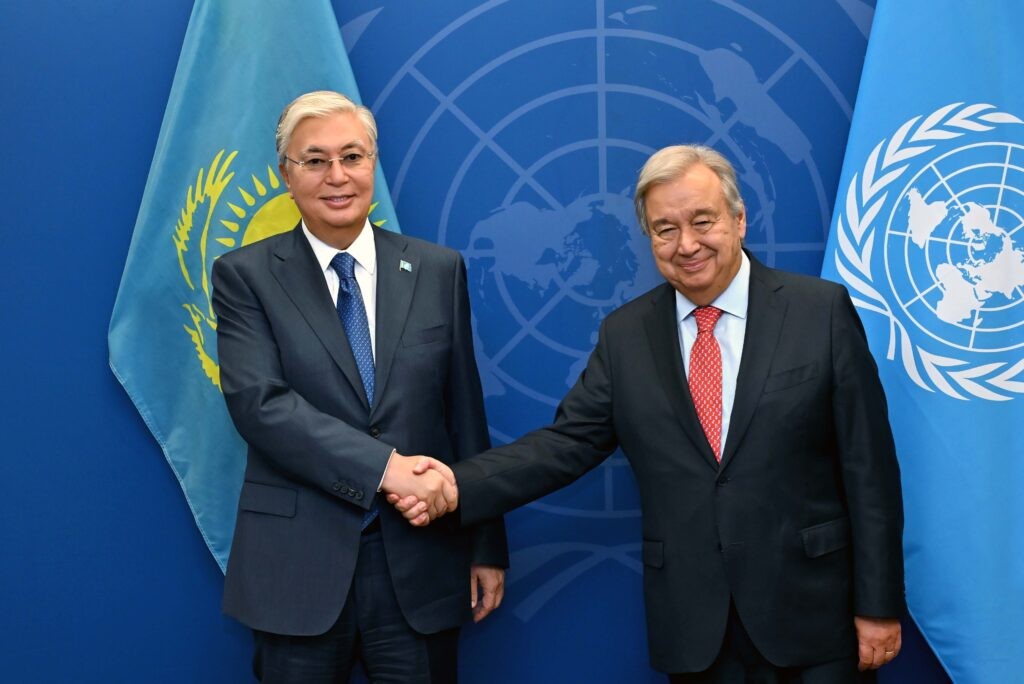
A meeting entitled “Strengthening Multilateral Dialogue – Striving for Sustainable Peace and Development” was held to conclude the Shanghai Cooperation Organization summit in Astana on July 4. The meeting was was held in the "SCO Plus" format. and was attended by the leaders of the SCO full member states who participated in the Summit earlier in the day, plus leaders of the organization's observer countries and dialogue partners. These included the UN Secretary-General António Guterres, presidents Recep Tayyip Erdoğan of Turkey and Ilham Aliyev of Azerbaijan, and the Emir of Qatar, Sheikh Tamim bin Hamad Al Thani. The SCO Plus session of the Summit took on greater importance this year, amid suggestions that the alliance is primed to expand next year. Countries interested in joining the SCO as full members include Turkey, Qatar and Egypt.  In his speech at the meeting, Kazakhstan's President Kassym-Jomart Tokayev emphasized the role that the SCO can play as a stabilizing force in the international arena. “Today the world is faced with serious challenges caused by unprecedented geopolitical contradictions and growing conflict potential,” said Tokayev. “The international security architecture is under threat, which could lead to dire consequences for all of humanity. In such a fateful period, we are entrusted with a huge responsibility for strengthening peace, stability, and security through collective efforts at the regional and global levels. The Shanghai Cooperation Organization, taking into account its authority, significant economic and human resources, is capable of developing effective solutions to achieve sustainable development goals and overcome modern challenges.”  Concerning the role of the United Nations, Tokayev said that its potential is far from being exhausted. “Our common task is to strengthen the role of the UN as the main international institution for ensuring global security, capable of effectively confronting the challenges of the 21st century. The voice of the SCO should and will sound louder in the international arena, promoting a consolidated position on various problems of our time,” he emphasized. In his own speech, Gutteres referred to the SCO as "a valuable partner of the United Nations". With reference to strengthening trade and economic ties, Tokayev said: “At the current stage, the economies of the SCO member countries are demonstrating high growth rates of 4% to 9%. The share of the SCO states in global GDP is 30% already. Today, the foreign trade of the SCO participating countries exceeds $8 trillion, which is equivalent to a quarter of all world trade.”  Tokayev emphasized the fact that economic growth in Asia is largely due to the SCO states. On behalf of Kazakhstan, he also welcomed China’s intention to expand access for SCO countries to its market, and increase trade turnover with the SCO member states to $3 trillion. “It is important for us to fully unleash the colossal economic potential of the SCO. The interaction of the SCO with such integration associations as the EAEU, BRICS and ASEAN opens up broad prospects. A powerful driver for sustainable growth in global trade is further strengthening of transport connectivity. More than...

Kyrgyzstan to Support Female Entrepreneurship

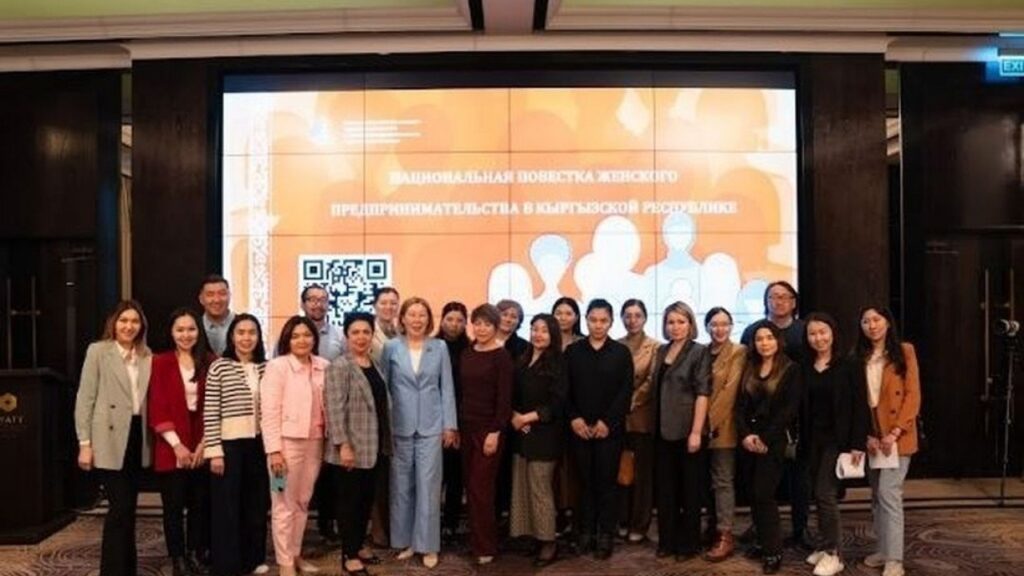
A group of Kyrgyz parliamentary deputies have initiated amendments to the draft law "On the Protection of Entrepreneurs' Rights," which will bow be supplemented with the words "women's entrepreneurship." The amendment states that women make up half of Kyrgyzstan's population, but their contribution to the economy is far less significant. Citing IMF data, the authors of the amendment stated that female entrepreneurship can contribute up to 27% to the republic's GDP. "As experience shows, the level of income from small businesses does not exceed the officially established subsistence minimum, which, unfortunately, does not leave additional funds available for further business development. The data also shows that women entrepreneurs who have better access to assets and can make independent decisions can help reduce poverty," the bill states. Representatives of the women's forum "Kurak," who contributed to drafting the amendments, proposed introducing the term "woman entrepreneur" into the law and defining this as a legal entity wherein a woman owns at least 51% of the shares. They believe this will enable women to receive preferential financing and access state support. "Women entrepreneurs often need more time to run a business. After all, they often raise children and run a household in parallel. It is also tough for a woman to get a loan from a bank because the collateral property belongs to men. Moral support from our patriarchal society and the state is also lacking," human rights activist Ainura Sarynbayeva told The Times of Central Asia. The legislative introduction of the word "woman" and "women's entrepreneurship" will help further develop women's businesses, believes Sarynbayeva, adding that commercial banks and international development institutions are already prepared to provide preferential lending. "Today, there are no countries in Central Asia where the concept of "women's entrepreneurship" is enshrined in the law. The draft law being promoted in Kyrgyzstan is largely similar to the Azerbaijani law. The authorities there support women businessmen at the state level," said Sarynbayeva. According to the latest census, Kyrgyzstan is home to 3.3 million women - half of the country's population. However, despite various training sessions and courses, only a small percentage of Kyrgyz women participate in economic activities. Human rights activists attribute this state of affairs to the haphazard nature of government support. The average Kyrgyz businesswoman is 40-50 years old, has a secondary education, is an individual entrepreneur or manages a small or medium-sized business, and has a family and children.

Taking the Necessary Steps to Curb Child Abuse in Kazakhstan

In Almaty, a young woman threw herself off a Ferris wheel, falling to her death. Before committing suicide, she had strangled her five-year-old daughter. The number of children in Kazakhstan has soared over the past decade, but so have the number of crimes committed against minors. When Mom and Dad are the murderers In 2023, twenty-five children were murdered in Kazakhstan, seven of them by their relatives according to the country’s children's ombudsman, Dinara Zakiyeva. This year, Kazakhstanis were shocked by numerous horrifying cases of child abuse. According to relatives and neighbors, the family of the woman who strangled her daughter lived in the Ile District of Almaty Region and were financially secure and successful. The regional commissioner for children's rights, Aigul Yesimbekova, explained that the woman had confesses her crime to her sister before committing suicide. “The child had Down's syndrome. The mother was most likely in an internal crisis and despair when she decided to do this,"Yesimbekova explained. "She went to her sister and told her that she was going to kill herself. When her sister tried to calm her down, she went to the park (the Central Park of Culture and Leisure in Almaty). Her husband is an IT specialist, and the financial component [of her life] was fine. She was not registered with psychiatrists, her husband makes money, and everything seemed fine, but the child was sick. Probably, her soul was in such a state of crisis; it is hard when a child is sick. Maybe she murdered the child in a rush of emotion, and then, unable to cope with the guilt, she took the step she did.” According to Zakiyeva, such families are in critical need of psychological support, and child protective services should supervise them. However, the situation with psychologists and child social workers in Kazakhstan is poor. At the end of June, a court in the Turkestan Region convicted a mother of killing her two children. Their bodies were found in a rented apartment in February 2024 in the city of Turkistan. The mother was sentenced to 15 years in prison. After killing her children, the woman called her friend and told her what she'd done. Even against the backdrop of Kazakhstan’s high birth rates, the Turkestan Region - as is the entire south of the country - is an outlier. The percentage of people under the age of 18 in Kazakhstan stands at 34.1%, whereas in the Turkestan Region, this figure is 43.3%, followed by the Mangystau Region at 41.9%, and the federal city of Shymkent at 40.6%. Experts say that it is in the regions with the highest birth rates that the highest rates of violence against children are recorded. In September of last year, a pedophile raped and brutally murdered a five-year-old girl who lived next to him in the village of Zhibek Zholy in the Turkestan Region. He was sentenced to life imprisonment and chemical castration. News of the murder almost sparked a riot and deadly reprisals against the rapist;...

Astana Qazaqhstan Team’s Stellar Rise from the Ashes

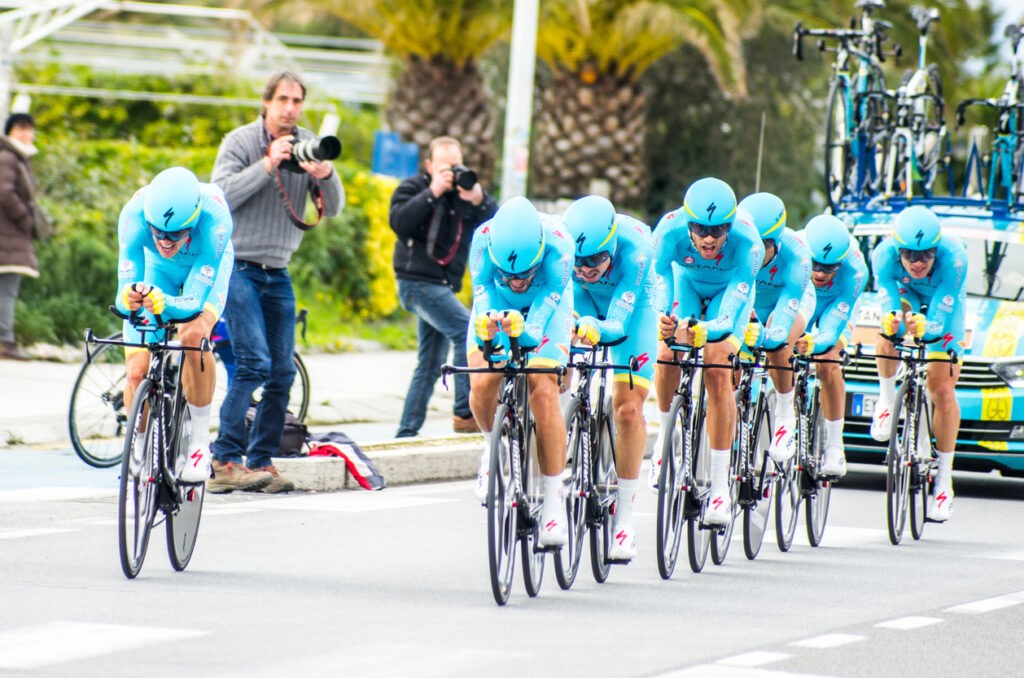
On July 4, the official website of the National Olympic Committee of the Republic of Kazakhstan announced that Astana Qazaqstan Team member, Mark Cavendish, won the fifth stage of the Tour de France.  Winning the Tour for the 35th time, Cavendish surpassed the previous record set by Eddy Merckx and demonstrating the management's rise from recent troubles, his victory revived his team's former glory. Two names Alexander Vinokurov and Danial Akhmetov are the two cyclists who first turned the spotlight on the Astana Qazaqstan Team. In May 2006, "Operation Puerto", the code name of the Spanish police investigation into the doping system in cycling, led by Dr. Eufemiano Fuentes, resulted in a series of searches and arrests involving numerous cyclists. The implication of the Spanish team Liberty Seguros-Würth, of which Kazakh cyclists Alexander Vinokurov and Andrey Kashechkin were key members, led to its sponsors' withdrawal.  Vinokurov sought assistance from the then Prime Minister and head of the Cycling Federation of Kazakhstan, Danial Akhmetov. With support from the latter, the Astana team was established that year and Vinokurov celebrated by winning the Vuelta a España, with Kashechkin finishing third. Scandals, intrigues, investigations The first scandal broke out immediately. When the owner of the ProTour license, which belonged to Liberty Seguros-Würth, refused to sell it to Astana, the team submitted an application to the International Cycling Union. The initial response from the  IUW was that it could not guarantee the license until the 2007 Tour.  Meanwhile, organizers assured Astana that it would be allowed to participate  in major international competitions and on December 20, 2006, the team was granted a four-year license. In July 2007, a doping scandal broke at the Tour de France, at the centre of which, was Astana's team leader , Alexander Vinokurov. A test performed after his winning a stage of the classic race showed the presence of different types of red cells in his blood, indicative of a blood transfusion prior to competing, and Vinokourov was disqualified for two years. Andrei Kashechkin was similarly caught and during the second season, two more Astana athletes, suspected of doping, were likewise suspended from racing. All these troubles led to the Kazakh team's absence from the 2008 Tour de France season in the Giro d'I and other Grand Tours. By then, the team was under the direction of  Johan Brunel renowned for bringing on winner of the Tour de France, Alberto Contador, and many other strong riders. Both Johan Brunel and Alexander Vinokurov were connected with the doping scandal that followed in 2009.  As soon as his disqualification period had expired the famous rider intended to return to "Astana triumphantly." Brunel invited American cyclist Lance Armstrong to Astana to pair with Contador. He persistently objected, however, to the contract with Vinokurov and Kashechkin. Ultimately, he left the team, unable to withstand the confrontation with the famous Kazakh. Armstrong and most of the team went after him, and Contador's contract was delayed for another year. The outcome of the scandals forced...