• KGS/USD = 0.01144 0%
  • KZT/USD = 0.00204 0%
  • TJS/USD = 0.10398 0%
  • UZS/USD = 0.00008 0%
  • TMT/USD = 0.28490 0%
  • KGS/USD = 0.01144 0%
  • KZT/USD = 0.00204 0%
  • TJS/USD = 0.10398 0%
  • UZS/USD = 0.00008 0%
  • TMT/USD = 0.28490 0%
  • KGS/USD = 0.01144 0%
  • KZT/USD = 0.00204 0%
  • TJS/USD = 0.10398 0%
  • UZS/USD = 0.00008 0%
  • TMT/USD = 0.28490 0%
  • KGS/USD = 0.01144 0%
  • KZT/USD = 0.00204 0%
  • TJS/USD = 0.10398 0%
  • UZS/USD = 0.00008 0%
  • TMT/USD = 0.28490 0%
  • KGS/USD = 0.01144 0%
  • KZT/USD = 0.00204 0%
  • TJS/USD = 0.10398 0%
  • UZS/USD = 0.00008 0%
  • TMT/USD = 0.28490 0%
  • KGS/USD = 0.01144 0%
  • KZT/USD = 0.00204 0%
  • TJS/USD = 0.10398 0%
  • UZS/USD = 0.00008 0%
  • TMT/USD = 0.28490 0%
  • KGS/USD = 0.01144 0%
  • KZT/USD = 0.00204 0%
  • TJS/USD = 0.10398 0%
  • UZS/USD = 0.00008 0%
  • TMT/USD = 0.28490 0%
  • KGS/USD = 0.01144 0%
  • KZT/USD = 0.00204 0%
  • TJS/USD = 0.10398 0%
  • UZS/USD = 0.00008 0%
  • TMT/USD = 0.28490 0%

Viewing results 1879 - 1884 of 3179

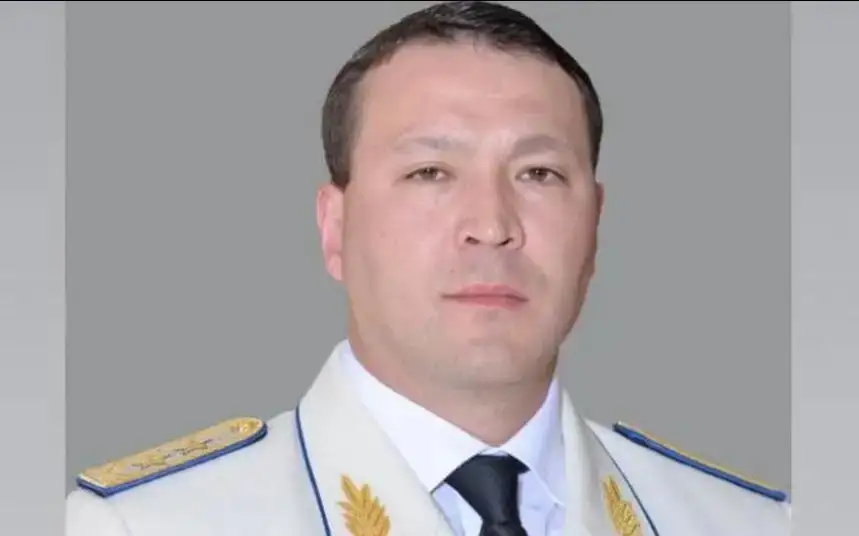
Nazarbayev’s Nephew Samat Abish Handed Eight-Year Suspended Sentence

An Astana court has found Samat Abish, a nephew of Kazakhstan's former president Nursultan Nazarbayev, guilty of "exceeding power or official authority" and given him an eight-year suspended sentence. Abish, the former deputy chairman of the National Security Committee (KNB), had his criminal case classified as "secret," and all court sessions were held behind closed doors. "By the court's verdict, [Abish] was found guilty of committing a crime under Part 4 of Article 362 of the Criminal Code of the Republic of Kazakhstan, and sentenced to eight years of imprisonment with deprivation of the right to hold certain positions for 10 years. On the basis of article 63 of the Criminal Code of the Republic of Kazakhstan, it [was] decided to consider the appointed punishment as conditional", reads a message from the inter-district criminal court of Astana. Mitigating circumstances for Abish included his young children, and the fact that he admitted his guilt and showed remorse. The court made an additional ruling to strip Abish of all of his state awards. Abish is the son of Satybaldy Nazarbayev, the younger brother of Kazakhstan's first president. Abish's father died in 1981 in a car accident. Nursultan Nazarbayev's nephew was appointed deputy chairman of the National Security Committee in 2013, and in 2015 became first deputy. Abish lost this position on January 17, 2022 after the unrest in the country and the subsequent detention of KNB head Karim Masimov.  At the time, the country's prosecutor general said that Abish was being held as a witness in the investigation into the unrest. In September last year it emerged that a criminal case had been opened against Abish. He came under investigation after the former head of a KNB department said that he had been following orders from his first deputy during the unrest that January. Abish was charged with abuse of power and abuse of authority. Another nephew of Nursultan Nazarbayev, Samat Abish's older brother Kairat Satybaldy, is accused of money laundering. He has been in prison since 2022 on charges of grand embezzlement. The trial is scheduled for April 1.

Huge Increase in Gas Supplies to Uzbekistan Sparks Debate Over Russian Influence

In a significant development for energy dynamics in Central Asia, the volume of Russian natural gas transiting through Kazakhstan to Uzbekistan is poised for a substantial increase. By 2026, the annual transfer is set to leap from the current 3 billion cubic meters (bcm) to 11 bcm, as announced by Kazakhstan’s Minister of Energy, Almasadam Satkaliyev earlier this month. The genesis of this increase can be traced back to last year, when Uzbekistan began importing gas from Russia. This came after a pivotal agreement was signed between UzGasTrade and the Russian energy giant, Gazprom, delineating a daily gas supply of up to 9 million cubic meters, or equivalently, 2.8 bcm annually. This initial arrangement set the stage for further negotiations aimed at securing medium and long-term contracts to bolster Uzbekistan’s energy security and support its economic development. To accommodate this increase, substantial upgrades to Uzbekistan's main gas distribution system are underway. An investment of $500 million, sourced from foreign and multilateral loans, has been earmarked for this purpose. These enhancements are crucial to ensure the efficient and reliable delivery of the increased volumes to meet domestic demand. Adding another layer to this energy partnership, Gazprom’s CEO, Alexey Miller disclosed that discussions are ongoing for agreements that would solidify gas supply and transit obligations between Russia, Kazakhstan, Kyrgyzstan, and Uzbekistan for a duration of 15 years. Expected to be finalized by mid-2024, these agreements would signal a long-term commitment between the participating nations. This significant increase highlights the growing energy needs of Uzbekistan, but experts are divided as to whether it represents or will serve as a catalyst for a strategic and geopolitical alignment with Russia. Posting on Twitter, Dr. Luca Anceschi, Professor of Eurasian Studies at the University of Glasgow, argued that such “regimes have become even more entrenched in their authoritarian ways, [and] getting closer to the Kremlin - and this Kremlin more in particular - is a convenient move to establish an international environment conducive to regime maintenance.” In response, Professor at the National Defense University, Erica Marat cautioned against conflating “sentiments in the society” with the actions of the Uzbek authorities. Senior Lecturer at the OSCE Academy in Bishkek, Asel Doolotkeldieva, meanwhile, stated that “economic inter-dependence [will] be the last to wane in changing influences in the region… The argument about the increasing economic role of Russia does not take into account the diversification of Central Asia's other ties: with China, the Gulf States, and Asia.” Still, others have argued that since the invasion of Ukraine, Moscow’s influence has diminished, noting that Uzbekistan has “strictly [followed] international sanctions,” adopting a neutral stance. In October 2023, an Uzbek court even arrested a citizen for joining Russian troops fighting in Ukraine. Speaking to TCA about the increase in gas supplies and its possible implications, long-standing Central Asia journalist Bruce Pannier of the Davis Center at Harvard stated that “Uzbekistan has turned from a gas exporter to a gas importer in recent years, and its major foreign investors in developing...

Kyrgyz Parliament Developing a Russian-Kyrgyz Legislative Dictionary

Last summer, the Kyrgyz Republic adopted a law on the official state language, according to which all civil servants must speak Kyrgyz, and speak only the state language in Parliament and the ministries. As one of the members of the working group in Parliament notes, a lot of international terms have appeared in legal practice today, and civil servants - sometimes not knowing their exact meaning in Kyrgyz - use the terms in their work, often incorrectly, causing potentially grave misunderstandings. "The main purpose of the initiative is to eliminate confusion in the terms used in the application of legal acts - bringing them into a unified system," said Nurlan Azygaliev, Deputy Speaker of the Parliament. Another member of the working group, the Chairman of the State Commission on Language, said the initiative would have a positive impact on the development of the Kyrgyz language as a whole. After officials develop a dictionary for legislative acts, they will work on creating an explanatory Russian-Kyrgyz dictionary of legal terms. "These issues should have been given attention since the first years of independence. We all need to work together in this direction," said State Language Commission Chairman, Melis Murataliyev. Several years ago, Kyrgyz President Sadyr Japarov urged officials to switch to Kyrgyz language documents. As the president noted, if officials remain indifferent, the Kyrgyz language will not develop. The head of the republic cited statistics that indicate ministries and agencies of Kyrgyzstan use Kyrgyz language only in 10-15% of the documents in circulation. The rest of the documents are printed in Russian. "These indicators should not be less than 50%," Japarov emphasized. According to the law adopted by the president, the Kyrgyz language should be used also for administrative dealings such as court proceedings, concluding international agreements, and conducting elections. It should also be used in more common communication in education, science and culture, as well as in the media and other areas. Today, Kyrgyzstan's mass media must publish more than half of all their publications in the state language. According to the republic's constitution, the authorities are also obliged to support the development of other languages spoken in the country. "Kyrgyzstan adheres to the principle of the free use of languages of representatives of all ethnic groups living on the territory of the country, and guarantees the creation of conditions for the development of these languages. Every citizen has the right to create conditions for the preservation, study and development of his or her native language," the law stipulates. Currently, most state orders, decrees and administrative legal acts, especially in the capital, Bishkek, are issued in Kyrgyzstan's de jure official language - Russian.

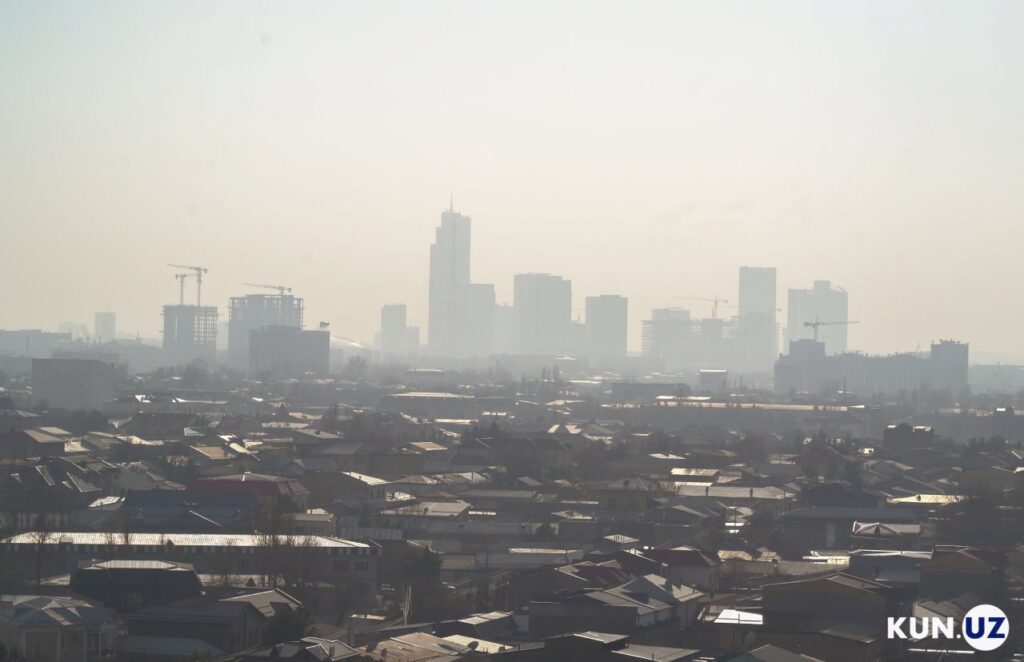
Dushanbe, Tashkent Are Worst Central Asian Cities for Air Quality

According to the latest ranking of the world capitals with the dirtiest air, published by the Swiss technology company IQAir, Dushanbe in Tajikistan came in fourth-worst, and Uzbekistan's capital Tashkent took 22nd place. According to IQAir's data, the average annual concentration of PM2.5 particles in amounted to 28.6 µg/m3, which is 5-7 times higher than World Health Organization (WHO) recommendations. The ranking was 'led' by India's capital New Delhi, followed by Dhaka (Bangladesh), Ouagadougou (Burkina Faso), Dushanbe (Tajikistan) and Baghdad (Iraq). In 2023 only 10 countries had air quality that met WHO recommendations. The cleanest air was in the capitals of Puerto Rico, New Zealand, Australia, Iceland, Bermuda, Estonia and Finland. Recently, Tashkent launched Air Tashkent, an open-source data platform for air quality monitoring. It was developed by the Department of Digital Development under the capital's hokimiyat (local administration), together with a group of national scientists called Amudario. The platform displays data from 10 stations which are updated hourly. Statistics for the last seven days are also available. To combat harmful vehicle emissions in the Uzbek capital, officials have opened a diagnostic center. The center will check the amount of harmful emissions in the car's exhaust, and according to those results, will put a sticker containing an RFID chip on the windshield in either red, yellow or green colors. That fits into a plan to divide Tashkent into ecological zones -- and will restrict entry of vehicles that don't comply with that zone 's specific sticker. Fines collected from those drivers will be used to fund ecological remediation. The government of Uzbekistan has recently taken active measures to combat air pollution. Among the most significant are the capital's gradual transition to electric transport, like city buses, the installation of exhaust filters at industrial enterprises, the gradual phase-out of AI-80 gasoline by 2026, and the construction of green power plants. According to the CEO of IQAir's North American division, Gloria Delphine Hammes, PM2.5 particles "kill more people than any other pollutant that exists." The main means of production of PM2.5 particles is the burning of fossil fuels such as coal, oil and gas. Those particles, in turn, are responsible for the premature deaths of more than four million people worldwide each year. A separate analysis by a researcher at the Max Planck Institute for Chemistry in Germany found that fossil fuels are responsible for 65% of those deaths. In addition, the danger of these particles is that once they appear in one place, they can be carried by the wind for hundreds of thousands of kilometers in numerous directions, harming large numbers of people in other geographical regions.

South Korea to Supply Uzbekistan With High-Speed Trains

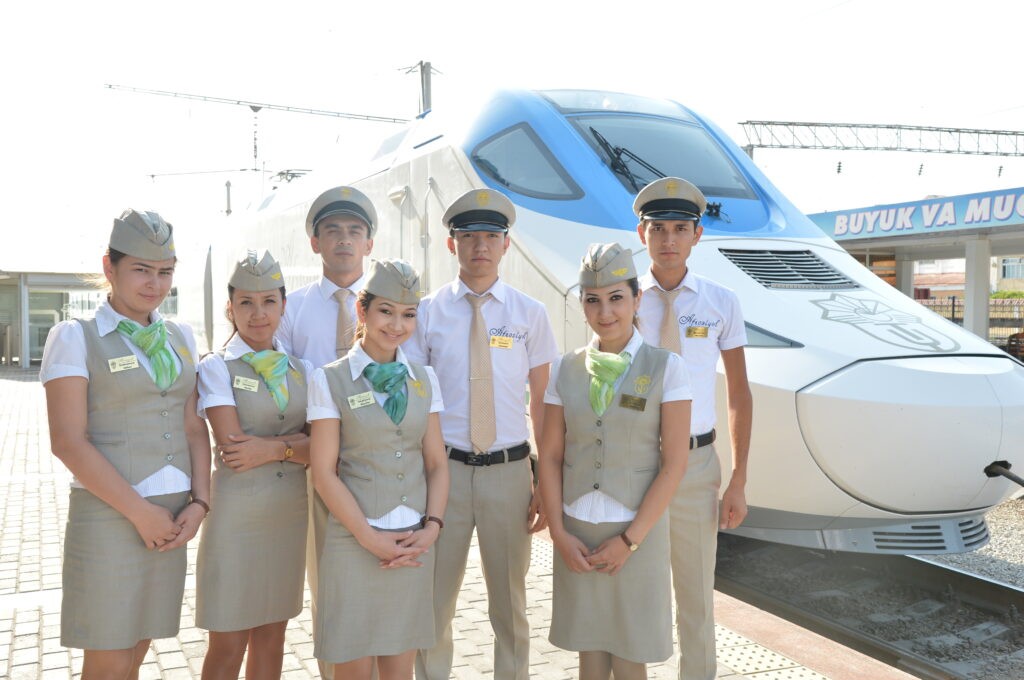
Six Hyundai Rotem high-speed trains made in South Korea will soon be launched between Tashkent and Khiva. The electric trains will have seven carriages, and will be able to carry 350 passengers at speeds of up to 250 kilometers per hour. To purchase the trains, Uzbekistan will use a $200 million, 35-year loan from the Economic Development and Cooperation Fund (EDCF) of the Republic of Korea. A feasibility study for the project is currently being drawn up. Uzbekistan had originally planned to purchase high-speed trains from Hyundai back in 2018, with the project estimated at $1 million. But the national rail company Uzbekistan Temir Yollari ended up instead signing a contract with the Spanish company Talgo, which manufactured the Afrosiyob trains currently in use in the country. A $162 million loan for electrification of the 465km Bukhara-Miskin-Urgench-Khiva railway line was approved by the Asian Development Bank (ADB) back in 2021. High-speed trains that will connect these cities will shorten the journey by two hours. The project was planned as part of the Central Asia Regional Economic Cooperation (CAREC) Corridor 2 program. It will link China and Europe through Central Asia and aims to boost the countries' cross-border trade. Uzbekistan is actively developing its tourism potential. Because of this, Uzbekistan Temir Yollari and the Italian company Arsenale Group are planning a luxury tourism train project. The train will have all the accoutrements for comfortable, five-star travel along the Silk Road along the Tashkent-Samarkand-Bukhara-Khiva-Tashkent route.

Tears and Laughter: An Evening at an Uzbek Theater

Tashkent, Uzbekistan - The action unfolds in the Soviet Union in the 1960s. An Uzbek man goes to Russia for compulsory military service and falls in love with a Russian woman. Back with her betrothed in his homeland, the Russian slowly wins over her recalcitrant mother-in-law and learns to love Uzbek culture. So goes the plot of “Uzbek Dance,” a play being performed in the colonnaded Uzbek National Academic Drama Theater in Tashkent, the capital. The tragicomedy made its debut in Uzbekistan in 2009 and has been re-staged several times, immersing audiences in Uzbek history and culture and making them laugh and cry. The Times of Central Asia attended a performance on March 9. So did hundreds of other people. Ticket prices in the Uzbek currency, the sum, cost the equivalent of about USD4 to USD5.60. Before the start, people in the atrium gazed at portraits of actors who helped to build the Uzbek theater scene over the last century. People mingle in the museum of the National Academic Drama Theater in Uzbekistan. Portraits of actors who contributed to the development of Uzbek theater in the past century are hung there. Photo: TCA   In the early days, the “Turon" troupe performed around Uzbekistan. The first performance of the theater group was held in 1913 in the garden of the 14th century Tashkent mausoleum of an Islamic leader, or sheikh. In 1918, the state took over the troupe. Written by Nurillo Abbaskhan, “Uzbek Dance” explores tension and reconciliation between the Russian woman and her Uzbek mother-in-law, whose verbal and cultural missteps make for mutual suspicion and comedy. The play invites reflection on the nuanced relationship between Russia and Uzbekistan today (at least 2% of Uzbekistan’s population are ethnic Russians, according to government data in 2021; the population is estimated today at nearly 37 million). There’s a dark side to the drama. The family saga happens against the backdrop of a real-life 1980s corruption scandal surrounding a campaign to supply more Uzbek cotton for the Soviet Union. Spectators await the performance of "Uzbek Dance," a play that has been staged in different productions several times since making its debut in 2009. Photo: TCA   The cotton campaign was marred by falsified production numbers and a backlash from Soviet officials who rounded up thousands of Uzbek people, prosecuting many on false charges. Additionally, pesticides took a devastating toll on the environment and workers’ health. In the play, the Uzbek man, Tursunboy, drives a tractor in the cotton fields. Eventually, he gets falsely accused in the purge and imprisoned. He eventually gets out of jail, but the harsh conditions and years of exposure to toxic chemicals have left him fatally ill. Then there is Panamaryova Maria Visilevna, who took the name Maryam after converting to Islam on the insistence of her Muslim mother-in-law, Kumri Aya. The two women don’t get along at first. But they get closer. Maryam, who gives birth to six children before Tursunboy’s decline, learns the Uzbek language, dances, hat-making...