• KGS/USD = 0.01144 0%
  • KZT/USD = 0.00216 0%
  • TJS/USD = 0.10659 0%
  • UZS/USD = 0.00008 0%
  • TMT/USD = 0.28530 0%
  • KGS/USD = 0.01144 0%
  • KZT/USD = 0.00216 0%
  • TJS/USD = 0.10659 0%
  • UZS/USD = 0.00008 0%
  • TMT/USD = 0.28530 0%
  • KGS/USD = 0.01144 0%
  • KZT/USD = 0.00216 0%
  • TJS/USD = 0.10659 0%
  • UZS/USD = 0.00008 0%
  • TMT/USD = 0.28530 0%
  • KGS/USD = 0.01144 0%
  • KZT/USD = 0.00216 0%
  • TJS/USD = 0.10659 0%
  • UZS/USD = 0.00008 0%
  • TMT/USD = 0.28530 0%
  • KGS/USD = 0.01144 0%
  • KZT/USD = 0.00216 0%
  • TJS/USD = 0.10659 0%
  • UZS/USD = 0.00008 0%
  • TMT/USD = 0.28530 0%
  • KGS/USD = 0.01144 0%
  • KZT/USD = 0.00216 0%
  • TJS/USD = 0.10659 0%
  • UZS/USD = 0.00008 0%
  • TMT/USD = 0.28530 0%
  • KGS/USD = 0.01144 0%
  • KZT/USD = 0.00216 0%
  • TJS/USD = 0.10659 0%
  • UZS/USD = 0.00008 0%
  • TMT/USD = 0.28530 0%
  • KGS/USD = 0.01144 0%
  • KZT/USD = 0.00216 0%
  • TJS/USD = 0.10659 0%
  • UZS/USD = 0.00008 0%
  • TMT/USD = 0.28530 0%

Viewing results 1873 - 1878 of 3582

What Does Raisi’s Death Mean for the Caspian Sea Region?

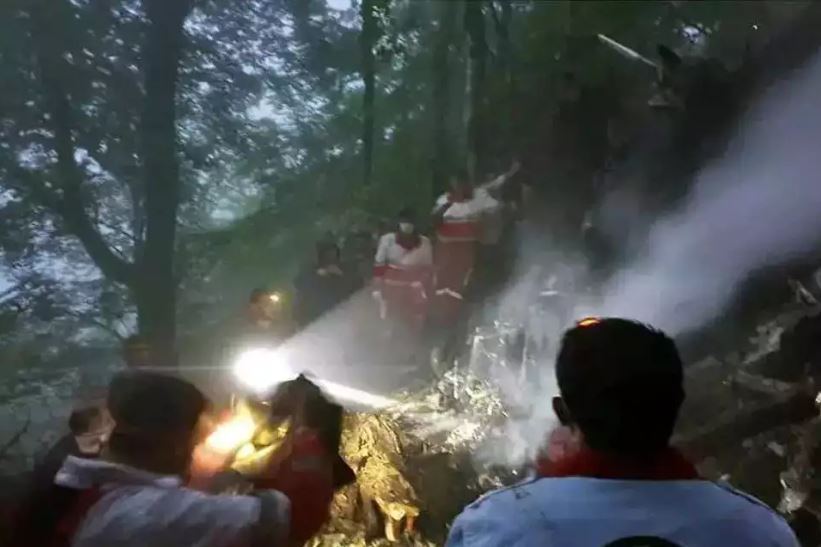
By Robert M. Cutler The death of Iranian President Ebrahim Raisi in a helicopter accident on May 19 will have significant effects on Iranian domestic politics and foreign policy. These include not only Iran's relations with Armenia and Azerbaijan directly, but also indirectly through the Trans-Caspian International Trade Route (TITR, also called the "Middle Corridor") and the International North–South Transit Corridor (INSTC). Despite conspiracy theories, the only reasonable alternative hypothesis to an accidental crash is that the pilot intentionally ran the helicopter into the mountain head-on at full speed. Both possibilities may be subsumed under the category "Act of God". Raisi was working to normalize relations with Azerbaijan and was seen as a potential - even likely - future Supreme Leader of Iran, succeeding the 85-year-old Ali Khamenei, who is in poor health. Now, however, it is not out of the question that his death leads to a reorientation of Tehran's foreign policy and a wave of radicalization. The outcome will depend upon the obscure machinations of the theocratic and security-service elite, for which the formal organizational and constitutional arrangements set the framework but do not determine the result. The Iranian president is not the most powerful individual in the country's political system, but he is still influential. Raisi had sought to improve ties with Azerbaijan, including water projects on the Aras River and discussions about transportation links. These initiatives may now face delays or even reversals. Yerevan's strategic significance for Tehran's relationship with Moscow and its broader regional ambitions will not diminish; indeed, their bilateral military-industrial cooperation has only grown since Russia's re-invigoration of its war of aggression against Ukraine in February 2022. At the same time, Tehran's relations with Baku are more complicated, for myriad present-day and historical reasons, not least but not only concerning the Azerbaijani minority in Iran.   The South Caucasus and Trans-Caspian Implications Armenia and Azerbaijan are nevertheless persevering in their bilaterally-based practical cooperation and peace negotiations, now proceeding without third-party mediation. The most recent high-level meeting in this process took place between their respective foreign ministers in Almaty on May 10–11. These significant discussions followed talks between them in Berlin in February of this year, and they took place in the context of ongoing efforts to delimit and demarcate the two countries' common border. Delimitation refers to drawing and describing lines on maps, whereas demarcation is the process of installing physical markers on the territory. Demarcation has already begun in the sensitive Tovuz region, and the Russian contingent assisting Armenian border guards under a bilateral agreement has already been withdrawn. In April, as a result of this process, Armenia returned four villages to Azerbaijan. Unresolved issues involve territorial claims against Azerbaijan in Armenia's constitution and the reopening of regional transit routes. Armenian Prime Minister Nikol Pashinyan's initiative for the necessary constitutional reforms, along with his border-demarcation initiatives and continuing peace negotiations, have provoked anti-government protests in Armenia, fueled by the irredentist and xenophobic segments of the diaspora, which are the best established, most...
Higher Education in Central Asia: Leaders and Outsiders

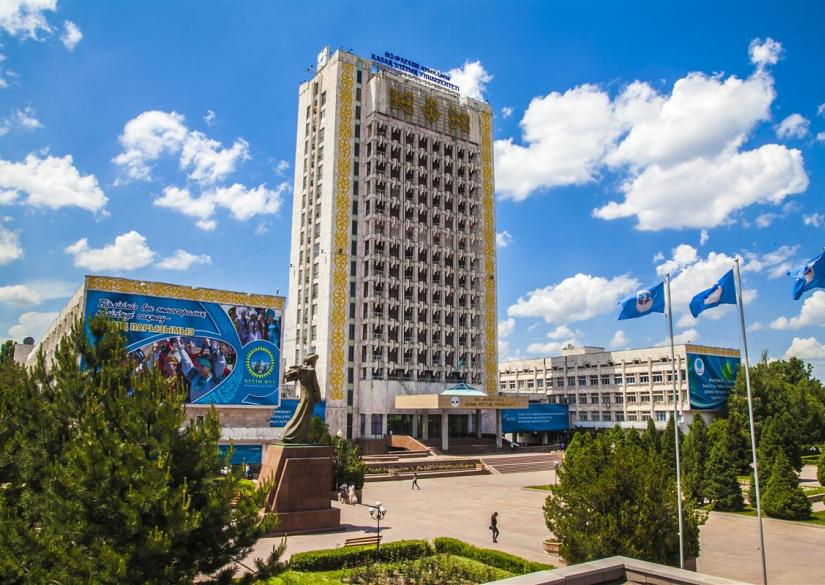
In June, it will be three years since the signing of a declaration at a forum held in the city of Turkestan between the heads of the Ministries of Education of Kazakhstan, Uzbekistan, Tajikistan, Turkmenistan, and Kyrgyzstan. According to the document, the Central Asian states agreed to expand cooperation and unite the scientific, intellectual, and creative potential of higher education institutions throughout the region. However, only Kazakhstan and Uzbekistan have made progress in terms of synergy during this time. The reason for this is the serious gaps between the Central Asian states in the level of provision of higher education for their citizens.   The pace of reform In the 1990s, the reform of education in Central Asia occurred at different rates. Although the Central Asian republics had similar problems at the time of the collapse of the Soviet Union, they began to address them depending on the degree of influence of global trends. For example, Kazakhstan signed the Bologna Declaration and joined the European Higher Education Area in 2010, while Turkmenistan switched to two-stage higher education under the "Bachelor's - Master's" system only in 2013. Some started organizing English-language curricula at their universities as soon as the early 1990s, such as Kazakhstan's KIMEP University or the University of Central Asia in Kyrgyzstan. Uzbekistan, on the other hand, only came around to the idea of the need for English-language education in the noughties. In the 2000s, universities established jointly with foreign partners, such as the Kyrgyz-Russian Slavic University and the Kazakh-British Technical University, began to open in the region. Uzbekistan was again somewhat late to the trend, first opening the International Westminster University (a branch of the University of London) and a branch of Turin Polytechnic University. In 2014, the first university established jointly with foreign partners from South Korea - Inha University, specializing in the training of IT specialists - appeared. Kazakhstan, Kyrgyzstan, and Uzbekistan are currently implementing reforms in the recognition of diplomas and attracting foreign employees and students, while Tajikistan and Turkmenistan are experiencing problems of a different nature related to low levels of enrollment in higher education.   Kazakhstan Kazakhstan has been the most successful nation in reforming higher education. Degrees have been reduced to four years, and the Unified National Testing (UNT) and credit system of education appeared, creating favorable conditions for accession to the Bologna Process in 2010. By 2016, almost every second Kazakhstani was studying at a higher education institution. Now, Kazakhstan has more than 120 universities. There are more than 600,000 students, and about 40% of Kazakhstanis are certified specialists. Kazakhstan's supremacy in this arena is confirmed by international rankings. For example, the international organization, Times Higher Education included four Kazakhstani universities in its rating for 2024: the Eurasian National University named after L.N. Gumilev; Satpayev University; the Kazakh National University named after Al-Farabi; Nazarbayev University (NU). Participating in these rankings for the first time, the latter was recognized as the best in Central Asia. NU is the first university of its...

The Outlook for Kazakhstan’s Rail Network

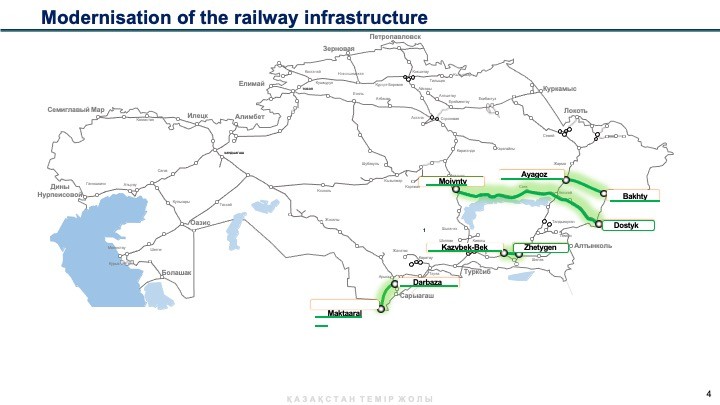
As a core infrastructure industry, railways play a strategic role in Kazakhstan’s economy. Today, over 50% of freight in the country is transported by rail, while the figure for passengers is 15%. Kazakhstan’s favorable geographical position between the largest producer of goods in the world, Asia, and the largest consumer, Europe, is spurring the development of transit freight transport and related income. However, government regulations and imperfect reforms have failed to reverse a degradation of Kazakhstan’s rail infrastructure and solve its capacity shortage problems. The robust rail network created during the Soviet period for a single national economy turned out to be ineffective under the new conditions of market dynamics. The country’s railway infrastructure, while reaching almost every region in Kazakhstan, meets neither current nor possible future needs of freight owners and has already nearly reached its limit in terms of throughput and processing capacity. The national railway carrier of both passengers and freight, Kazakhstan Temir Zholy (KTZ), cannot provide by itself the financial resources and investments at the scale needed to meet current and future challenges. The national budget is also unlikely to allocate such funding. A lack of prompt, large-scale modernization of key areas of rail transport, however, may hurt the country's economy.   Tentative sources of funding for improvements According to the Ministry of Transport’s plan for the modernization of rail infrastructure, 1,300 km of railway track is to be added by 2030, while 4,800 km of second track is to be constructed. The expected price tag for these additions is over $11 million. It is currently unclear where these funds will come from. There have been mentions of borrowing around $400,000 from the national pension fund. According to the Ministry of Transport’s modernization plan, private investments will also be a key source through public-private partnership projects (PPP). In recent years, state participation in financing the construction and reconstruction of sections of the rail network has been limited and paled in comparison to those involving road projects. As part of the Nurly Zhol (“Bright Path”) infrastructure initiative, $9.2 billion has been allocated for just two programs to develop roads versus only $16.1 million allocated for railways. Added to this is the involvement of KTZ in implementing major transport infrastructure projects – the Khorgos dry port, the Kuryk port ferry complex and more than 1,000 km of railway track built in recent years, among others – using borrowed funds. Thus, the company bears a considerable burden in terms of servicing and repaying loans already raised for these projects, which represent its long-term assets. Given this debt burden, it is clear that the rail industry remains underfunded.   Tariffs present a further dilemma Across the world, funding for the development of main rail networks is typically allocated from the national budget. In many European countries, for example, government funding covers up to 97% of operating and capital costs of rail infrastructure. Besides direct subsidies from the state, other sources of funds for modernizing and renewing rail infrastructure include bond...

One Dead and Six Missing in Turkmenistan Mudslides

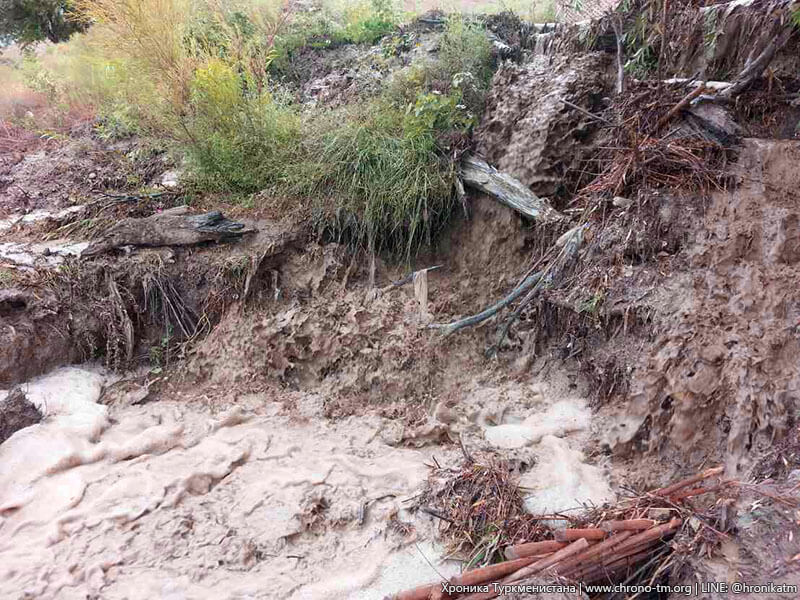
One soldier has been killed and six are missing during mudslides caused by recent heavy rains in Turkmenistan. It is being reported that the man died at the Serakhs border outpost in Akhal province. "On May 17, around 17:00 hours, seven soldiers from the 16-border outpost of the Border Troops connection in Serakhs [on the border with Iran] went missing. The body of one of them was found May 18. The searches for the other six soldiers continue," an anonymous source commented. "The search work is being carried out by the border troops' forces of the adjacent territories," the source said. Special means, such as drones or helicopters, are not involved in the search operations. The source adds that on the day of the incident, the soldiers were sent to repair the automobile roads next to the military unit, which were washed away by mud-flows. The Turkmen government is trying to stop information about the incident from being published, and "it is dangerous to ask and inquire about the details". But in conversations among themselves, servicemen are discussing that "sending soldiers in such weather to this area was a wrong decision and the cause of the accident was the negligence of the commanders and management of the border guard unit." "It was not possible to get comments on the disappearance of several soldiers and the death of at least one of them from the Turkmen authorities, including the aforementioned military unit," the source notes. For almost ten days, Turkmenistan’s capital Ashgabat has been flooded with rain, in what local meteorologists think have been the worst downpours since the 1970s. The rain has caused significant damage to the city’s infrastructure. The Akhal province has also been badly affected, with agricultural land flooded. Mud-flows hit the cities of Anev and Kahka, and in many areas electricity and part of the rail network were shut down. However, there have been no reports in Turkmen media about the rains and the damage they are causing.

Arrest Made in Connection with Bishkek Unrest

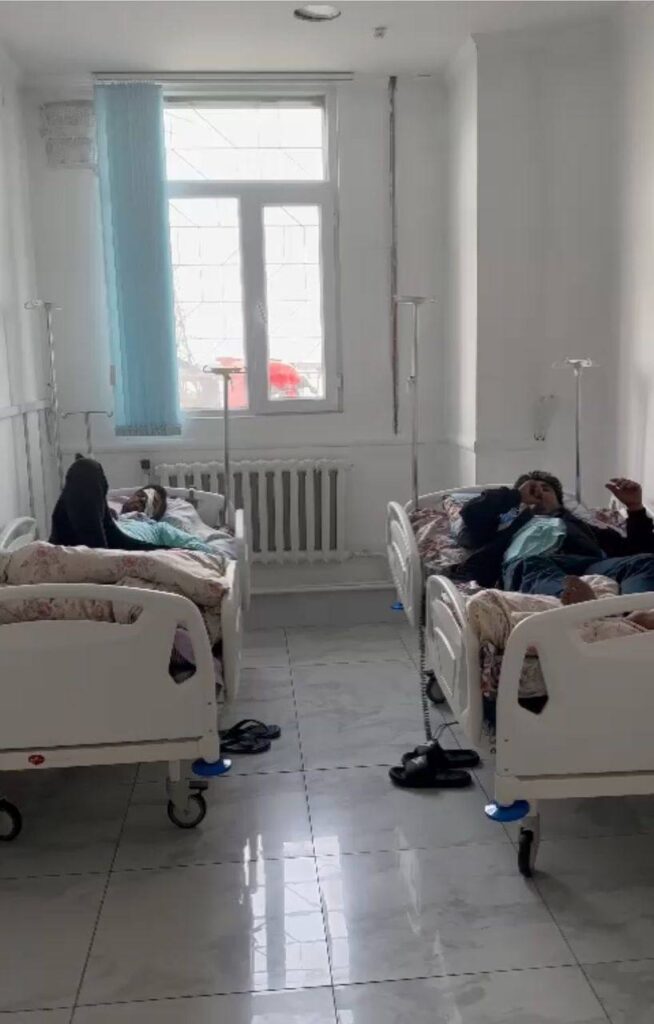
The Ministry of Internal Affairs of Kyrgyzstan has announced the detention and opening of a criminal case against a man suspected of beating foreigners during unrest which occurred on the night of May 18, leaving 41 people hospitalized. The suspect also allegedly transported people to places where foreigners lived during the events which transpired in the Kyrgyz capital. On May 18, 2024, a video showing the beating of foreign citizens began circulating on social media. The footage revealed an unidentified man of Asian descent, approximately 20-25 years old, wearing a beige hooded sweater, striking victims with his hands and feet on their faces and other body parts. The incident took place after four individuals broke into a house near the Dordoi Market. The accused assailant was identified on surveillance cameras located in the vicinity. “Four attackers arrived in a dark-colored Mercedes-Benz Sprinter on May 18 at 04:00 am.,” the Ministry’s statement reads. Investigations revealed that it is “registered to a resident of the Issyk-Kul region. The driver of the said car was Zhekshenbekov Azat, born in 1999, a native of the Issyk-Kul region, living in Bishkek, and an employee of a furniture workshop. The detainee was placed in the temporary detention center of the Bishkek City Internal Affairs Directorate.” The investigation is ongoing, with the authorities seeking to identify and apprehend the others involved. On Monday, President Japarov promised swift action should the events be repeated, stating that “Anyone, whether he is our citizen or a foreign citizen, who threatens the integrity of our state, organizes chaos, will be punished mercilessly.”

Kyrgyzstan’s President Warns of Swift Crackdown If Unrest Flares Again

President Sadyr Japarov of Kyrgyzstan on Monday has addressed the nation about recent unrest and anti-foreigner sentiment, saying “our hot-blooded youth” were led astray by inflammatory internet posts and warning of a crackdown if it happens again. Japarov spoke after a week of tension in Bishkek that began with a fight between local and foreign people at a hostel on May 13 and culminated with large crowds of angry Kyrgyz youths roaming intersections on the night of May 17-18. There were scattered attacks on foreigners, whose population includes students and workers from Egypt, Pakistan and other countries. Some people were hospitalized. Riot police were on standby as officials negotiated with the crowds and persuaded them to disperse peacefully. “Now, if such an event happens again, then the law enforcement agencies will switch to the method of dispersal by force from the first minutes. Thank God, now the power structures are not as weak as they used to be,” Japarov said. “Anyone, whether he is our citizen or a foreign citizen, who threatens the integrity of our state, organizes chaos, will be punished mercilessly.” Japarov said the demands of Kyrgyz youth for tough action against illegal migration were “certainly correct” and that the government had taken steps to address the problem. But he chastised those who were “led by the temptations of provocateurs” seeking to spread chaos. The president referred to “bloggers” trying to foment a “large-scale uprising in the crowd,” though he did not offer more details on the alleged agitators. Kyrgyzstan has experienced periodic unrest on a much bigger scale over the years, and three presidents have been ousted by uprisings since 2005. Japarov, who had been in exile and in prison, came to power in 2021 after being freed by supporters whose protests against a disputed election toppled the previous government. The Central Asian country had been known for a lively media scene and other relative freedoms in a region with authoritarian traditions. Japarov has rolled back some of those rights, tightening control over foreign funded non-governmental organizations despite international concerns and increasing pressure on some media critical of the government. Japarov said law enforcement officials arrested “the perpetrators” of the May 13 brawl and appealed to the country to consider the damage that the unrest of the last week can do to tourism and the economy, as well as the nation’s interaction with the world. He noted that more than one million Kyrgyz citizens live abroad (the total population is about seven million), and that the number of working migrants in Kyrgyzstan is 5,322 people and foreign students number 42,620. “We should be happy about that,” he said.