• KGS/USD = 0.01144 0%
  • KZT/USD = 0.00203 0%
  • TJS/USD = 0.10429 -0.38%
  • UZS/USD = 0.00008 0%
  • TMT/USD = 0.28490 0%
  • KGS/USD = 0.01144 0%
  • KZT/USD = 0.00203 0%
  • TJS/USD = 0.10429 -0.38%
  • UZS/USD = 0.00008 0%
  • TMT/USD = 0.28490 0%
  • KGS/USD = 0.01144 0%
  • KZT/USD = 0.00203 0%
  • TJS/USD = 0.10429 -0.38%
  • UZS/USD = 0.00008 0%
  • TMT/USD = 0.28490 0%
  • KGS/USD = 0.01144 0%
  • KZT/USD = 0.00203 0%
  • TJS/USD = 0.10429 -0.38%
  • UZS/USD = 0.00008 0%
  • TMT/USD = 0.28490 0%
  • KGS/USD = 0.01144 0%
  • KZT/USD = 0.00203 0%
  • TJS/USD = 0.10429 -0.38%
  • UZS/USD = 0.00008 0%
  • TMT/USD = 0.28490 0%
  • KGS/USD = 0.01144 0%
  • KZT/USD = 0.00203 0%
  • TJS/USD = 0.10429 -0.38%
  • UZS/USD = 0.00008 0%
  • TMT/USD = 0.28490 0%
  • KGS/USD = 0.01144 0%
  • KZT/USD = 0.00203 0%
  • TJS/USD = 0.10429 -0.38%
  • UZS/USD = 0.00008 0%
  • TMT/USD = 0.28490 0%
  • KGS/USD = 0.01144 0%
  • KZT/USD = 0.00203 0%
  • TJS/USD = 0.10429 -0.38%
  • UZS/USD = 0.00008 0%
  • TMT/USD = 0.28490 0%

Viewing results 1993 - 1998 of 3126

Uzbekistan Modernizing Defense Industry

The President and Commander-in-Chief of the Armed Forces of Uzbekistan, Shavkat Mirziyoyev on January 11th visited the production cluster of the Defense Industry Agency located in the Tashkent region. At the initiative and under the supervision of Mirziyoyev, Uzbekistan is reforming and modernizing its armed forces to fully meets modern requirements and guarantee the nation’s independence and sovereignty, the presidential press service stated. For this purpose, in January 2023 the President transferred the Defense Industry Agency to the Ministry of Defense. The Agency has since launched the production of several types of military-technical products, supplied modern equipment to troops, and updated existing models of weapons. An equipment repair plant and the central storage base for automotive equipment of the Ministry of Defense have been transferred to a cluster territory. Enterprises located in the new cluster repair and modernize weapons and military equipment, radars, optical devices, and artillery. During his visit, Mirziyoyev was shown samples of upgraded equipment and weapons, and devices that are part of the “Soldier of the Future” complex, which was developed by specialists to meet global standards. The President also launched an enterprise producing a new range of military hardware. Established in 1992 following the collapse of the Soviet Union, January 14th will mark the 32nd anniversary of the founding of the Armed Forces of the Republic of Uzbekistan. Twelve months military conscription is compulsory for males at the age of 18, with the option of paying for a shorter service of one month whilst remaining in the reserves until the age of 27. Upon completion of their service, privileges in employment and admission to higher educational institutions are granted. The armed forces constitute an acting personnel of 48,000, with 20,000 in reserve. In the 2024 Military Strength Ranking released by the Global Firepower, Uzbekistan ranked 65th among the 145 countries listed. Elsewhere in Central Asia, Kazakhstan ranked in 58th place, Turkmenistan 83rd, Kyrgyzstan 100th, and Tajikistan 107th. Despite the modernization drive, however, this position marked a decline in Uzbekistan’s ranking, down from 62nd place in the previous year.

Uzbekistan to Boost Development in Karakalpakstan

On January 10th, the President of Uzbekistan, Shavkat Mirziyoyev held a government meeting on the socioeconomic development of the Republic of Karakalpakstan, an impoverished autonomous region in the northwest of the country. In recent years, Karakalpakstan has made headlines as a politically volatile area which saw deadly unrest break out in July 2022. The region has also suffered acutely from the consequences of the Aral Sea ecological disaster. At the meeting, it was stated that over the past seven years, Karakalpakstan has undergone unprecedented changes. Twelve of the autonomous republic’s fifteen districts were formerly subsidized by the central government, but now they have begun to bring in revenues to the state budget. More than 5,300 projects have been implemented through investment. Forest plantations covering 1.8 million hectares have been sown on the desiccated bed of the former Aral Sea, and living conditions for 51,000 families have been improved. In Karakalpakstan, there are incentives and opportunities for doing business which are not available in any other parts of Uzbekistan - taxes on profit, turnover, land and property have all been lowered twofold, and social tax has been set at 1%. Over the past two years, seven decrees and resolutions have been adopted on the development of industry, agriculture, entrepreneurship, and the improvement of the infrastructure in mahallas (local neighborhoods) in Karakalpakstan, with a total of $400 million and 250 billion Uzbek som have been allocated for these purposes. Today, the population of Karakalpakstan exceeds two million, and every year 50,000 citizens enter the region’s labor market. At the meeting, the President emphasized the need to train them in modern professions, and provide them with gainful employment and decent conditions. In 2024, the government plans to attract $2.1 billion in foreign investment to the region. This injection of funds will help implement 206 projects in industry, 240 in the services sector, and 34 in agriculture, creating 13,000 jobs. The head of state pointed out that tourism can become a driver of economic growth in Karakalpakstan, and set the task of developing a program to kick-start tourism in the region, with a focus on environmental, ethnographic, and pilgrimage destinations. The establishment of a tourism cluster and attracting foreign experts to the local tourist industry were also discussed.

USAID Provides $1.4 Million to Strengthen Central Asia’s Power Sector

On January 10th, the United States Agency for International Development (USAID) handed over $1.4 million of modern energy sector management equipment and software to the Coordinating Dispatch Center (CDC) Energia in Tashkent. This cutting-edge technology will allow CDC Energia’s dispatchers to display relevant information for maintaining the region’s energy regime, the U.S. Embassy in Uzbekistan reported. This investment will enhance Central Asia’s ability to manage and monitor electricity flows to ensure the stability of the power grid and foster increased opportunities for the regional trade in electricity. It will also modernize the work of CDC Energia as a regional Systems Operator, which faces an increasing number of challenges in connection with the intensive integration of renewable energy sources and the introduction of the electricity and capacity market in Central Asia. The Deputy Minister of Energy of Uzbekistan, Akmal Jumanazarov, U.S. Ambassador to Uzbekistan, Jonathan Henick, USAID/Uzbekistan Mission Director, David Hoffman, and the Head of CDC Energia, Khamidilla Shamsiev attended the ceremony. Ambassador Henick emphasized Uzbekistan’s prominent role in the region’s energy sector, stating that “Uzbekistan plays a vital role in the region due to its central geographical location, abundant energy resources, and key infrastructure. As Central Asia’s power system expands and becomes more complex, innovative solutions are imperative for energy sector development planning. Together, we are creating the foundation for a sustainable future to address the complex challenges of energy transition.” This delivery of modern equipment was possible through USAID’s flagship regional energy project, Power Central Asia. With a total budget of $39 million over a five-year period, the project aims to improve the performance of the energy sector, expedite clean energy development, and enhance energy security and resiliency through greater regional connectivity and expanded cross-border electricity trade. Through this project alone, USAID has leveraged $2.2 billion in clean energy investments and facilitated the installation of 2,241 megawatts of clean energy capacity across Central Asia to date. The equipment’s installation is a significant step to achieving a more resilient and efficient energy landscape in Uzbekistan and the broader region, aligning with the high-level priorities outlined in the joint decree by the presidents of the U.S. and all five Central Asian nations. In a joint statement, the parties made it known that “Through C5+1 programs such as USAID Power Central Asia, the United States and Central Asian states will unlock the economic benefits of regional clean energy trade and a clean economy future.”

UNDP Supports Kyrgyzstan in Biodiversity Conservation and Sustainable Ecosystem Management

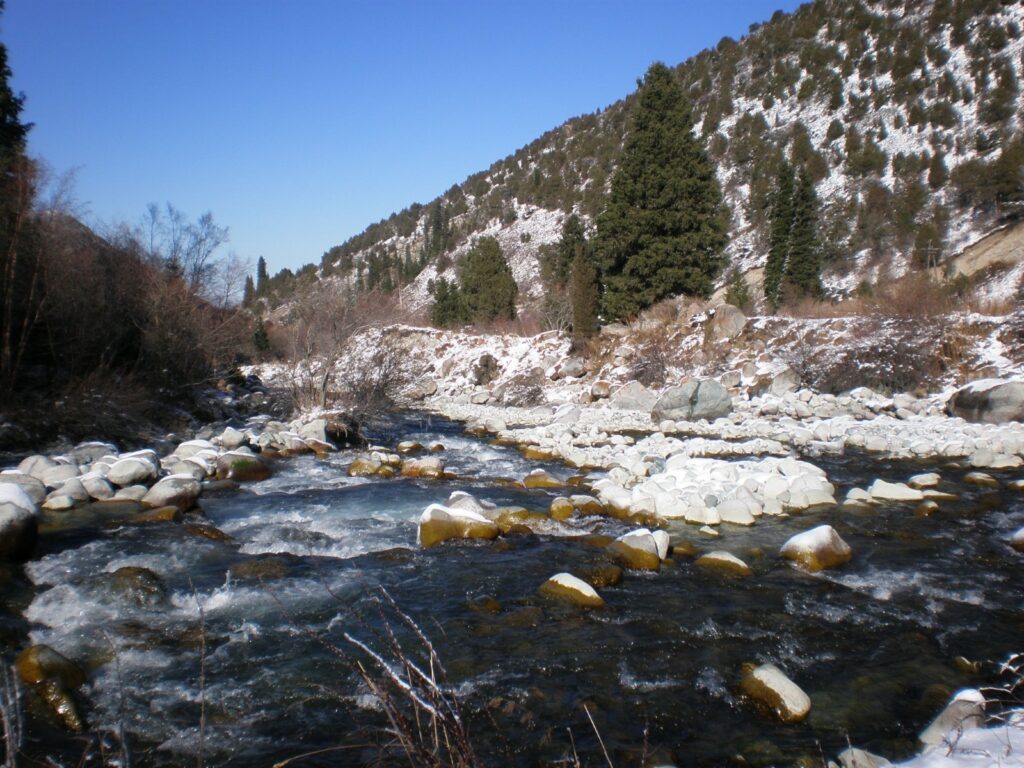
The United Nations Development Program (UNDP) has helped Kyrgyzstan to conclude the biodiversity conservation project in Western Tian Shan, and is now launching a new initiative for the integrated management of valuable mountain ecosystems of Pamir-Alai. Speaking at an event marking the conclusion of the Western Tian Shan project, Alexandra Solovieva, UNDP Resident Representative in the Kyrgyz Republic, highlighted the achievements of the project, which supported the adoption of a landscape approach, advocating for a holistic ecosystem strategy in biodiversity and natural resource planning, management, and monitoring. The project’s key achievements included strengthening protected area management, implementing high conservation value forest concepts, flagship species monitoring, revising sector legislation, expanding local community rights and opportunities, and promoting environmental education initiatives, UNDP Kyrgyzstan reported on January 9th.[/vc_column_text][vc_single_image image="13449" img_size="full" el_class="scond-image" parallax_scroll="no" woodmart_inline="no"][vc_column_text woodmart_inline="no" text_larger="no"]The Western Tian Shan project focused on preserving globally significant biodiversity and the sustainable management of land and forest resources. A major achievement was the establishment of the Chatkal ecological corridor and the Kabak buffer zone, spanning 89,000 hectares, linking three protected areas - Alatai, Sary-Chelek, and Padysha-Ata - and facilitating natural wildlife migration. Recently adopted as the national symbol of the Kyrgyz Republic, the snow leopard, an ecosystem indicator species, plays a vital role in the health of entire ecosystems and in determining the well-being of its prey species. UNDP's conservation initiatives focus on preserving and increasing the snow leopard population, with recent data showing a population of 15 to 28 individuals in the Western Tian Shan mountains. Efforts to enhance conservation effectiveness include reducing ecosystem pressure through alternative income sources, local development, and expanding socioeconomic opportunities for residents near protected areas. The project supported income-generating initiatives in pilot villages of the Toktogul and Toguz-Toro districts, with a focus on expanding socio-economic opportunities for women and youth. "Our current country program aligns closely with national priorities, focusing on low-carbon sustainable development and reliable ecosystem preservation. UNDP will continue to support Kyrgyzstan in sustainable ecosystem management and biodiversity conservation,” stated Solovieva, adding that in January 2024, “we will launch the Pamir-Alai project, funded by the Global Environment Facility, reaffirming our dedication and partnership in preserving natural heritage and invaluable ecosystems."

New City, Alatau, Established in Kazakhstan

By a decree dated January 9th, President Tokayev ordered that the village of Zhetygen in the Ili district of the Almaty region be classified as a city of regional significance and renamed Alatau. The new city is located 15 km from Almaty, and has a total area of 88,000 hectares and a population of 52, 700. The Ministry of National Economy said that the creation of the new city will allow for the modernization of road networks, engineering and social infrastructure, create new jobs, attract investment and technology, develop entrepreneurial activity, and increase tax revenues. A decision to expand the territory of the local Special Economic Zone (SEZ) from 30,000 to 96,500 hectares and rename the G4 City SEZ to the Alatau SEZ was also approved. As a result, the entire territory of Alatau and part of the nearby city of Konaev are now included within the territory of the SEZ. The SEZ is expected to host more than 170 projects with the creation of 110,000 new jobs, the ministry said. In November 2023, the Alatau project was discussed at a meeting chaired by Prime Minister Alikhan Smailov. According to the plan, the new city should become a magnet for attracting domestic and foreign investments and an international business hub operating to world standards based on the experience of such international business centers as Dubai, Singapore, and Tianjin. The development of Alatau will also facilitate an increase in the level of trade and investment interaction with China and Central Asian countries, launch new production and commercial projects, and introduce best practices in various spheres and industries. For this purpose, conditions and incentives will be provided to attract investments and for doing business in the new city and its SEZ, including tax and customs.

President’s First Book Presented in Turkmenistan

A presentation of the first book by President of Turkmenistan, Serdar Berdimuhamedov, entitled “Youth is the support of the Motherland,” took place on January 6th at the Institute of International Relations of the Ministry of Foreign Affairs. The Chairman of the Central Council of the Youth Organization of Turkmenistan, Yazpolat Keriev, and the Minister of Foreign Affairs, Rashid Meredov, delivered speeches at the event. As was emphasized in the speeches, as part of the national youth policy of the President, the necessary opportunities and conditions are being created for the fruition of a worthy generation based on traditions inherited from their ancestors, and comprehensive support is being provided to the youth, who represent the future of the country. It was also stated that the literary work of the head of state, dedicated to the activities and achievements of Turkmen youth in socioeconomic, cultural, humanitarian and other spheres, is intended to become a reference book for the current and future generation of young Turkmen citizens, the Foreign Ministry reported. At the same time, special emphasis was placed on the implementation of the “Strategy for International Youth Cooperation for 2023-2030,” which aims to contribute to the active involvement of Turkmen youth in international events. From the first years of Turkmenistan's independence, each of the country's leaders has published books they claimed as coming from their pen. The father of the current president, former President Gurbanguly Berdimuhamedov, is the most prolific author. Since coming to power in 2007, a government portal claims that the “esteemed” Gurbanguly Berdimuhamedov senior has written over 60 books, including a novel about his father. During the reign of the Berdimuhamedovs, the books of the first President of Turkmenistan, Saparmurat Niyazov, were removed from educational curricula and state propaganda, Radio Azadliq reported.[/vc_column_text][vc_single_image image="13432" img_size="full" el_class="scond-image" parallax_scroll="no" woodmart_inline="no"][vc_column_text woodmart_inline="no" text_larger="no"]Winning the Presidential election of 1992 unopposed, Niyazov declared himself “Turkmenbashi,” meaning Father of the Turkmen. Eager to foster a cult of personality despite his reclusive nature, statues of Niyazov began to sprout across the country. Atop a rocket-shaped monument called the Arch of Neutrality, his twelve-meter-tall golden likeness rotated to face the sun, or as a Turkmen saying had it, the sun revolved to face him. “My countrymen worshiped Lenin, then Stalin,” Niyazov ruminated at the time. “Now it’ll either be Allah or myself. It had better be me.” Despite 58% of his people living below the poverty line, by the time of Niyazov’s death there were 10,000 new statues in Turkmenistan, largely of him and his family. Now, dumped in the outskirts, the Arch of Neutrality stands with the lift upon its marble frame long since out of commission and its ticket booth closed.