• KGS/USD = 0.01144 0%
  • KZT/USD = 0.00211 0%
  • TJS/USD = 0.10523 0%
  • UZS/USD = 0.00008 0%
  • TMT/USD = 0.28530 0%
  • KGS/USD = 0.01144 0%
  • KZT/USD = 0.00211 0%
  • TJS/USD = 0.10523 0%
  • UZS/USD = 0.00008 0%
  • TMT/USD = 0.28530 0%
  • KGS/USD = 0.01144 0%
  • KZT/USD = 0.00211 0%
  • TJS/USD = 0.10523 0%
  • UZS/USD = 0.00008 0%
  • TMT/USD = 0.28530 0%
  • KGS/USD = 0.01144 0%
  • KZT/USD = 0.00211 0%
  • TJS/USD = 0.10523 0%
  • UZS/USD = 0.00008 0%
  • TMT/USD = 0.28530 0%
  • KGS/USD = 0.01144 0%
  • KZT/USD = 0.00211 0%
  • TJS/USD = 0.10523 0%
  • UZS/USD = 0.00008 0%
  • TMT/USD = 0.28530 0%
  • KGS/USD = 0.01144 0%
  • KZT/USD = 0.00211 0%
  • TJS/USD = 0.10523 0%
  • UZS/USD = 0.00008 0%
  • TMT/USD = 0.28530 0%
  • KGS/USD = 0.01144 0%
  • KZT/USD = 0.00211 0%
  • TJS/USD = 0.10523 0%
  • UZS/USD = 0.00008 0%
  • TMT/USD = 0.28530 0%
  • KGS/USD = 0.01144 0%
  • KZT/USD = 0.00211 0%
  • TJS/USD = 0.10523 0%
  • UZS/USD = 0.00008 0%
  • TMT/USD = 0.28530 0%

Viewing results 469 - 474 of 3379

Kazakhstan’s Strong Bond Sale Anchors Regional Capital Markets

The Republic of Kazakhstan once again captured global investor attention with its highly successful sovereign bond issuance in October 2025, underscoring its status as Central Asia’s benchmark borrower. The Ministry of Finance sold a $1.5 billion five-year Eurobond at a record-low 4.412% yield, about 85 basis points above U.S. Treasuries, after attracting nearly $4.4 billion in orders from a geographically diverse investor base spanning Europe, the U.S., and Asia - almost three times oversubscribed. Strong Market Reception and Competitive Pricing This five-year issue achieved the lowest yield in Kazakhstan’s independent history and was one of the tightest-priced five-year sovereign bonds among investment-grade peers, pricing inside higher-rated Poland, and modestly above Qatar’s comparable five-year yield. The Finance Ministry credited the result to investors’ confidence in Kazakhstan’s macroeconomic management and fiscal credibility, strengthened by the country’s ongoing budget and tax reforms enacted in 2025. These measures have reinforced perceptions of policy discipline and institutional reliability, enabling Kazakhstan to secure funding at exceptionally low costs. June 2025: Dual-Tranche Success In June 2025, Kazakhstan executed a $2.5 billion dual-tranche Eurobond comprising a 7-year $1.35 billion note at 5.0% and a 12-year $1.15 billion note at 5.5%. Investor demand was exceptional, with orders roughly twice the issue size from global funds across Europe, the U.S., and Asia. The transaction priced tightly against comparable BBB sovereigns, reflecting market confidence in Kazakhstan’s low debt levels, ample reserves, and consistent reform momentum. Together, the June and October offerings have demonstrated Kazakhstan’s ability to tap international markets repeatedly in 2025 on favorable terms, even amid global volatility. Fiscal Strength and Ratings Support Kazakhstan’s strong market performance rests on a robust fiscal foundation and solid credit ratings. Fitch Ratings has affirmed Kazakhstan’s long-term foreign-currency issuer default rating at ‘BBB’ with a Stable Outlook, noting the country’s low government debt - around 25% of GDP - and substantial sovereign net foreign assets supported by the National Fund and foreign-exchange reserves. Combined reserves and National Fund assets total roughly $93 billion, equal to about 31% of GDP. S&P Global Ratings, which upgraded Kazakhstan’s outlook to Positive in August 2025, forecasts 5.5–5.6% GDP growth and has commended progress in deficit reduction and institutional reform. The agency noted that Kazakhstan’s new Budget and Tax Codes, along with tighter fiscal rules and improved oversight of quasi-fiscal activities, are expected to strengthen fiscal consolidation and institutional transparency. These reforms, together with the country’s moderate debt burden and substantial sovereign assets, have helped sustain investor confidence. Kazakhstan’s ability to issue Eurobonds at yields tighter than some A-rated peers demonstrates that credibility in practice, and market participants now view the country as the regional benchmark sovereign in Central Asia. Uzbekistan: Reform Progress, Higher Yields In February 2025, Uzbekistan raised roughly $1.5 billion equivalent through a multi-currency sovereign issue — a $500 million 7-year U.S. dollar tranche at 6.95%, a €500 million 4-year euro tranche at 5.1%, and a UZS 6 trillion 3-year local-currency note at 15.5%. Total demand reached about $4.2 billion, nearly 2.8 times oversubscribed, underscoring strong...
Tajikistan and the Taliban – Talking and Fighting

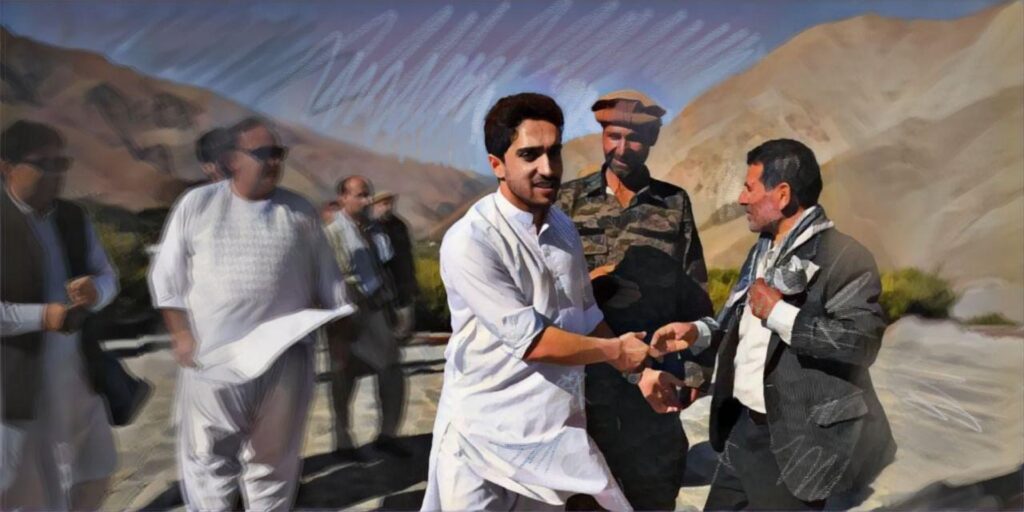
Peaceful coexistence is turning out to be complicated for Tajikistan and the Taliban government in Afghanistan. The Tajik government has viewed the Taliban as a threat since the militant group appeared in Afghanistan in the mid-1990s. But now that modest efforts are underway to establish some sort of amicable ties, there has been an uptick of violence directly involving the two sides along the Tajik-Afghan border. Let’s Keep This Between Us Tajikistan is the lone government in Central Asia that remained hostile to the Taliban after the latter returned to power in Afghanistan in August 2021. In the weeks that followed, the Taliban again exerted control over Afghanistan, and the Tajik government and the Taliban sent reinforcements to their common border. Russia and Pakistan had to intervene to ease tensions. The other Central Asian states, Kazakhstan, Kyrgyzstan, Turkmenistan, and Uzbekistan, have all established a business relationship with the Taliban government since the Taliban again seized control, but Tajikistan has remained aloof. Which is why the visit of Muhammad Yusuf Vafo, the governor of Afghanistan’s northern province of Balkh, to the Tajik capital Dushanbe on October 23 came as such a surprise. The Tajik government did not say anything about Vafo’s trip. The independent Tajik news agency Asia-Plus cited Afghan media as reporting on the visit, during which Vafo met with the head of Tajikistan’s National Security Committee (GKNB), Saimumin Yatimov. Vafo and Yatimov reportedly discussed ways to improve ties in a variety of spheres and pledged not to let any “hostile elements” use their territory to plot or carry out attacks on the country. An estimated several hundred Jamaat Ansarullah militants of Tajik origin continue to operate in Afghanistan. The group allied with the Taliban during the last years foreign forces were in Afghanistan, propping up the government of Ashraf Ghani, and stayed in Afghanistan after the Ghani government fell. Jamaat Ansarullah fighters were among the reinforcements the Taliban sent to the Tajik border during the weeks of tension in late 2021. There were reports soon after the Taliban returned to power that Tajikistan was aiding the National Resistance Front (NRF), a mainly ethnic Tajik group of former government soldiers who continue to wage a guerrilla campaign against the Taliban. NRF leader Ahmad Masoud, the son of the legendary Afghan field commander and ethnic Tajik, Ahmad Shah Masoud, has been in Dushanbe several times since August 2021, and there was a report that the NRF opened an office in Dushanbe in October that year. Shortly after Vafo’s visit to Dushanbe, Taliban sources in Balkh Province told the Pakistani-based Khorasan Diary website that Tajik authorities had banned the NRF, but the Tajik authorities stated that no such decision was made. Yatimov’s meeting with Vafo was not the first time the Tajik GKNB chief had met with Taliban representatives. In September 2024, Yatimov went to Kabul to hold security talks with Taliban officials, though the Tajik authorities never confirmed that meeting. Both parties are concerned about militants from the Islamic State of...

Rare Earth Diplomacy: Critical Minerals Set to Top Agenda at C5+1 Summit

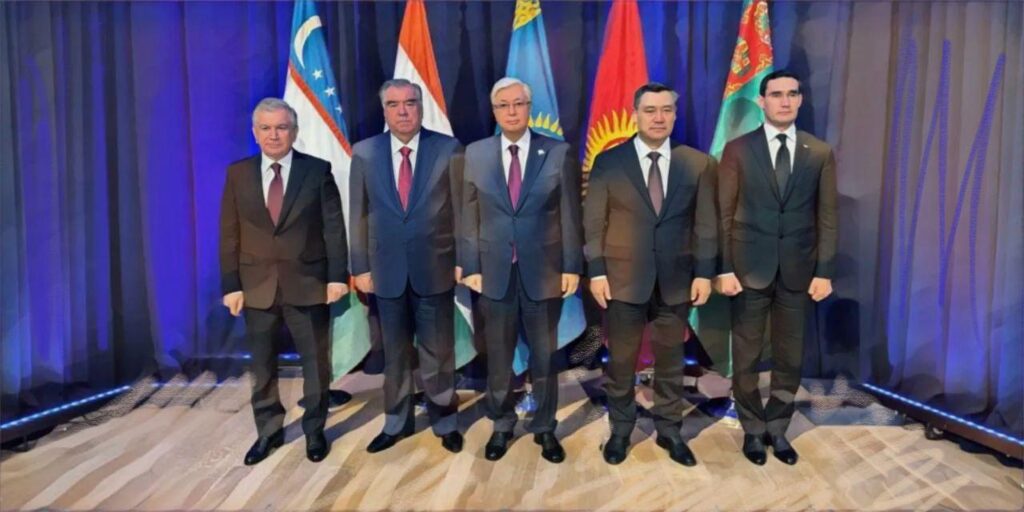
The announcement of an upcoming C5+1 summit in Washington between the United States and the Central Asian republics has taken much of the regional and U.S. political establishment by surprise. A swift visit by U.S. Special Envoy for South and Central Asia Sergio Gor and Deputy Secretary of State Christopher Landau to Uzbekistan and Kazakhstan was seemingly necessary to coordinate the summit’s agenda. Notably, Kazakhstan appears prepared to play a leading role on one of the summit’s most pressing issues. The summit, scheduled for November 6 in Washington, was first revealed through media channels before being confirmed through official correspondence between Kazakh President Kassym-Jomart Tokayev and U.S. President Donald Trump. Uzbek media later confirmed the meeting, citing sources within the administration of President Shavkat Mirziyoyev, and this was followed by Kyrgyzstan's President Sadyr Japarov. It is notable that shortly after Tokayev’s correspondence with Trump became public, the Kazakh president held a phone call with Russian President Vladimir Putin. Officially, the two discussed Tokayev’s upcoming visit to Moscow. This was their second such call in less than two weeks, the previous taking place on October 14. There is speculation that the Washington summit may have been a key topic of discussion. During meetings in Tashkent with Gor and Landau - Uzbekistan being the first stop on their tour - Mirziyoyev reportedly discussed a broad set of topics. However, the issue of “critical materials,” particularly rare earth metals, stood out. It is increasingly clear that rare earths will be a central focus of Trump’s engagement with Central Asian leaders. [caption id="attachment_38242" align="aligncenter" width="1600"] Sergio Gor and Christopher Landau at the Shymbulak ski resort in Almaty; image: Akorda[/caption] Trump has previously drawn attention for high-stakes diplomacy involving rare earth metals, including a controversial deal with Ukrainian President Volodymyr Zelensky and later discussions with Russian President Vladimir Putin in Anchorage. Most recently, during the first leg of his Asia tour, Trump met with Japanese Prime Minister Sanae Takaichi and concluded a rare earth metals agreement, despite the challenges associated with extracting these materials, which are often found underwater. Against this backdrop, Kazakhstan appears well-positioned to take the lead in terms of rare earth elements. President Tokayev first proposed developing rare earth metal deposits in his September 2023 address, “The Economic Course of Fair Kazakhstan.” In 2024, Kazakh geologists identified 38 promising solid mineral deposits, including the Kuyrektykol site in the Karaganda region, which contains substantial reserves. Tokayev returned to the issue in January 2025, during an extended government meeting, criticizing the cabinet for delays and emphasizing Kazakhstan’s untapped potential in rare earth extraction and processing. In April, during the Central Asia-European Union summit, Tokayev met with European Commission President Ursula von der Leyen, who congratulated him on the discovery of a major deposit in Kazakhstan. The topic also featured at the Central Asia-Italy summit in May, where Tokayev proposed creating a regional research center to consolidate data on rare earth deposits across Central Asia. “The creation of joint ventures, technology transfer, and the localization...

China’s Visa Diplomacy: A Strategic Tool for Influence in Central Asia

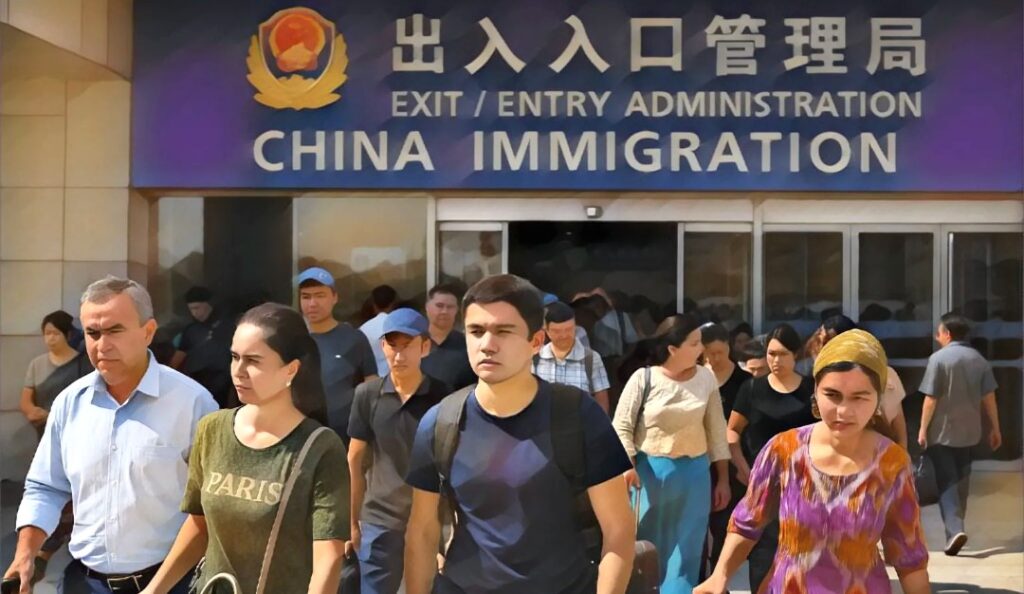
As China’s international influence expands, it is refining its approach to global engagement by combining economic strength with crafted instruments of soft power. While in the past China primarily relied on Confucius Institutes and educational exchange programs to promote cultural understanding and strengthen people-to-people connections, its strategy has evolved into a more diverse and multidimensional framework. In recent years, Beijing has expanded its soft power tools to include Luban Workshops, which transfer technical skills and vocational expertise, and medical cooperation initiatives that enhance China’s reputation as a reliable development partner. These efforts have allowed China to project an image of a country that not only builds infrastructure and invests in markets, but also contributes to human capital and social welfare across the developing world. A newer element in this evolving strategy is visa diplomacy. In a global environment where mobility and connectivity shape international relationships, easing travel restrictions has become a subtle yet effective way to deepen engagement.  As of mid-2025, China has signed or implemented visa-free or unilateral visa exemption agreements with 75 countries, covering tourism, business, family visits, and transit travel. This list includes key Central Asian partners such as Kazakhstan and Uzbekistan, both of which maintain mutual visa exemption agreements with Beijing. The expansion of China’s visa diplomacy brings significant benefits for both China and its Central Asian partners, particularly Kazakhstan and Uzbekistan. For Beijing, this initiative advances two major objectives, strengthening its economy and enhancing its soft power.  On the economic side, visa-free agreements allow China to attract a larger and more diverse group of international visitors, expanding its tourism market beyond traditional regions. While travelers from Europe, Asia, and North America remain the most frequent visitors, there has been a noticeable increase in arrivals from Central Asia.  This trend is already visible in official figures, as in 2024 China recorded 20.1 million foreign entries under visa-free arrangements, representing 74.6 percent of total arrivals and marking a growth of more than 112 percent compared with 2023. Visa-free diplomacy also supports China’s broader development goals by making tourism one of the essential drivers of economic growth and a reliable source of revenue. In 2025, China’s tourism sector, including both domestic and international travel, is expected to contribute a record 13.7 trillion yuan to the national economy.  This figure exceeds pre-pandemic levels by more than ten percent and sustains approximately 83 million jobs. As China expands its visa agreements with Central Asian countries, it aims to attract more visitors from the region, increase tourism income, and deepen regional economic ties. Beyond its economic value, visa-free diplomacy enhances China’s soft power across Central Asia. By facilitating more frequent travel and cultural interaction, China has the opportunity to build a more positive image among Central Asian societies and to strengthen long-term people-to-people relations.  These exchanges can create familiarity and trust, which are essential elements of sustainable diplomacy. When combined with other soft power tools such as educational programs, technical cooperation, and media outreach, visa diplomacy helps China build a balanced...

Gor and Landau Tour Central Asia Amid Rising Stakes

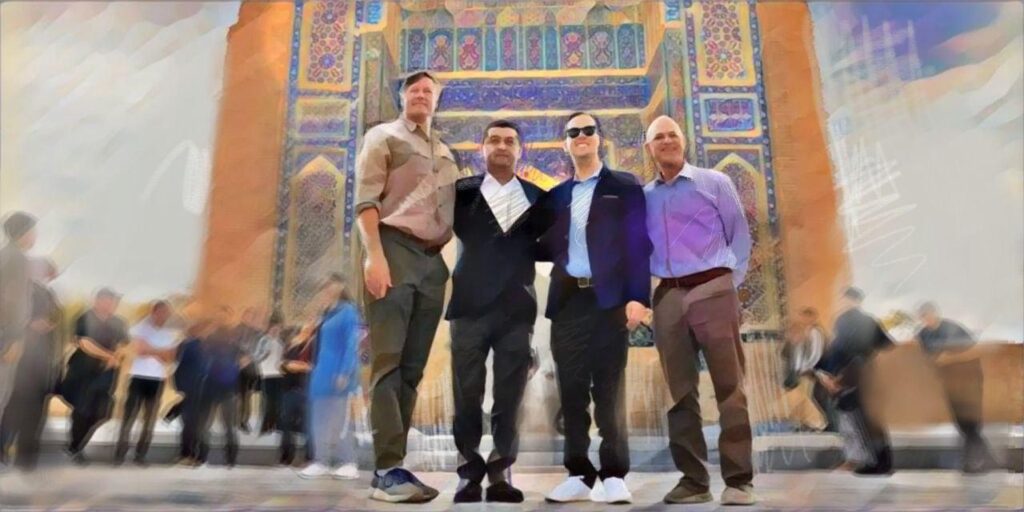
On October 25, U.S. Special Representative for South and Central Asia Sergio Gor and Deputy Secretary of State Christopher Landau arrived in Tashkent on an official visit. The visit to Central Asia was not publicly scheduled in advance, with news of the trip only emerging a few days beforehand. In Uzbekistan, the high-ranking visitors were received with full state honors. A motorcycle escort and blocked roads in the capital are typically reserved for visits by heads of state. Although the American delegation’s visit to Uzbekistan ended by Monday evening, local media coverage remained scant. Apart from posts on the U.S. Embassy in Uzbekistan’s Telegram channel, almost no media outlets covered the event. On the evening of October 25, Gor and Landau held productive talks with representatives of U.S. companies about numerous opportunities to strengthen mutual prosperity. Afterwards, they traveled to Samarkand, where they toured the city often referred to as the pearl of Central Asia. On October 26, the visitors held fruitful talks with Foreign Minister Saidov, thanking him for his leadership and hospitality throughout the visit. His efforts, they noted, are elevating the strategic partnership between the U.S. and Uzbekistan to a new level. The delegation also held “productive” talks with Ministers Bobir Islamov and Laziz Kudratov on expanding trade and investment ties. By Monday evening, Gor and Landau had arrived in Almaty, Kazakhstan. As the largest city in the country, Almaty is also one of Central Asia’s key business hubs. According to sources, the agenda in Kazakhstan includes meetings with business leaders and a cultural program. As in Uzbekistan, there was no official information about the visit released on Monday. This may, however, be because Monday was a national holiday - Republic Day – an event which President Donald Trump extended his congratulations to mark, stating that ““The United States values ​​our close economic and security ties with Kazakhstan and looks forward to further strengthening our expanded strategic partnership in the coming year.” Secretary of State Marco Rubio also sent his “congratulations to the people of Kazakhstan.” By all indications, the lightning-fast visit by the senior U.S. delegation is linked to the recently announced C5+1 summit in Washington on November 6. Beyond cultural sightseeing, the talks reportedly covered cooperation in rare earth mineral processing and other sensitive areas. Recently, U.S. interest in the countries of the region has expanded significantly. While China and, traditionally, Russia are considered the main players in the region, Europe and the U.S. are increasingly seeking a firmer foothold in Central Asia’s strategic landscape. Recent global conflicts have exposed major powers’ dependence on raw materials and logistics routes. The search for new corridors and suppliers now seems both logical and urgent. Sanctions on Russia have also had a direct impact on regional economies, requiring swift responses. The C5+1 format presents an ideal framework for launching coordinated political and business cooperation. Yet, it’s essential to recognize the significant disparities among Central Asian countries. Kazakhstan is the region’s financial heavyweight. According to the IMF, Kazakhstan’s GDP per capita...

Tokayev Backs Azerbaijan to Join Central Asia-U.S. Summit

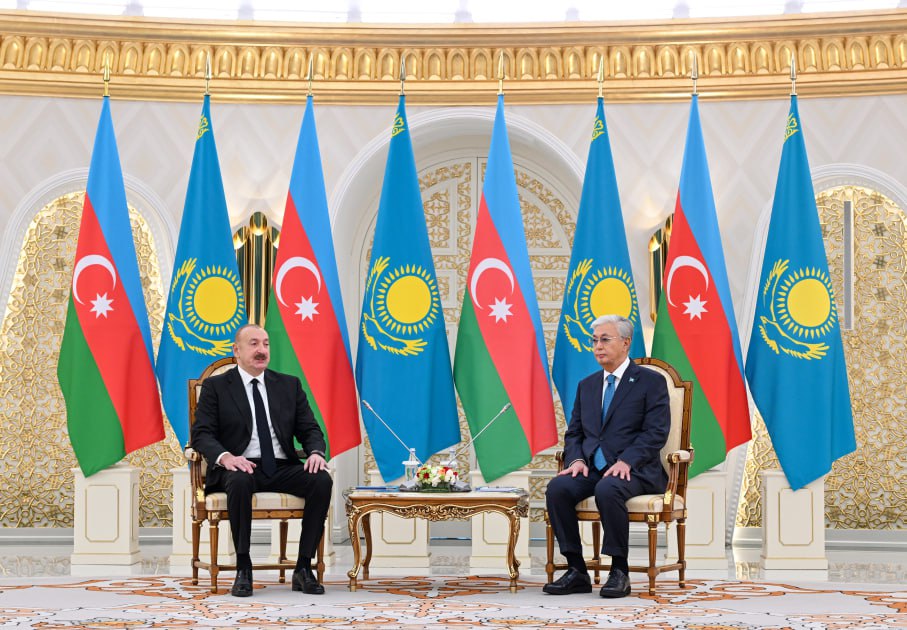
Kazakhstan’s President Kassym-Jomart Tokayev has said he would welcome Azerbaijan’s participation in the upcoming Central Asia-U.S. Summit in Washington. In an exclusive comment to Azerbaijani outlet Minval Politika, Tokayev praised Azerbaijan’s regional role and even called the country a “natural part of Greater Central Asia.” “I consider Azerbaijan’s participation in such an important forum desirable. Given its energy resources, favorable geographic location, strategic vision, and the political will of President Ilham Aliyev, this country plays a crucial role in the South Caucasus and beyond, essentially becoming a regional transport, logistics, and energy powerhouse,” Tokayev said. “Azerbaijan can be considered a natural part of Greater Central Asia. I also consider President Donald Trump’s initiative to hold a summit in Washington in the very near future to be very timely and worthy of support. I am confident this event will be productive and mutually beneficial,” the Kazakh leader noted.  The planned summit on November 6 falls under the C5+1 format that brings together the U.S. and the five countries of Central Asia. It will mark the first such gathering held in Washington, after an initial presidential meeting took place on the sidelines of the UN General Assembly in 2023. Donald Trump has formally invited the leaders of Kazakhstan, Kyrgyzstan, Tajikistan, Turkmenistan, and Uzbekistan to attend. The meeting will coincide with the tenth anniversary of the C5+1 diplomatic platform, which was launched in 2015 to deepen cooperation between Central Asia and the U.S. on security, economic and other issues. Tokayev’s remarks about Azerbaijan reflect a growing view that Azerbaijan is increasingly integrated with Central Asia. In recent years, Baku has been invited to Central Asian heads-of-state consultative summits as a special participant, underscoring what analysts call the “growing importance of the South Caucasus as a gateway for Central Asia to European markets”. During the most recent Central Asia leaders’ meeting in Astana in August, Azerbaijan was designated a key partner in regional initiatives, and Aliyev stressed that Azerbaijan and the Central Asian countries “represent a single historical, cultural, and geopolitical space” with deep-rooted ties. That brotherly affinity is reinforced by Turkic cultural links and mutual strategic interests. Tokayev himself, in talks with Aliyev, has called Azerbaijan “a regional power” and “a fraternal state” for Kazakhstan. Azerbaijan indeed wields significant influence as an energy and transport hub connecting Eurasia. The country is a major oil and gas producer that has steadily expanded exports to Europe, and it anchors the Trans-Caspian trade routes linking China and Central Asia to the West via the Caucasus. Since Russia’s 2022 invasion of Ukraine disrupted traditional east–west corridors, the so-called Middle Corridor -- running from Central Asia across the Caspian Sea through Azerbaijan -- has taken on greater importance. Kazakhstan and Azerbaijan have positioned themselves as “key actors” in this reconfigured Eurasian logistics network that bypasses Russian territory. The United States is also paying close attention to these routes: officials have indicated that the Washington summit will spotlight development of the Trans-Caspian corridor, with the U.S. “keen to promote logistics...