• KGS/USD = 0.01144 0%
  • KZT/USD = 0.00216 0%
  • TJS/USD = 0.10698 0%
  • UZS/USD = 0.00008 0%
  • TMT/USD = 0.28530 0%
  • KGS/USD = 0.01144 0%
  • KZT/USD = 0.00216 0%
  • TJS/USD = 0.10698 0%
  • UZS/USD = 0.00008 0%
  • TMT/USD = 0.28530 0%
  • KGS/USD = 0.01144 0%
  • KZT/USD = 0.00216 0%
  • TJS/USD = 0.10698 0%
  • UZS/USD = 0.00008 0%
  • TMT/USD = 0.28530 0%
  • KGS/USD = 0.01144 0%
  • KZT/USD = 0.00216 0%
  • TJS/USD = 0.10698 0%
  • UZS/USD = 0.00008 0%
  • TMT/USD = 0.28530 0%
  • KGS/USD = 0.01144 0%
  • KZT/USD = 0.00216 0%
  • TJS/USD = 0.10698 0%
  • UZS/USD = 0.00008 0%
  • TMT/USD = 0.28530 0%
  • KGS/USD = 0.01144 0%
  • KZT/USD = 0.00216 0%
  • TJS/USD = 0.10698 0%
  • UZS/USD = 0.00008 0%
  • TMT/USD = 0.28530 0%
  • KGS/USD = 0.01144 0%
  • KZT/USD = 0.00216 0%
  • TJS/USD = 0.10698 0%
  • UZS/USD = 0.00008 0%
  • TMT/USD = 0.28530 0%
  • KGS/USD = 0.01144 0%
  • KZT/USD = 0.00216 0%
  • TJS/USD = 0.10698 0%
  • UZS/USD = 0.00008 0%
  • TMT/USD = 0.28530 0%

Viewing results 1021 - 1026 of 2528

Kazakhstan’s Strategic Stand: Navigating BRICS Amidst Geopolitical Tensions

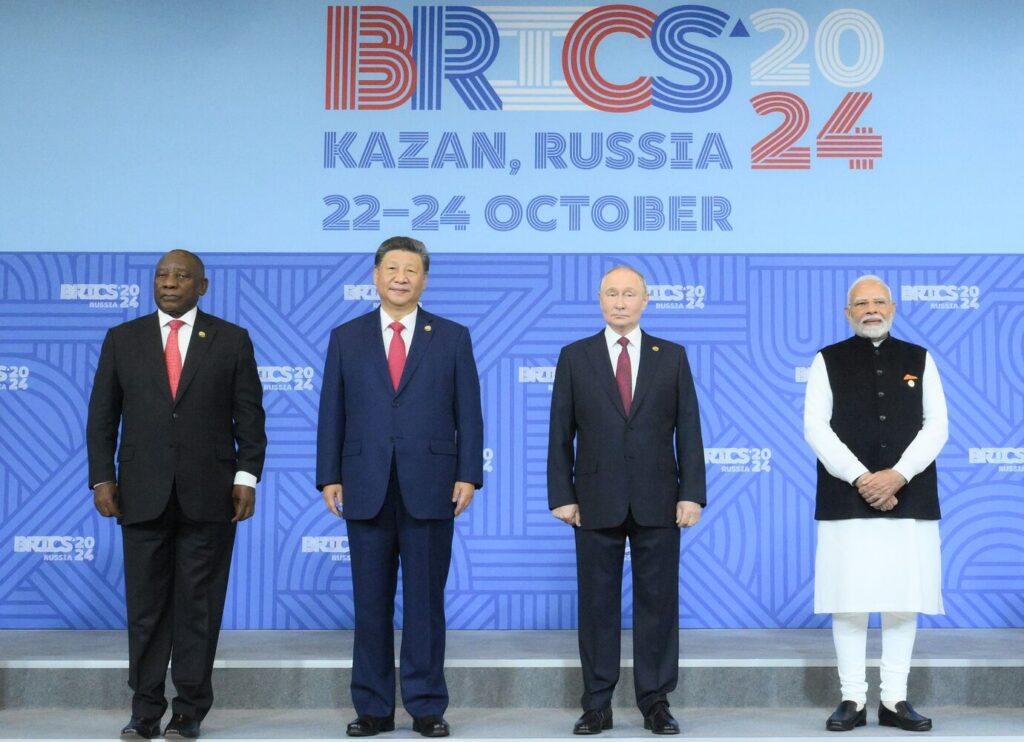
In recent days, BRICS - an intergovernmental organization comprising Brazil, Russia, India, China, South Africa, Iran, Egypt, Ethiopia, and the UAE - has become one of the most critical topics on the Eurasian region's information agenda. Russian propaganda has presented the BRICS summit, which is taking place in Kazan, as a global event. However, the press secretary of Kazakhstan's president, Kassym-Jomart Tokayev, has stated that the republic has no plans to apply for BRICS membership in the foreseeable future, which has caused an adverse reaction in the Russian media, and led to a seemingly retaliatory Russian ban on Kazakhstan's agro-products. The Kazakhstani side, represented by the expert community, has tried to explain that its reasoning is based not only on Astana's national interest, but also on its obligations to its partners in Central Asia. Perhaps the most convincing argument is that the C5+1 mechanism is effective as a format for the region's interactions with the outside world. Therefore, it is not worth breaking this mechanism. No Central Asian country besides Kazakhstan has been invited to join BRICS, but Astana cannot afford to damage the established alliance by creating the conditions for distrust from its neighbors; Central Asia has already gone through a period of distrust. At the same time, rejecting the idea of joining BRICS, where India, Russia, Brazil and China are the founding members, does not unduly affect Kazakhstan's interactions with these powers. Kazakhstan works with China and Russia within the framework of the SCO (Shanghai Cooperation Organisation) and EAEU (Eurasian Economic Union), and has signed multiple partnership and alliance agreements with Beijing and Moscow. In other words, the information hysteria that Kazakhstan will exit Russia's sphere tomorrow and join the "Global West" (a term used in the Russian media) has no basis in reality. At the same time, however, it is evident that most Central Asian countries are trying to distance themselves from Russia as much as possible, maintaining cooperation only along certain economic lines. Even banks in Kyrgyzstan, a republic maximally dependent on Moscow on several essential issues, have stopped working with Russian banks. The Kazakhstan Stock Exchange, meanwhile, recently announced the end of cooperation with the sanctioned Moscow Stock Exchange. Moreover, Rosselkhoznadzor's ban on imports of a wide range of agro-industrial products from Kazakhstan, if not a response to the refusal to join the BRICS, clearly hints that behind the scenes, economic relations between Astana and Moscow are not all that smooth. Another argument against joining BRICS was voiced not just within Kazakhstan, but also by Russian experts. Despite the organization's purportedly representative nature, which includes countries with a combined population of 3.5 billion people (45% of the Earth's population), the association has no structure. Russian analysts opposed to the Kremlin believe that BRICS is a club where one can come, sabre-rattle at the West, conclude bilateral agreements, and forget about everything until the next summit. No coordinating center monitors the implementation of any agreements reached. BRICS was conceived as an intercontinental organization, uniting similar economies in volume and GDP. Thus, it initially included Brazil, representing...

Tajikistan Has Baked the World’s Tallest National-Themed Cake

In Dushanbe, 15 pastry chefs and representatives of the World Federation of Restaurant Sports (WFRS) from Kyrgyzstan, Russia, and Tajikistan set a world record by making a cake weighing 200 kg and 2.10 meters high. This culinary masterpiece became the world's tallest nationally-themed cake, which was confirmed by the Eurasian Rating Agency (ERA). The cake was transported by truck to Abulkasim Ferdowsi Park and placed on a decorated table. A copy of the 45-centimeter-high Ismoil Somoni monument was placed on the cake, and the confectionery had a square base with a side of 1.1 m. The cake was decorated with gingerbread figures of Tajikistan's landmarks, national ornaments, and more than 300 marshmallow elements stylized as watermelons, melons, grapes, and other fruits. Pastry chef Natalie Vee said the cake is designed for 100-200 people. The team created it in four days, using 160 eggs, 25 kg of sugar, about 45 kg of sugar paste, several kilograms of flour, and about 30 liters of juice. “We have set records in Russia, Africa, and Europe. This is the first record for Tajikistan, and I hope it will remain for a long time,” said Alexander Rabinovich, chairman of the ERA's Service and Hospitality Committee and WFRS secretary general. He explained that the cake preparation coincided with World Chef's Day and the national holiday Mehrgon. On that day, Ferdowsi Park also became the center of Mehrgon celebrations, where a harvest and culinary fair was organized, offering vegetables, fruits, honey, and drinks from different regions of Tajikistan. Two cake records stand out for their impressive scale and global attention. The tallest cake, created in Indonesia for a Christmas event in Jakarta in 2008, reached an astounding 33 meters. Equally remarkable is the record for the longest cake, stretching 5,300 meters, made in India in 2020. Both cakes captivated international audiences with their sheer size and uniqueness.

Kazakhstan and Afghanistan Discuss Transport Links for Trade with China

At a meeting in Almaty on October 21, Kazakhstan's Deputy Prime Minister Serik Zhumangarin and Afghanistan's Minister of Industry and Commerce Nuriddin Azizi addressed the logistics of transportation of goods from China to Afghanistan and back through Kazakhstan. In June, Kazakhstan’s President Kassym-Jomart Tokayev announced that his country had removed the Taliban from its list of terrorist organizations in a move to develop trade and economic ties with Afghanistan. In late August, Kazakhstan’s Foreign Ministry accredited a chargé d’affaires of Taliban-led Afghanistan to expand trade, financial, and humanitarian cooperation between the two countries. As the Kazakh Ministry of Trade and Integration reported, one critical issue is the reverse loading of railcars and containers on their way back from Afghanistan. To reduce the cost of logistics, Kazakhstan is considering loading empty railcars with Afghan fruits and vegetables, persimmons, beans, and other food products for delivery to Kazakhstan. Bauyrzhan Urynbasarov, managing director of Kazakhstan Temir Zholy (KTZ), the country's national railway company, proposed two options for reverse loading empty containers and railcars. The first is a circular train route: container trains traveling from China through Kazakhstan to Afghanistan are loaded with Afghan goods bound for China. From there, they pass through the port of Karachi in Pakistan before returning to China. In the second route, trains reach Afghanistan, where they are reloaded and loaded with Afghan goods, then return to Kazakhstan, where, after unloading, they are packed with Kazakh goods and go to China. Zhumangarin proposed that the Afghan side use the capacities of the Kazakh terminal in the Chinese dry port in Xi'an, the Kazakh-Chinese logistics terminal in the port of Lianyungang, and the terminal currently under construction in the dry port of Urumqi in China’s Xinjiang. The parties also agreed to organize an interregional Kazakh-Afghan forum, where the provinces of Afghanistan and the regions of Kazakhstan could discuss cooperation projects. According to Kazakh statistics, trade turnover between Kazakhstan and Afghanistan amounted to $330.7 million from January to August 2024. Exports from Kazakhstan to Afghanistan totaled $316.5 million, including flour, sunflower oil, natural gas, and fertilizers. Afghanistan's exports reached $14.1 million, mainly mineral water, fruits, juices, and aluminum products. The Afghan delegation arrived in Almaty on October 20 to participate in an exhibition of Afghan food and industrial products.

Foreign Companies to Invest in Waste Recycling Plants across Uzbekistan

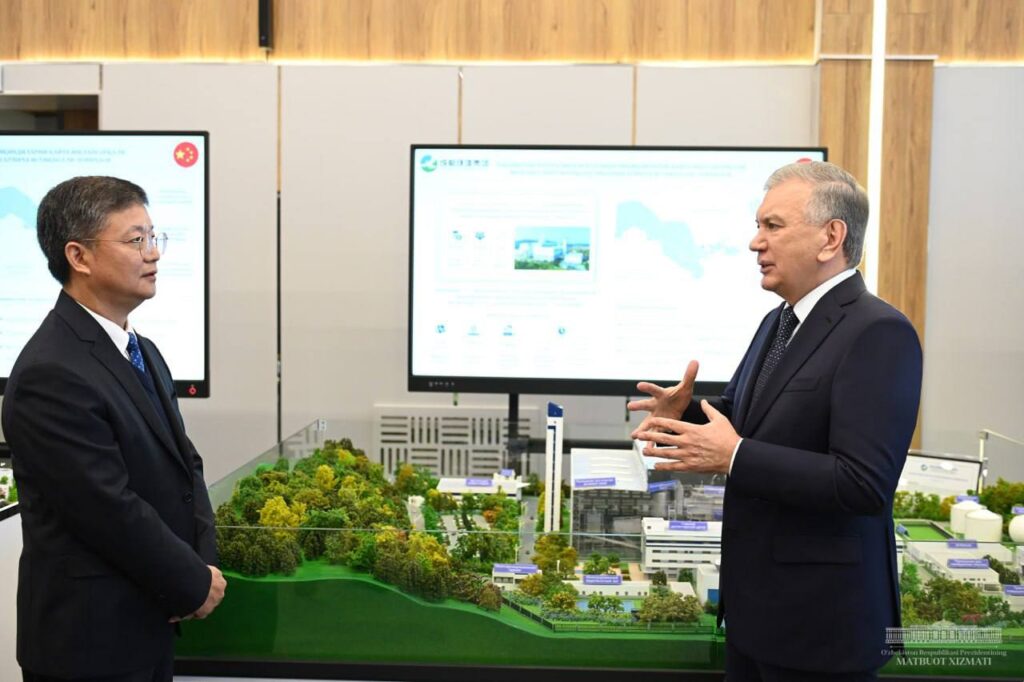
On October 21, Uzbekistan President Shavkat Mirziyoyev attended a presentation on new projects for recycling household waste into electricity. As  reported by the president’s press service, Uzbekistan produces 14 million tons of solid waste annually, but only 4-5 percent is recycled. As a consequence, over 7 million tons of greenhouse gases and 43,000 tons of toxic substances formed at waste landfills are annually emitted into the atmosphere and penetrate the soil. To resolve the problem, the Ministry of Ecology, Environmental Protection, and Climate Change has prepared several projects with foreign investors. The plan is to build waste incineration plants across Uzbekistan and process landfill gases at the Akhangaran landfill, with a total investment of about $1.3 billion. A Chinese company, CAMC Engineering, will invest $350 million in constructing two waste incineration plants in the Andijan and Tashkent regions, capable of processing 4,000 tons of waste daily and generating 630 million kilowatt-hours of electricity annually. Another Chinese company, Shanghai SUS Environment, plans to invest $310 million in building two plants in the Samarkand and Kashkadarya regions to process 3,000 tons of waste daily and generate 480 million kilowatt-hours of electricity annually. The United Arab Emirates Group is to invest $200 million in a plant in the Bukhara and Navoi regions to process 1,500 tons of waste daily and generate 363 million kilowatt-hours of electricity annually, and Sejin (Republic of Korea) will invest $55 million in the construction of a 16-megawatt electricity plant in the Akhangaran district of Tashkent to generate electricity from landfill gases. The combined projects, to be implemented between 2025-'27,  are predicted to burn over 4.7 million tons of solid municipal waste annually and generate 2.1 billion kilowatt-hours of electricity worth $97 million, saving  152 million cubic meters of natural gas and reducing greenhouse gas emissions by 2.4 million tons. Back on September 26, the President of Uzbekistan established the Agency for Waste Management and Circular Economy Development aimed to introduce modern methods of collecting, sorting, and recycling waste and producing alternative energy, raw materials, and organic fertilizers. Eco-industrial zones are also to be created on landfill sites across Uzbekistan.

Kyrgyzstan and Russia Set to Expand Cooperation

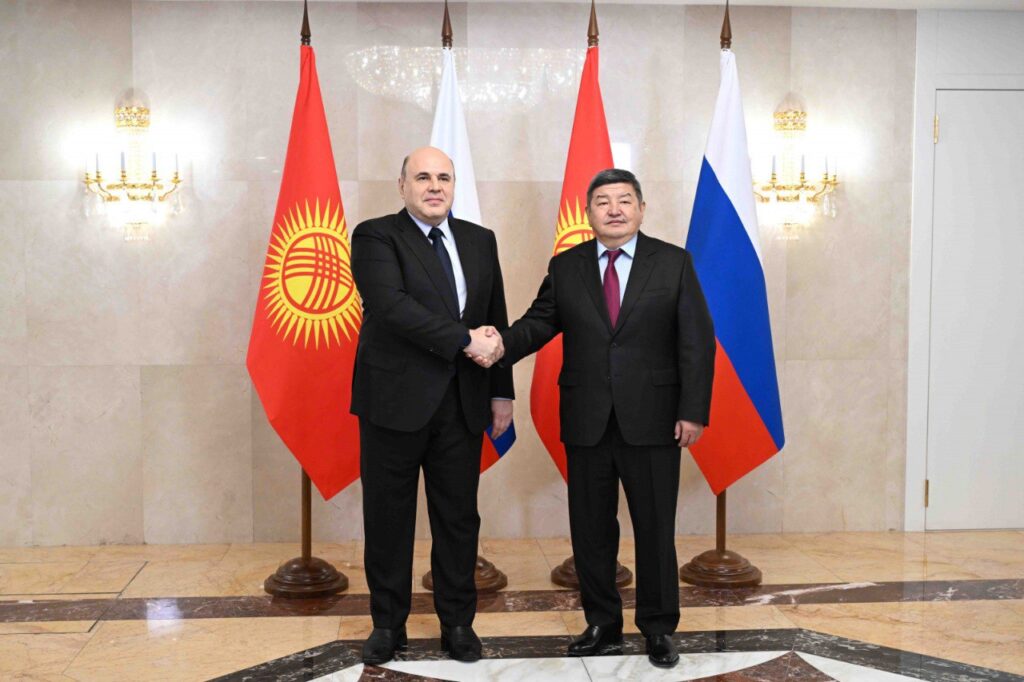
On October 21, in Moscow, Akylbek Japarov, the Chairman of Kyrgyzstan's Cabinet of Ministers, and Mikhail Mishustin, the Chairman of the Russian Government, chaired a joint meeting of the governments of both countries. Japarov's visit was planned to coincide with the centenary of the formation of the Kara-Kyrgyz Autonomous Region, and also with the beginning of the Days of Culture of Kyrgyzstan in Russia. “The establishment of the Kara-Kyrgyz Autonomous Region in 1924 as part of the Russian Soviet Federative Socialist Republic, followed by the formation of the Kyrgyz Autonomous Soviet Socialist Republic in 1926 and later the Kyrgyz Soviet Socialist Republic in 1936, was of colossal importance for our people, becoming the foundation of the sovereign Kyrgyz Republic. The friendship between the Kyrgyz and Russian peoples has been forged over the centuries, has gone through difficult times, but has given many examples of devotion and loyalty,” Japarov said. Noting that Kyrgyz-Russian relations have elevated to the status of "deepened relations" of alliance and strategic partnership, Japarov stated: "We are very pleased that Russian private businesses and investors have paid attention to Kyrgyzstan's possibilities and have intensified their work. We are always open to Russian investments and are ready to provide maximum assistance in implementing investment proposals." Mishustin in turn expressed Russia’s interest in further developing bilateral cooperation in all areas. "During the first eight months of this year, [Kyrgyz-Russian] trade turnover has grown by 16 percent. The share of the ruble in mutual settlements has reached almost 90 percent. We want to maintain this trend to ensure stable and predictable conditions for doing business," Mishustin said.

Warren Buffett’s Companies Expand Investment in Uzbekistan

Uz500, a wealth advisory and private sector development organization focused on Uzbekistan, Eurasia, and the wider Global South, is to analyse direct foreign investments in Uzbekistan, starting with billionaire Warren Buffett. Since 1965, Buffett has transformed Berkshire Hathaway into a trillion-dollar company, primarily investing in American businesses. Currently, Berkshire owns stakes in eight non-US companies, including five major Japanese firms and China's BYD. Notably, half of these companies have expanded their presence in Uzbekistan, launching major energy, infrastructure, and manufacturing projects. Last month, the Sumitomo Corporation announced its agreement to acquire a 49% stake in several renewable energy assets in Uzbekistan from ACWA Power, a company listed in Saudi Arabia. Through this ACWA-Sumitomo partnership, they aim to develop 2.5 GW of renewable energy (solar and wind) and 968 MW of battery storage capacity in Uzbekistan, with a total investment of $4.2 billion. In August 2024, an international consortium of TAQA Water Solutions, Marubeni, and SUEZ signed a $1 billion joint development agreement with the Government of Uzbekistan to build the CIS region’s largest wastewater treatment facility in Tashkent. Meanwhile, Mitsubishi’s advanced power equipment is responsible for 90% of Uzbekistan’s large-scale gas-fired generation, including Navoi 1, 2, and 3 and the $2.5 billion Sirdarya 1 and 2 combined-cycle gas turbine (CCGT) power projects. The first EVs were produced at the BYD Uzbekistan JV plant in June 2024. While the world’s largest EV maker announced or started building its plants in Thailand, Brazil, Turkey, and Hungary, BYD Uzbekistan became BYD’s first operational overseas plant. Uz500 predicts that Japanese companies Itochu and Mitsui, part of Berkshire Hathaway’s portfolio, will follow their peers and invest in Uzbekistan, the region's fastest-growing economy. Their investments could include acquiring renewable energy or infrastructure assets from ACWA Power or Masdar or forming joint ventures to develop uranium and mineral resources. Mitsubishi, Sumitomo, and Marubeni are also expected to increase their investments through more projects and acquisitions. As a result, Berkshire’s indirect investment in Uzbekistan (already worth several hundred million dollars) is likely to grow significantly in the coming years.