• KGS/USD = 0.01144 0%
  • KZT/USD = 0.00207 0%
  • TJS/USD = 0.10437 0.19%
  • UZS/USD = 0.00008 0%
  • TMT/USD = 0.28490 0%
  • KGS/USD = 0.01144 0%
  • KZT/USD = 0.00207 0%
  • TJS/USD = 0.10437 0.19%
  • UZS/USD = 0.00008 0%
  • TMT/USD = 0.28490 0%
  • KGS/USD = 0.01144 0%
  • KZT/USD = 0.00207 0%
  • TJS/USD = 0.10437 0.19%
  • UZS/USD = 0.00008 0%
  • TMT/USD = 0.28490 0%
  • KGS/USD = 0.01144 0%
  • KZT/USD = 0.00207 0%
  • TJS/USD = 0.10437 0.19%
  • UZS/USD = 0.00008 0%
  • TMT/USD = 0.28490 0%
  • KGS/USD = 0.01144 0%
  • KZT/USD = 0.00207 0%
  • TJS/USD = 0.10437 0.19%
  • UZS/USD = 0.00008 0%
  • TMT/USD = 0.28490 0%
  • KGS/USD = 0.01144 0%
  • KZT/USD = 0.00207 0%
  • TJS/USD = 0.10437 0.19%
  • UZS/USD = 0.00008 0%
  • TMT/USD = 0.28490 0%
  • KGS/USD = 0.01144 0%
  • KZT/USD = 0.00207 0%
  • TJS/USD = 0.10437 0.19%
  • UZS/USD = 0.00008 0%
  • TMT/USD = 0.28490 0%
  • KGS/USD = 0.01144 0%
  • KZT/USD = 0.00207 0%
  • TJS/USD = 0.10437 0.19%
  • UZS/USD = 0.00008 0%
  • TMT/USD = 0.28490 0%

Viewing results 1237 - 1242 of 2336

Uzbekistan and Kazakhstan Aim for $10 Billion Trade Volume

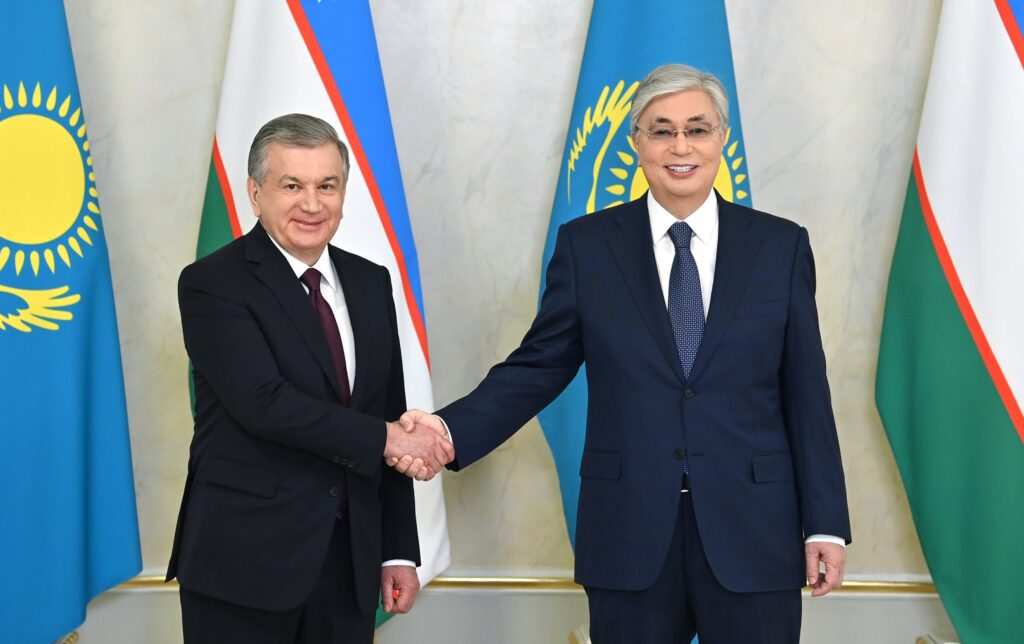
Following on from our previous report on the President of the Republic of Uzbekistan's current visit to Kazakhstan, on August 8, a meeting was held between Shavkat Mirziyoyev and the President of the Republic of Kazakhstan, Kassym-Jomart Tokayev, at the residence in Аkorda. Meetings of the Intergovernmental Commission, the business forum, and several cultural events were also held on the eve of the visit. A strategic partnership and alliance program until 2034 has been prepared, and a council chaired by the heads of foreign policy agencies is being established. In recent years, the volume of trade has doubled, the number of joint ventures has increased five-fold, the volume of cargo transportation is increasing, and large cooperation projects are being implemented. At the meeting, the presidents supported a further comprehensive cooperation program and the establishment of an inter-parliamentary forum with the participation of the chambers of the two countries' parliaments. Before the current summit, a portfolio of new deals and contracts with a total value of $7 billion was initiated to develop industrial cooperation which includes projects in energy, transport and logistics, metallurgy, textiles, agriculture, and construction, as well as inter-regional projects. The highest priority was given to implementing strategic regional projects as soon as possible, such as the Kambarata HPP-1. It was also agreed that the first meeting of the two countries' regional leaders in Samarkand will be held this fall. In unison, the first session of the Supreme Interstate Council was held under the president's chairmanship. The two countries' leaders noted the adoption of the strategic partnership and alliance program for 2024-2034, stating that the volume of trade should increase to $10 billion in the coming years, and for this purpose, a separate program will be adopted by the end of the month. Special attention was paid to the mutual formation of markets and eliminating existing restrictions. At the end of the Supreme Interstate Council's first meeting, a ceremony was held, wherein the presidents signed the decisions of the Supreme Interstate Council on approving the strategic partnership and alliance program for 2024-2034 and establishing the Council of Foreign Ministers. In addition, agreements were reached on mutual cooperation in agriculture, health, and the economy. A memorandum on establishing the Uzbekistan-Kazakhstan Council of Experts, protocols on cooperation in the regulation of natural monopolies and competition policy, and a plan for several other activities were also signed. At the end of the bilateral negotiations, branches of the Tashkent Institute of Irrigation and Agricultural Mechanization Engineers in Almaty (Kazakhstan) and the South Kazakhstan State University named after Mukhtar Avezov in Chirchik (Uzbekistan) were ceremonially opened. The leaders of Uzbekistan and Kazakhstan also took part in a ceremony dedicated to the arrival of the first freight train on the route Xi’an–Khorgos–Almaty–Saryogoch–Tashkent. Presidents Mirziyoyev and Tokayev unveiled a statue in Astana of the founder of the Uzbek literary language, poet and great thinker, Alisher Navoi. In 2020, the late Kazakh poet Nesipbek Aytuli translated and published Navoi's most important work, Khamsa, into Kazakh, and President Tokayev...
Israeli Companies Ready to Invest in Construction of Reservoirs in Kazakhstan

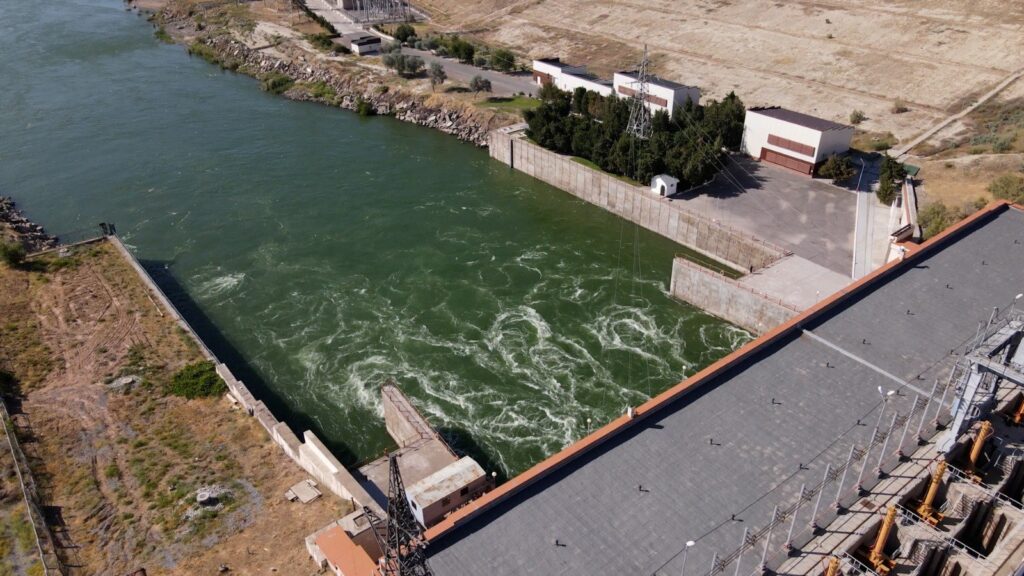
Israeli companies have expressed interest in participating in the construction and reconstruction of reservoirs in Kazakhstan as well as their readiness to provide the country with modern flood forecasting and protection systems. The announcement was made during a meeting on August 8 between Kazakhstan’s Minister of Water Resources and Irrigation Nurzhan Nurzhigitov, and a consortium of leading Israeli companies in the field of water resources management, headed by Managing Partner of Value LBH and Chairman of the Board of the investment company Dan Capital, Shimon Ben-Hamo. Discussions  focused on potential cooperation in various areas of the water industry, from the construction and reconstruction of water facilities to joint personnel training, as well as the introduction of  water-saving technologies, water purification and reuse, drinking water quality control, and automation of water distribution and metering. Reporting on the meeting, Minister Nurzhigitov commented: "Israeli companies have extensive experience and modern technologies for high-quality water management. Some companies have been successfully operating in Kazakhstan for a long time. We intend to achieve the most efficient water use in all sectors, so we count on mutually beneficial cooperation.” The Kazakh Ministry of Water Resources and Irrigation plans to build 20 new reservoirs with a 2.5 billion cubic meters capacity by 2030. Once completed, the project will reduce the country’s dependence on water flowing from upstream Kyrgyzstan and China by 25%, help combat drought in southern Kazakhstan, and reduce the threat of flooding in 70 rural settlements with a total population of nearly 140 thousand people. In addition, irrigation will be provided for a further 250 thousand hectares of farmland. Plans are also in place to reconstruct 15 existing reservoirs with a total capacity of 1.9 billion cubic meters.

Sixth Consultative Meeting of Heads of Central Asian States Takes Place in Astana

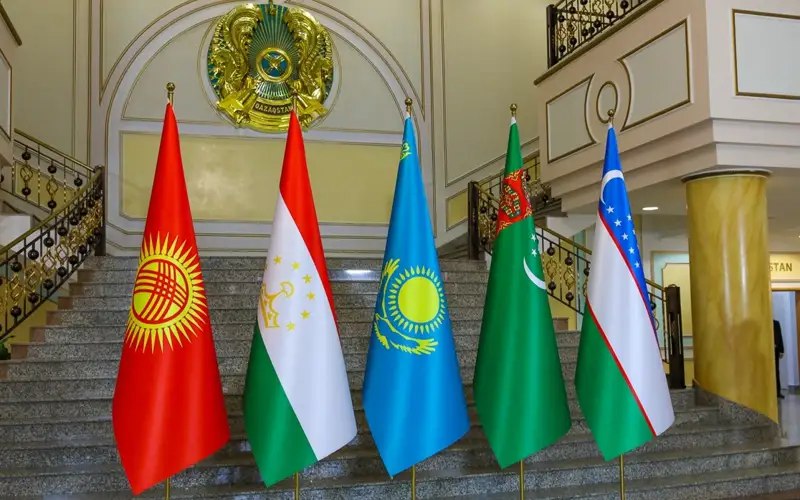
On August 9, 2024, Astana will host the Sixth Consultative Meeting of Heads of State of Central Asia, bringing together the leaders of Kazakhstan, Kyrgyzstan, Tajikistan, Turkmenistan, and Uzbekistan. This event has become an important platform for discussing critical issues of regional cooperation, strengthening economic ties, and addressing everyday challenges. This year’s guests of honor were the President of Azerbaijan, Ilham Aliyev, and the head of the UN Regional Center for Preventive Diplomacy for Central Asian countries, Kakha Imnadze. The main topics of this year's meeting will be economic cooperation, regional security and cooperation, water resources, and energy. Special attention will be paid to water resources management, which is critical to the region's sustainable development. The leaders will also discuss strengthening trade and economic ties, which has become especially important given the growing indicators of mutual trade, which have grown 2.5 times over the past ten years, reaching almost $11 billion. Another important topic will be ensuring regional stability, including fighting terrorism and extremism, and developing joint measures to strengthen border security. The summit is also expected to adopt the "Strategy for the Development of Regional Cooperation in Central Asia-2024", which aims to expand the five-party interaction and strengthen the international role of the region. These consultative meetings of Central Asian leaders, which began in 2018, have become an important tradition and serve as a constructive platform to discuss and address common challenges. The 2024 meeting emphasizes Central Asia's growing importance in the international arena and the readiness of the region's countries to address current challenges and seize opportunities for joint development jointly. On August 9, 2024, a meeting of Central Asian foreign ministers was also held in Astana. Kazakh Foreign Minister, Murat Nurtleu opening the meeting, emphasizing that the event demonstrates the strong commitment of Central Asian countries to strengthening cooperation in all spheres, and that the region's governments have all made significant progress in economic and political interaction in recent years. The total GDP of the Central Asian countries now stands at about $450 billion, and mutual trade has grown by 80% over the past five years, reaching $11 billion. The meeting focused on strengthening regional cooperation in the key areas of energy, transportation, logistics, industry. Kazakhstan proposed developing a long-term comprehensive mechanism of collaboration in the area of water resources and hydropower that would consider the interests of all countries in the region. On the same day, the summit, Central Asia + Japan was to be attended by Japanese Prime Minister Fumio Kishida; however, Kishida cancelled his visit to Kazakhstan due to a powerful earthquake which struck off the coast of Japan.

Japanese PM Cancels Attendance at Central Asia + Japan Summit.

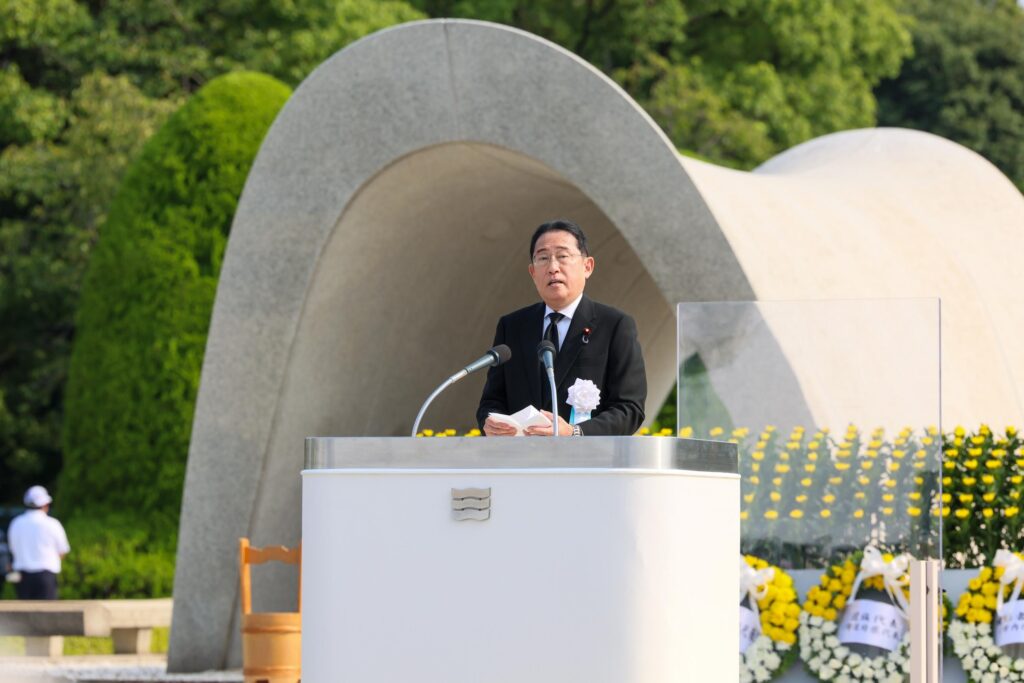
A visit to Kazakhstan, Uzbekistan, and Mongolia by Japanese Prime Minister Fumio Kishida scheduled for August 9-12, has been cancelled. According to the publication Kyodo, the trip was cancelled in response to a warning issued by the Japan Meteorological Agency on the possibility of a strong earthquake and tsunami in Japan. In an apology made at a press conference today, the prime minister who was due to participate in the summit of Japan and the Central Asian countries in Astana, stated,  “As the top official in charge of the nation's crisis management, as an extra precaution, I should remain in Japan for at least about a week." Confirming the decision, official representative of the Ministry of Foreign Affairs Aibek Smadiyarov announced, "According to the information of the Embassy of Japan, in connection with the earthquake in their country, a decision was made to cancel the visit of Prime Minister Fumio Kishida to Kazakhstan." On August 8, a 7.1-magnitude earthquake occurred in Miyazaki prefecture in southwestern Japan and the Japan Meteorological Agency recorded earthquakes at a depth of 30 km. The Japanese government also issued a tsunami warning for Kochi and Miyazaki prefectures. The Times of Central Asia previously reported on the Prime Minister of Japan's intention to announce a package of economic assistance to Central Asia. According to the Japanese government, the initiative which Kishida planned to outline at the summit,  will reduce the heavy influence of both Russia and China on the region and afford Central Asia economic independence.

Uzbekistan Repairs Afghanistan’s Naibabad Railway Station

Uzbekistan Railways JSC  reports that the opening ceremony of the restored Naibabad railway station in Afghanistan was held on August 7. The restoration work was carried out by Uzbekistan Railways JSC in cooperation with the Termez regional railway junction and Sogdiana Trans. During the ceremony, the first freight cars arrived at Naibabad. Afghanistan plays an important role in connecting Central and South Asia through road and railway routes passing through its territory. The Naibabad station will be an important center for transporting goods from Russia, Kazakhstan, China, and European countries to Pakistan, India, and other South Asian countries. Particular attention was paid to accelerating the implementation of the Trans-Afghan railway construction project along the Mazar-e Sharif-Kabul-Kharlachi route. This project significantly improves regional logistics relations and trade and economic cooperation. Kazakhstani diplomat Aidar Borangaziev said that Uzbekistan and SCO member states benefit from economic projects implemented in Afghanistan. These projects include the trans-Afghan railways, the North-South Transport Corridor, and the Central Asian branches of the New Silk Road – part of the Partnership Network concept of strategic ports and logistics centers being developed within the SCO.

Uranium Lawsuit Against Kyrgyz Government To Be Considered in Washington, D.C.

A case against the Kyrgyz authorities will be heard in Washington, D.C. in November 2024. At the end of 2022, International Mining Company Invest Inc. - which is headquartered in the U.S. - filed a lawsuit in international arbitration, accusing the Kyrgyz authorities of illegally expropriating investments. The company estimated its losses at $63 million. In 2009, International Mining Company Invest Inc. received the right to use subsoil for geological exploration. In 2013, the country's authorities issued a license to the foreign company to search for uranium and other metals at one more site. International Mining Company Invest Inc. carried out work in three regions of the republic; however, in 2019, a moratorium on exploration and development of uranium and thorium deposits was introduced. The company lost its license and initiated arbitration proceedings at the International Center for Settlement of Investment Disputes. Speaking at a press conference in Bishkek, Kyrgyz Justice Minister Ayaz Baetov said the case will be heard in international arbitration in Washington in November 2024. "The so-called uranium moratorium was the reason for this case's emergence. The case is now being considered. We have our arguments; they have theirs," the official stated. The previous authorities imposed a moratorium on the mining and exploration of uranium and thorium deposits; the new administration lifted the ban, but announced that Kyrgyz companies would develop the deposits.