• KGS/USD = 0.01143 0%
  • KZT/USD = 0.00202 0%
  • TJS/USD = 0.10433 0%
  • UZS/USD = 0.00008 0%
  • TMT/USD = 0.28575 0%
  • KGS/USD = 0.01143 0%
  • KZT/USD = 0.00202 0%
  • TJS/USD = 0.10433 0%
  • UZS/USD = 0.00008 0%
  • TMT/USD = 0.28575 0%
  • KGS/USD = 0.01143 0%
  • KZT/USD = 0.00202 0%
  • TJS/USD = 0.10433 0%
  • UZS/USD = 0.00008 0%
  • TMT/USD = 0.28575 0%
  • KGS/USD = 0.01143 0%
  • KZT/USD = 0.00202 0%
  • TJS/USD = 0.10433 0%
  • UZS/USD = 0.00008 0%
  • TMT/USD = 0.28575 0%
  • KGS/USD = 0.01143 0%
  • KZT/USD = 0.00202 0%
  • TJS/USD = 0.10433 0%
  • UZS/USD = 0.00008 0%
  • TMT/USD = 0.28575 0%
  • KGS/USD = 0.01143 0%
  • KZT/USD = 0.00202 0%
  • TJS/USD = 0.10433 0%
  • UZS/USD = 0.00008 0%
  • TMT/USD = 0.28575 0%
  • KGS/USD = 0.01143 0%
  • KZT/USD = 0.00202 0%
  • TJS/USD = 0.10433 0%
  • UZS/USD = 0.00008 0%
  • TMT/USD = 0.28575 0%
  • KGS/USD = 0.01143 0%
  • KZT/USD = 0.00202 0%
  • TJS/USD = 0.10433 0%
  • UZS/USD = 0.00008 0%
  • TMT/USD = 0.28575 0%

Viewing results 1507 - 1512 of 2256

Uzbekistan’s President Guarantees Protection of Foreign Investors’ Rights

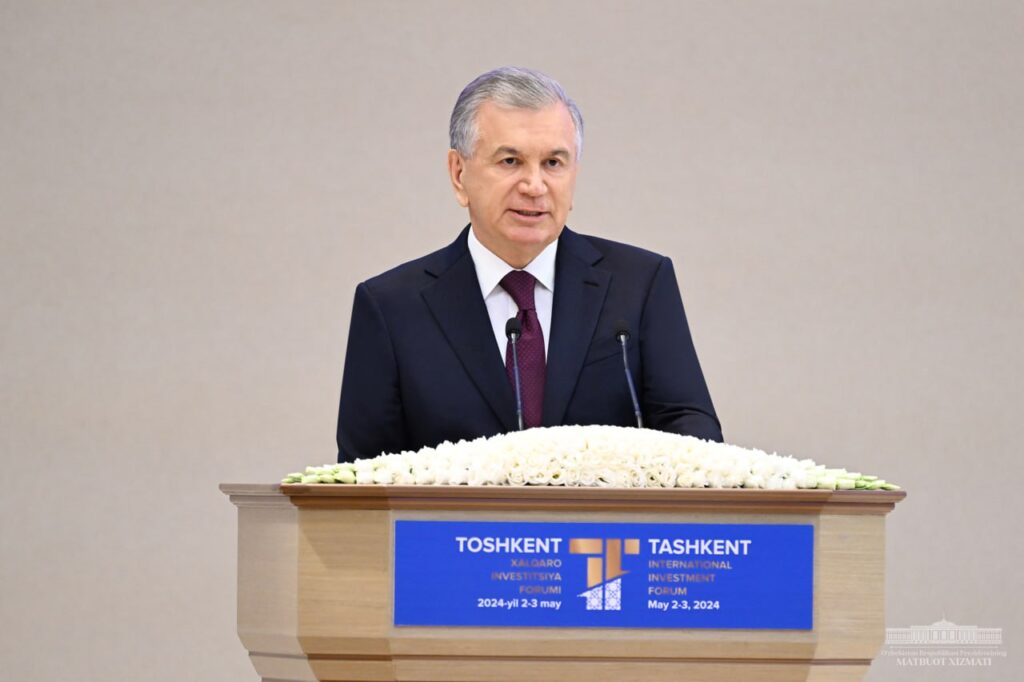
Addressing the Tashkent International Investment Forum, Uzbekistan President Shavkat Mirziyoyev remarked that in recent years, his country had attracted more than $60 billion in foreign investment, in over 300 joint industrial projects. Regarding the goal to attract further foreign partnerships, he continued, "Our state guarantees development of market relations, reliable protection of investors' rights, improvement of favorable investment and business environment, creation of wider opportunities and conditions for fair competition, ensuring inviolability of private property and independence of [our] judicial system." To achieve its aims, Uzbekistan has adopted a new version of the law "On Investments" in accordance with World Trade Organization (WTO) standards.  Despite not yet ratified by Uzbekistan, the International Commercial Court (ICC), is already operating in the country, and the terms of land lease for foreign investors have been increased from 25 to 49 years. Uzbekistan's head of state also announced plans to introduce  new approaches to the system of industrial zones,  the management of which will involve experienced foreign companies. Drawing attention to the country's wealth of natural reserves, the  president noted, " Our country has colossal resources of gold, copper, tungsten, silver and uranium. Along with rare and unique minerals, we have deposits of more than 30 rare earth metals such as lithium, magnesium, molybdenum, germanium, vanadium and indium. " He emphasized Uzbekistan's ongoing negotiations with the U.S. and the UK  on cooperation in the field of critical raw materials (CRMs) and extended an invitation to leading companies to develop projects concerning the deep processing of strategic raw materials and the creation of a value-added chain of refining and processing. Mirziyoyev mentioned  the forthcoming construction of the Trans-Afghan railroad and upgrades to existing international airports in Tashkent, Bukhara and Urgench  planned with the cooperation of foreign investors, and with reference to improved logistics, stated,  "These strategic projects will radically change the geo-economics situation in the region and turn Central Asia into a global transit centre connecting North and South, East and West." This year's Tashkent Investment Forum was attended by 2,500 delegates including government leaders, heads of major companies and representatives of the  United Nations (UN), European Bank for Reconstruction and Development (EBRD), the Organization of the Petroleum Exporting Countries (OPEC) and the Shanghai Cooperation Organization (SCO).
OPEC Fund to Allocate $500 Million for Tourism, Logistics Development in Uzbekistan

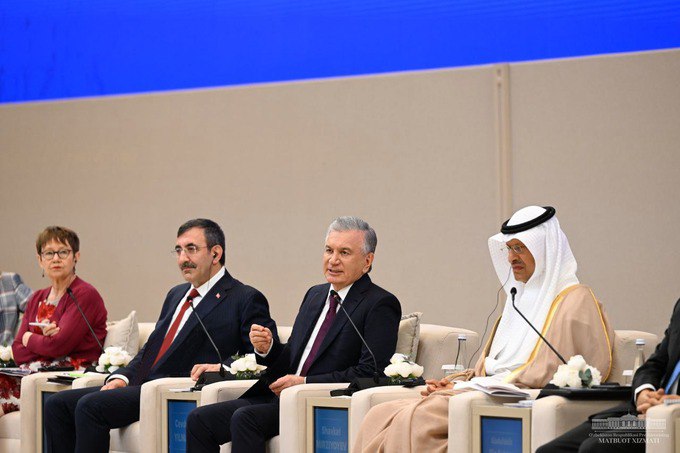
A delegation of the Organization of the Petroleum Exporting Countries (OPEC) International Development Fund headed by President Abdulhamid Alkhalifa participated in the events of the Tashkent International Investment Forum. The OPEC Fund and the Government of Uzbekistan signed agreements on joint activities and financial commitments worth $500 million. The funds will be used for the development of tourism, logistics, pharmaceuticals, ecology, support for women's entrepreneurship, and youth initiatives. The OPEC delegation will visit the facility of water supply and wastewater disposal in the Samarkand region, which was financed by the organization. This project provides the basic tools to improve health and living conditions for 70,000 local residents. For 25 years, the OPEC Fund has been working with Uzbekistan, providing it with $760 million in loans. This financial support has helped provide drinking water to remote areas and modernize Uzbekistan's energy sector. This year's Tashkent Investment Forum was attended by 2,500 delegates - government leaders, heads of major companies and representatives of the United Nations (UN), the European Bank for Reconstruction and Development (EBRD), the Organization of the Petroleum Exporting Countries (OPEC), and the Shanghai Cooperation Organization (SCO).
Tajikistan and Kyrgyzstan May Swap Territories to Ease Border Tensions

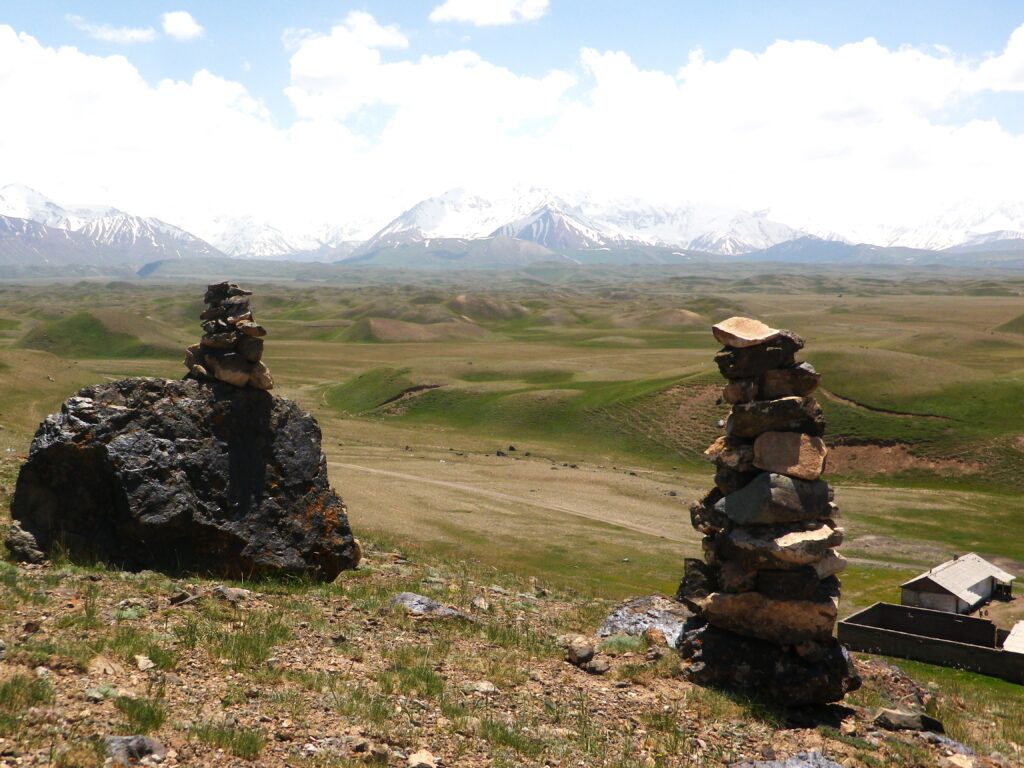
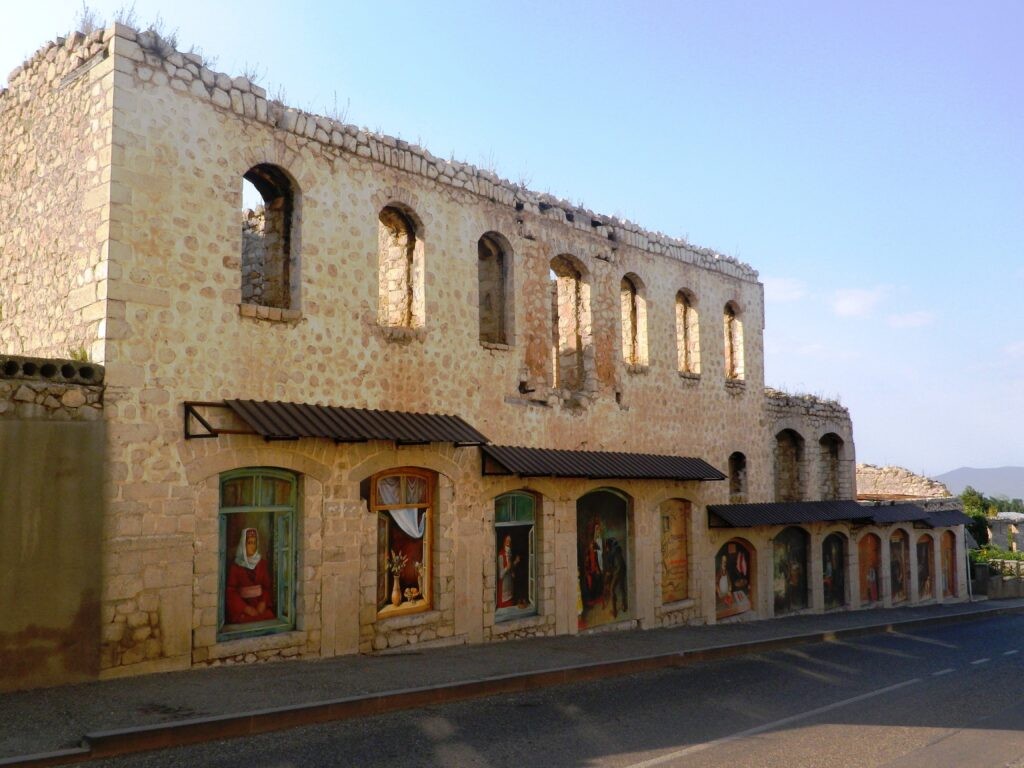
In order to solve their long-running border demarcation dispute, Kyrgyzstan and Tajikistan may consider the option of exchanging territories. That's according to remarks made by Marat Imankulov, the Secretary of the Security Council of the Kyrgyz Republic, in an interview with state news agency, Kabar. According to him, the remarkable thing is that the border in the Batken region passes through difficult terrain, densely populated areas, bisecting streets, yards, and even houses. “Therefore, it should be separated. This is a difficult compromise. It is impossible without it. We have to give way. If necessary, the option of exchanging regions can be considered. Of course, there should be a preliminary agreement with local residents; that's how things are going now,” said Imankulov. The Secretary of the Security Council noted that each country has its own interests, but the parties are now looking for balance and compromise. Imankulov added that all border negotiations should proceed peacefully. Demarcation of the border has been a long-standing source of conflict between the two nations, it is emblematic of the problem that even the length of the border - sometimes cited as being 975-kilomtres long, and at others times 972-kilomteres - is rarely agreed upon. In January 2023, Tajikistan’s President Rahmon stated that 614-kilometres had been settled upon, backtracking on a previously stated figure of 664. In a sign of thawing relations, however, on November 9th 2023, the Cabinet of Ministers of the Kyrgyz Republic announced that a further 17.98 kilometers of the border had been agreed. With its scant natural resources and dwindling water supplies, the border between Kyrgyzstan and Tajikistan has been the scene of numerous skirmishes for many years. In 2014, all borders between Kyrgyzstan and Tajikistan were closed indefinitely to Kyrgyz and Tajik citizens following clashes over a bypass road in disputed territory; mortars were fired and both armies suffered casualties. Trouble spilled over again throughout 2021 and 2022, reportedly starting over a water dispute in the Vorukh enclave, and leaving an unknown number in the hundreds killed, and up to 136,000 people evacuated. In September 2022, another shooting took place on the border between the two countries.

Kazakhstan Says It’s Ready to Host Azerbaijan-Armenia Talks; No Date Announced

Kazakhstan’s president said on Wednesday that he hopes planned talks in Almaty between Azerbaijan and Armenia will lead to a lasting peace in the South Caucasus, though he did not provide a date for the negotiations. “I welcome the agreement between the Republic of Azerbaijan and the Republic of Armenia to hold talks at the Foreign Ministers’ level on the preparation of a peace treaty between the two states, at the suggestion of the Kazakh side,” President Kassym-Jomart Tokayev said in a statement. He said he hoped the upcoming meeting would help with the “practical implementation” of agreements between the two sides. Armenia and Azerbaijan have been locked in tension and conflict over territory since the 1990s, though the two sides have been working to delineate their borders following Azerbaijan’s retaking of control of the disputed Nagorno-Karabakh region last year. Kazakh Foreign Ministry spokesman Aibek Smadiyarov said this week that Kazakhstan is supporting the talks but will not act as mediator, according to reports in Azerbaijan and Armenia. “The upcoming negotiations will be held exclusively between the parties,” Armenian radio quoted Smadiyarov as saying. “We are not talking about Astana’s mediation, we are only providing goodwill services, the so-called good offices.” Kazakhstan benefits economically from stability in the Caucasus because it exports oil through Azerbaijan. In March, Azerbaijan’s energy minister met his counterpart in Kazakhstan to discuss boosting Kazakh oil flows via the Baku-Tbilisi-Ceyhan pipeline.

American Company Launches CO2 Production in Uzbekistan

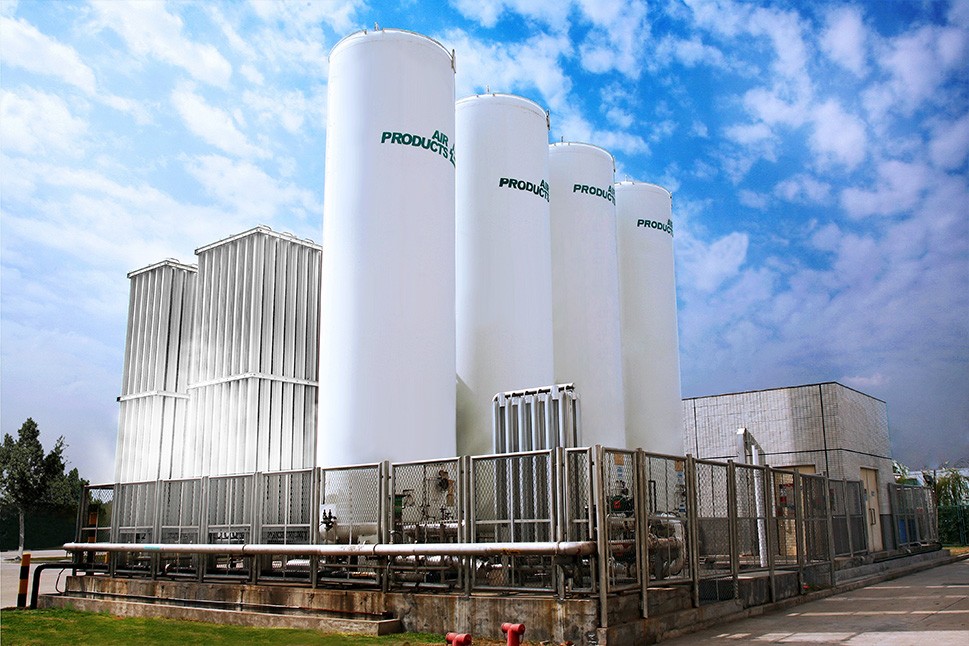
The American company Air Products is planning to open a carbon dioxide (CO2) production project in Uzbekistan. The corresponding agreement, worth $15 million, was signed with Navoi Nitrogen (Navoiazot) chemical complex. The plant will be the first and so far the only one of its kind in Uzbekistan, and will use untreated CO2 captured at the ammonia production line. Production of high-purity carbon dioxide will allow its use in beverage production, food packaging, welding mixtures, for blast freezing of food products, the agro-industrial complex, greenhouses, water purification, dry ice production, and more. The plant, which will have a capacity of 120 tons of CO2 per day, will reduce the consumption of natural gas, which is currently the main source of CO2 generation. "Using CO2 in greenhouses allows farmers to harvest 20-40 percent more crops. For example, in Holland and Spain, 60 percent to 90 percent of greenhouses use carbon dioxide to enrich the atmosphere. Uzbekistan's agriculture has great potential, and competent use of CO2 will allow it to achieve excellent results," believes Kirill Korotkov, commercial director for Air Products Uzbekistan. Air Products began operations in Uzbekistan in 2019, and to date has implemented a number of projects in the oil & gas and chemical industries. In September 2023, during a working visit of Uzbek president Shavkat Mirziyoyev to New York, he met with Air Products's chairman Seifi Ghasemi. The parties considered the expansion of their strategic partnership -- with investments totaling up to $1 billion.

Visit by UK’s Cameron Doesn’t Oblige Central Asian Countries to Do Anything, Expert Says

British Foreign Minister David Cameron's grand tour of Central Asia last month was an attempt to remind those of us in Central Asia about investment and sanctions, Kazakhstani economist Aidarkhan Kusainov has told The Times of Central Asia. Over several days in late April, Cameron visited the five countries of Central Asia, demonstrating the UK's intentions to participate in developing economic ties with the region. The visit was closely monitored by the international media, which said Britain's main motive was to reiterate its interests. In the countries chosen by the head of the UK Foreign Office for the tour, the interest in his visit was not so acute. Cameron himself assured them that he was not going to force the leaders to choose between Russia and China on the one hand and the West on the other. However, experts believe that the geopolitical component was still present, as the war in Ukraine has sharply increased attention to the region -- and not only on the part of British leadership. "We are not saying to Kazakhstan or any other country that you have to make a choice, or that we are asking you not to choose to partner and trade with Russia or with China or with anyone else. We are here because we believe that you should be able to choose to partner with us in a way that reflects positively on both our common security and our common prosperity," Cameron said before meeting with Kazakh Foreign Minister Murat Nurtleu. The British Foreign Secretary made a similar statement during his visit to Kyrgyzstan. Following a trip to Kazakhstan, where Cameron also met with President Kassym-Jomart Tokayev, it was stated that economic cooperation between the two countries has great prospects. In addition, it's  worth noting that bilateral trade turnover between Britain and Kazakhstan exceeds the total bilateral turnover of all other countries in the region. Furthermore, Cameron commented on British mining companies' interest in Kazakhstan. "I think we can still do a lot more in the sphere of small business. We talked about how to remove bureaucracy and barriers for small- and medium-sized businesses to settle and work here. And I think in all areas, whether it's education, whether it's the economy, whether it's energy, whether it's climate change, there's a whole range of things that we can do in partnership. And I want that to happen next year, in the coming years," he said. For his part, Kazakh Foreign Minister Murat Nurtleu noted the special role of the UK in Air Astana's recent IPO and the creation of the Astana International Financial Center. "Given the recently adopted in London roadmap on fossil minerals, we considered the possibility of implementing advanced projects in the field of important raw materials, development of the Trans-Caspian International Transport Corridor and green energy. We agreed to work together to overcome global challenges, including the fight against climate change, environmental protection and effective management of water resources. We reaffirmed our interest in expanding trade and investment...