• KGS/USD = 0.01144 0%
  • KZT/USD = 0.00202 0%
  • TJS/USD = 0.10399 -0.29%
  • UZS/USD = 0.00008 0%
  • TMT/USD = 0.28490 0%
  • KGS/USD = 0.01144 0%
  • KZT/USD = 0.00202 0%
  • TJS/USD = 0.10399 -0.29%
  • UZS/USD = 0.00008 0%
  • TMT/USD = 0.28490 0%
  • KGS/USD = 0.01144 0%
  • KZT/USD = 0.00202 0%
  • TJS/USD = 0.10399 -0.29%
  • UZS/USD = 0.00008 0%
  • TMT/USD = 0.28490 0%
  • KGS/USD = 0.01144 0%
  • KZT/USD = 0.00202 0%
  • TJS/USD = 0.10399 -0.29%
  • UZS/USD = 0.00008 0%
  • TMT/USD = 0.28490 0%
  • KGS/USD = 0.01144 0%
  • KZT/USD = 0.00202 0%
  • TJS/USD = 0.10399 -0.29%
  • UZS/USD = 0.00008 0%
  • TMT/USD = 0.28490 0%
  • KGS/USD = 0.01144 0%
  • KZT/USD = 0.00202 0%
  • TJS/USD = 0.10399 -0.29%
  • UZS/USD = 0.00008 0%
  • TMT/USD = 0.28490 0%
  • KGS/USD = 0.01144 0%
  • KZT/USD = 0.00202 0%
  • TJS/USD = 0.10399 -0.29%
  • UZS/USD = 0.00008 0%
  • TMT/USD = 0.28490 0%
  • KGS/USD = 0.01144 0%
  • KZT/USD = 0.00202 0%
  • TJS/USD = 0.10399 -0.29%
  • UZS/USD = 0.00008 0%
  • TMT/USD = 0.28490 0%

Viewing results 1579 - 1584 of 2256

Kazakhstan and Russia to Harness Transit Potential

Kazakhstan’s Prime Minister Olzhas Bektenov travelled to Moscow to attend a meeting on March 4th with the Prime Minister of the Russian Federation, Mikhail Mishustin. High on the agenda, was the North-South international transport corridor and in particular, the section of railway interlinking Russia, Kazakhstan, Turkmenistan, and Iran. Russia and Kazakhstan are connected by the longest land border in the world spanning over 7,500 km. Noting that “the most important transit routes in Eurasia run through our countries", the Russian prime minister highlighted the huge potential for cooperation in transport and logistics. Late in February, Kazakhstan’s Deputy Minister of Transport, Maksat Kaliakparov reported on plans by the railway administrations of Kazakhstan, Russia, and Turkmenistan to launch a joint venture to improve services and reduce cargo delivery time along the North–South Transport Corridor. In 2023 the volume of cargo transported via this route amounted to 2.1 million tons; an increase of 4% compared to 2022. By 2027, the transport potential of the entire corridor rise to between 6 - 10 million tons per year. Mr Bektenov furthermore stated that Kazakh and Russian business entities are currently implementing 135 projects worth $26.5 billion. To maintain progress and facilitate transit between the two countries, the Kazakh prime minister stressed the need to speed up work on checkpoints on the Kazakh-Russian border. According to plans, 29 of the 30 checkpoints are due to be modernized by 2027.
Turkmenistan and Turkey to Collaborate on Export of Natural Gas to Europe

Turkmenistan and Turkey are to collaborate on a project that will pave the way for transportation of Turkmen natural gas through Turkey to European markets. A declaration of intent on cooperation in the field of hydrocarbon resources, alongside a memorandum on natural-gas partnership between the Turkmen State Concern Türkmengaz and the Ministry of Energy and Natural Resources of Turkey, were signed by Turkish President Recep Tayyip Erdogan and Turkmenistan's Chairman of the People's Council, Gurbanguly Berdimuhamedov at a meeting on the margins of the Antalya Diplomatic Forum on March 1st. The export of Turkmen gas to Europe will necessitate the construction of a gas pipeline across the Caspian Sea to Azerbaijan; a project revisited since the 1990s but not yet implemented. Diversification of natural-gas export routes remains a pressing issue for gas-rich Turkmenistan. Today, China is the largest importer of Turkmen gas, transported by pipeline via Uzbekistan and Kazakhstan. Smaller volumes of Turkmen gas are exported to Russia. Turkmenistan continues to work on the Turkmenistan-Afghanistan-Pakistan-India (TAPI) project to transport natural gas to South Asia. After years of delays in the construction of the Afghan section due to funding and security issues, Turkmen and Afghan authorities are now close to advancing the project.

Kazakhstan Comments on Russian Missile Tests on its Territory

Kazakhstan's Ministry of Defense has confirmed that Russia tests its missiles inside of Kazakhstan's borders. The country's deputy minister of defense Shaykh-Khasan Zhazykbayev has gone on record to say that in Kazakhstan there is a military test range called Saryshagan, where the 110th training center of the Russian Federation does indeed conduct missile tests. Zhazykbayev noted that Russia has a treaty dating back to 1993, according to which it has the right to use this land as a testing ground. "Missiles of up to 200 kilometers' range are tested there. There is no infrastructure and population [on] this range, so no one suffers," said Zhazykbayev. The deputy minister also noted that Russia conducts only 50 hours of missile testing at Saryshagan each year. The Saryshagan military training range in Kazakhstan is located in the Karaganda and Zhambyl regions, to the northwest and west of Lake Balkhash in the Betpak-Dala steppe. Its construction began in 1956, and its area now holds an active military airfield and several abandoned dirt airfields. The Yekaterinburg to Almaty highway runs through it. Presently it's considered to be the first and the only military range in Eurasia where missile weapons are developed and tested.

Kazakhstan Seeks U.S. Cooperation to Develop Critical Minerals

During a visit to the United States on March 1st, Kazakhstan’s Minister of Industry and Construction, Kanat Sharlapaev met David Applegate, director of the U.S. Geological Survey, to discuss expanding bilateral cooperation regarding mineral deposits in Kazakhstan. Of Kazakhstan’s 50 types of minerals, 17 were identified by the U.S. Geological Survey as critical. As reported by Sharlapaev, the key aims of future collaborations are attracting investment in geological exploration, mining, and the processing of rare and rare-earth metals, as well as facilitating Kazakhstan's integration to the global market through cutting-edge technologies and expertise. Speaking at a roundtable discussion at the U.S. Chamber of Commerce with members of the Kazakh-American Business Council (USKZBC) and representatives of American companies, the minister outlined the benefits afforded by consolidating the partnership between Kazakhstan and the USA. Emphasis was placed on the strategic potential of mining rare and rare earth metals and the development of related industries. In particular, he cited the importance of creating a cluster of industries in Kazakhstan to produce raw materials for batteries, including nickel, cobalt, manganese, and lithium and with reference to reforms on the use of subsoil to attract investment, encouraged US mining companies to participate in forthcoming auctions in Kazakhstan.

A New Railway Project for China, Kyrgyzstan and Uzbekistan

On March 1st, Akylbek Japarov Chairman of the Cabinet of Ministers of the Kyrgyz Republic, Abdulla Aripov Prime Minister of Uzbekistan and Ma Xingrui Communist Party Secretary of China’s western Xinjiang Uygur Autonomous Region, met in Kashgar (Xinjiang) to discuss the construction of the China-Kyrgyzstan-Uzbekistan railway. Japarov first praised the incentive for its potential to strengthen the development of trade and economic cooperation between the three countries and reported that a jointly funded feasibility study of the project had already been developed and approved. Uzbekistan’s Prime Minister Aripov expressed his country’s interest in developing multimodal transport routes to support the joint construction of the China-Kyrgyzstan-Uzbekistan railway. Addressing the insufficient throughput capacity of the Irkeshtam checkpoint on the Kyrgyz-Chinese border, Japarov stated, “increasing the volume of cargo throughput at the Irkeshtam checkpoint is an issue relevant to both the Kyrgyz and Chinese sides, as well as the Uzbek side. It is therefore important that all checkpoints are modernized and equipped with updated means of customs control.” He then reported that new customs inspection complexes at the Irkeshtam and Torugart checkpoints to be installed this year, will allow up to 125 vehicles per hour to cross the border, and added that the Kyrgyz side aims to increase the throughput capacity of these checkpoints to 1,000 vehicles per day. In the interest of developing trade and economic ties, the Secretary of Xinjiang’s Party Committee welcomed the Kyrgyz Prime Minister's proposals and supported his stance that Xinjiang is perceived as a gateway to China from Kyrgyzstan and in turn, several other Central Asian countries.

Update: Russian Defence Minister Speaks about Threats to Central Asia

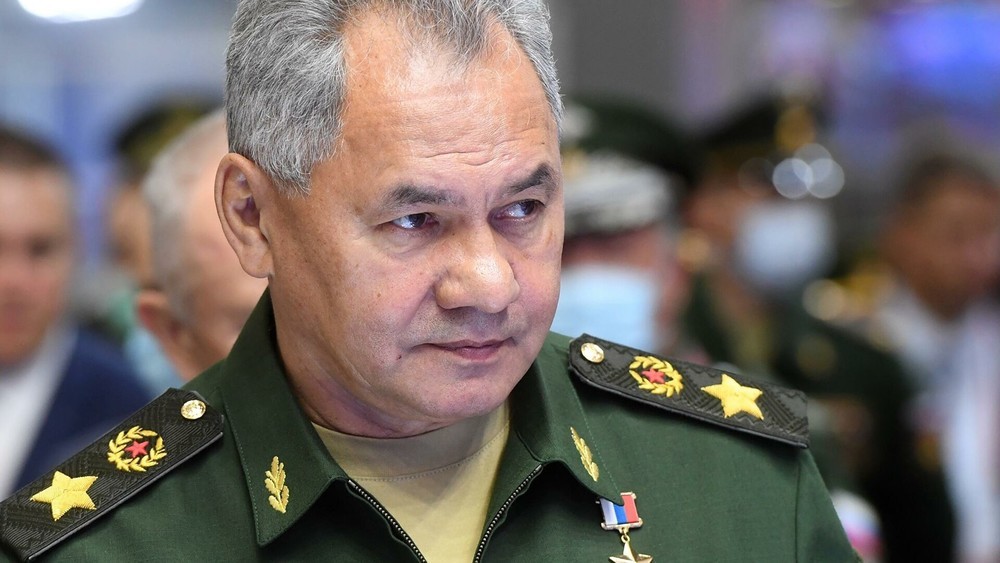
Speaking at a Defence Ministry meeting on February 27th, the Russian Minister of Defence Sergei Shoigu spoke of threats coming from Afghanistan extremists and Western NGO's. The Russian minister prioritized “ensuring military security in the Central Asian strategic area,” and warned that the situation in the region remains complex, with the greatest threat coming from the territory of Afghanistan. In Afghanistan, Shoigu claimed that over the past year alone, the number of ISIS militants in Afghanistan had increased by 15%. He explained that their key objectives were to spread radical ideology and to conduct subversive activities on the southern borders of the Collective Security Treaty Organization (CSTO); the Russian-led security alliance which includes Belarus, Kazakhstan, Kyrgyzstan, and Tajikistan. The Russian defense minister stated that Russia’s Central Military District would concentrate its efforts this year on resolving crisis situations in the countries of the region and participate in seven exercises in the territories of Kazakhstan, Kyrgyzstan, and Tajikistan. With drug production and trafficking from Afghanistan through the Central Asian republics expected to rise by 20%, this would be a primary crises of the CSTO to be address. Last week, Armenian Prime Minister Nikol Pashinian announced that his country has frozen its membership in the CSTO. Shoigu also stated that over 100 large pro-Western non-governmental organizations with more than 16,000 representative offices and branches are currently operating in the Central Asia. "Against the backdrop of the special military operation [of Russia against Ukraine]", he said that "these NGOs have significantly increased their anti-Russian activities in order to reduce the military-technical, economic and cultural cooperation of the Central Asian states with the Russian Federation.” The Deputy Minister of Foreign Affairs of the Republic of Kazakhstan, Roman Vassilenko, responded with strong support for the civil sector and non-governmental organizations (NGOs) in Kazakhstan. He emphasized, "Support for the civil sector and NGOs is a top priority for the president, the government, and the Ministry of Culture and Information, which is responsible for this area." Vassilenko further highlighted that there are 18,000 NGOs in Kazakhstan operating in accordance with national legislation, constituting a crucial part of the country's society. In response to statements from Russia regarding proactive measures against NGOs in Central Asia, the Ministry of Foreign Affairs of Kazakhstan stated that it is not aware of any such measures being taken by Russia.