Viewing results 1585 - 1590 of 2424
Over an eight-day period in April 2024, a barrage of news stories featuring rumors about Kazakhstan’s foreign policy permeated Chinese media. These dubious reports alleged that the U.S. had hyped an unverified leak from a Russian Duma official claiming Kazakhstan was engaged in covert negotiations to join NATO and suggested that Kazakhstan was seeking China's support to deter a potential Russian invasion. The series of articles highlights the "fog of war" that pervades not only the battlefields of Ukraine but also the media landscape, representing a new front where Kazakhstan risks becoming collateral damage. Kazakhstan’s president has not deviated from the country’s neutrality and has maintained a difficult yet strategic multi-vector foreign policy that seeks to diversify economic and security arrangements rather than aligning exclusively with one partner. The evident information war underscores the diplomatic sensitivities which Kazakhstan faces, and the sinister tactics employed by outside actors to disrupt domestic and regional balances. Misleading narrative #1: The U.S. is hyping an alleged voice recording of an official claiming that Kazakhstan is Russia’s next target On April 6, an alleged audio recording, attributed to Russian State Duma deputy and General Andrei Gurulov, hinted that Kazakhstan was set to become Russia's next target. The leak surfaced on X (Twitter) and was reported by the New Voice of Ukraine just hours later. In the following two days, the story propagated across at least five Chinese platforms, with numerous reposts claiming that “the Western media has vigorously hyped…the recording scandal”. The above post is machine translated from Chinese into English A search on Google News on 21 April 2024 for “Andrei Gurulov” yielded no results, while a wider search revealed a single defense blog reporting on the alleged leak. Misleading narrative #2: Kazakhstan is in covert discussions to join NATO Between April 10 and April 11, an array of articles and blogs appeared on at least six Chinese language media platforms (and were reposted across numerous other outlets) about Kazakhstan’s intent to join the North Atlantic Treaty Organization (NATO). The so-called “news” was based on an unverified and unconfirmed rumor. The above post is machine translated from Chinese into English The above post is machine translated from Chinese into English Kazakhstan has not expressed an intention to join NATO as a full member. Instead, it has engaged with NATO through partnership programs and dialogue, focusing on security cooperation, counter-terrorism, and military training within frameworks like the Partnership for Peace (PfP) program, which Kazakhstan joined in 1995. The above post is machine translated from Chinese into English This is not the first case of gaslighting by the media on Kazakhstan-NATO issues. Images taken from the 2023 opening of a conference hall at the Peacekeeping Operations Center of the Ministry of Defense of Kazakhstan, which was attended by the U.S. Ambassador to Kazakhstan, resulted in similarly bizarre misrepresentations. Misleading narrative #3: Kazakhstan seeks China’s security to counterbalance the Russian threat On April 14 and April 15, the latest barrage...
According to Chinese Customs Service data from the first quarter of 2024, Kazakhstan became the main trade partner of China's Xinjiang Uygur Autonomous Region. Since the beginning of the year, Xinjiang has conducted trade with 193 countries and regions of the world. The volume of imports and exports with Kazakhstan and Kyrgyzstan in currency terms has increased by 58.8% and 1.9% respectively. The volume of foreign trade originating from Xinjiang since the beginning of 2024 has increased by 42.7% year-on-year and reached about $13.2 billion. That puts Xinjiang in second place in China in terms of trade growth at the provincial level. Imports of agricultural products specifically increased by 36%. According to the General Customs Administration (GCA) of China, last year the trade turnover between Kazakhstan and Xinjiang increased by 63% and reached $20.3 billion. In the first half of 2023 China became Kazakhstan's main trading partner, displacing Russia. China supplies the country with cars, computers and laptops, plastics and plastic products -- and from Kazakhstan imports oil, natural gas, uranium, ferroalloys, mined ores and concentrates and oilseeds.
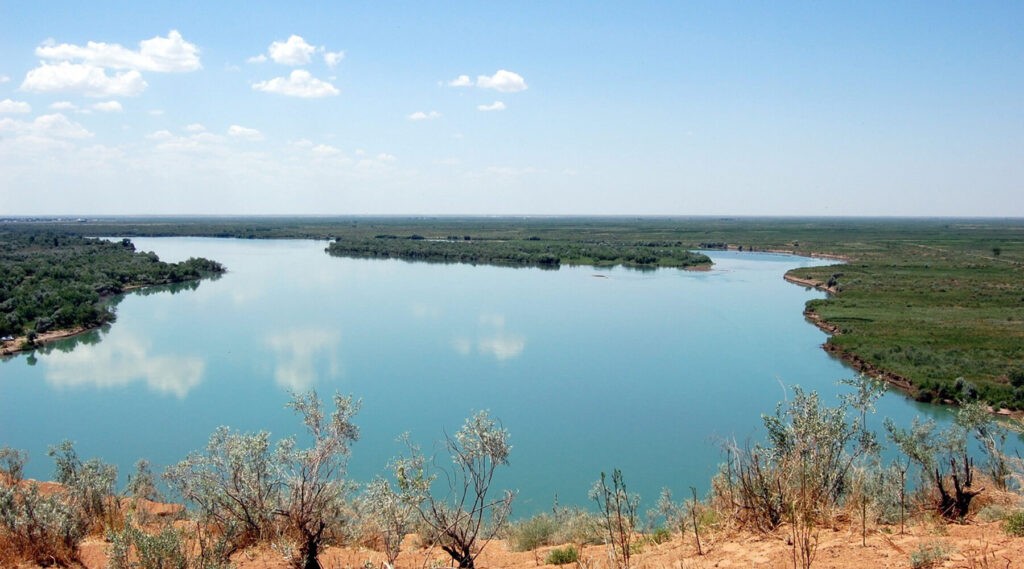
Last week in Kazakhstan, delegates came together for the 87th meeting of the Interstate Commission for Water Coordination (ICWC) of Central Asia, where they discussed the potential and limitations of regional water reservoirs ahead of the 2023-2024 agricultural growing season. According to the ICWC, some of the more pressing questions focused on confirming limits of water usage for the 2024 growing season for the Syr Darya and Amu Darya river basins and the prognosis for water release from the reservoirs in those basins. There's still no information on how much water will be sent to the Aral Sea basin. In accordance with the quota, the draw on water from the Amu Darya watershed will be 56 billion cubic meters for the year, with about 40 billion cubic meters to be used in the April-to-October growing season. As stated in the ICWC agreement, Uzbekistan will receive 16 billion cubic meters, Turkmenistan 15.5 billion cubic meters, and Tajikistan will get 6.9 billion cubic meters. The Syr Darya's water use quota for this year's growing season is around 11.9 billion cubic meters, with 8.8 billion cubic meters going to Uzbekistan, 1.9 billion cubic meters for Tajikistan, 920 million cubic meters for Kazakhstan, and 270 million cubic meters for Kyrgyzstan. According to the ICWC, the totals for irrigated lands by Central Asian country are 4.3 million hectares in Uzbekistan, 2.5 million hectares in Kazakhstan, 1.9 million hectares in Turkmenistan, 1 million hectares in Kyrgyzstan, and 680,000 in Tajikistan.
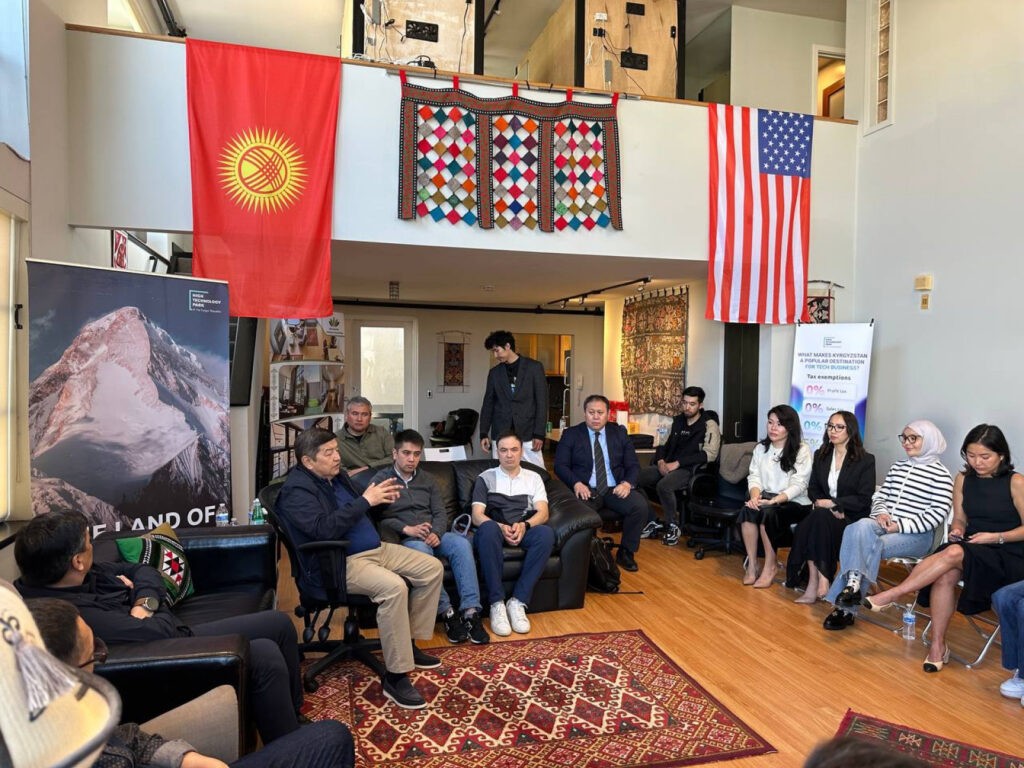
On a visit to San Francisco (USA) on April 21, Chairman of the Cabinet of Ministers of the Kyrgyz Republic Akylbek Japarov was guest of honour at the opening of the High Technology Park (HTP) House of the Kyrgyz Republic in Silicon Valley. Speaking at the event which brought together Kyrgyz IT specialists working in international technology corporations, the prime minister, emphasized the state’s readiness to support IT initiatives and the Cabinet of Ministers’ goal to make Kyrgyzstan a centre of excellence for the development of the industry: “All of you, young people, working in international IT companies are the pride of our country. Your innovation, talent and dedication make us stronger and more competitive on the world stage. It would be great if we could attract your companies to open development centres in Kyrgyzstan. We believe in you, in your capabilities and are ready to support you at every stage of your path to success.” During meetings with IT corporations at the head offices of Apple Inc., the Nvidia Corporation, and Hewlett-Packard, the Kyrgyz delegation led by Akylbek Japarov, focused on prospects afforded by collaboration to enable the government to fulfil its plans to create an IT park in Kyrgyzstan.
The World Bank has given Uzbekistan a soft loan of $50 million to grow its digital economy. The loan will help employ about 9,000 young people -- including 4,500 women and 360 persons with disabilities -- in IT-related services. The funds will also be used to create 11 IT service centers, and train 6,200 people in digital skills, communication and foreign languages. The program, which will run until 2029, foresees the creation of a legislative framework in the IT sphere. The IT sector's contribution to Uzbekistan's GDP remains insignificant -- it was just 1.9% in 2022.
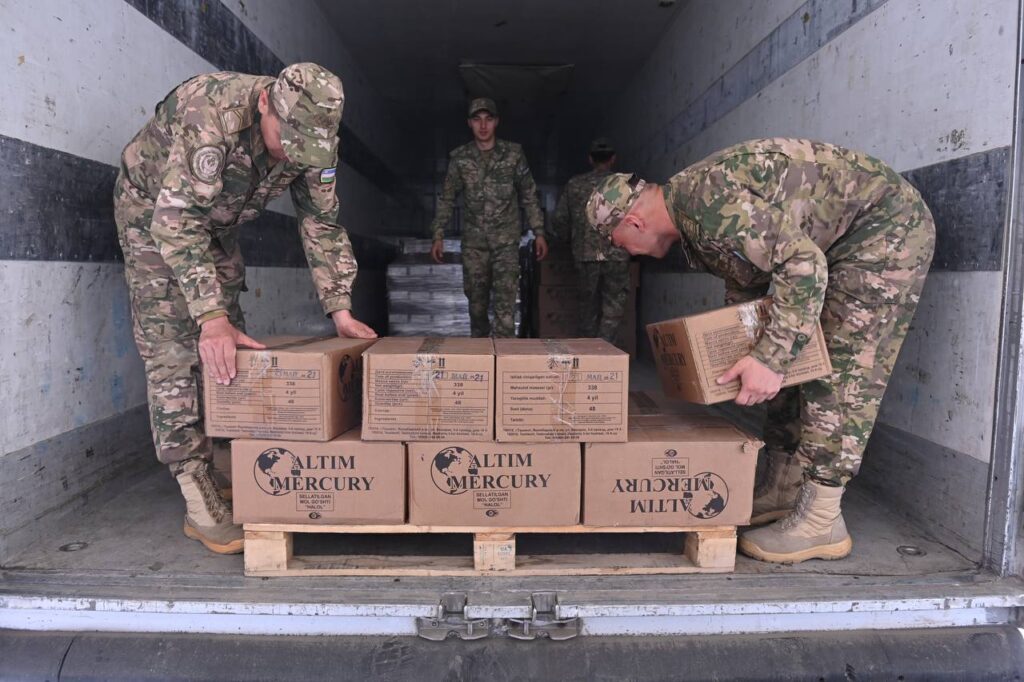
The people of Uzbekistan plan to send humanitarian aid to the people of Kazakhstan affected by the spring floods, according to a report by news outlet 24.KZ. The initiative was proposed by a group including a local blogger, activists and Kazakhs living in Uzbekistan. Residents of Upper Chirchik, Tashkent region, sent hundreds of liters of vegetable oil and bedding. There are also people bringing inflatable boats, rubber boots and personal hygiene items to the collection center. Uzbeks also organized fundraising, with the amount of funds raised reaching 60 million sum (~$4,700). According to 24.KZ, the volunteers planned to send humanitarian aid to Kazakhstan on April 19 to a village affected by the flood in the Kostanay region. Humanitarian aid has been sent to the people affected by the floods in Kazakhstan. Fifteen large trucks will deliver food, clothes, blankets, blankets, pillows, hygiene products, special equipment tents, rubber boat kits and other essential items.