• KGS/USD = 0.01144 0%
  • KZT/USD = 0.00217 0%
  • TJS/USD = 0.10627 -0.28%
  • UZS/USD = 0.00008 0%
  • TMT/USD = 0.28530 0%
  • KGS/USD = 0.01144 0%
  • KZT/USD = 0.00217 0%
  • TJS/USD = 0.10627 -0.28%
  • UZS/USD = 0.00008 0%
  • TMT/USD = 0.28530 0%
  • KGS/USD = 0.01144 0%
  • KZT/USD = 0.00217 0%
  • TJS/USD = 0.10627 -0.28%
  • UZS/USD = 0.00008 0%
  • TMT/USD = 0.28530 0%
  • KGS/USD = 0.01144 0%
  • KZT/USD = 0.00217 0%
  • TJS/USD = 0.10627 -0.28%
  • UZS/USD = 0.00008 0%
  • TMT/USD = 0.28530 0%
  • KGS/USD = 0.01144 0%
  • KZT/USD = 0.00217 0%
  • TJS/USD = 0.10627 -0.28%
  • UZS/USD = 0.00008 0%
  • TMT/USD = 0.28530 0%
  • KGS/USD = 0.01144 0%
  • KZT/USD = 0.00217 0%
  • TJS/USD = 0.10627 -0.28%
  • UZS/USD = 0.00008 0%
  • TMT/USD = 0.28530 0%
  • KGS/USD = 0.01144 0%
  • KZT/USD = 0.00217 0%
  • TJS/USD = 0.10627 -0.28%
  • UZS/USD = 0.00008 0%
  • TMT/USD = 0.28530 0%
  • KGS/USD = 0.01144 0%
  • KZT/USD = 0.00217 0%
  • TJS/USD = 0.10627 -0.28%
  • UZS/USD = 0.00008 0%
  • TMT/USD = 0.28530 0%

Viewing results 1609 - 1614 of 2468

The Taliban and its Neighbors: An Outsider’s Perspective

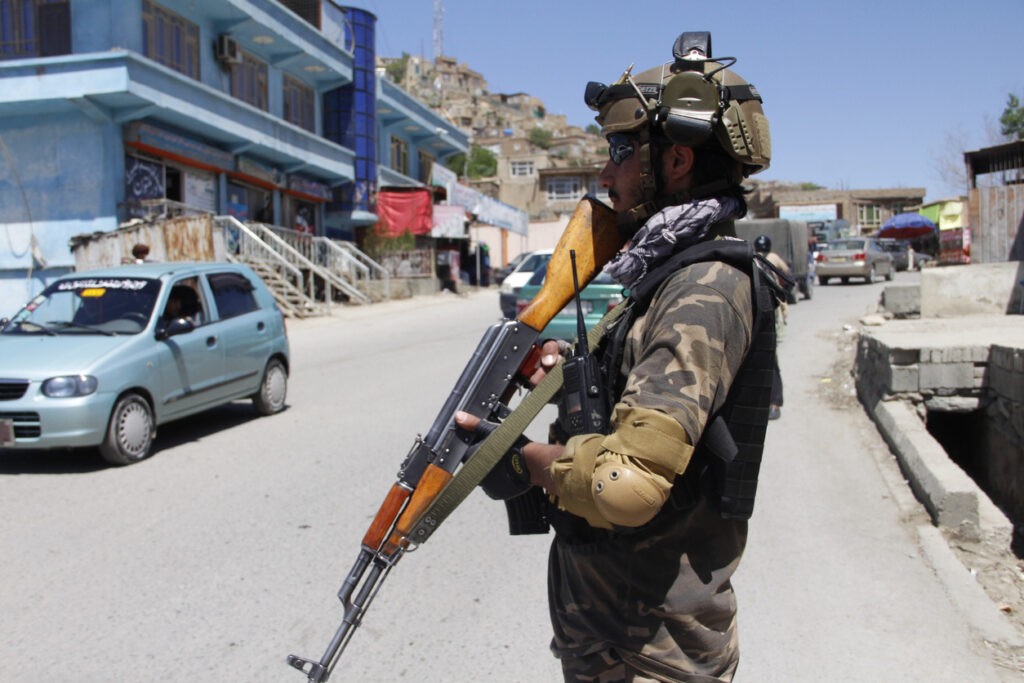
This is part two of a piece of which part one was published here. The topic of a regional approach to solving Afghanistan's problems is increasingly being discussed in various expert and diplomatic circles. The International Crisis Group (ICG), a reputable think tank whose opinion is extremely interesting as part of an "insider vs outsider" set of viewpoints, writes about this in particular. A report from ICG entitled "Taliban's Neighbors: Regional Diplomacy with Afghanistan" is one of the first works to summarize the role and place of the region as regards the situation around Afghanistan. In the voluminous work, the authors touch upon almost all aspects - issues of diplomatic recognition, security, terrorist activity, trade and economic relations within the region, water issues and others. In their conclusions, ICG analysts point out that many steps towards regional cooperation aren't related to Western donors, but European countries should nevertheless be interested. Europeans in particular would benefit from a stable, self-sufficient region that isn't a major source of illegal drugs, migrants or terrorism. But sanctions and other Western measures designed to show disapproval of the Taliban are obstacles to a more functional relationship between Kabul and the countries of the region. Significant progress depends on Western support - or at least tacit acquiescence. While such practical steps need not lead to  recognition of the Taliban regime, they will contribute to regional peace and security. However, experts are concerned that the emerging regional consensus is directly dependent on security and stability issues in Afghanistan - if regional neighbors feel that the government cannot restore order within Afghanistan's borders and contain transnational threats, the consensus may well collapse. If that happens, regional countries may be tempted to choose sides in another intra-Afghan civil conflict, repeating the destructive pattern of past decades. At the same time, experts believe that the first step toward improving regional security cooperation would be to cool down the rhetoric on all sides and get regional players to agree on security issues, even if they have different priorities. Security information sharing within the region also suffers because the Taliban have yet to build a trusted dialog. They lack credibility because of their complete denial of certain threats. Meanwhile, countries in the region and the world are guided by inflated estimates of militant numbers. The ICG's assessments of the security threats posed by Islamic State Khorasan Province (ISKP) are broadly in line with the consensus - in some ways, the growing concern about ISKP is paradoxical due to the fact that the overall level of violence associated with the group has declined over the past two years. The question of whether ISKP could become a more potent transnational threat in the future remains open. So far, its operations outside of its original territory near the Afghanistan-Pakistan border have been limited. On the other hand, ISKP continues to attract recruits from different parts of Central and South Asia and encourages attacks outside Afghanistan - arguably making it the most dangerous armed group in...
Carlsberg Expands Production in Kazakhstan

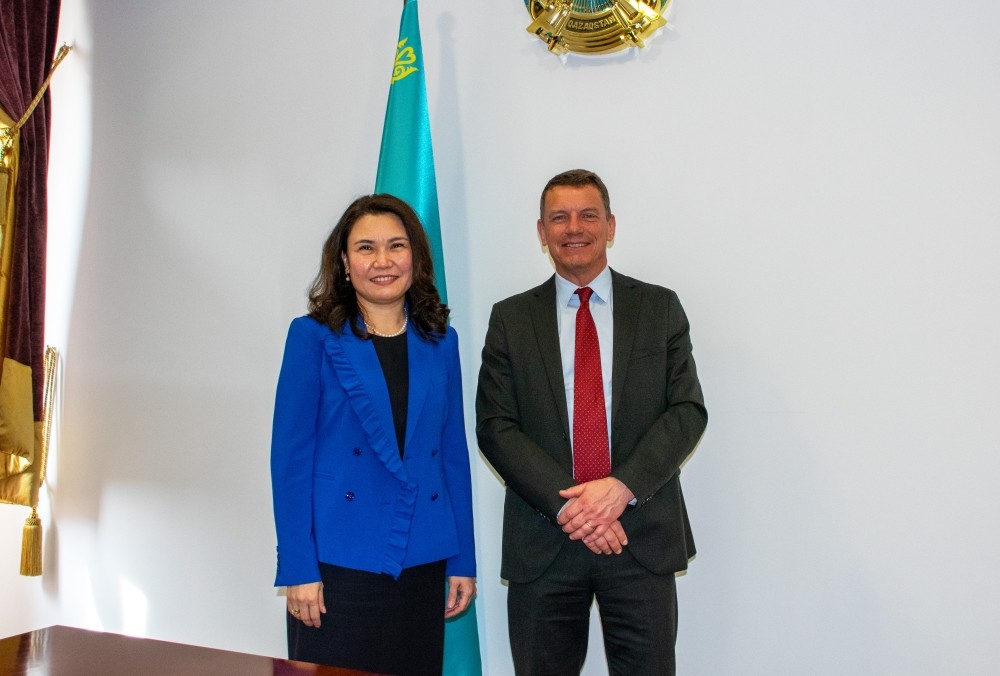
Kazakh Invest has announced that Danish company Carlsberg is to open a new factory in Almaty to produce non-alcoholic beverages worth $50 million. In preparation of its launch, Deputy Minister of Foreign Affairs of Kazakhstan, Nazira Nurbayeva, Chairman of Kazakh Invest, Yerzhan Yelekeyev, and First Vice President for Central and Eastern Europe of the Carlsberg Group, Lars Lehmann met on 18 April. During the meeting, Lars Lehmann thanked the Ministry of Foreign Affairs of Kazakhstan for its support at all stages of the project and pledged the company’s commitment to furthering cooperation with Kazakhstan. Outlining the benefits afforded by the initiative, he reported that the new production facility in Almaty will help ensure 100% localization of brewing and non-alcoholic products for the Kazakh market and in addition, create opportunities for export to Uzbekistan, Kyrgyzstan, Tajikistan, and Armenia. Regarding the company’s existing business in Kazakhstan, Lehmann stated, "Over the past years, Carlsberg Kazakhstan LLP has been consistently included in Kazakhstan's Top 50 largest taxpayers. Our regional hub is also located here. Over the past two years, the share of local raw materials used in our products has increased from 30% to 65% and in the future, should rise to 80%." Carlsberg Kazakhstan currently provides jobs for some 500 employees in Almaty and over 2,000, in distribution companies across Kazakhstan.

Uzbekistan Planning to Abandon State Regulation of Coal Prices

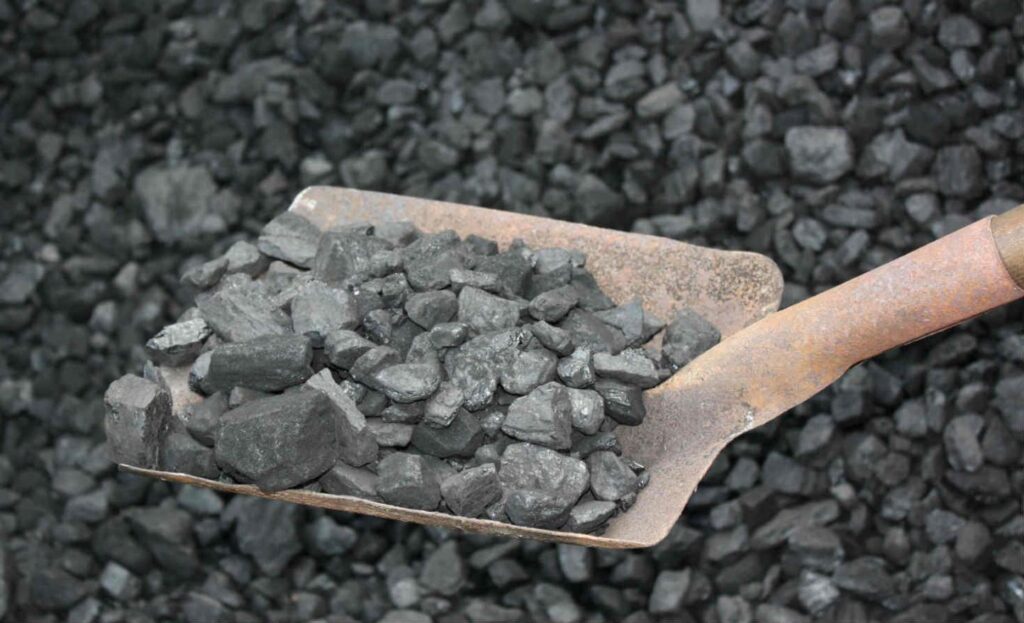
A decision to end Uzbekistan's price caps on coal has been made against the background of rising costs for electricity. To date, hard coal in the country is a social commodity, which is sold to the population at fixed prices. Currently, coal is sold under direct contracts to the population, state organizations and thermal power plants, and because it's included in the list of socially important goods, its price is regulated by the state. Wholesale and retail prices for coal are considered and approved by the Interdepartmental Commission on Tariffs at least once a year (valid through June 1). Retail coal is sold to the population through coal warehouses run by the state company "Kumir ta'minot". The Ministry of Energy, together with other agencies, has a mandate to make proposals for the formulation of wholesale and retail prices "based on market principles" within a month. In 2023 Uzbekistan's coal production rose to 6.19 million tons, up 15.5% from the previous year. However, imports also increased -- 3.1 million tons were purchased from Kazakhstan alone. At the beginning of this year, Uzbek president Shavkat Mirziyoyev instructed domestic mining companies to increase coal production by 22%, taking into account the needs of the population, social sphere and industries. According to experts, the potential of the coal industry is not being properly utilized. At the same time, coal combustion is the main air pollutant in Uzbekistan, especially in Tashkent, which has recently taken a leading position on the list of cities with the worst air quality. During the fall and winter period, greenhouses on the outskirts and industrial enterprises of the Uzbek capital massively use coal and fuel oil as heating and power generation fuel. This has led to a sharp deterioration of air quality indicators and an increase in respiratory diseases among citizens.

CSTO Says It’s Satisfied With Negotiations on Kyrgyz-Tajik Border Demarcation

The Secretary General of the Collective Security Treaty Organization (CTSO), Imangali Tasmagambetov, said in an interview with Tajik media that Tajikistan and Kyrgyzstan are managing to peacefully resolve their border conflict. "The will of the political leadership of the two countries made it possible not only to start and successfully carry out the delimitation of the state border, but also to reach a political solution to the problem," said Tasmagambetov. The problem of a common border between the two countries arose after the collapse of the Soviet Union. The two countries both laid claim to lands rich in water resources. Because of this, there are periodic conflicts between citizens of border villages and residents of enclaves. In some cases, domestic clashes have turned into armed clashes with the use of heavy weapons. One of the bloodiest episodes occurred in September 2022. Military and civilian infrastructure on both sides of the border was destroyed and hundreds of people were injured. The situation in the disputed territories is also monitored by the CSTO, of which Kyrgyzstan and Tajikistan are both members. Representatives of Kyrgyzstan and Tajikistan meet once or twice a month to agree on the demarcation of the disputed section of the border. The heads of the national security services were also involved in negotiations. To date, the sides have agreed on about 800 kilometers of the common border from the previously disputed 975 kilometers. Kyrgyz authorities are making every effort to finally resolve the border issue. The head of the State Committee for National Security (SCNS), Kamchibek Tashiyev, commented: "In order not to repeat all this [fighting on the border] we need to resolve the border issue. We are working on it. God willing, we hope it will be resolved. We have found a common language, the work is going on in a good way. As soon as everything is resolved, we will open the border and live in good neighborly relations. Neighbors are not chosen. God gave us a neighbor, and we must live with him in peace and harmony."

Air Travel Between Tajikistan and Russia Rebounding After Terrorist Attack

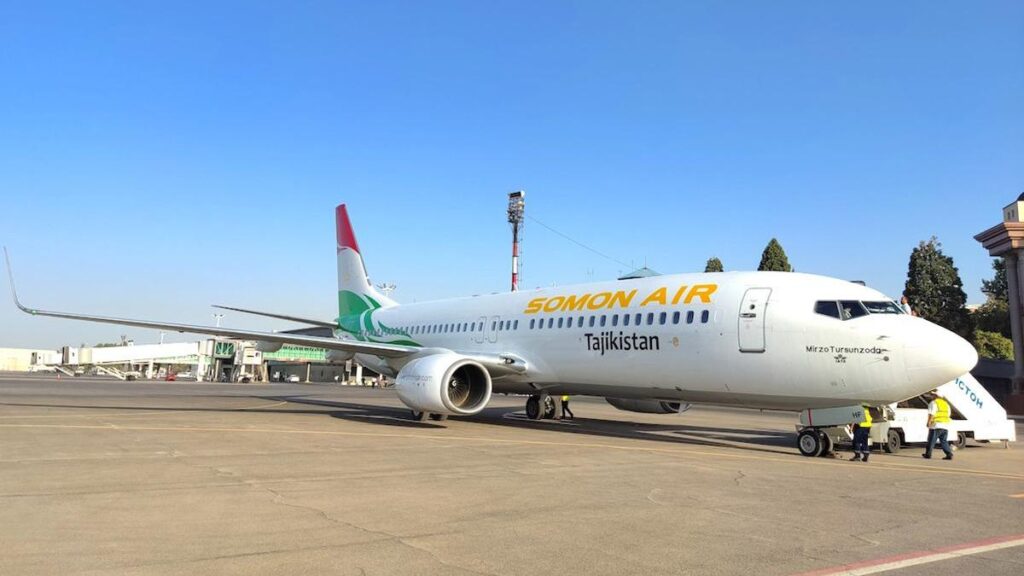
Passenger traffic on flights between Tajikistan and Russia decreased after the terrorist attack at Crocus City Hall near Moscow on March 22, which Tajik members of the Islamic State (IS) are suspected of perpetrating. But the news site Avesta reports that the flow of passengers between the two countries is increasing again. Tajikistan's national airline Somon Air has commented: “Currently, we are observing an increase in the flow of passengers to and from the Russian Federation compared to two weeks ago. We hope that by the end of the month, the flow of passengers will be fully restored to the previous level.” Representatives of Somon Air mentioned that they didn't reduce the number of flights to Russian cities in the wake of the terrorist attack and subsequent political friction, and that the frequency of flights on some routes actually increased. The airline operates approximately 130–140 flights between Tajikistan and Russian cities per month.

Islamic State – Khorasan Province: An Element of Geopolitical Rivalry?

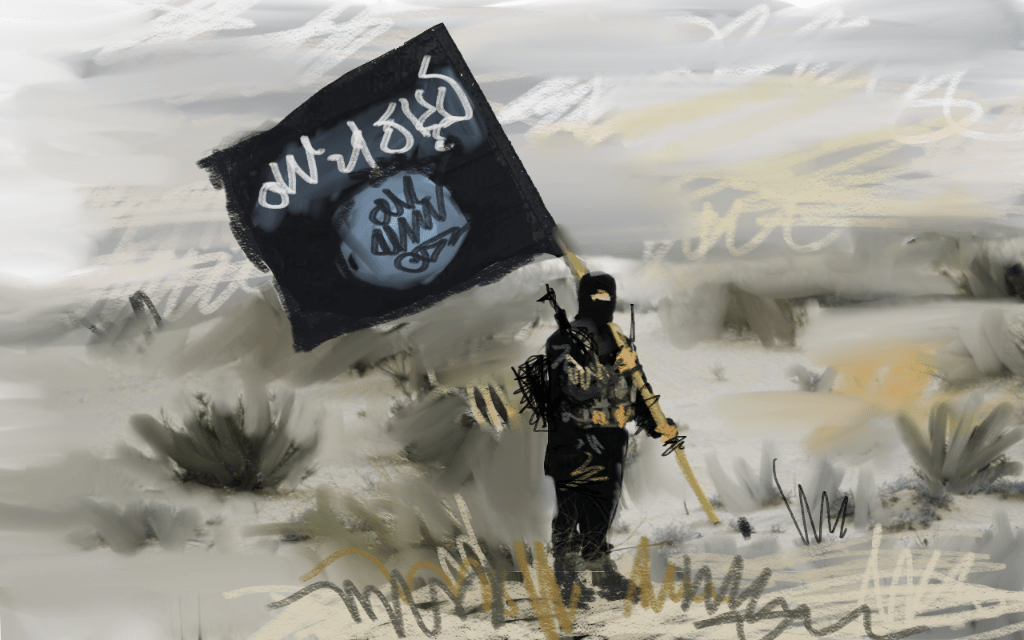
In the aftermath of the terrorist attack in Moscow, the media has once again been saturated with discussions about the terrorist group Islamic State – Khorasan Province (ISKP), also known as ISIS-Khorasan and “Wilayat Khorasan.” At this point, most of the coverage has focused on the Afghan wing of Islamic State, and not its other “wilayats,” such as on the Arabian Peninsula, “Wilayat Sinai” (Islamic State – Sinai Province) or “Wilayat Caucasus” (Islamic State – Caucasus Province). The international media covering the ISKP attack in Moscow, including journalists from Russia, widely speculated that the terrorist group is looking at Central Asia as its next base. Such media coverage included a variety of sentiments indicating that Central Asia should be worried. Reports have suggested that the alliance of Central Asian leaders with Moscow makes them look weak in the eyes of ISKP and that the terrorist threat emanating from Central Asia has become a point of weakness for the Putin regime. It has also been suggested that Islamic terrorism in Central Asia remains a real problem for the FSB, and even though the FSB has extensive experience in fighting extremists in the Caucasus, having committed enormous resources to the issue, Central Asia is a blind spot. Alarm bells sounded that regional jihadist groups have become more powerful. Thus, the terrorist attack in Moscow significantly increased media attention on ISKP in the context of Central Asia. Overall, the ISKP theme fits into existing narratives regarding threats to the southern border of the CIS. Sanaullah Ghafari, Emir of ISIS-K; image: rewardsforjustice.net   The more likely reality is that in Central Asia, ISKP has been more of a challenge to regional security than an existential threat. In recent years, the region has been broadly successful in dealing with threats from Afghanistan.   How real of a threat is the ISKP? A very narrow circle of experts can give a truly objective assessment of ISKP. Information about ISKP membership is contradictory and seemingly based on political considerations. As such, it is difficult to back these up with statistics. The number of fighters reported vary greatly from 2,000 to several tens of thousands. What remains indisputable are two facts: 1. Despite measures declared by the Taliban to eliminate the ISKP, terrorist acts by the group are still recorded throughout Afghanistan, and 2. The group lacks a serious infrastructure in Afghanistan. The activity of ISKP in Afghanistan consists of carrying out targeted, low-level terrorist acts, mainly against local Hazara Shiites. Based on the assessments of the UN Afghanistan monitoring team, the potential of ISKP success looks dubious. In its reports, UN experts point to a decrease in ISKP activity in Afghanistan. Recently, the UN has avoided estimating the size of the group, but previous estimates put it at 1,500-2,200 fighters. At the same time, according to a UN report in January, “ISKP adopted a more inclusive recruitment strategy, including by focusing on attracting disillusioned Taliban and foreign fighters.” Taliban officials, meanwhile, tend to play down the situation....