• KGS/USD = 0.01144 0%
  • KZT/USD = 0.00218 0%
  • TJS/USD = 0.10610 -0.09%
  • UZS/USD = 0.00008 0%
  • TMT/USD = 0.28530 0%
  • KGS/USD = 0.01144 0%
  • KZT/USD = 0.00218 0%
  • TJS/USD = 0.10610 -0.09%
  • UZS/USD = 0.00008 0%
  • TMT/USD = 0.28530 0%
  • KGS/USD = 0.01144 0%
  • KZT/USD = 0.00218 0%
  • TJS/USD = 0.10610 -0.09%
  • UZS/USD = 0.00008 0%
  • TMT/USD = 0.28530 0%
  • KGS/USD = 0.01144 0%
  • KZT/USD = 0.00218 0%
  • TJS/USD = 0.10610 -0.09%
  • UZS/USD = 0.00008 0%
  • TMT/USD = 0.28530 0%
  • KGS/USD = 0.01144 0%
  • KZT/USD = 0.00218 0%
  • TJS/USD = 0.10610 -0.09%
  • UZS/USD = 0.00008 0%
  • TMT/USD = 0.28530 0%
  • KGS/USD = 0.01144 0%
  • KZT/USD = 0.00218 0%
  • TJS/USD = 0.10610 -0.09%
  • UZS/USD = 0.00008 0%
  • TMT/USD = 0.28530 0%
  • KGS/USD = 0.01144 0%
  • KZT/USD = 0.00218 0%
  • TJS/USD = 0.10610 -0.09%
  • UZS/USD = 0.00008 0%
  • TMT/USD = 0.28530 0%
  • KGS/USD = 0.01144 0%
  • KZT/USD = 0.00218 0%
  • TJS/USD = 0.10610 -0.09%
  • UZS/USD = 0.00008 0%
  • TMT/USD = 0.28530 0%

Viewing results 1615 - 1620 of 2471

Islamic State – Khorasan Province: An Element of Geopolitical Rivalry?

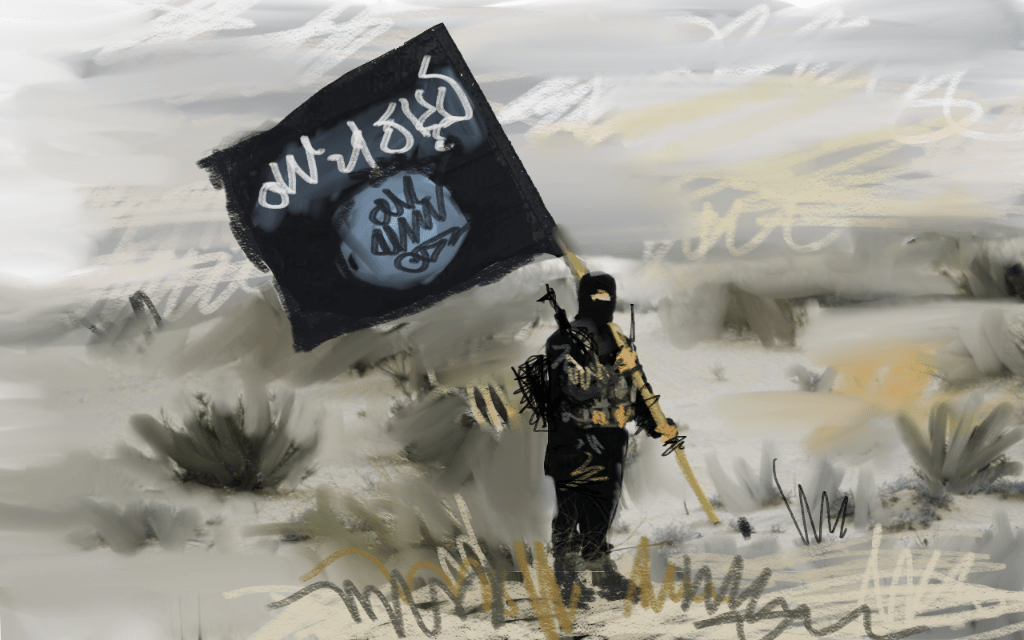
In the aftermath of the terrorist attack in Moscow, the media has once again been saturated with discussions about the terrorist group Islamic State – Khorasan Province (ISKP), also known as ISIS-Khorasan and “Wilayat Khorasan.” At this point, most of the coverage has focused on the Afghan wing of Islamic State, and not its other “wilayats,” such as on the Arabian Peninsula, “Wilayat Sinai” (Islamic State – Sinai Province) or “Wilayat Caucasus” (Islamic State – Caucasus Province). The international media covering the ISKP attack in Moscow, including journalists from Russia, widely speculated that the terrorist group is looking at Central Asia as its next base. Such media coverage included a variety of sentiments indicating that Central Asia should be worried. Reports have suggested that the alliance of Central Asian leaders with Moscow makes them look weak in the eyes of ISKP and that the terrorist threat emanating from Central Asia has become a point of weakness for the Putin regime. It has also been suggested that Islamic terrorism in Central Asia remains a real problem for the FSB, and even though the FSB has extensive experience in fighting extremists in the Caucasus, having committed enormous resources to the issue, Central Asia is a blind spot. Alarm bells sounded that regional jihadist groups have become more powerful. Thus, the terrorist attack in Moscow significantly increased media attention on ISKP in the context of Central Asia. Overall, the ISKP theme fits into existing narratives regarding threats to the southern border of the CIS. Sanaullah Ghafari, Emir of ISIS-K; image: rewardsforjustice.net   The more likely reality is that in Central Asia, ISKP has been more of a challenge to regional security than an existential threat. In recent years, the region has been broadly successful in dealing with threats from Afghanistan.   How real of a threat is the ISKP? A very narrow circle of experts can give a truly objective assessment of ISKP. Information about ISKP membership is contradictory and seemingly based on political considerations. As such, it is difficult to back these up with statistics. The number of fighters reported vary greatly from 2,000 to several tens of thousands. What remains indisputable are two facts: 1. Despite measures declared by the Taliban to eliminate the ISKP, terrorist acts by the group are still recorded throughout Afghanistan, and 2. The group lacks a serious infrastructure in Afghanistan. The activity of ISKP in Afghanistan consists of carrying out targeted, low-level terrorist acts, mainly against local Hazara Shiites. Based on the assessments of the UN Afghanistan monitoring team, the potential of ISKP success looks dubious. In its reports, UN experts point to a decrease in ISKP activity in Afghanistan. Recently, the UN has avoided estimating the size of the group, but previous estimates put it at 1,500-2,200 fighters. At the same time, according to a UN report in January, “ISKP adopted a more inclusive recruitment strategy, including by focusing on attracting disillusioned Taliban and foreign fighters.” Taliban officials, meanwhile, tend to play down the situation....
Kazakhstan Seeks Investment from South Korea

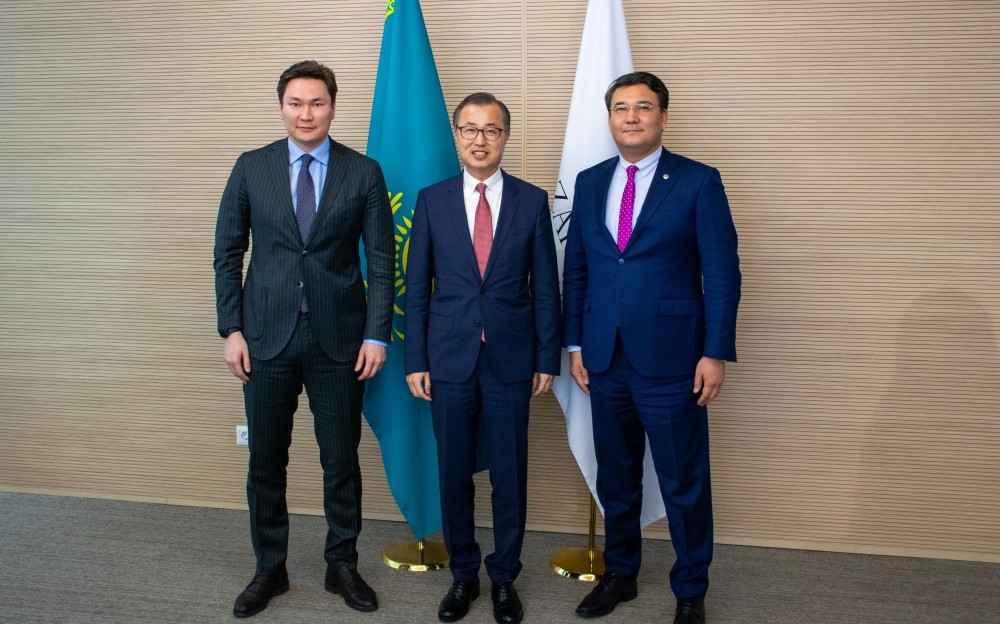
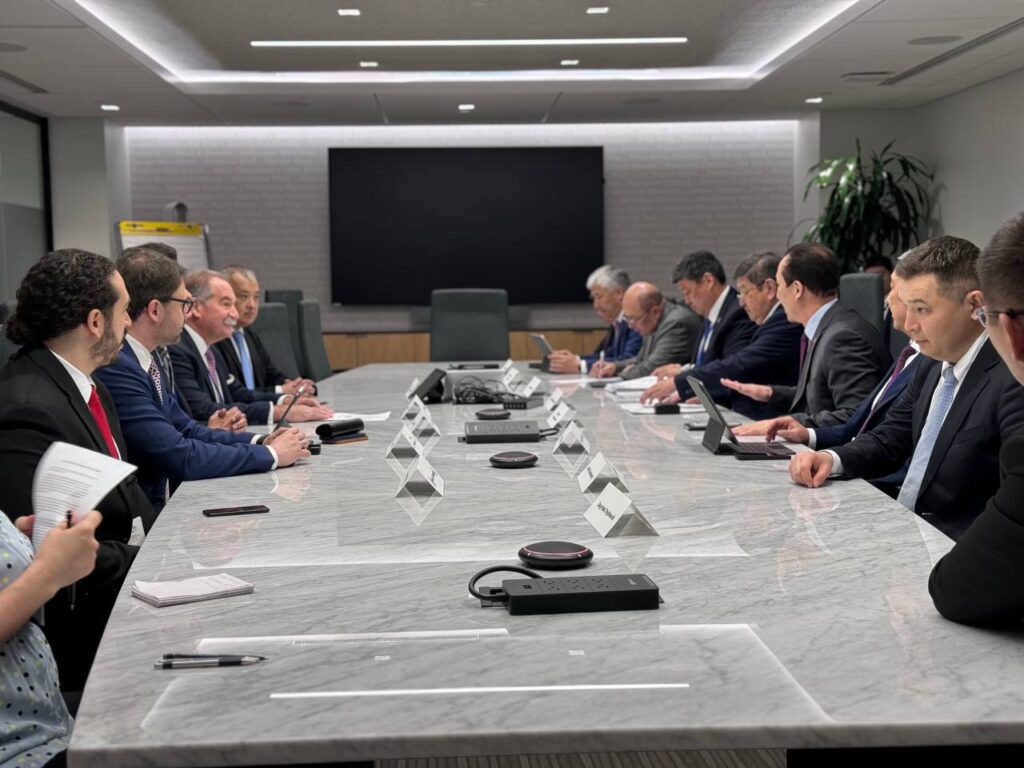
Over the past ten years, South Korea's investments in Kazakhstan's economy have exceeded $6.8 billion and several joint Kazakh-Korean projects with investments of about $1 billion are currently under implementation. The potential to increase and diversify bilateral trade and expand investment cooperation was the focus of a meeting on 16 April between Gabidulla Ospankulov, Chairman of the Investment Committee of the Ministry of Foreign Affairs of Kazakhstan, Yerzhan Yelekeyev, Chairman of the Management Board of National Company Kazakh Invest, and Joe Tae-Ik, Ambassador of the Republic of Korea to Kazakhstan. During the meeting, Ospankulov spoke of the large number of Korean companies working in Kazakhstan and emphasizing that developing economic and investment relations with South Korea is a priority, pledged comprehensive support to companies implementing projects in the country. Kazakh Invest’s Yelekeyev gave thanks to Korean car brands for their input into the Kazakhstan’s successful development of the domestic automotive industry and reported on the high potential for strengthening partnerships in tourism, energy, and petrochemistry. Looking ahead, he stated, “South Korean entrepreneurs work in an export-oriented economy and create competitive, innovative products. We want to adopt this expertise and technology in developing priority sectors in Kazakhstan. In this regard, we are ready to provide a full range of support services, including an existing package of preferences." In return, Ambassador Joe Tae-Ik confirmed his intention to assist in implementing new joint investment projects.

Kyrgyz PM Japarov In U.S. For Talks With Energy Investors

Kyrgyzstan's prime minister Akylbek Japarov is in the United States this week, and will meet with potential investors as Kyrgyzstan looks to grow its energy sector. Japarov will meet with the heads of the World Bank, International Monetary Fund, the U.S. Agency for International Development (USAID), the U.S.-Kyrgyz Chamber of Commerce, Asian Infrastructure Investment Bank, Asian Development Bank and the European Investment Bank. He will also meet with representatives of leading tech corporations, according to the Kyrgyz government's press service. Kyrgyzstan's largest energy project is the construction of a hydroelectric power plant on the Naryn River, for which the World Bank has allocated a soft loan of $5 million for a feasibility study. Kyrgyz authorities are also negotiating a $500 million loan to construct the hydropower plant. In total, according to current estimates, the project will cost about $5 billion. The Times of Central Asia has previously reported that the Kyrgyz Chamber of Commerce and Industry intends to open representative offices in the U.S.

Kazakhstan and Armenia Negotiate on Trade and Transport Cooperation

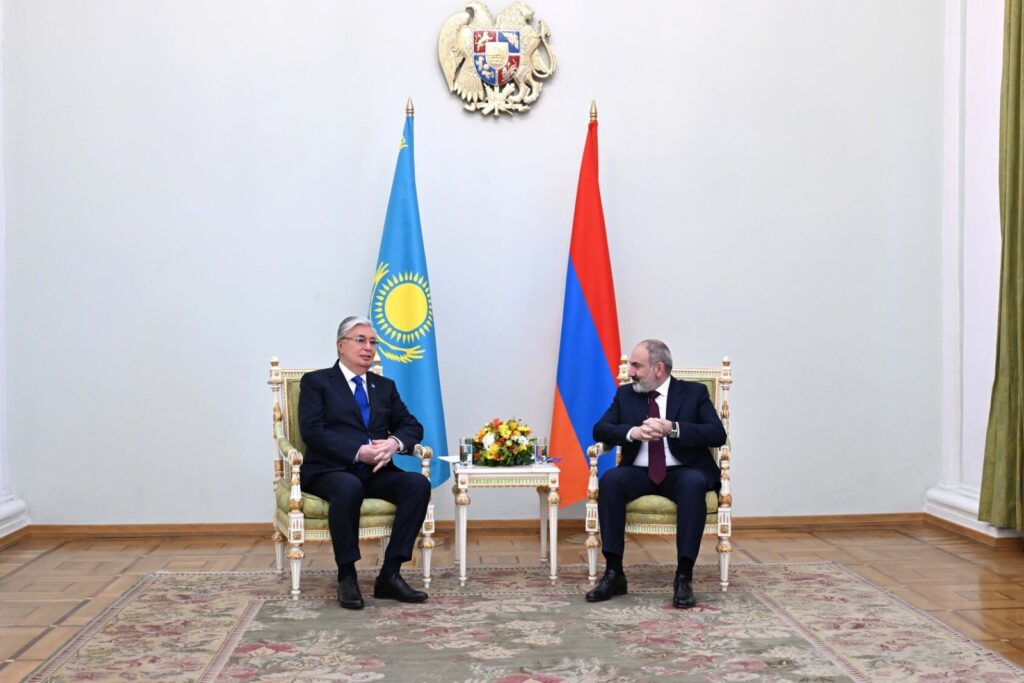
Following negotiations on 15 April in Yerevan, with Armenian Prime Minister Nikol Pashinyan, Kazakh President Kassym-Jomart Tokayev stated that with regard to furthering cooperation, the countries enjoy “unshakable friendship and mutual support.” With reference to developing a more comprehensive partnership, he cited their common goals as expanding and activating bilateral ties, and strengthening regional and international security. Negotiations also focused on enhancing cooperation in economic and investment and the Kazakh president reported, “We - both agreed - that it is necessary to look for new directions that will give impetus to the growth of trade turnover. Kazakhstan is ready to increase its exports to Armenia to $350 million.” Tokayev stressed that development of the transport and logistics sector is key to strengthening Kazakh-Armenian cooperation and hailed Armenia’s readiness to restore transit communications in the South Caucasus under the ‘Crossroads of Peace’ initiative. Aimed at developing communications between Armenia, Turkey, Azerbaijan, and Iran, the Armenian-proposed initiative includes renovating, building, and operating roads, railways, pipelines, cables, and electricity lines. In addition, the Kazakh president welcomed proposals for the operation of direct flights between the countries’ capitals and other cities. Pashinyan likewise emphasized the significant headway made during the negotiations, saying, “We have identified further prospects for strengthening our cooperation, including - transport and logistics. We agree that despite the constant growth in trade turnover, there is still unrealized potential for the development of trade and economic cooperation.”

Central Asian and Gulf Cooperation Council Countries Engage in Strategic Dialogue

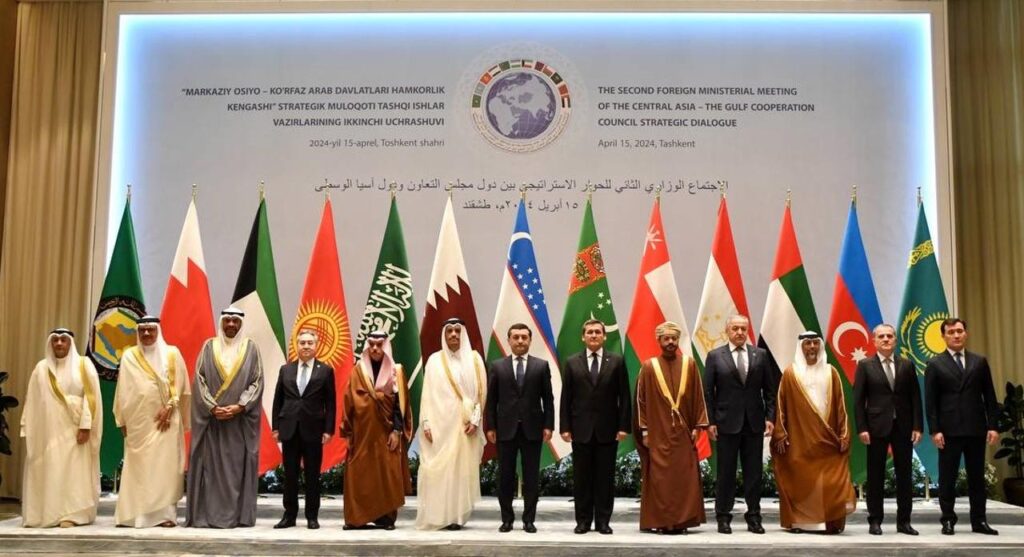
The 2nd Ministerial Meeting of Strategic Dialogue ‘Central Asia – Gulf Cooperation Council (GCC)’, hosted by Tashkent on April 15, was attended by top diplomats from Central Asia and six member states of the Gulf Cooperation Council: Saudi Arabia, the United Arab Emirates, Qatar, Kuwait, the Sultanate of Oman, and Bahrain. Aimed at strengthening comprehensive cooperation between Central Asia and Gulf Cooperation Council states, discussions focused on political, security, trade, economic, investment, transport and logistics, environmental protection, green energy, cultural and humanitarian issues. In his address, Alibek Bakayev, Deputy Minister of Foreign Affairs of Kazakhstan, emphasized the importance of strengthening trade relations between the two regions and encouraged the Gulf States to actively participate in the implementation of joint investment projects in both Kazakhstan and other Central Asian countries. In addition, he outlined various initiatives currently in operation in Kazakhstan including expanding the activities of the Islamic Organization for Food Security and exploiting the potential of the International Technopark of IT start-ups, ‘Astana Hub’. Reporting on the outcome of the Ministerial Meeting, Uzbekistan’s First Deputy Foreign Minister Bakhromjon Aloyev stated that participants had unanimously agreed to a further summit of the Central Asia – Gulf Arab States Strategic Dialogue, to be held in Samarkand in 2025. The ‘Central Asia – GCC’ dialogue platform was launched in 2022 and the first Ministerial Meeting took place that September in Riyadh, Saudi Arabia.

Uzbekistan to Hold CIS Anti-Terror Exercise for First Time in 2024

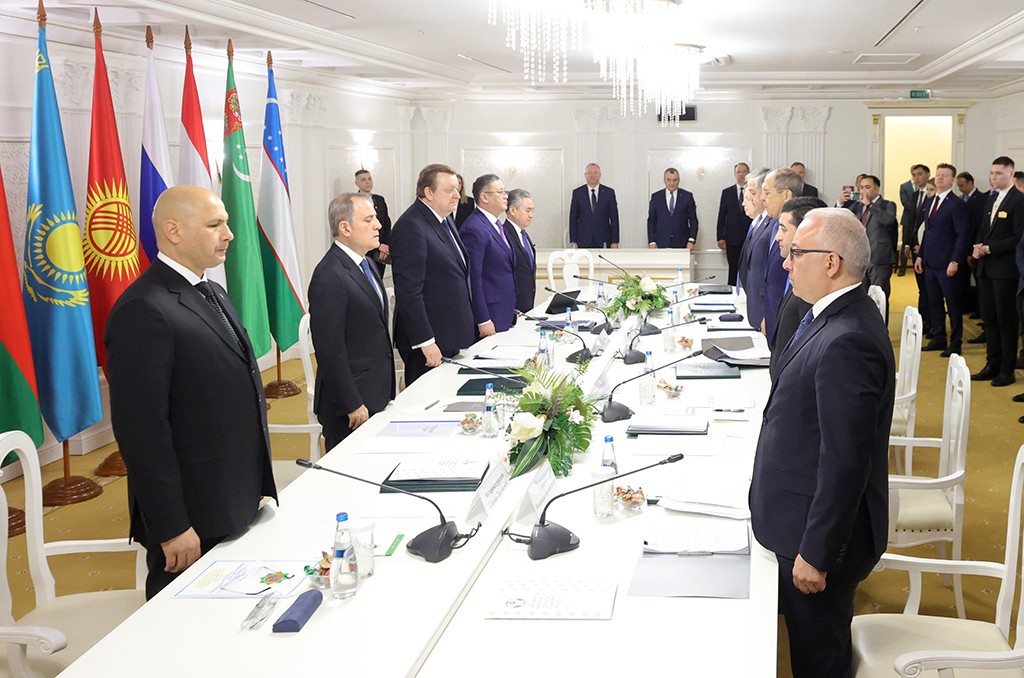
Uzbekistan will host a joint anti-terrorism exercise of countries belonging to the Commonwealth of Independent States, or CIS, for the first time this year. The decision comes at a time of heightened concern after gunmen killed more than 140 people at the Crocus City Hall in Moscow on March 22. The Islamic State group, which is said in some quarters to be seeking to recruit more people from Central Asia, claimed responsibility. The suspected gunmen were Tajik migrants in Russia. Last week’s decision for Uzbekistan to host the drill coincided with a meeting on Friday in Minsk, Belarus, of foreign ministers of the CIS, a group of regional countries that was formed after the collapse of the Soviet Union in 1991. Russia and the Central Asian nations are among the members. An advisory council of the anti-terrorism center of the CIS discussed countering the use of unmanned vehicles and artificial intelligence by extremists, as well as “prospects for the development and use of unmanned aircraft systems in the field of security,” the CIS stated. The advisory council also discussed ways to combat “the use of modern digital tools by international terrorist organizations to finance terrorist and extremist activities,” it said.