• KGS/USD = 0.01144 0%
  • KZT/USD = 0.00216 0%
  • TJS/USD = 0.10718 0.37%
  • UZS/USD = 0.00008 0%
  • TMT/USD = 0.28490 0%
  • KGS/USD = 0.01144 0%
  • KZT/USD = 0.00216 0%
  • TJS/USD = 0.10718 0.37%
  • UZS/USD = 0.00008 0%
  • TMT/USD = 0.28490 0%
  • KGS/USD = 0.01144 0%
  • KZT/USD = 0.00216 0%
  • TJS/USD = 0.10718 0.37%
  • UZS/USD = 0.00008 0%
  • TMT/USD = 0.28490 0%
  • KGS/USD = 0.01144 0%
  • KZT/USD = 0.00216 0%
  • TJS/USD = 0.10718 0.37%
  • UZS/USD = 0.00008 0%
  • TMT/USD = 0.28490 0%
  • KGS/USD = 0.01144 0%
  • KZT/USD = 0.00216 0%
  • TJS/USD = 0.10718 0.37%
  • UZS/USD = 0.00008 0%
  • TMT/USD = 0.28490 0%
  • KGS/USD = 0.01144 0%
  • KZT/USD = 0.00216 0%
  • TJS/USD = 0.10718 0.37%
  • UZS/USD = 0.00008 0%
  • TMT/USD = 0.28490 0%
  • KGS/USD = 0.01144 0%
  • KZT/USD = 0.00216 0%
  • TJS/USD = 0.10718 0.37%
  • UZS/USD = 0.00008 0%
  • TMT/USD = 0.28490 0%
  • KGS/USD = 0.01144 0%
  • KZT/USD = 0.00216 0%
  • TJS/USD = 0.10718 0.37%
  • UZS/USD = 0.00008 0%
  • TMT/USD = 0.28490 0%

Viewing results 397 - 402 of 768

Former Prosecutor General Beknazarov Detained in Kyrgyzstan

A former member of the Provisional Government and former Prosecutor General, Azimbek Beknazarov, has been detained in Kyrgyzstan. The State Committee for National Security (SCNS) said he is suspected of embezzling significant sums of money. The money in question was seized in April 2010 from bank boxes and the Government House during the revolutionary events. The investigation found that Beknazarov, then a member of the Provisional Government, was involved in the theft of these funds through the purchase of expensive real estate in Kyrgyzstan, including in Issyk-Kul, Bishkek, and the Chui and Jalal-Abad regions. “On September 12, 2024, A. Beknazarov was detained and placed in the temporary detention facility of the SIZO of the SCNS KR on suspicion of committing a crime under Article 222 part 3 p.3 of the Criminal Code of the Kyrgyz Republic (Legalization, laundering of criminal proceeds in large amounts),” the SCNS said in a statement. According to the investigation, the funds were allegedly seized from several bank boxes with the permission of the Bishkek prosecutor. At that time, $21 million belonged to President Kurmanbek Bakiyev's cronies. These funds were transferred to the National Bank for safekeeping. However, according to unconfirmed reports, the seized funds may have reached $100 million, which led to rumors that some money did not get into the vault. Azimbek Beknazarov is one of the key figures in Kyrgyz political life. He served as Prosecutor General and Deputy Prime Minister of Roza Otunbayeva's interim government from 2005 to 2010. Beknazarov was also actively involved in the coups d'état of 2005 and 2010, for which he was nicknamed “the bulldozer of revolutions.” The politician was also among the defendants in the “Kempir-Abad case”, in which he was acquitted in June 2024 with his associates.

Tokayev Pardons Chinese Scholar Konstantin Syroezhkin

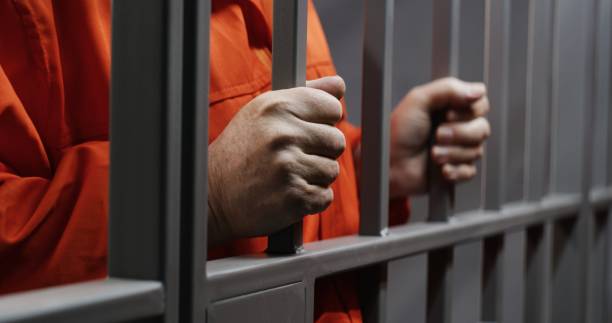
The Kazakh political analyst Andrei Chebotaryov has announced on his Telegram channel that President Kassym-Jomart Tokayev has pardoned a scholar of Chinese studies, Konstantin Syroezhkin, who was convicted of treason in 2019. “On the proposal of the Commission on pardon issues under the President of the Republic of Kazakhstan, the head of state Kassym-Jomart Tokayev pardoned the doctor of political sciences and professor Konstantin Syroezhkin by an appropriate decree. In this regard, his criminal record was removed, and his rights were restored. In general, justice has triumphed! I wish our colleague and mentor good health and new scientific achievements!”,  Chebotaryov shared. Syroezhkin was arrested in February 2019 in a criminal case of high treason. The case caused widespread outrage, especially in scientific circles. At the same time, little is known about it. The trial was closed, and the circumstances of the case were not disclosed. In October 2019, Konstantin Syroezhkin was found guilty of high treason and sentenced to 10 years in prison by the specialized inter-district criminal court of Almaty. In April 2024, the appellate panel granted Syroezhkin's appeal and released him on parole with probation supervision for the remaining term of four years, five months, and 22 days. The board concluded that Syroezhkin's exemplary behavior, conscientious attitude to work, and participation in prison life proved he did not need to serve the entire sentence. Syroezhkin has been engaged in Oriental studies for many years and has had a long academic career in Kazakhstan. Earlier, he worked at the Institute of Uyghur Studies of the Academy of Sciences of the Kazakh SSR and at Kazakhstan's Center of Oriental Studies of the Academy of Sciences. During the investigation that ended his career, Syroezhkin was chief scientific officer of the Kazakhstan Institute for Strategic Studies, from 2006 to 2019. Among his significant works are such studies as “Modern Xinjiang and its Place in Kazakhstan-China Relations,” “Kazakhstan-China: From cross-border Cooperation to Strategic Partnership,” and “Should Kazakhstan be Afraid of China: Myths and Phobias.” He has also researched the life of Kazakhs in China, which became his work “Kazakhs in China: Sketches of Socio-Economic and Cultural Development.” It is worth noting that other well-known scientists have also been convicted in Kazakhstan. For example, in 2011, the leader of the country's Sufi community and a Doctor of Technical Sciences, Professor Sayat Ibrayev, was sentenced to 12 years in prison on charges of “organizing a criminal group.” The same year, he was nominated in absentia for the Alikhan Bukeikhanov Award of the Union of Journalists of Kazakhstan.

Kazakhstan Proposes Lowering Age of Criminal Responsibility

Kazakhstan has proposed lowering the age of criminal responsibility Leading the initiative  at a plenary session, Mazhilis Deputy Magerram Magerramov emphasized, “We, legislators, should probably revise the age of criminal responsibility threshold for some crimes, establishing responsibility not from 14, but from 12 years old, for example, in cases of rape." Magerramov drew attention to unsafe conditions in schools, citing cases of violence and murder committed by minors. In his opinion, bullying, and romanticizing  banditry within the school environment create the basis for violence that continues in the army. The deputy also stressed the lack of a social protection system and called for strengthening educators' roles in preventing schoolchildren's destructive behavior. To this end, he recommended a revision of current approaches to the prevention of criminal behavior among teenagers in tandem with increased attention to moral and ethical education. Magerramov noted that Kazakhstan needs a comprehensive approach by authorized bodies to solving these problems as well as a revision of the current system which allows juvenile offenders to avoid punishment because of their age. In June 2024, a new law came into force in Kazakhstan, which introduced liability for bullying and cyberbullying of minors. However, the deputy believes that additional measures are needed to combat juvenile violence. The age of criminal responsibility varies from country to country. In Japan, Ireland, and Morocco, children can be held responsible for crimes from the age of twelve. In India, the minimum age of responsibility is set at 12, with the caveat that for serious offenses such as murder or rape, the court may take into account the child's conscious actions.

Kyrgyzstan Adds First Three Organizations to List of Foreign Agents

The Kyrgyz Ministry of Justice has posted a list of non-profit organizations that have been given the status of “foreign agent”. On August 27 the Cabinet of Ministers of Kyrgyzstan adopted a decree “On non-profit organizations”. The new law came into force on September 9, since when any NPO engaged in political activities and receiving funding from abroad must apply for inclusion as a foreign agent. The first three organizations to declare themselves as "foreign agents" are the Eurasian Club association of entrepreneurs, the business association JIA, and a branch of the environmental organization Fauna and Flora International. “Applications shall be submitted to the authorized body to maintain the register of NPOs within two months from the date of entry into force of this decree,” the Ministry of Justice explained to The Times of Central Asia. After receiving an application, the ministry has 60 days to verify the information provided. The law stipulates that foreign agent status can be removed if an organization has not received funds or property from foreign sources in the past 12 calendar months, or if it has not been engaged in political activity in the past 12 months. Kyrgyzstan's president Sadyr Japarov has promised the public that the authorities would not prosecute foreign agents and their representatives. “I, as head of state, guarantee that there will be no persecution. We are not a nuclear country. We are not going to fly into space yet. Our state has no secrets to hide from you and your donors,” Japarov said earlier this year.

Turkmenistan Forces Government Employees to Surrender Passports

Employees of state institutions in Turkmenistan are being forced to surrender their biometric passports. According to local sources, the migration service has been instructed to collect passports within a week and submit a report to the State Migration Service in Ashgabat. Workers from the education, healthcare, transportation and other sectors must surrender their passports, or provide a certificate to prove that they do not possess one. The requirement was verbally sent to state agencies in the country's Balkan region on September 9, and enforcement began immediately. “The heads of local organizations have announced to their employees: 'Either hand in your passports or don't come to work from tomorrow afternoon.' Even chief doctors at clinics and school directors must hand in their passports,” a state employee in the town of Turkmenbashi said. Attempts to get comments from the authorities on the measure -- which coincides with an increase in the number of citizens traveling abroad -- were unsuccessful. In addition, as the number of Turkmenistanis joining Russia's army in its war in Ukraine increases, passports have also been taken away from university students. In late August, students of the Turkmen State Pedagogical Institute and the Turkmen State Medical University were forced to surrender their biometric documents.

Turkmenistan Continues to Hide Forced Labor in Cotton Fields

Although the season has  yet to officially open, cotton harvesting is already underway in Turkmenistan. As reported by Azatlyk correspondents, workers, including budgetary employees in the Lebap province, are being watched by Ministry of National Security (MNS) officers. These officers, tasked with preventing information about forced labor being leaked, have forbidden the use of cell phones in the fields. Turkmenistan has long been criticized for its use of forced labor on cotton plantations, and authorities continue to hide the reality. The increased control by security agencies coincides with a briefing in Ashgabat on measures discussed in collaboration with the International Labor Organization (ILO), to eradicate child and forced labor. Despite official bans, including an order issued by Labor Minister Muhammetseyit Sylabov in July this year prohibiting the employment of children under 18, child labor continues in some regions, including Kerki and Chardjev etraps, and teachers confirm that high school students, with their parents' consent, participate in cotton picking. At the same time, cotton pickers complain about underpayment. Employers also repeatedly renege on promised rates of pay and in Lebap, citing the poor quality of the cotton harvested, are known to withhold up to 50% of their workers' salaries, leading to inevitable conflict. Despite orders issued by the authorities to increase pickers' wages in accordance with the state's  procurement prices for cotton, the workers' situation shows no sign of improving.