• KGS/USD = 0.01144 0%
  • KZT/USD = 0.00217 0%
  • TJS/USD = 0.10456 0%
  • UZS/USD = 0.00008 0%
  • TMT/USD = 0.28571 0%
  • KGS/USD = 0.01144 0%
  • KZT/USD = 0.00217 0%
  • TJS/USD = 0.10456 0%
  • UZS/USD = 0.00008 0%
  • TMT/USD = 0.28571 0%
  • KGS/USD = 0.01144 0%
  • KZT/USD = 0.00217 0%
  • TJS/USD = 0.10456 0%
  • UZS/USD = 0.00008 0%
  • TMT/USD = 0.28571 0%
  • KGS/USD = 0.01144 0%
  • KZT/USD = 0.00217 0%
  • TJS/USD = 0.10456 0%
  • UZS/USD = 0.00008 0%
  • TMT/USD = 0.28571 0%
  • KGS/USD = 0.01144 0%
  • KZT/USD = 0.00217 0%
  • TJS/USD = 0.10456 0%
  • UZS/USD = 0.00008 0%
  • TMT/USD = 0.28571 0%
  • KGS/USD = 0.01144 0%
  • KZT/USD = 0.00217 0%
  • TJS/USD = 0.10456 0%
  • UZS/USD = 0.00008 0%
  • TMT/USD = 0.28571 0%
  • KGS/USD = 0.01144 0%
  • KZT/USD = 0.00217 0%
  • TJS/USD = 0.10456 0%
  • UZS/USD = 0.00008 0%
  • TMT/USD = 0.28571 0%
  • KGS/USD = 0.01144 0%
  • KZT/USD = 0.00217 0%
  • TJS/USD = 0.10456 0%
  • UZS/USD = 0.00008 0%
  • TMT/USD = 0.28571 0%

Viewing results 463 - 468 of 702

Lost Identities: Tackling Statelessness in Central Asia

The collapse of the Soviet Union and the subsequent emergence of 15 new countries transformed what was once considered internal migration, leaving an extraordinary number of people marooned across newly established borders. Many found themselves holding obsolete Soviet passports or lacking any documentation with which to verify their birthplace. Such was the scale of the problem that in its 2014 Special Report: Ending Statelessness Within 10 Years, the UN Refugee Agency (UNHCR) estimated that “more than two decades after the disintegration of the Soviet Union, over 600,000 people remain stateless.” This was the case for Vladi, a forty-year-old man with a learning disability, bright blue eyes and a shock of blonde hair, who The Times of Central Asia spoke with at a truck stop in the hamlet of Darvaza in Turkmenistan’s Karakum Desert. When the Soviet Union dissolved in 1991, Vladi was with his father in Ashgabat. With non-ethnic Turkmen not feeling particularly welcome in the chaotic early days of independence, most Russians went home, but during their passage back to Kazan in Tatarstan, Vladi and his father became separated. With no passport, Vladi had become landless, an illegal alien unable to return home. Having drifted from village to village ever since, he’d been in Darvaza for eleven years, now, serving as little more than a whipping boy. Whilst the number of those with expired or invalid papers is difficult to gauge, particularly badly affected are so-called “border brides” who’ve married across national frontiers and found themselves legal in neither country. For years now, though, Central Asia has sought to tackle the issue of statelessness head-on. Thus, for example, in 2020 Tajikistan adopted an amnesty law which granted official status to some 20,000 people. In the same year, a new provision in the law allowed 50,000 stateless people in Uzbekistan to acquire citizenship. TCA spoke with Azizbek Ashurov, the Executive Director of Ferghana Valley Lawyers Without Borders, who in 2019 received the Nansen Refugee Award for his work, which saw the Kyrgyz Republic declared by the UNHCR and UNICEF to be the first country in the world to have eradicated the issue of statelessness.   TCA: How did you first become involved in the question of statelessness, and what brought the issue to your attention? Ashurov: I was born during the days of the Soviet Union, when we all had a unified citizenship; the population was very mobile at that time. There were just administrative borders; there was no need to obtain any authorization documents in order to cross these. When the collapse of the USSR occurred in 1991, a lot of people were caught in another state, studying, working, temporarily residing, etc. So, when the 15 new states were formed, along with many other things, each state faced the question: out of the population on the territory at that moment, who should be recognized as our citizens? All these things had to be linked to the legislation emerging in the states. Many adopted their constitutions two or three years...

UN Special Rapporteurs Denounce Repressions of Independent Media in Kyrgyzstan

A number of UN Special Rapporteurs have denounced the repression of independent media in Kyrgyzstan and sent a letter to the authorities of the country. In the letter, they mentioned recent events related to the publications Kloop, 24.kg and Temirov Live, Vesti.kg  reports. The UN Special Rapporteurs called on the Kyrgyz authorities to fully respect international norms and standards regarding freedom of expression. "We are concerned that attacks on independent journalists and news outlets appear to be a direct result of their independent journalistic investigations. We are concerned that independent media and human rights defenders are worried that they will not be able to exercise their rights to freedom of expression and peaceful assembly, and associations to do their legitimate work without intimidation or reprisal," the letter states. The authors of the letter also ask the Kyrgyz authorities to provide detailed information on the charges against Kloop, 24.kg and Temirov Live. Earlier TCA reported that evidence regarding the case of 11 current and former journalists of Temirov Live, arrested on charges of calling for mass riots, were transferred to the court and will soon be handed over to the judge.

“I Hope Saltanat’s Family Can Find Peace” – Women of Kazakhstan Speak Out on Bishimbayev’s Sentence

On November 9, 2023, former Kazakh Minister of the National Economy, Kuandyk Bishimbayev was caught on surveillance cameras arguing with and then brutally beating his common-law wife, 31-year-old Saltanat Nukenova, for around eight hours outside a restaurant he owned in Astana. A forensic examination showed that she had been strangled, but the cause of death was recorded as traumatic injury to the brain. The high-profile case which was live-streamed garnered international attention. Despite pleading not guilty to premeditated murder, Bishimbayev was sentenced to 24 years’ imprisonment for torturing and murdering Nukenova, and his cousin Bakytzhan Baizhanov to four years for his part in covering up the crime. Prosecutor Aizhan Aimaganova, who became widely-known during the trial, said in an interview with Tengrinews.kz that she believes the verdict will change the country forever. "Family and domestic violence is a pressing problem... I hope that after this trial, women will realize that going to law enforcement is not useless. It is necessary to talk about problems. I think now any domestic tyrant will think twice before raising his hand," she said. [caption id="attachment_18029" align="aligncenter" width="872"] Prosecutor Aizhan Aimaganova; image: Press service of the Astana Court[/caption] While the length of the sentence is a victory for advocates against gender-based violence, both within Kazakhstan and in the many parts of Europe where the trial was also followed closely, many Kazakhs feel it is still too early to say that justice has been done. In an open discussion that is rare in Central Asia, many citizens are posting their concerns on social media that the Nazarbayev-era official will find a way to get out of prison early: there is already speculation that Bishimbayev, a former member of the country’s elite, will leverage his political connections to secure an early release – or be recognized as terminally ill. Following the verdict, TCA took to the streets of Kazakhstan to ask women their opinion. "I finally feel relieved,” Sara, an SMM manager from Astana told TCA. “Twenty-four years is a justified sentence in my opinion. Although tragic, this case drew public attention to a great many issues, such as the need for both a new law against domestic abuse and charities to support victims of domestic violence, which is very prominent in Kazakhstan. The whole country watched the case unfold, and that attention was put to good use since many other domestic violence cases got the attention they deserved. I hope that our justice system will make sure that Bishimbayev doesn't get a chance to get out early and serve his full sentence. The same applies to Baizhanov." "Considering various aspects, including the status of his family and the presence of his children, this sentence is probably objective, especially given the jury's involvement,” 21-year-old journalist, Kamila told TCA. “The main issue now is to prevent his release on parole once the unrest subsides, though I know this is only possible if the victim’s family give their consent.” "From an objective point of view, 24-years for a brutal...

Kazakhstan Still Repatriating Its Citizens From War Zones

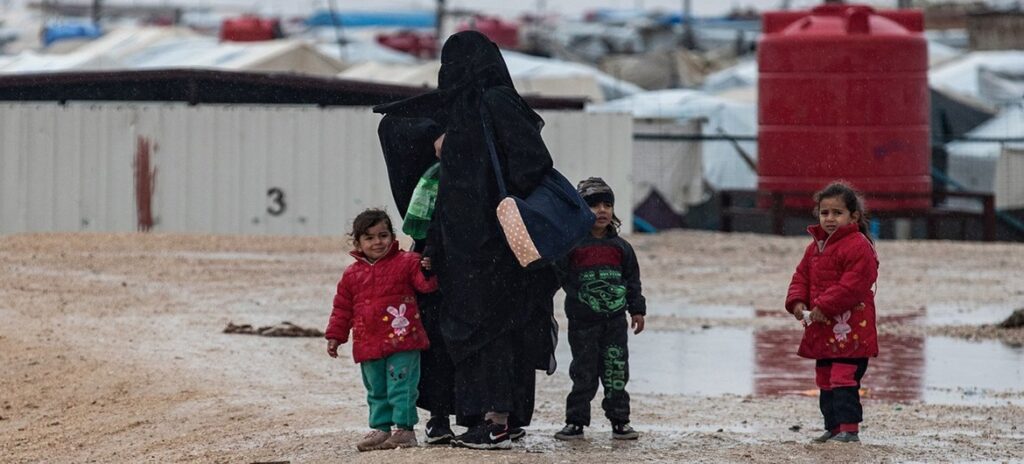
Kazakhstan is still repatriating its citizens from war zones, 24KZ reports. Since 2019, more than 750 Kazakhs have been successfully repatriated to the republic as part of a humanitarian operation. Similar efforts are underway in other Central Asian countries. For example, Uzbek authorities have evacuated more than 500 citizens from conflict zones, compared to 511 in Kyrgyzstan and 381 in Tajikistan. These figures were presented in Tashkent at the first meeting of the Regional Expert Council on Rehabilitation and Reintegration in Central Asia. "The results of our rehabilitation programs are very high. Repatriated women and children do not pose a danger to society and the state. All orphaned children have been taken under the guardianship of their grandparents. Now they are studying at school," psychologist Gulnaz Razdykova said. However, the UN's under-secretary-general Vladimir Voronkov has commented: "Unfortunately, there are still a huge number of people still in camps and detention centers in northeastern Syria and Iraq. First, women and children. We estimate that this is about 55,000 to 60,000 people as of today. So, there is still a lot of work to be done to unload these camps and bring back those who deserve a normal life." Thanks to the active efforts of the Kazakhstani authorities, 180 women, more than 500 children and 37 men have already returned home. In addition, another 34 children left without parents have been successfully reunited with their grandparents. In 2018, Kazakhstan approved a state program to counter religious extremism and terrorism. The special operation to return Kazakh citizens from Syria and Iraq was called "Zhusan", which is Kazakh for wormwood, found on the country's steppe and which symbolizes home for many Kazakhs.

Nationwide Survey on Domestic Violence in Kazakhstan Publishes Results

A large-scale statistical analysis on domestic violence in Kazakhstan was conducted by three professors from Karaganda Medical University: Saule Musabekova, Ksenia Mkhitaryan and Hamida Abdukadirova. The study, conducted between 2019 and 2022, covered 14,342 women between the ages of 18 and 75 from 14 regions of Kazakhstan. The questionnaire included questions about health, children, partners, violence and its consequences, financial independence, and cases of sexual abuse in childhood. The study showed that the main victims of domestic violence in Kazakhstan are women (more than 77.9%). Next on the list are children (17.52%), elderly people (3.5%) and men (less than 1.1%). It is important to note that not all victims seek help from the police or hospitals. Therefore, there may be many more victims. According to the results of the study, the most vulnerable age group is women from 40 to 49 years (41.46%) and from 30 to 39 years (37.80%). Victims of domestic violence were most often unemployed women or those with low levels of education, with two or more children, and economically dependent on their husbands. Most of the victims of violence were from urban areas (63%). It was also found that violence against women is committed by strangers in only 12.2% of cases. In 87.8% it is committed by men with whom the victims are in a close relationship. Almost all of them are intimate partners of the victims (in 95-98% of cases). Half of the women interviewed stated that their intimate partners had attacked them while they were pregnant or raising young children. The forms of systematic violence varied. The most common were physical violence, experienced by 78% of respondents; psychological violence, experienced by 21% of respondents; sexual and physical violence, 16%; economic violence, 7%; and regular sexual violence, 6% of respondents. More than half of the respondents (57%) also stated that over the past year they have faced one of the above forms of abusive behavior more than once (from 2 to 8 times). Almost all cases of violence against women (98.2%) occurred when the abuser was intoxicated. Other factors cited by female researchers were economic problems and male unemployment. Incidents of violence most often occurred at home in the evening and at night (91%). Two-thirds of women (66%) said they had suffered at least one injury after partner violence. The study also took into account physical and sexual abuse of women by men with whom they were not in an intimate relationship. In 92%, the abusers were family members, friends and coworkers, and only 8% were unknown men. The researchers noted that Kazakhstan only formally supports the main international commitments to gender equality. Domestic violence and general tolerance to it persist in the country. "Gender roles and cultural norms are clearly expressed in some regions of Kazakhstan: in the south of the country, educated women often do not look for work outside the home because of the priority of domestic duties, and attempts to restrict women in their choice of occupation are quite common. Thus,...

Kyrgyz Writer Oljobai Shakir Sentenced to Five Years in Prison

On 14 May, the Alameda District Court of the Chui Oblast in Kyrgyzstan sentenced 52-year-old activist and writer Oljobai Shakir to five years imprisonment for inciting mass riots on social media against the government. At the previous hearing, Shakir a frequent and popular blogger, pleaded not guilty to the charges of slander and argued that the aim of his posts was to encourage open dialogue  between the country's leadership and its people on how the government is run. During the trial, the writer's lawyer, Akmat Alagushev, demanded the acquittal of his client and announced his intention to appeal. Olzhobai Shakir has been held in the pre-trial detention center of the SCNS since August 2023 on account of the “provocative nature” of material he posted on Facebook, TikTok and YouTube. Throughout his incarceration, the writer has denied the validity of the criminal charges against him. Renowned for his critical statements against the authorities, Shakir was arrested shortly after he had publicly scrutinized the government’s controversial transfer of four hotels on the shores of Lake Issyk-Kul to Uzbekistan. In a period when the government is increasingly clamping down on political opposition through social media, neither President Sadyr Japarov nor GKNB head Kamchybek Tashiev accepted Shakir’s invitation to be interviewed on the issue. Shakir is a well-established author and supporter of contemporary Kyrgyz literature, but like his activities on social media, his own work at times has proved highly controversial. Published in 2021 in a country where open discussion of LGBT+ rights is still taboo, his novel “Adam+” caused public outcry by relating the emotional challenges he faced during his daughter’s transgender transition.