• KGS/USD = 0.01144 0%
  • KZT/USD = 0.00213 0%
  • TJS/USD = 0.10714 0.09%
  • UZS/USD = 0.00008 0%
  • TMT/USD = 0.28571 0%
  • KGS/USD = 0.01144 0%
  • KZT/USD = 0.00213 0%
  • TJS/USD = 0.10714 0.09%
  • UZS/USD = 0.00008 0%
  • TMT/USD = 0.28571 0%
  • KGS/USD = 0.01144 0%
  • KZT/USD = 0.00213 0%
  • TJS/USD = 0.10714 0.09%
  • UZS/USD = 0.00008 0%
  • TMT/USD = 0.28571 0%
  • KGS/USD = 0.01144 0%
  • KZT/USD = 0.00213 0%
  • TJS/USD = 0.10714 0.09%
  • UZS/USD = 0.00008 0%
  • TMT/USD = 0.28571 0%
  • KGS/USD = 0.01144 0%
  • KZT/USD = 0.00213 0%
  • TJS/USD = 0.10714 0.09%
  • UZS/USD = 0.00008 0%
  • TMT/USD = 0.28571 0%
  • KGS/USD = 0.01144 0%
  • KZT/USD = 0.00213 0%
  • TJS/USD = 0.10714 0.09%
  • UZS/USD = 0.00008 0%
  • TMT/USD = 0.28571 0%
  • KGS/USD = 0.01144 0%
  • KZT/USD = 0.00213 0%
  • TJS/USD = 0.10714 0.09%
  • UZS/USD = 0.00008 0%
  • TMT/USD = 0.28571 0%
  • KGS/USD = 0.01144 0%
  • KZT/USD = 0.00213 0%
  • TJS/USD = 0.10714 0.09%
  • UZS/USD = 0.00008 0%
  • TMT/USD = 0.28571 0%

Viewing results 1 - 6 of 69

Syrian Security Forces Detain Uzbek Fighters During Operation in Idlib

Syrian security forces have detained a group of Uzbek fighters during a security operation in the country’s northwest, according to two Syrian security officials cited by Reuters. The arrests followed unrest in Idlib province after the authorities attempted to detain an Uzbek militant accused of opening fire in Idlib city. According to Reuters, the incident escalated when armed Uzbek fighters gathered outside a government security facility demanding the release of the suspect. The protests later triggered a broader security sweep in several parts of the countryside, including the towns of Kafriya and al-Foua. Locals and Syrian officials said security forces deployed military convoys and reinforcements to the area, where sporadic gunfire was heard during the operation. It remains unclear how many Uzbek fighters were detained. The Syrian Interior Ministry did not immediately comment on the reports. The latest incident highlights ongoing tensions between Syria’s Islamist-led authorities and foreign militants who traveled to the country during the civil war that began in 2011. Many foreign fighters, including Uzbeks, fought alongside factions linked to current Syrian President Ahmed al-Sharaa before he formally severed ties with al-Qaeda in 2016. Reuters previously reported, citing a Syrian security source, that around 1,500 Uzbek fighters were believed to be living in Syria, some accompanied by their families. The Syrian government has attempted to integrate thousands of foreign fighters into the country’s newly reorganized military structures following the December 2024 ouster of former President Bashar al-Assad. Some foreign militants have assumed senior state roles, including a Jordanian commander of the Republican Guard and an Australian head of a newly established sovereign fund. Others, however, have resisted joining state institutions, creating continuing security concerns for Damascus. The recent operation marks the second major confrontation in Idlib involving foreign militants in recent months. Last year, Syrian government raids targeting foreign fighters near the Turkish border drew in Uzbek militants after clashes erupted around a compound linked to French jihadist Omar Diaby, also known as Omar Omsen. At the time, the U.S.-based Institute for the Study of War said Syrian transitional authorities were conducting “a low-level effort to target foreign fighters in Syria who have not integrated into the Ministry of Defense.” The institute reported that Uzbek militants had deployed to reinforce foreign fighters during clashes in Harem, a city near the Turkish border. The same report stated that Syrian authorities had arrested two prominent Uzbek foreign fighters in August 2025, contributing to growing dissatisfaction among Central Asian militant groups operating in Syria.

Syria After Assad: What the New Regional Order Means for Central Asia

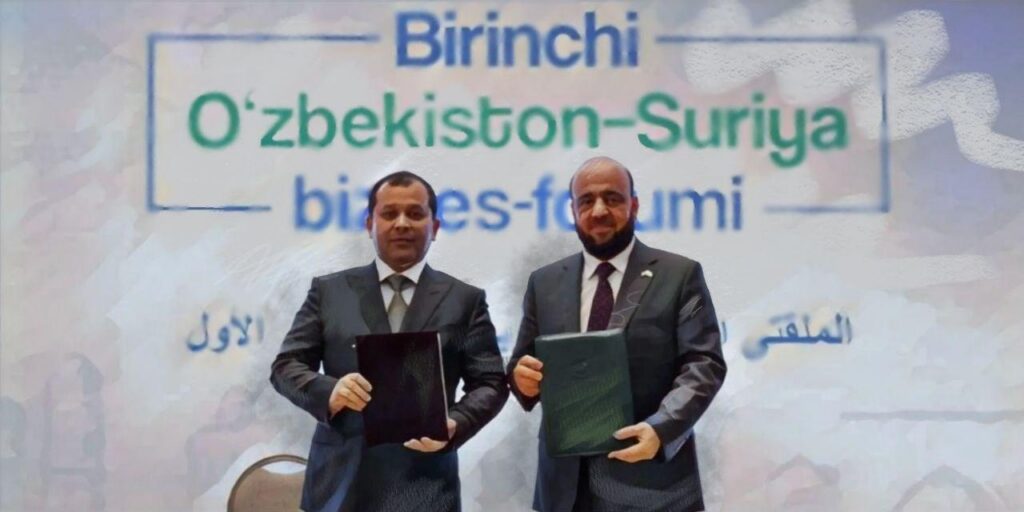
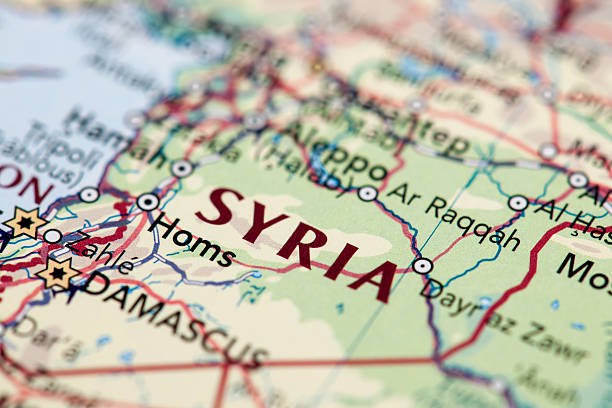
The overthrow of Bashar al-Assad in December 2024 fundamentally reshaped Syria’s regional position. The collapse of the old power structure weakened Iran’s entrenched military and economic networks and left Russia’s previously secured foothold uncertain. As Damascus enters a new political phase, external actors are recalibrating their strategies in a landscape that looks markedly different from that of the past decade. For Central Asian governments, the shift is not merely regional. Syria is becoming a testing ground for how mid-sized states navigate post-conflict environments shaped by larger powers, and a potential arena for economic and diplomatic outreach. As influence is redistributed and new investment and trade corridors are reconsidered, decisions taken in Damascus will increasingly intersect with Central Asia’s own foreign policy and economic calculations. In this emerging landscape, a power vacuum is being filled by states seeking to advance their interests. From the earliest days of Syria’s post-Assad transition, Turkey has been particularly active. As part of its declared comprehensive support for the new Syrian authorities, Ankara has taken steps to consolidate its position in the Syrian Arab Republic. Turkey is actively participating in infrastructure reconstruction, investing in economic projects, and expanding military-technical cooperation with Damascus. In August 2025, Syria and Turkey signed a military cooperation agreement covering areas including counterterrorism training, cybersecurity, demining, military engineering, logistics, and enhanced coordination between their armed forces. That same month, the two sides agreed to establish an intergovernmental business council under the Turkish Foreign Economic Relations Board to promote trade and investment cooperation between public and private companies. Turkish exports to Syria reached $3 billion in 2025, reflecting the rapid expansion of Ankara’s economic presence. For Central Asia, Ankara’s activism carries particular weight. Turkey has simultaneously deepened its political, economic, and security cooperation across the Turkic world, meaning its posture in Syria intersects with its broader regional strategy. A central element of Turkey’s Syria policy remains the issue of refugee returns. However, the prospect of large-scale repatriation is complicated by several factors, notably the long-term presence of around 2.5 million Syrian displaced persons in Turkish society and the absence of stable socio-economic conditions in Syria to support reintegration. Over more than a decade of conflict, a generation of Syrians has grown up in Turkey, many of whom are deeply embedded in the country’s social and economic life. Turkey’s obligations under the 1951 UN Convention Relating to the Status of Refugees, including the principle of non-refoulement, further constrain policy options. Taken together, these factors make large-scale return unlikely until Syria achieves sustained political stabilization and adequate living conditions. In the longer term, Turkey’s objective of neutralizing what it describes as the Kurdish threat emanating from Syrian territory will continue to shape its strategy. Israel has also intensified its military and political engagement since the change of power in Damascus. It has taken steps to establish control over areas adjacent to the Golan Heights and to create a buffer zone, arguing that such measures are necessary to safeguard national security against potential terrorist threats. Israeli officials...

Over 5,700 ISIS Detainees Transferred from Syria to Iraq, Including Central Asians

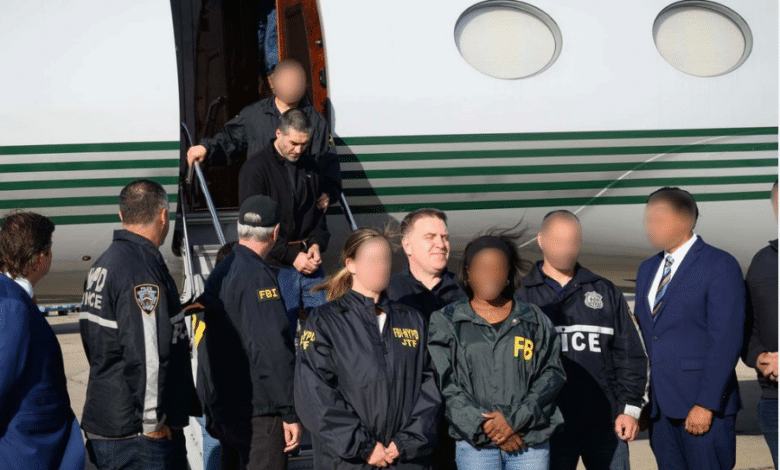
A total of 5,704 ISIS detainees have been transferred from prisons in northeastern Syria to Iraq, including dozens of citizens from Central Asian countries, according to data from Iraq’s Ministry of Justice shared by journalist and Iraqi Observatory for Human Rights founder Mustafa Saadoun on X. The figures, issued by the Iraqi Correctional Service under the Ministry of Justice, detail the number of inmates held at Al-Karkh Central Prison by nationality. Among them are 36 citizens of Uzbekistan, 63 of Tajikistan, 42 of Kyrgyzstan, and four of Kazakhstan. The list also includes 165 individuals identified as “Turkestan,” 130 from Russia, and 3,544 Syrians, who make up the largest group. Saadoun told Shafaq News that the transfer of ISIS detainees from camps and detention centers in northeastern Syria could place “extreme pressure” on Iraq’s already overcrowded prison system. He warned that overcrowding levels could exceed 300% if facilities are not properly equipped to absorb the influx. “The success of the transfer depends primarily on the prisons’ ability to absorb detainees through modern isolation and classification mechanisms,” Saadoun said. He urged authorities to develop rehabilitation and reform programs that uphold the rule of law and prevent ideological spillover caused by the improper mixing of prisoners. He also described deteriorating infrastructure inside detention facilities. “Inmates are often forced to sleep in shifts in narrow, poorly ventilated corridors without sunlight,” he said, adding that such conditions create breeding grounds for contagious diseases, including scabies and tuberculosis. Last month, United States Central Command announced it had begun a “safe and systematic” transfer of around 7,000 ISIS detainees from northeastern Syria to what it described as secure facilities in Iraq, in coordination with Iraqi authorities. However, Reuters later reported that fewer than 500 detainees had been transferred in the initial phase after Baghdad requested a slowdown to negotiate with foreign governments over the repatriation of their nationals and to prepare additional detention capacity. Iraqi officials have cautioned that accepting the full number of detainees could overwhelm the judicial system, particularly as many foreign fighters may face the death penalty under Iraqi law. Central Asian governments have previously faced challenges repatriating their citizens from conflict zones in Syria and Iraq, conducting special operations in recent years to return women and children, while cases involving male detainees have remained more complex.

Up to 300 Tajik Women and Children Remain in Syria and Iraq

An estimated 250 to 300 Tajik women and children remain in Syria and Iraq, according to Suhaili Kodiri Abduhafizzoda, Head of the Department for State Protection of Children's Rights at the Office of the Human Rights Commissioner of Tajikistan. Abduhafizzoda stated that the repatriation process, previously overseen by a dedicated Tajik working group, has stalled since the change of government in Syria. At its peak, approximately 800 Tajik nationals, mainly women and children, were believed to be in the two countries. While more than half have returned home, hundreds remain stranded. Four Repatriation Waves Since 2019 Tajikistan has conducted four formal repatriation missions since 2019, resulting in the return of 382 individuals. These included: 2019: 84 children repatriated 2022: 144 women and children 2023: 104 individuals 2024: 47 women and children In addition, roughly 90 Tajik citizens returned independently, although their exact routes and methods of escape from conflict zones have not been officially disclosed. Final Stage Falls Short Officials had hoped the 2024 operation would mark the final stage of the repatriation effort. However, Abduhafizzoda confirmed that not all remaining women and children agreed to return. “We planned to return all remaining women and children, but this was not possible, primarily because they themselves refused,” he explained. Fear of legal consequences was the most commonly cited reason. Many of the women expressed concern that they would face criminal prosecution upon returning to Tajikistan. However, authorities insist these fears are largely unfounded. According to the ombudsman’s office, none of the women previously repatriated have been charged or prosecuted. Instead, they were reportedly met with state support and reintegration programs. “Some of the women who had already returned had similar fears. But once they came back, they saw that no criminal cases were initiated, and they were all forgiven,” Abduhafizzoda noted. Children Reunited With Families Officials report that all repatriated children have been reunited with relatives and received assistance in resuming their education and adjusting to civilian life. Nonetheless, the fate of those still in Syria and Iraq remains unclear. Legacy of the Islamic State According to official figures, more than 2,500 Tajik citizens joined the Islamic State group after 2013. Many men took their families with them to Syria and Iraq. By 2017, most of the men were reported killed or missing, and some women and children are also believed to have died during the conflict. With no current framework for further repatriation, the future of the remaining Tajik women and children in the region remains uncertain.

Uzbek Militants Become Mediators in Syria Stand-Off

Brandishing assault rifles, the Uzbek fighters in Syria arrived ready to fight. They ended up helping to mediate an end to a confrontation between another group of militants and government security forces.  Fighting broke out early last week when Syrian forces raided a stronghold of the Islamic militant group Fiqrat al-Ghuraba, whose leader, identified as Omar Diaby, is a French national of Senegalese origin. Authorities accused the group of kidnapping and other crimes, though some analysts say the government is under international pressure to rein in foreign fighters who helped oust former leader Bashar al-Assad last year but have resisted integration into the military of Syria’s new, relatively moderate leadership. The confrontation erupted in the city of Harem in Idlib province in northern Syria. Ethnic Uzbek fighters deployed to the area, saying they were prepared to reinforce the so-called French jihadis. Uzbek combatants play a prominent role in two groups of foreign fighters in Syria that are known by the acronyms KIB and KTJ and retain ties to al-Qaida and the Taliban, according to a recent West Point analysis. But the Syrian Observatory for Human Rights, which tracked the country’s long civil war, said an agreement to end the fighting was reached with the mediation of Uzbek fighters and members of the Turkistan Islamic Party, a mostly Uyghur extremist movement. As part of the deal, heavy weapons were to be withdrawn from the region and the mediators were “entrusted to track the fate” of Omar Diaby, according to the observatory.  While the agreement resolved the local stand-off, it didn’t address the broader question of how the Syrian government will deal with the many foreign militants who joined the fight against al-Assad and remain, with their weapons, in the country. At least in the short term, the deal seemed to benefit the extremists who demonstrated leverage in their talks with authorities. Foreign fighter groups had shared the same goal as Hayat Tahrir al-Sham, a group with al-Qaida roots that led the rebel push to overthrow al-Assad and whose leader, Ahmed al-Sharaa, is now trying to project an inclusive image as Syria’s president.  The French-led extremists have accused Syrian authorities of collaborating with France to detain them and turn them over to French authorities. China, which is concerned about Uyghur militants, has also urged Syria’s transitional government to crack down on designated terror groups.

Syrian Government Raid on Foreign Fighters Draws in Uzbek Militants

A Syrian government raid on a compound controlled by French foreign fighters in northern Syria threatened to evolve into a wider conflict after Uzbek Islamist militants arrived to reinforce the French group.  The fighting that started on Monday reflects the challenges that Syria’s transitional government faces as it tries to restore stability to the country after the 2024 ouster of former leader Bashar al-Assad and the end of more than a decade of civil war. Outbreaks of sectarian violence have disrupted progress. An additional problem is how to handle foreign fighters who originally arrived in Syria to fight al-Assad’s forces, but have turned down an invitation to join the new government’s military.  “The Syrian transitional government appears to be pursuing a low-level effort to target foreign fighters in Syria who have not integrated into the Ministry of Defense,” the Institute for the Study of War, a U.S.-based research group, said in a report on Wednesday.  The institute said that Syrian forces targeted a compound run by a group of French militants called Fiqrat al-Ghuraba as well as fighters from the Caucasus in Harem, a city in Idlib province near the border with Türkiye. Fighting broke out and a group of Uzbek foreign fighters deployed to the compound to reinforce the militants, according to the institute.  Syrian security forces “previously arrested two prominent Uzbek foreign fighters in August 2025, which has led to increased discontent among Central Asian foreign fighter groups,” it said.  Videos purportedly showing ethnic Uzbek fighters arriving in Harem are circulating on social media.  An Arabic-language news platform, nabd.com, reported that an Uzbek fighter in one video clip said: “We have gathered in Idlib to support our French brothers." The Syrian Observatory for Human Rights, a Britain-based group that tracks events in Syria, said security forces tried to storm the jihadi camp with “light and medium weapons” and that fighting “left several casualties among French migrants and security forces, amid confirmed arrests of French jihadists.” Syrian authorities said they took action this week after the militants in Idlib had kidnapped a girl and committed other “grave violations” against civilians, the state-run Syrian Arab News Agency reported.  Uzbek militants previously collaborated with Hayat Tahrir al-Sham, a group that led the rebel push to overthrow al-Assad. Hayat Tahrir al-Sham, or HTS, had al-Qaida roots but later split off and moved to project a more moderate image under leader Ahmed al-Sharaa, now Syria’s president. On Tuesday, Britain removed HTS from its list of terrorist organizations as it seeks to engage the new Syrian government. The United States took a similar step in July.  Two mainly ethnic Uzbek groups of foreign fighters in Syria, known by the acronyms KIB and KTJ, retain ties to al-Qaida and the Taliban in Afghanistan, according to an analysis by Kathleen Collins that was published last month by the Combating Terrorism Center at West Point, the U.S. military academy.  The two groups “constitute a resilient force of battle-hardened fighters, demonstrating remarkable staying power in Syria,” Collins wrote.