• KGS/USD = 0.01143 0%
  • KZT/USD = 0.00212 0%
  • TJS/USD = 0.10718 -0.09%
  • UZS/USD = 0.00008 0%
  • TMT/USD = 0.28571 0%
  • KGS/USD = 0.01143 0%
  • KZT/USD = 0.00212 0%
  • TJS/USD = 0.10718 -0.09%
  • UZS/USD = 0.00008 0%
  • TMT/USD = 0.28571 0%
  • KGS/USD = 0.01143 0%
  • KZT/USD = 0.00212 0%
  • TJS/USD = 0.10718 -0.09%
  • UZS/USD = 0.00008 0%
  • TMT/USD = 0.28571 0%
  • KGS/USD = 0.01143 0%
  • KZT/USD = 0.00212 0%
  • TJS/USD = 0.10718 -0.09%
  • UZS/USD = 0.00008 0%
  • TMT/USD = 0.28571 0%
  • KGS/USD = 0.01143 0%
  • KZT/USD = 0.00212 0%
  • TJS/USD = 0.10718 -0.09%
  • UZS/USD = 0.00008 0%
  • TMT/USD = 0.28571 0%
  • KGS/USD = 0.01143 0%
  • KZT/USD = 0.00212 0%
  • TJS/USD = 0.10718 -0.09%
  • UZS/USD = 0.00008 0%
  • TMT/USD = 0.28571 0%
  • KGS/USD = 0.01143 0%
  • KZT/USD = 0.00212 0%
  • TJS/USD = 0.10718 -0.09%
  • UZS/USD = 0.00008 0%
  • TMT/USD = 0.28571 0%
  • KGS/USD = 0.01143 0%
  • KZT/USD = 0.00212 0%
  • TJS/USD = 0.10718 -0.09%
  • UZS/USD = 0.00008 0%
  • TMT/USD = 0.28571 0%

Viewing results 787 - 792 of 1735

Laughter Amidst Ruins: Rediscovering Tajikistan’s Resilience Through Comedy and Cultural Exchange

The UN General Assembly's Human Rights Council recently condemned the government of Tajikistan for its failure to implement the recommendations of a 2019 study by UN representatives. The study focused on the unreconciled atrocities and societal wounds caused by the civil war that swept through the republic after the collapse of the Soviet Union. More than 60,000 people died in this war, and more than 250,000 fled the republic. Reading this news, I was reminded of and reflected on post-war Tajikistan, which I visited in the late summer of 2000. At that time, the country had been in a state of fragile peace for two years, and you could still feel the tension in the air. Since my visit to the country in 2000, the Tajik Civil War has been reflected on by many people in the arts. In the same year that UN researchers were raking up the old tragedy, the film Kazbat was released in Kazakhstan. This movie is a military drama about the real deaths of 17 soldiers of the Internal Troops of the Ministry of Internal Affairs of the Republic of Kazakhstan (now the National Guard), who fell into an ambush in Tajikistan on April 7, 1995. A little earlier, in 2017, Russian writer Vladimir Medvedev released the novel Zakhok, which talks about the horrors of that six-year war through the struggles of a single family, where the mother is Russian, and the children are half Tajik. My visit to this war-torn country was for a reason most wouldn’t have expected - a comedy festival. The group that I traveled with consisted of my teammates, Almaty residents, as well as people from other Kazakh, Uzbek, and Kyrgyz cities. Despite coming from all over Central Asia, we ended up in Tajikistan for the first international СVN festival (СVN - Club of the Funny and Inventive) in Central Asia. СVN is an improv and sketch comedy competition involving students that originated in Soviet times, the point of which is to satirize the surrounding reality through theatrical skits and question-based improv. Due to its satirical nature, СVN was banned for two decades during the Soviet-era. It was later revived during Perestroika, and, in the shortest possible time, became a phenomenon in all universities in Russia and across almost all of post-Soviet space. In Kazakhstan, СVN was developed immediately after the collapse of the USSR. Alma-Ata, which was the capital city back then, organized its own league, which included teams from the leading national universities of that time - Kazakh State University, Narkhoz, Almaty Institute of Transport Engineers, and Almaty State Medical Institute. I belong to the second generation of СVN players. Our task was to popularize this game throughout the republic and attract not only universities but also colleges and schools. Later, the new СVN league went beyond Kazakhstan, starting with friendly meetings with universities from Bishkek, Tashkent, and other Central Asian cities. Then, the International League of СVN, which was created and headed by Alexander Maslyakov, who passed...
Qatar To Help Restore Uzbekistan’s UNESCO World Heritage Site, Bibi-Khanym Mosque

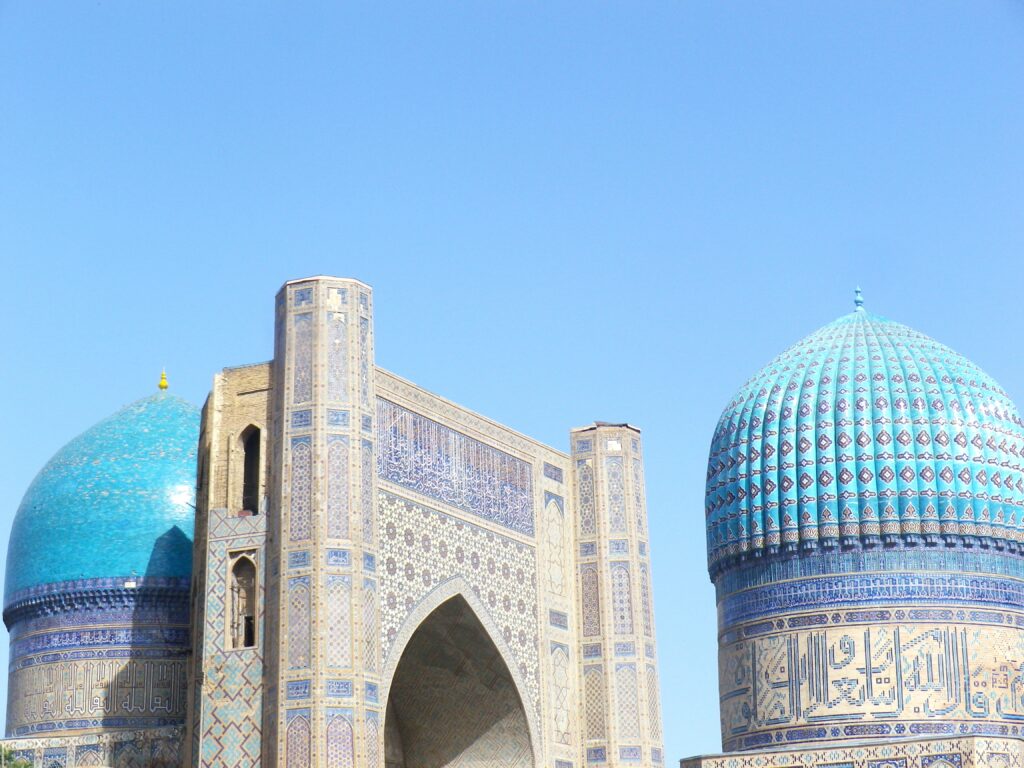
During a recent meeting between the Assistant to the President of Uzbekistan Saida Mirziyoyeva and Sheikha Al Mayassa bint Hamad bin Khalifa Al Thani, bilateral cooperation agreements were signed between the Foundation for the Development of Culture and Arts of Uzbekistan, the Aga Khan Trust, and the Qatar Development Foundation. These agreements envisage not only financial support, but also the exchange of experience in the field of restoration of cultural monuments. In particular, the talks focused on restoring the Bibi-Khanym Mosque, built in the 15th century by Timur and a UNESCO World Heritage Site. According to local media reports, Qatar will actively revitalize this important monument, which attracts tourists from all over the world. Although details of the funding have not yet been disclosed, the work is expected to restore the mosque to its historic appearance, preserving its uniqueness for future generations. The Bibi-Khanym Mosque in Samarkand was built on the orders of Timur (Tamerlane) after his victorious campaign to India in 1399. The construction used 95 elephants to transport materials. Its high tympanum coated in cobalt blue tile-work, the Mosque stands in a grassy courtyard around a large marble carving of the Quran. Named after Timur's Chinese wife, local folklore tells how the architect fell in love with her and stole a kiss. Escaping the wrath of Timur by jumping from the minaret, he sprouted wings and flew to Mecca. At its peak, the mosque could hold up to 10,000 worshipers and became a symbol of Timur's greatness; however, due to its enormous size, the structure began to deteriorate before it was completed. Since then, the building has undergone numerous restorations, especially during the Soviet era.

Eurasian Creative Guild Festival Bridges Cultural Divides

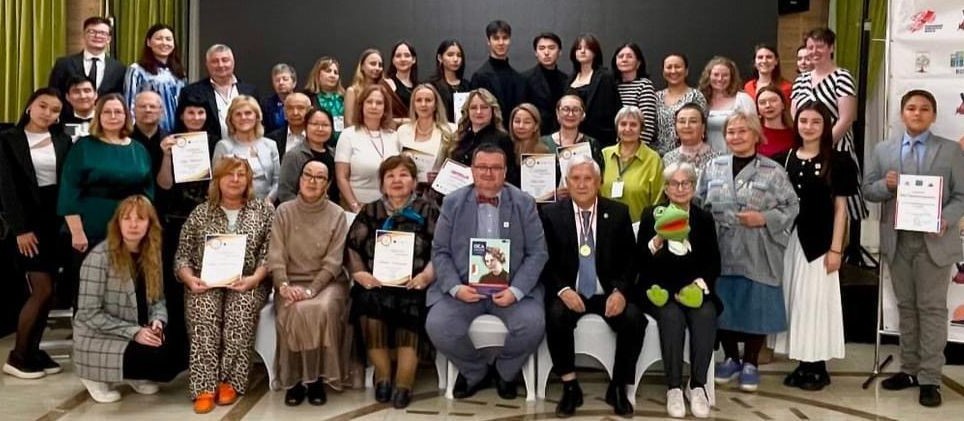
The 4th International Festival of Poetry and Visual Arts, "Voices of Friends: Poetry & Art 2024" took place from September 15 to 18 in the scenic Burabay National Park, Kazakhstan. The festival, organized by the Eurasian Creative Guild (London) and supported by various local entities, showcased a vibrant blend of poetry, visual arts, literature, and cinema. It included the 13th Open Eurasian Literary Festival and Book Forum, the third Burabay International Short Film Festival (BISFF), and the inaugural Future Cinema youth film festival. More than 50 creative individuals from 15 countries, including Kazakhstan, the UK, Belarus, Israel, the UAE, and the U.S., participated, bringing a rich tapestry of cultural expressions to the event. The festival featured an array of activities, started with an introductory meeting and progressing through screenings, presentations, and master classes. Highlights included the introduction of youth films and the BISFF screenings, which received over 80 submissions, celebrating diverse stories through film. Noteworthy films, such as In Search of Healing Water: Chunja-Burabay-Dushanbe and Teacher on Stage were showcased. The festival also encompassed literary salons, art presentations, roundtable discussions on tourism, and a charity auction, providing attendees with a deep dive into the creative and cultural industries. The festival concluded with award ceremonies celebrating achievements in film, poetry, and visual arts. Winners in various categories were recognized, such as Best Short Film awarded to As Easy As Closing Your Eyes from the United States, and announcements for future events were made. With over 500 guests, the event underscored its stated objective of celebrating the power of art to bridge cultures and enhance mutual understanding among diverse communities. The next Guild Festival will be held in Scotland later in the year.

Kazakhstan’s Youth Suicide Crisis: Unraveling the Complex Web of Societal Challenges

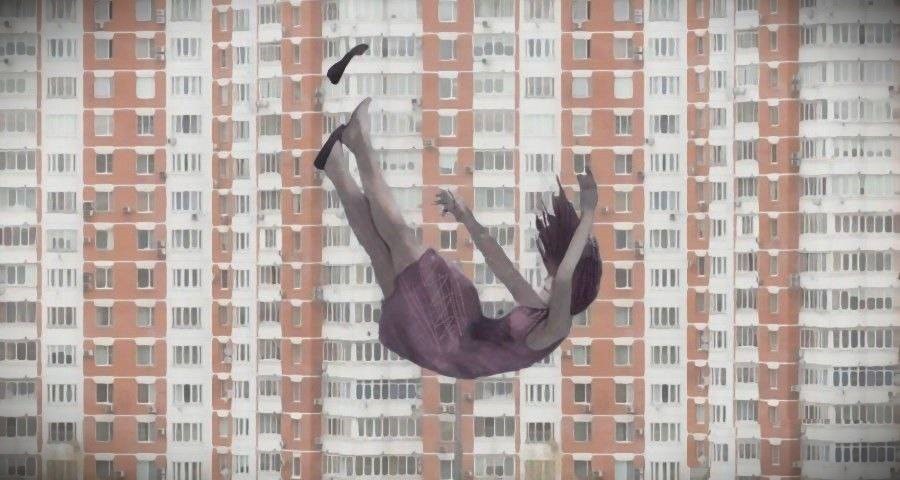
A wave of suicides among teenagers and young adults has swept across Kazakhstan. Parents and the Children's Ombudsman have said children were provoked to do dangerous things by the internet, and deputies have demanded that social networks should be blocked. The media, meanwhile, has been accused of creating a “Werther effect,” fixating on the rash of suicides and thus encouraging teenagers to repeat these acts of self-harm. However, experts believe the cause is much more nuanced and cannot be eliminated by blocking harmful content alone. Chronicle of a Fateful September On September 13, a teenager fell from an eighth-story window in Astana. The boy died of his injuries. The very next day, a schoolgirl plummeted from a fifth-floor window in Shchuchinsk. The 12-year-old girl is in hospital, and the causes of both incidents are still under investigation. On September 16 in Almaty, two seventh-grade students from school No. 25 named after the writer I.Esenberlin, left class and climbed to the attic of a neighbor's apartment complex. The girls both fell to their death from the roof. “I came, and I saw two girls lying there. They had jumped from the roof," an eyewitness stated. "The girls were about 13 years old; seventh graders. One had a backpack next to her, and the other had no shoes and was wearing black tights. She had taken her shoes off and placed them neatly. One fell on a car, and her body rolled away. The second was immediately killed on the asphalt.” Later, it became known that one of the girls was the daughter of a famous Almaty ecologist and artist. Deputy Interior Minister Igor Lepekha said that what happened "is a suicide; the case was opened based on it being suicide." On September 21, another schoolgirl fell from a high-rise in Almaty. Allegedly, the girl left the house to perform a routine task, but climbed to the 13th floor, from where she plunged. The Almaty Police Department confirmed the girl's death and has opened a criminal case. By this time, in schools, online, and on social networks, parents had started to spread panicked rumors about the impact on children of a particular computer game, similar to the semi-mythical game “Blue Whale.” In the past, Blue Whale has been decried as a malicious game which encourages teenagers to commit suicide and acts of violence, but no convincing evidence has ever been presented. The Almaty police stated that gossip regarding the involvement of dangerous internet games in the girls' deaths is not valid and reminded the public about their responsibility vis-à-vis spreading false information. On September 22, in the yard of a multi-story residential building in Almaty, the body of a 3rd-year cadet from the Border Academy of the National Security Committee (NSC) who was on regular leave was found. “The cause of death was a fall from a height,” the NSC press service reported. On September 23, also in Almaty, multiple sources reported that a young man had tumbled from a high-rise building. Police...

Kazakhstan’s Largest Hackathon to Take Place Across the Country

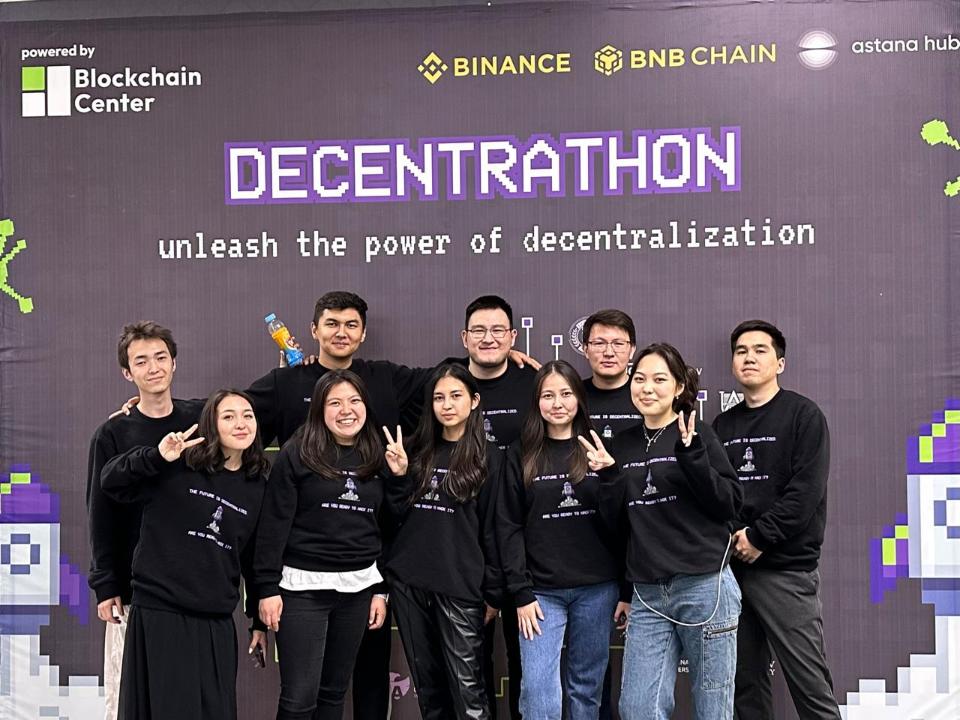
Decentrathon 2.0, Kazakhstan's largest multi-location hackathon, will be held on October 18-19 across major cities, including Astana, Almaty, Shymkent, Karaganda, and others, gathering more than 2,500 developers from the country’s 17 regions to compete for a $50,000 prize. According to the Ministry of Digital Development, Innovations, and Aerospace Industry, participants will tackle challenges related to AI, Blockchain, GameDev, and Telegram mini apps. Additionally, a virtual job fair will offer developers the chance to connect with top companies and explore local and international career opportunities. Organized by the Blockchain and AI Technology Center (BAITC) and Astana Hub, with support from the Ministry of Digital Development, Innovations, and Aerospace Industry, this year’s hackathon will be an expanded including leading universities and tech parks, making it a truly national event. The inaugural event in 2023 gathered more than 1,500 participants from nine regions. Zhaslan Madiyev, Minister of Digital Development, Innovations, and Aerospace Industry, stated that: "Decentrathon is the first large-scale IT event spanning every region of Kazakhstan and one of the key initiatives of the Generative Nation movement this year. Our goal is to drive the country's AI transformation. Initiatives like this must have a national scope, providing young talents across Kazakhstan with the opportunity to contribute to technological and AI development." Magzhan Madiyev, CEO of Astana Hub, added, "AI engineers play a pivotal role in Kazakhstan's AI transformation. The Generative Nation movement’s initiatives focus on developing human capital in AI, enabling them to work on projects that will transform our country and have a global impact."

Sumbar the Life-Saving Brown Bear Settles in Ashgabat Zoo

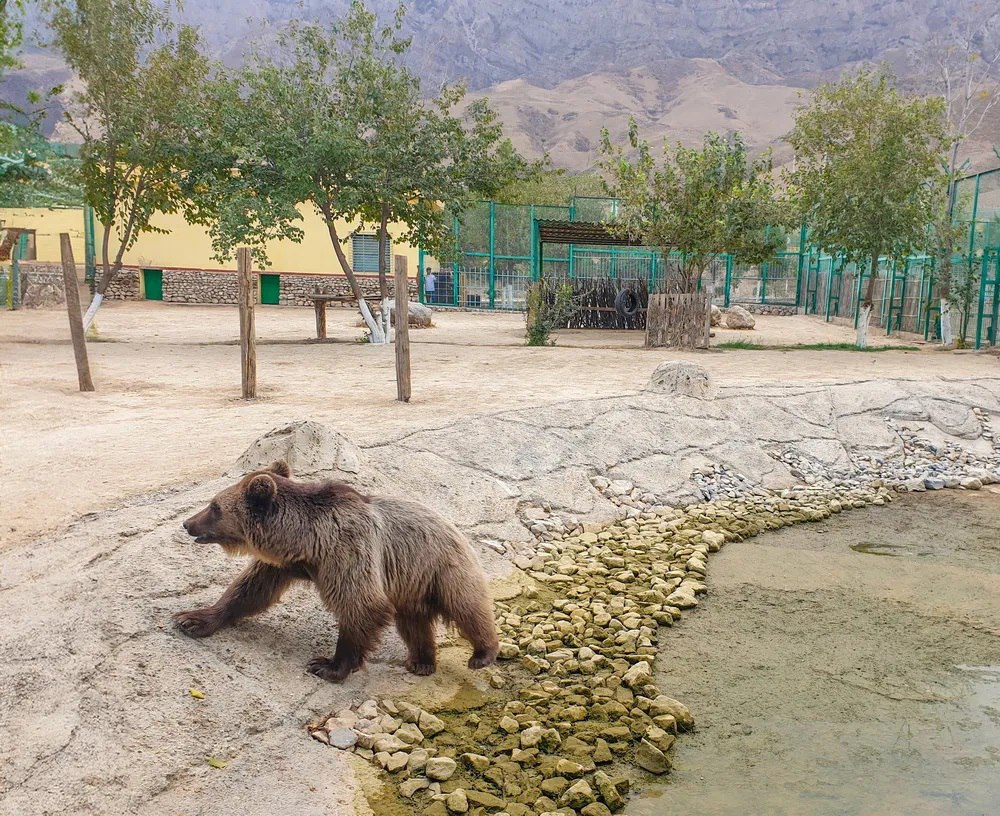
The National Museum of Wildlife of Turkmenistan, known as the Ashgabat Zoo, has a new resident — a brown bear named Sumbar, transferred from the Volokolamsk Center of the Moscow Zoo. This bear is not an ordinary bear: earlier, as a donor, his blood saved the life of another female bear. This is a rare case because there are seven groups of bear blood, and the blood of Sumbar suited the sick animal. The bear was given to the Ashgabat Zoo on the initiative of the Eurasian Regional Association of Zoos and Aquariums (EARAZA) in honor of the 33rd anniversary of Turkmenistan's independence. Sumbar will have to adapt to a new place where comfortable conditions have been created for him in a spacious enclosure. Caring zookeepers have hidden food in different corners of the zoo's territory so that the bear can show its instincts. Currently, Sumbar is showing unexpected vegetarian preferences, favoring fruits and nuts. He is soon to be joined by a female brown bear named Aydere, also from the Moscow Zoo. Given that bears reach sexual maturity by age three and that Sumbar and Aydere are still "little," they have time to adapt and become friends, with the prospect of starting a family in the future. This case is unique because it is extremely rare for bears to become donors due to the difficulty of blood group compatibility. When veterinarians discovered that a sick bear cub had a serious illness requiring a blood transfusion, Sumbar's blood matched perfectly. Thanks to this, the bear cub's life was saved. This case attracted the attention of zoologists and veterinarians worldwide, and Sumbar gained heroic status among his subscribers and the center's staff.