• KGS/USD = 0.01143 0%
  • KZT/USD = 0.00205 0%
  • TJS/USD = 0.10433 0%
  • UZS/USD = 0.00008 0%
  • TMT/USD = 0.28577 0%
  • KGS/USD = 0.01143 0%
  • KZT/USD = 0.00205 0%
  • TJS/USD = 0.10433 0%
  • UZS/USD = 0.00008 0%
  • TMT/USD = 0.28577 0%
  • KGS/USD = 0.01143 0%
  • KZT/USD = 0.00205 0%
  • TJS/USD = 0.10433 0%
  • UZS/USD = 0.00008 0%
  • TMT/USD = 0.28577 0%
  • KGS/USD = 0.01143 0%
  • KZT/USD = 0.00205 0%
  • TJS/USD = 0.10433 0%
  • UZS/USD = 0.00008 0%
  • TMT/USD = 0.28577 0%
  • KGS/USD = 0.01143 0%
  • KZT/USD = 0.00205 0%
  • TJS/USD = 0.10433 0%
  • UZS/USD = 0.00008 0%
  • TMT/USD = 0.28577 0%
  • KGS/USD = 0.01143 0%
  • KZT/USD = 0.00205 0%
  • TJS/USD = 0.10433 0%
  • UZS/USD = 0.00008 0%
  • TMT/USD = 0.28577 0%
  • KGS/USD = 0.01143 0%
  • KZT/USD = 0.00205 0%
  • TJS/USD = 0.10433 0%
  • UZS/USD = 0.00008 0%
  • TMT/USD = 0.28577 0%
  • KGS/USD = 0.01143 0%
  • KZT/USD = 0.00205 0%
  • TJS/USD = 0.10433 0%
  • UZS/USD = 0.00008 0%
  • TMT/USD = 0.28577 0%

Viewing results 847 - 852 of 1444

VI ECG Film Festival Goes Beyond the Moving Image

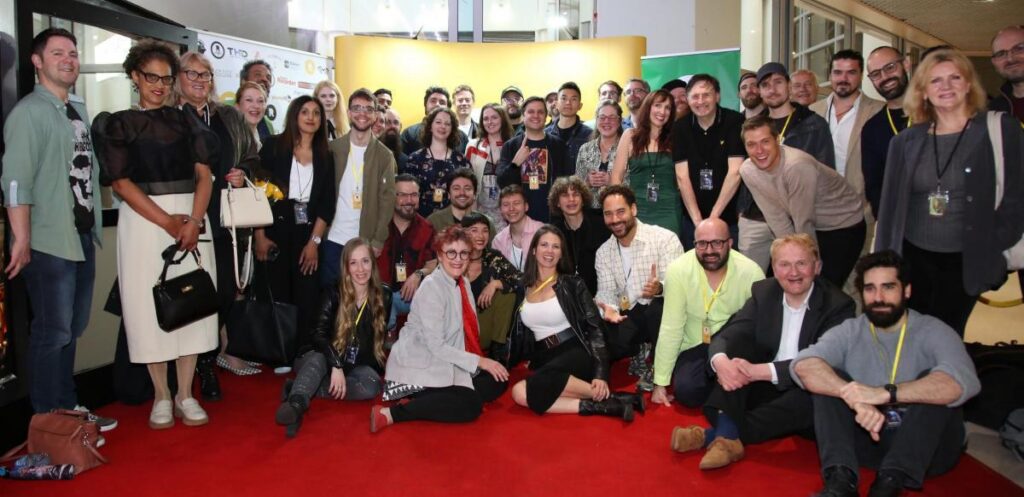
The VI ECG Film Festival staged in London from 24-28 May, in partnership with the eighth UK Romford Film Festival at Premier Cinemas Romford, attracted over 100 entries from 22 countries. The Eurasian Creative Guild (ECG) is the sole platform promoting Eurasian cinema in the UK and this year’s festival featured work by directors from Poland, the UK, Kyrgyzstan, Spain, Russia, Iran, Uzbekistan, China, Armenia, and Kuwait. The non-profit organization was founded by Marat Ahmedjanov in London in 2015 to unite and promote Eurasian cultural and artistic practices to English-speakers, and as befits its mission, the festival went far beyond the ‘moving image’ to showcase work by visual artists, authors, poets, and musicians. In film, the competition attracted over 100 competition entries from 22 countries and with support from  SIFFA film festival organiser Lubov Balagova-Kandur, included screenings of several Russian films such as the comedy ‘Aul's Challenge;’ the war drama ‘Maria. Save Moscow;’ a documentary on the poet ‘3723 Voznesensky’, and a Jordanian love story ‘Cherkes’. Central Asian films took several awards, including Best Eurasian Short film: ‘Happy Independence Day’ by Camila Sagyntkan (Kazakhstan); Best Eurasian Documentary Film: Sailing Seven Seas by Tatania Borsh (Russia-Kyrgyzstan); Audience Choice Award: ‘Sharaf Rashidov- Inspirer for the Development of Mirzachul’ by  Shukhrat Khaitov (Uzbekistan); and the Honorary Achievement Certificate for Documentary Drama: ‘Behtarin’ by Mohsen Rahimi (Kuwait-Tajikistan). Visual artists from Kyrgyzstan took centre stage in the exhibition ‘‘Nomadic Narratives’, which also highlighted work by Dungan artist Rahima Arli, created during her ECG Horizons Rugby residency near London. ECG has a long and ongoing tradition of publishing works by Central Asian writers which would otherwise remain inaccessible to English readers, under Hertfordshire Press. Editor John Farndon took pleasure in presenting three new stories under the collective title ‘Akhriman, Lord of Darkness’ by highly renowned Tajik author Gulsifat Shahidi, as well as ‘Is It Necessary to Worship at Notre Dame?’ by Kazakh author Alikhan Zhaksylyk. Lovers of literature also enjoyed the opportunity to view the Kazat Akmatov Memorial in Romford, which both honours the esteemed Kyrgyz writer and serves as a beacon of strength for all Central Asian artists living and visiting London. The well-established Azerbaijani poet Sahib Mamedov read poems which he dedicated to the festival participants. Music too, featured highly at the event. In addition to a concert, medals of appreciation from Marta Brassart, ECG Chair, were presented to the musical duo Sherkhon, alongside artist Rahima Arli and young film director Timur Akhmedjanov, and recitals given by the duo from Uzbekistan Sherxon and the director of the Kazakh Cultural Centre in London, Kamshat Kumysbai. Now in its sixth season, the festival continues to gather momentum and this year, attracted audiences from Italy, Kazakhstan, Poland, USA, Russia, Kyrgyzstan, Austria, and Uzbekistan, and welcomed as guests of honour, the Mayor of Romford, Gerry O'Sullivan with MPs from the London Borough of Havering, and representatives from the embassies of Kyrgyzstan, Uzbekistan, Tajikistan, Russia and Belarus. As testimony to ECG’s unique promotion of Eurasian film, cinema audiences were...

Child Malnutrition Hits Central Asia

In its recently published report “Child Food Poverty 2024,” UNICEF has identified 63 countries, including four Central Asian countries, where child malnutrition has reached a  crisis point. Severe child food poverty threatens the survival, growth, and development of an estimated 181 million children under five globally, denying them the opportunity to escape social and economic deprivation. As stated in the report, “Child food poverty harms all children, but it is particularly damaging in early childhood when insufficient dietary intake of essential nutrients can cause the greatest harm to child survival, physical growth, and cognitive development. The consequences can last a lifetime: children deprived of good nutrition in early childhood perform worse in school and have lower learning capacity in adulthood, trapping them and their families in a cycle of poverty and deprivation.” The indicator of food ration determines children’s food security. It was developed by UNICEF and the World Health Organization (WHO). For healthy growth and development, children should consume at least five products from the following eight groups: Breast milk Grains, roots, tubers, and plantains Pulses, nuts, and seeds Dairy products Fresh foods Egg Vitamin A-rich fruits and vegetables Other fruits and vegetables. If children consume products that belong to just two groups, they live in extreme nutritional poverty; if they consume products belonging to three-four groups, they live in a moderate state related to nutrition. If they consume products belonging to five or more groups, they are considered not to be in a poor situation related to nutrition. Uzbekistan and Kyrgyzstan have average levels of child malnutrition, Turkmenistan has a low level, and Tajikistan has a high level.

Protecting Women and Children Helps Preserve, Not Contradict, Traditional Family Values in Kazakhstan

In today's rapidly evolving world, traditional values can sometimes clash with progressive movements advocating for inclusivity and modern perspectives in many areas of life. While these values are often seen as barriers, they can instead serve as a source of stability and continuity when thoughtfully upheld. President Kassym-Jomart Tokayev is aligning legislative reforms with Kazakhstan's family values while integrating them with the society's progressive aspirations. At a recent meeting with young scientists in Almaty, President Tokayev took aim at domestic violence calling it “a manifestation of backwardness and moral degradation.”  He added that “only a society that values ​​and respects women can be considered truly civilized and cultured.”  Regulatory actions In his speech, Tokayev placed “strengthening of the institution of the family” at the center of modernizing Kazakhstani society. “After all, comprehensive protection of the rights of women and children does not at all contradict the preservation of traditional family values ​​and, on the contrary, contributes to their further strengthening”, he said. “From the first days of my presidency, I have been paying great attention to protecting the rights of women and children. We are consistently taking legislative and institutional measures in this direction,” he noted.  This is not a new issue for the President, who in his September 2022 address, had already ordered stricter penalties for domestic violence. His agenda to strengthen protective measures sped up following the high-profile murder of Saltanat Nukenova in November 2023 by her husband, an influential former minister.  The events following this tragedy helped bring about new laws, inspired a culture of zero tolerance for any form of violence, and perhaps even opened the way for further reforms. On April 15, 2024, Tokayev signed a landmark law criminalizing violence against women and children, reversing a 2017 decriminalization. In two weeks, these amendments will be put into effect. The government’s response to the death of Nukenova and to the events following it, including the public reaction, has garnered international praise.  Promoting a values-based society Tokayev in his Almaty speech expressed that “not all problems can be solved by passing or tightening the law,” and adding that “everyone must start with themselves changing for the better”. “Family values ​​should be established in every home”, he said, highlighting the key role of women in raising the new generation.  Tokayev also prescribed enforcing good values in educational institutions while acknowledging that the country’s education system still had shortcomings. This is another example of how the leadership’s rhetoric matters in advancing a society. Tokayev continues to set the tone for his country on women’s rights. As the Washington Post wrote on May 13, 2024, “Kazakhstan’s President Kassym-Jomart Tokayev has repeatedly spoken about strengthening protections for women.”  Tokayev’s messaging of values has indeed been consistent – with a focus on rule of law as a basis for the protection of rights of all citizens.  The future The President’s actions have already begun inculcating a culture of no tolerance for aggression against women. “Today, the problem of domestic violence is widely...

The Aral Sea: Addressing Water Issues, Crisis, and Striving for a Better Life in Central Asia

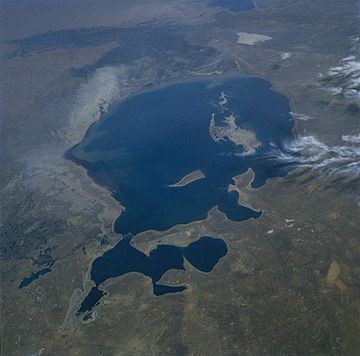
By Arindam Banik and Muhtor Nasirov   The world is currently grappling with the devastating impact of climate change, as rising temperatures have become an undeniable reality. In January 2024, the global temperature exceeded normal levels for the second consecutive month, pushing the global average temperature over the 1.5-degree threshold for the first time. Many human activities, such as unplanned water use, excessive groundwater extraction, and climate change, are thought to be contributing to this situation. One poignant example is the case of the Aral Sea in Central Asia. This once breathtaking and teeming endorheic lake, nestled between Kazakhstan and Uzbekistan, was not just a body of water. It was a symbol of life, a testament to the beauty and resilience of nature. Its azure waters and diverse marine life were a source of sustenance and livelihood for the region's people. It was a vibrant ecosystem, nourished by the almost entire flow of the two main rivers, the Amu Darya and the Syr Darya, in the upstream region of Central Asia. Interestingly, the Amu Darya River used to flow into the Caspian Sea through Uzboy Channel. However, a significant shift occurred during human settlement when the flow of these rivers was redirected into the Aral Sea, marking a crucial turning point in the region's hydrological history. Despite its former glory as the third-largest lake in the world, covering an area of 68,000 km2 (26,300 sq miles), the Aral Sea began shrinking in the 1960s after the rivers that fed it were diverted to support large-scale irrigation for cotton production intended for export. The irrigated area in the Aral Sea Basin has now expanded to eight million hectares. By 2007, it had decreased to only 10 percent of its original size, dividing into four lakes. By 2009, the southeastern lake had vanished, and the southwestern lake had shrunk to a thin strip at the western edge of the former southern sea. In the following years, occasional water flows partially replenished the southeastern lake. In August 2014, NASA satellite images revealed that the eastern basin of the Aral Sea had completely dried up, leading to the formation of the Aralkum Desert. This dramatic change has severely impacted the ecology, risking the survival of numerous fish subspecies and three endemic sturgeon species. The loss of these species disrupts the natural balance and affects the livelihoods of the local communities that depend on fishing. The herring, sand smelt, and gobies were the first planktivorous fish in the lake, and their decline led to the lake's zooplankton population collapse. Consequently, the herring and sand-smelt populations have not recovered. Except for the carp, snakehead, and possibly the pipefish, all introduced species survived the lake’s shrinkage and increased salinity. In an attempt to revive fisheries, the European flounder was introduced. This situation is urgent as the delicate balance of this ecosystem is on the verge of collapse. The region's once-prosperous fishing industry has been devastated, leading to unemployment and economic hardship. Additionally, the diverted Syr Darya River...

Endangered Wild Horses Return to Kazakhstan’s Golden Steppe

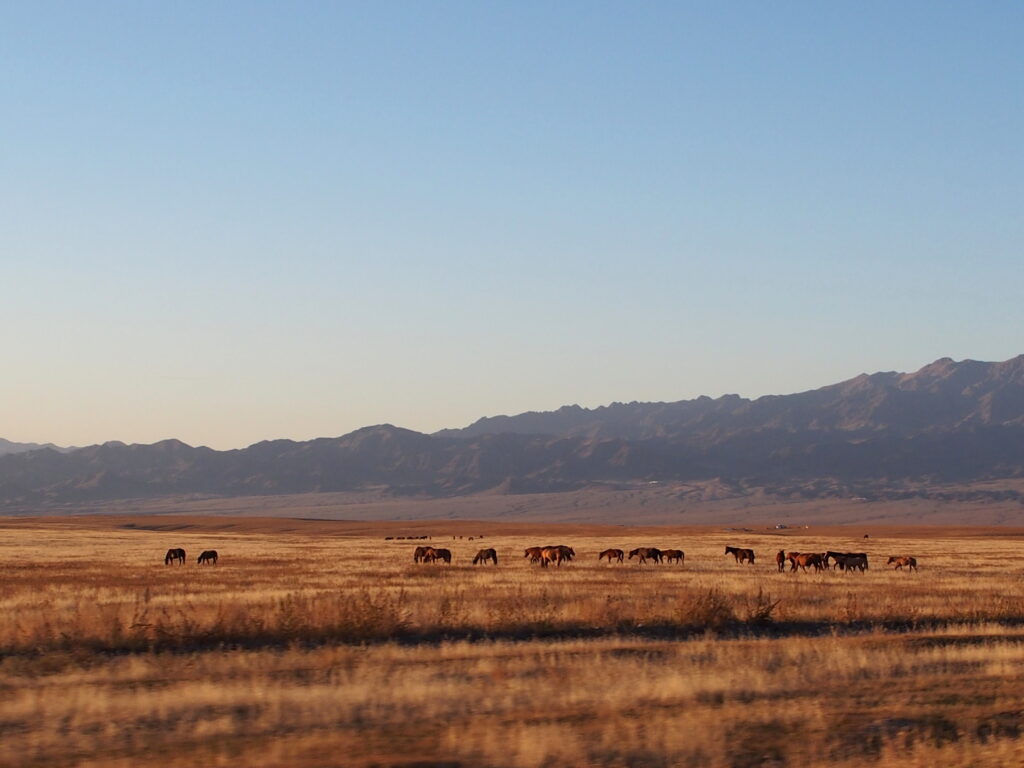
Three wild horses have been transported from the Prague Zoo to the vast grasslands of Kazakhstan, restoring the endangered species to one of its natural habitats after an absence of a century.  A Czech military plane helped to deliver the Przewalski's horses to the “Golden Steppe," or Altyn Dala, in central Kazakhstan, where they will stay for a while in enclosures to get used to conditions in their new environment. The Czech Ministry of Foreign Affairs said it co-funded repairs to the enclosures after damage caused by recent flooding in the Central Asian country.   “Congratulations to all those involved in these huge efforts to return these wild horses to the steppes of Kazakhstan,” said the Altyn Dala Conservation Initiative, a multinational partnership that is working to restore the Kazakh steppe ecosystem. It said on Tuesday that another group of the wild horses, which are named after the Russian geographer who identified the species in 1881, are on their way from Tierpark Berlin, a German zoo. Przewalski’s horse is “the last genetically wild horse on Earth” and its Russian namesake first came across the species in Mongolia, according to the multinational conservation group. The species vanished from the wild in the 1960s. But several European zoos kept some of the horses, saving the species from extinction, and reintroductions into the wild began in the 1990s, first in China and then in Mongolia.  The Prague Zoo is leading the relocation project in Kazakhstan, which aims to introduce a total of eight Przewalski’s horses to the steppe in the first year and several dozen horses over the next five years. Some of the wild horses will also come from Hungary’s Hortobagy National Park, which has the largest group of Przewalski’s horses outside Mongolia, as well as Nuremberg Zoo in Germany.  The reintroduction center for the horses is located in the Torgai steppe, which lies within a network of linked nature reserves that total 40,000 square kilometers, according to the Frankfurt Zoological Society, a partner in the Altyn Dala Conservation Initiative. The initiative, in turn, is led by the Association for the Conservation of Biodiversity of Kazakhstan. The conservation initiative has overseen a surge in the number of saiga antelope to more than 1.9 million, a 10-fold increase since a devastating disease outbreak in 2015.  “Unlike the Saiga, the Przewalski’s horse prefers a much broader selection of grasses, and in turn distributes the seeds of additional plant species across their shared steppe environment, playing a complimentary role.  In addition to this, their dung piles provide nutrients to other plants and decomposers, such as insects,” the initiative said.  A key part of the project is raising awareness about the wild horses among local communities. Conservationists are planning work with children and schools, providing educational materials and coloring books that outline the differences between wild and domestic horses. 

Uzbekistan Park Managers Arrested for Mass Distribution of Toys

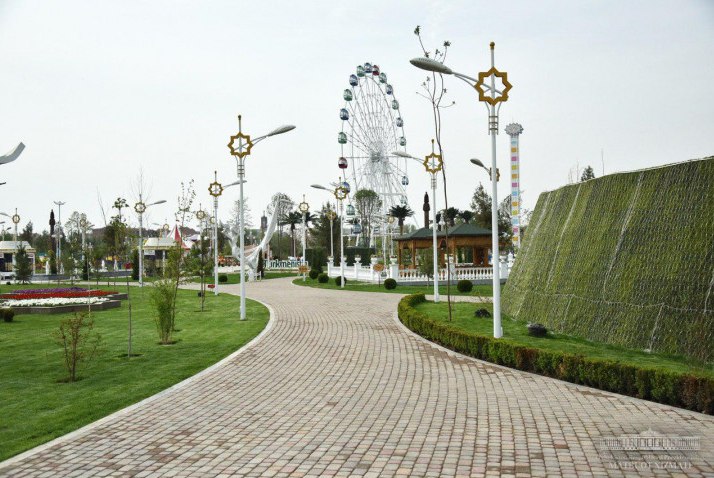
The director, deputy, and head of marketing of the Ashgabat Park in Tashkent have been arrested and detained for 15 days for violating the rules of mass events.  According to Gazeta.uz reports, the arrests were made after some  40,000 people had gathered in the park in the hope of receiving free toys. The throng had responded to an advertisement circulated on social media announcing the free distribution of 20,000 soft toys and ice cream at noon on 1 June. However, according to the Department of Internal Affairs, the park's management had been pre- warned and then instructed to cancel the event because of the risks posed by a mass gathering within the park's territory and the event's  non-compliance with traffic and citizen safety guidelines. By failing to comply, the park's administration created a danger to citizens and traffic jams at the park's entrance and exit, on some internal routes, and  roads leading to the park. The Yashnabad District Department of Internal Affairs drew up an administrative protocol against the park director, deputy director, and head of the advertising department, followed by a sentence of 15 days of administrative arrest imposed by  the District Court.  The Department of Internal Affairs  also published a reminder that according to the requirements of the Cabinet of Ministers resolution of July 29, 2014 (#205),  permission to hold mass events  must be submitted one month in advance.