• KGS/USD = 0.01144 0%
  • KZT/USD = 0.00213 0%
  • TJS/USD = 0.10543 -0.09%
  • UZS/USD = 0.00008 0%
  • TMT/USD = 0.28530 0%
  • KGS/USD = 0.01144 0%
  • KZT/USD = 0.00213 0%
  • TJS/USD = 0.10543 -0.09%
  • UZS/USD = 0.00008 0%
  • TMT/USD = 0.28530 0%
  • KGS/USD = 0.01144 0%
  • KZT/USD = 0.00213 0%
  • TJS/USD = 0.10543 -0.09%
  • UZS/USD = 0.00008 0%
  • TMT/USD = 0.28530 0%
  • KGS/USD = 0.01144 0%
  • KZT/USD = 0.00213 0%
  • TJS/USD = 0.10543 -0.09%
  • UZS/USD = 0.00008 0%
  • TMT/USD = 0.28530 0%
  • KGS/USD = 0.01144 0%
  • KZT/USD = 0.00213 0%
  • TJS/USD = 0.10543 -0.09%
  • UZS/USD = 0.00008 0%
  • TMT/USD = 0.28530 0%
  • KGS/USD = 0.01144 0%
  • KZT/USD = 0.00213 0%
  • TJS/USD = 0.10543 -0.09%
  • UZS/USD = 0.00008 0%
  • TMT/USD = 0.28530 0%
  • KGS/USD = 0.01144 0%
  • KZT/USD = 0.00213 0%
  • TJS/USD = 0.10543 -0.09%
  • UZS/USD = 0.00008 0%
  • TMT/USD = 0.28530 0%
  • KGS/USD = 0.01144 0%
  • KZT/USD = 0.00213 0%
  • TJS/USD = 0.10543 -0.09%
  • UZS/USD = 0.00008 0%
  • TMT/USD = 0.28530 0%

Viewing results 823 - 828 of 1307

Kazakhstan’s Parliament To Consider Ban on Religious Clothing

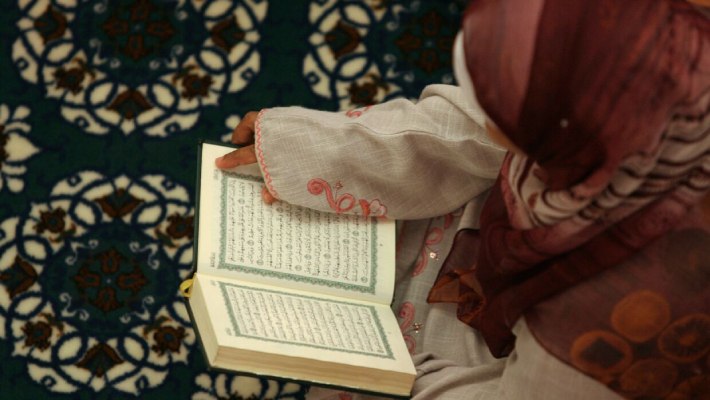
The Kazakh authorities are once again trying to restrict the wearing of religious clothing -- hijabs and niqabs -- in public places. There have been heated discussions on social media, and Muslim women have appealed to President Kassym-Jomart Tokayev himself. The hijab (headscarf) has long become an everyday accessory, and today, the secular part of society is trying to prevent its wearing in schools. However, women wearing niqabs -- a long, usually black cape that covers the face -- are increasingly common on the streets. Many Kazakhs consider the niqab categorically unacceptable. The issue of wearing religious clothing in public places may be considered in Kazakhstan's parliament, said Yermurat Bapi, a member of the Mazhilis (lower house of parliament). "Now, the most important issue for us is to preserve our country's national interests, traditions, and culture. And if we look at the current situation, more Kazakhs are dressed in black in society. This situation seriously harms our future national interests," Bapi said. "That is why we, a group of deputies, have prepared such a bill. It will be submitted to the Parliament at the fall session. I think that the issue of hijab, niqab, and other religious clothing in society will be solved after its adoption. Then we will be able to regulate the issues of religious dress in some way," he added. In May this year, President Tokayev spoke sharply about covered faces. "Dressing in all black contradicts the worldview of our people, is thoughtless copying of foreign norms, conditioned by religious fanaticism. We must not break away from our spiritual roots and erode our national identity," he said. Also, in October 2023, Minister of Culture and Information Aida Balayeva said that the new law on religion will prohibit wearing religious clothing in public places. Kazakhstan has been trying to solve the problem of wearing religious clothing in schools, universities, courts, and other organizations for years. In the past, the ban on wearing hijabs to school repeatedly caused clashes between school administrations, akimats (mayor's offices), and parents of female students. For example, in Atyrau region in 2023, more than 150 girls refused to attend classes without a hijab. As the Ministry of Education explained, the parents were spoken with, after which the children returned to classes. Experts believe the hijab and niqab have become fashion elements imposed by foreign influences alien to Kazakhstanis. However, local theologians are virtually unanimous: Kazakh women have never covered their faces. "After gaining independence, our youth began to study in foreign educational institutions and began to instill in our people certain clothes and dress codes, which were abroad: in Pakistan, Saudi Arabia, and other Muslim countries. These are their customs, especially about covering the face. Popularly it is called a burqa -- a headscarf with slits for the eyes -- but in Arabic it is called a niqab. The niqab, which completely covers the face, is generally unacceptable for our people, and our people do not use it. Today, in some regions of our...

Threat of Cholera Prompts Tajikistan to Test Its Water

Due to reported cholera cases in Afghanistan, Tajikistan's health ministry has taken strict control of water quality in the border areas of the Panj River and some districts of the Khatlon region. The deputy head of Tajikistan's sanitary surveillance service, Navruz Jafarov, said that a large-scale inspection of open water sources in the border areas of Khatlon region has been underway since June 3rd. Specialists are taking water samples and conducting tests to prevent the possible spread of infection. The main reason for the inspections is the cholera outbreak in Afghanistan, which reached dangerous levels last year. "The disease has spread to the districts of Balkh, Kunduz, Tahor, and Badakhshon, as well as areas bordering Tajikistan. In this regard, the water in the Panj River in the border areas is under strict control of specialists of the Republican Center for Quarantine Disease Control of the Ministry of Health," Jafarov said. He said five rivers in Tajikistan cross the border with Afghanistan. The disease may come to Tajikistan if floods or sewage from Afghan villages enter the rivers.

Central Asian Countries Gather to Share Air Pollution Solutions

On June 19th a political and regional forum was organized in Tashkent under the slogan “Building a Clean Air Future in Central Asia”. The forum was organized in partnership with the Uzbek Ministry of Ecology, the World Bank, and the United Nations Environment Program (UNEP). Participants included senior officials from the governments of Kazakhstan, Kyrgyzstan, Tajikistan, Turkmenistan, and Uzbekistan. The forum was created to allow the countries of Central Asia to exchange knowledge on how to prevent air pollution. Air quality in both urban and rural areas is affected by transboundary pollution, caused by emissions from burning fossil fuels in industry, the heating sector, and transport. Another source of pollution in cities is sand and dust storms. Most air quality-related illnesses and premature deaths in Central Asia are attributable to delicate particulate matter 2.5 microns or less in diameter (PM2.5). Their concentration in large cities is often several times higher than the permissible air quality parameters recommended by the World Health Organization. This is especially noticeable during winter, when the heating sector uses coal and gas for power. According to the IQAir portal, which monitors global air quality, Central Asian cities are often among the most polluted cities in the world. The participants at “Building a Clean Air Future in Central Asia” studied each other's measures and practices in air quality management. They then defined some priority directions for accelerating regional cooperation on these issues. Valerie Hickey, the World Bank's global director for environment, natural resources and the blue economy, commented: “Air quality management is a complex challenge that requires understanding where the pollution comes from and prioritizing actions in those sectors. This will take better data and stronger regulations harmonized across borders, credible institutions, and clean infrastructure. Working together, the countries can clean the air across Central Asia.” Sylvie Motar, deputy director of the European office of the UNEP, added: “Air pollution knows no borders, so cooperation between Central Asian countries in this area is essential. This dialogue will help increase investments in clean air to protect the health of the people of Central Asia.”

Controversial Kazakh Opposition Figure Aidos Sadykov Shot in Kyiv

An unknown man in Kyiv fired several shots at Kazakh activist and oppositionist Aidos Sadykov, who has been granted official refugee status in Ukraine. It is reported that the incident occurred in the Shevchenkivskiy district of the Ukrainian capital when Sadykov was approaching his car with his wife, Natalia, who previously worked for Mukhtar Ablyazov’s opposition paper, Respublika. The gunman used a silencer on the firearm. Sadykov's condition is currently assessed as serious; his wife was not injured. As this is a case involving a high-profile individual, the head of the regional police, Andriy Nebytov, was called to the crime scene. Sadykov is the author of the Telegram channel 'Base', which has 59,000 subscribers, and has been permanently residing in Kyiv since 2014. Over the years, he has criticized the current Kazakh authorities, including the current president, Kassym-Jomart Tokayev. In 2020 Base, together with the initiative to create the opposition Democratic Party, became the co-organizers of a rally in Almaty demanding a boycott of the upcoming parliamentary election. The Democratic Party of Kazakhstan, an unregistered political party, was founded and led by Zhanbolat Mamai, a former journalist who was convicted for receiving funds from Ablyazov in 2017. Sadykov and Mamai both actively supported the protests in January 2022 in Kazakhstan, widely seen as an attempted coup. He is wanted in Kazakhstan under the articles on the incitement of discord.

Eurasian Connectivity Comes One Step Closer at the 2024 CAMCA Forum in Bishkek

The wider Eurasia region took another step towards cooperation and connectivity last week, as the 10th annual CAMCA Regional Forum was held in Bishkek. CAMCA – standing for Central Asia, Mongolia, the Caucasus and Afghanistan – is an initiative to accelerate dialogue between governments, private enterprises and media figures from these ten nations. Organized by the Washington, D.C.-based Central Asia-Caucasus Institute and the Rumsfeld Foundation, this year’s Forum – the first such event to take place in Kyrgyzstan – featured over 300 delegates across its two days, and presented insights from over 70 speakers. Attendees came from 25 countries in total. Professor Frederick Starr, the Central Asia-Caucasus Institute’s chairman, used his opening address to call on the countries of the region to start preparing for a future within a cohesive international bloc. Dr Starr reasoned that Russia and China, imperial powers that have traditionally had a controlling presence in Central Asia, may see their global influence wane in the coming decade. This would give the countries of Central Asia, and their neighbors, more space to create projects that serve their economies directly. A leading CAMCA regional project is the ‘Middle Corridor’ trade route, which bypasses Russia to transport goods more efficiently between Europe and China. Discussions are also taking place concerning the creation of single business and tourist visas for the whole Central Asia region. The importance of collaboration between countries in the Caucasus and Central Asia to mitigate the impact of climate change has never been so great. Addresses by senior members of the Kyrgyz government highlighted the progress that Kyrgyzstan has made since the administration of president Sadyr Japarov began its work in 2021. The country’s deputy prime minister Edil Baisalov reported that Kyrgyzstan is on track to double its GDP to $30 billion by 2030, while the minister for digital development, Nuria Kutnaeva, spoke about the rapid digitalization of the country’s government services.  In a noticeably warm and collaborative atmosphere, the event nonetheless highlighted the barriers that prevent the ten countries from forming a tangible ‘CAMCA’ space in the present. A key goal is the harmonization of their legislation and policy directions; however, no delegates from Tajikistan could travel to Bishkek for the Forum, as otherwise solid relations between Tajikistan and Kyrgyzstan are still strained by a dispute over their common border. Likewise, Armenian voices were also absent this time, in light of several of the sessions featuring Azerbaijani speakers and talking points. The event featured only one guest from Turkmenistan.  Even in these conflicts, however, Central Asian diplomacy is at work. The conflict on the Kyrgyz-Tajik border, mainly in Tajikistan’s Vorukh district, is being resolved through negotiations between the two countries’ governments, which would have been unthinkable even five years ago. Meanwhile, Kazakhstan is acting as a mediator between Baku and Yerevan in the aftermath of the war in Nagorno-Karabakh. Other topics on the agenda included security priorities for Central Asia, digital innovation in business, cooperation with Afghanistan, transitions in global energy markets, and infrastructure projects...

Kazakhstan Developing Digital System of Flood Forecasting and Modeling

An information system for forecasting and modeling floods in Kazakhstan was discussed with representatives at a Cabinet of Ministers meeting, as reported on the official website of the Government of Kazakhstan. The information system includes four modules: data collection, analysis, forecasting, and modeling. It will use both operational and long-term data from Kazakhstan Ғarysh Sapary, Kazgidromet, and the National Center of Geodesy and Spatial Information. The system will be integrated with the Ministry of Emergency Situations' database on floods, mud-flows, landslides, avalanche-prone areas, and hydraulic structures. The Ministry of Digital Development, Innovation, and Aerospace Industry suggested utilizing the European program for remote Earth sensing in its operations. Deputy Prime Minister, Kanata Bozumbayev directed the ministry to also consider domestic digital solutions. Additionally, to develop a comprehensive data set, it is necessary to increase the number of hydrological and meteorological stations, perform bathymetric surveys of water bodies and rivers, and create a "digital relief" map of areas in the country that frequently experience flooding. In the spring of 2024, Kazakhstan experienced its largest flooding in 80 years. Ten regions of the country declared a state of emergency, and thousands of houses and buildings were flooded. Thousands of people were evacuated from flooded areas and are still in the process of recovering from the damage.