Viewing results 829 - 834 of 1355
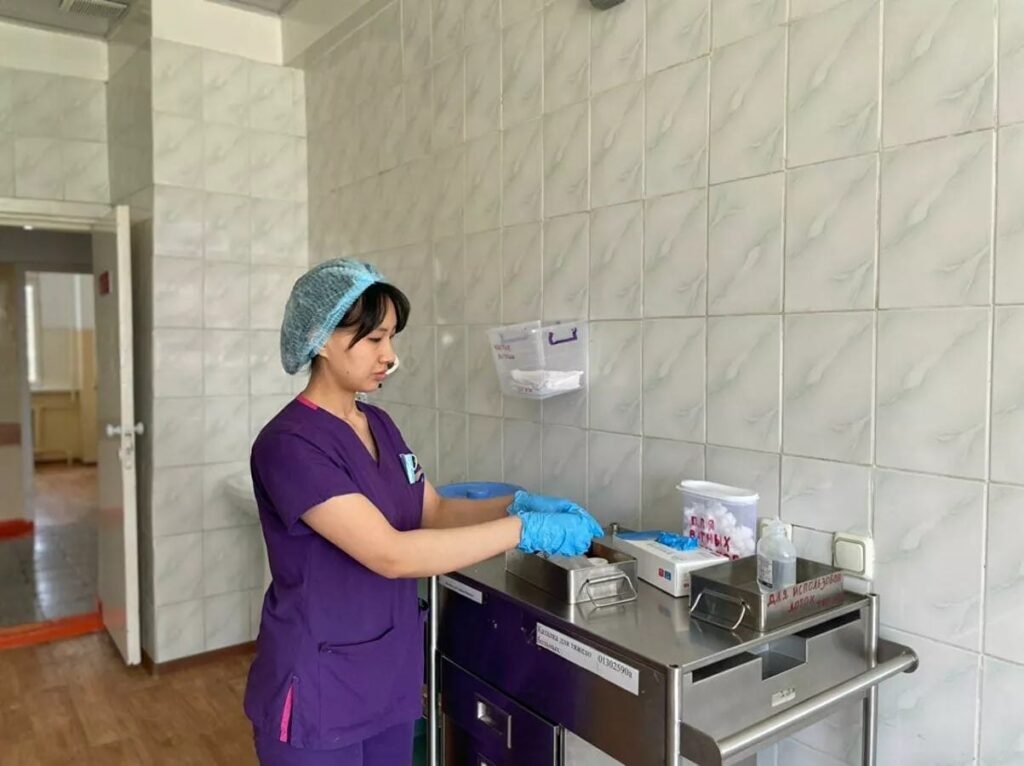
The First Deputy Minister of Health of Kyrgyzstan, Mederbek Ismailov has newly announced that medical workers' wages will be raised by 10 -50 percent from September this year. Selected specialists will also receive bonuses of up to 20,000 KGS ($220). "The ministry will work directly to raise medics' salaries. We will review tables of staffing and workloads over the past two years and depending on results, may raise salaries," commented a ministry spokesman, adding that the average doctor's salary will rise to 35,000 KGS ($400) after the increase. Local MPs, however, expressed their dissatisfaction with the government's decision, deeming the rises in medical workers' salaries inadequate. "The health minister promised us that doctors would receive 80,000 KGS ($900) each," complained MP Vinera Raimbachayeva.
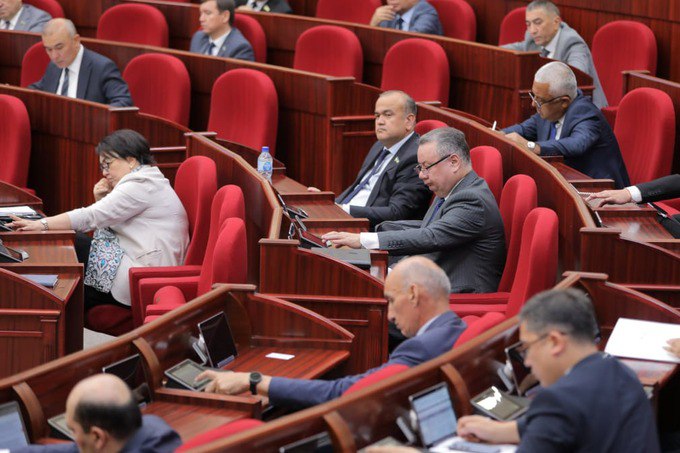
In its second and third readings, the Legislative Chamber of the Oliy Majlis (parliament) approved amendments to the law regulating the legal status of foreign citizens and stateless persons within the country. The key innovation was a move to recognize foreign citizens as undesirable elements who will not be permitted to stay in Uzbekistan. The grounds for declaring the stay of foreign citizens and stateless persons unacceptable may be public calls or actions that contradict state sovereignty, territorial integrity and security of the country, provoke interstate, social, national, racial, and religious enmity, or discredit the honor, dignity, and history of the people of Uzbekistan. The law provides for a five-year ban on such persons entering Uzbekistan, opening bank accounts, acquiring real estate, participating in the privatization of state property, and entering into financial and contractual relations. The document also defines the procedure for deporting persons not permitted to stay in the country. Before this new law can enter into force, it must be approved by the Senate and signed by the president.
Since 1991, over 1.1 million ethnic Kazakhs have returned to live in Kazakhstan, the government has reported. Since the start of this year 7,353 ethnic Kazakhs have received the status of kanda (Kazakh repatriates). Just under half (49.4%) arrived from China, 34.4% came from Uzbekistan, followed by Turkmenistan (6.3%), Mongolia (5.4%) and Russia (3.2%). These kandas have settled in different regions of Kazakhstan, but labor-deficient regions -- the Akmola, Abay, Kostanay, Pavlodar, East, and North Kazakhstan regions -- have been promoted as potential new homes. Kandas resettling in these regions are provided state support, namely a relocation subsidy of KZT 258,400 ($560) per family. The Ministry of Labor has announced that since 2023 the pilot relocation program has implemented a "one window" mechanism for granting kandas status through Kazakhstan's embassies. This initiative allows ethnic Kazakhs to address issues related to visiting Kazakhstan, securing employment, finding housing, and obtaining official status without physically entering the country. To date, 9,569 applications from ethnic Kazakhs have been processed under this new system.
On January 1, 2025, Uzbekistan will launch the Virtual Academy on Combating Corruption. This electronic platform aims to continuously improve the knowledge of both civil servants and the public about fighting corruption. According to the press service of the Anti-Corruption Agency, President Shavkat Mirziyoyev has signed a decree to this effect. The decree outlines priority areas for continuously enhancing knowledge about combating corruption. These priorities include raising legal awareness and culture, fostering societal resistance to corruption, and instilling values of integrity in the younger generation. In addition, it aims to improve the knowledge, skills, and qualifications of employees responsible for combating corruption, and those in civil service positions that are most exposed to risks associated with corruption. The system also includes assessing and certifying civil servants' anti-corruption knowledge and maintaining a register of those who have received certification. The Anti-Corruption Agency and the Law Enforcement Academy will organize and conduct training activities in the virtual academy. In addition to civil servants, the virtual academy is open to business entities, representatives of non-governmental, non-profit organizations, and other civil society institutions, students of educational organizations, and employees of enterprises with state participation. Training is organized into introductory and special courses. Basic courses will be free for all users, and advanced training in special classes will be on a paid contract basis. Training will be mandatory for civil servants, who will have to take the course within three months of being hired. The periodicity of civil servants' professional development will be at least once every three years. For other categories, training will be voluntary.
The Chronicle of Turkmenistan reported that on 3 June, the governor of Lebap Province called a meeting with heads of agricultural associations of etraps - administrative-territorial units - to discuss issues regarding the production of cotton and in particular, the growing employment of children in harvesting. In order to halt this worrying trend, he warned, "If children are seen in the fields, the heads of the agricultural associations will be held responsible and as such, should advise parents of the inadmissibility of child labor." He also recommended that families of tenants on neighboring plots form brigades and cooperate in agro-technical activities on each other's plots. In addition, heads of the associations were promised that if their tenants bought fertilizers at their own expense and provided receipts, the agricultural enterprise would provide compensation when paying for the harvest.
The former Chairman of the Supreme Soviet of Tajikistan, Akbarsho Iskandarov, has been detained in Dushanbe. During the wave of conflicts in the early 1990s, he took over as the Chairman of Parliament and served as Tajikistan's acting president. In recent years, he worked at the Institute of Philosophy, Political Science, and Law of the Academy of Sciences. Prior to this, for many years he served as Ambassador Extraordinary and Plenipotentiary of Tajikistan to Turkmenistan, Kazakhstan, and Mongolia. The General Prosecutor's Office summoned Akbarsho Iskandarov for questioning on June 13 and 14, following which they did not release him. The reason he was interviewed and the grounds on which he has been detained are unknown. "Investigators of the General Prosecutor's Office questioned about 50 people during these days and released them on their recognizance, while Akbarsho Iskandarov was not released," a source stated. Officials and relatives of Akbarsho Iskandarov have refused to comment. Iskandarov was detained after MP Saidjafar Usmonzoda and former Foreign Minister Hamrokhon Zarifi were also held in custody. It is not known whether these detentions are related.