• KGS/USD = 0.01144 0%
  • KZT/USD = 0.00201 0%
  • TJS/USD = 0.10475 0%
  • UZS/USD = 0.00008 0%
  • TMT/USD = 0.28571 0%
  • KGS/USD = 0.01144 0%
  • KZT/USD = 0.00201 0%
  • TJS/USD = 0.10475 0%
  • UZS/USD = 0.00008 0%
  • TMT/USD = 0.28571 0%
  • KGS/USD = 0.01144 0%
  • KZT/USD = 0.00201 0%
  • TJS/USD = 0.10475 0%
  • UZS/USD = 0.00008 0%
  • TMT/USD = 0.28571 0%
  • KGS/USD = 0.01144 0%
  • KZT/USD = 0.00201 0%
  • TJS/USD = 0.10475 0%
  • UZS/USD = 0.00008 0%
  • TMT/USD = 0.28571 0%
  • KGS/USD = 0.01144 0%
  • KZT/USD = 0.00201 0%
  • TJS/USD = 0.10475 0%
  • UZS/USD = 0.00008 0%
  • TMT/USD = 0.28571 0%
  • KGS/USD = 0.01144 0%
  • KZT/USD = 0.00201 0%
  • TJS/USD = 0.10475 0%
  • UZS/USD = 0.00008 0%
  • TMT/USD = 0.28571 0%
  • KGS/USD = 0.01144 0%
  • KZT/USD = 0.00201 0%
  • TJS/USD = 0.10475 0%
  • UZS/USD = 0.00008 0%
  • TMT/USD = 0.28571 0%
  • KGS/USD = 0.01144 0%
  • KZT/USD = 0.00201 0%
  • TJS/USD = 0.10475 0%
  • UZS/USD = 0.00008 0%
  • TMT/USD = 0.28571 0%

Viewing results 847 - 852 of 1235

Kazakhstan Wants to Use AI in Drafting Laws

Kazakhstan is considering introducing artificial intelligence technologies in its legislation development and law analysis. This was recently announced at an international conference on AI and law, Elblog.pl reports. AI is expected to change the game in legislative efforts, helping in both its organizational and technical aspects. One of its most practical benefits is converting the words spoken by lawmakers into text. More sophisticated uses include drafting legislation and analyzing the impact on proposed laws without human bias. Kanatbek Safinov, director of the Institute of Parliamentarism of Kazakhstan, noted that AI tools could better allocate significant resources currently spent on the legislative process, such as drafting expert assessments. "The main task is to create artificial intelligence tools that would make it possible to assess the potential effectiveness of new legislation, thus freeing lawmakers from the hard work of formulating legal texts. This reorientation will allow them to focus on identifying and solving problems of concern to the public," Safinov believes. In his opinion, the European Parliament, especially its Greek division, is an ideal role model. The latter uses more than 200 AI tools, 33 of which are directly involved in the lawmaking process.

Authorities in Turkmenistan Using Cab Drivers As Informants to Identify “Unreliable” Citizens

Turkmen authorities are forcing cab drivers to denounce and identify citizens they consider "unreliable". This is being reported by Radio Azatlyk. Ministry of Homeland Security (MHS) officers are reportedly forcing cab drivers to ask passengers various questions to find out their attitudes toward events in the country, and the overall situation. "MHS officers are using cab drivers in the capital as informants. They try to incentivize these cab drivers with promises to help them if they are stopped by traffic police officers to extort bribes," one of the capital's cab drivers said, on condition of anonymity. In an attempt to recruit cab drivers as informants, MHS officials hint that if the drivers agree to cooperate and provide information of interest to the authorities, their cooperation may also be rewarded financially. "Security officials instruct drivers who agree to cooperate to ask certain questions. The questions should mostly be put to passengers who are coming from the airport, railway station, shopping centers and bazaars," said another cab driver. According to him, in order to strike up a conversation, the MHS officers tell drivers to ask a certain list of questions to gauge their passengers' opinions and attitudes. "In this way, they say, they are trying to identify 'unreliable people'. Some drivers are agreeing to participate in these dirty games," said a driver from Ashgabat. Azatlyk is reporting that in recent months the Turkmen authorities have increased control over the country's citizens. Earlier this year it reported that security agencies were questioning the parents of schoolchildren who used VPN services to visit sites disapproved by the authorities, and that these families were included in the lists of "unreliable families".

Kyrgyzstan Proposes To Fine People For Speaking Substandard Kyrgyz

Kyrgyzstan's National Commission on State Language is proposing to introduce fines for people working in certain jobs if they do not speak Kyrgyz well enough. It has submitted the corresponding bill for public discussion. The law "On State Language" sets out a list of people who are obliged to know the state language, and use it while performing their official duties -- be they in socio-cultural, educational, or other professional spheres. The National Commission proposes that people working in certain professions must speak Kyrgyz at an average (B2) level if they are ethnic Kyrgyz, and at least the basic level (A2) if they are a member of another ethnic group. Foreign citizens living in the republic, or intending to obtain immigrant status, should speak at least elementary (A1) Kyrgyz. The draft bill reads: "It is proposed to introduce a new article into the Code of Offenses, according to which violation and non-compliance with the requirements of the legislation on language entails a fine of 5,000 som ($57) for individuals and 17,000 som ($194) for legal entities. In addition, the National Commission proposes to increase fines for texts in advertising and other visual information that do not meet the standards of literary Kyrgyz language.

Kazakhstani Movies No Longer Playing Just a Supporting Role

Until recently, the idea of Kazakhstani movies grossing a billion tenge ($2.5m) was a pipe dream. But in the last two years several films have earned this amount. The number of films being co-produced with world-leading studios is growing. However, domestic cinema still struggles to overcome funding and content quality problems. At the end of last year, the romantic comedy Taptym au seni (I Found You) earned more than a billion tenge in just 10 days of screenings. But the real shock came later, when the box office receipts of the suspense film Dastur (Tradition) exceeded a billion tenge after only a week of distribution. In one weekend alone it significantly outperformed Hollywood's Aquaman. In just the second half of last year, Kazakhstani films at the domestic box office earned over $14 million. One of the highest-grossing films was Kazakhstani Business in India, directed by Nurlan Koyanbayev. The film grossed over 1.25 billion tenge, and it was followed by Maghan Nazar Audar (Look at Me). The top ten includes Zhaidarman (Cordial), Zhynim Sol (My Gene) and Azhyrasam (Divorced). Domestic films now account for 30% of total box office receipts in Kazakhstan. Domestic analysts are confident that in the near future Kazakhstani cinema will overtake Uzbekistan to become the leader in Central Asia. In addition to the national Kazakhfilm studio and private studios, production is being driven forward by the State Center for Support of National Cinema. The Center allocates grants to industry figures on a competitive basis, and although there are heated discussions around the terms of the competition and the awardees, state support has a significant impact on the release of films. As for the subject matter, comedies are usually the leaders at the box office. They are often devoted to crime, drug trafficking, fraud, dishonest business, and corruption. Romance and historical figure movies remain popular as well. There is also a growing trend of condemning violence against women in the industry. Dastur, for example, tells the story of a rape victim who violently avenges not only the offender but also his neighbors, with whose tacit consent her life and dignity were devalued. Some sources are speculating that there will soon be a film adaptation of the story of the murder of Saltanat Nukenova by former minister Kuandyk Bishimbayev, which has attracted worldwide attention. A decline in the popularity of western and Russian films, which have led the box office in past decades, is also helping the growth of domestic movies. The share of international projects in the Kazakhstani film industry is growing. In March, the series Assassins Beginning, produced in Egypt, showed spectacular locations across Kazakhstan, including Charyn Canyon and Kolsai Lakes. In January Kazakhstan and Nigeria's 'Nollywood' joined forces for the first time to create a movie called Adam Bol. The film will be shown in both countries, with Nigeria steadily taking over movie markets in Africa and Asia. Joint production helps to not only create jobs in the film industry, but to support businesses as well....

Why Have Women’s Carriages Become So Popular in Kazakhstan?

Kazakhstani women have already had time to appreciate women-only cars in trains - an innovation that seemed unthinkable in the secular country a few years ago. However, the special carriages did not appear as an indulgence to traditionalist views. Kazakhstani women now have a choice: they can ride in a regular carriage, or they can ride in a carriage that is practically closed to men - and demand for the latter service is increasing year by year. In May, the statistics of Kazakhstan Temir Zholy (KTZ), a railroad monopoly, were published, which revealed that women twice as often choose women's cars. Since 2021, more than 359,000 women have chosen this option, and since the beginning of 2024 alone, the service has been used by about 70,000 women, whereas in 2023, only 34,000 did so. Today, women's cars run in eight long-distance passenger trains, with only female conductors working in them. Male children up to seven-years-old are allowed, whilst men can go enter for a short period of time, but overnight stays are strictly prohibited. The need to ensure the safety of women in trains began to be discussed after the scandal that broke out in the fall of 2018, when two conductors raped a female passenger on the high-speed train "Talgo" on the Astana-Aktobe route. This crime resonated widely, and led to loud demands for the authorities to take action. Conductors Zhetes Umbetaliev and Kolkanat Kurmaniyazov were found guilty of rape in July 2019 and were sentenced to just 2.3 and 2.5 years, respectively, whilst Kanat Almagambetov, first deputy chairman of KTZ, apologized on behalf of the company. The first women-only cars were launched in October 2021. "This is being done primarily for the safety of women... If demand for the service increases, our company is ready to expand the geography of these routes. Apart from the female conductors, these carriages are no different from the others. They have the same pricing policy," KTZ explained at the time. The current routes were chosen because of their length, company representatives said. Kazakhstan is a large country and a trip from Almaty to Mangistau, for example, takes several days. Ainagul Kasenova, a resident of Mangistau Oblast, travels to see relatives in Almaty several times a year, and for her, women's cars have become a solution. "Now I try to buy tickets only in a separate car. You travel for a long time, so it's much more comfortable if there are only women and children around. I used to encounter men talking to me, paying me unnecessary attention; it was unpleasant. When the news about the rape of a female passenger by conductors broke, my parents didn't even want to let me go to Almaty. Now they let me go without any problem," Kasenova told TCA. According to her, both students and pensioners are comfortable in women's carriages, especially those who have to travel often, which increases the risk. "The women's carriage is always quiet, friendly atmosphere, without drinking and noise," she added....

Tajikistan Doubles Down on Fines for Wearing “Foreign Clothes”

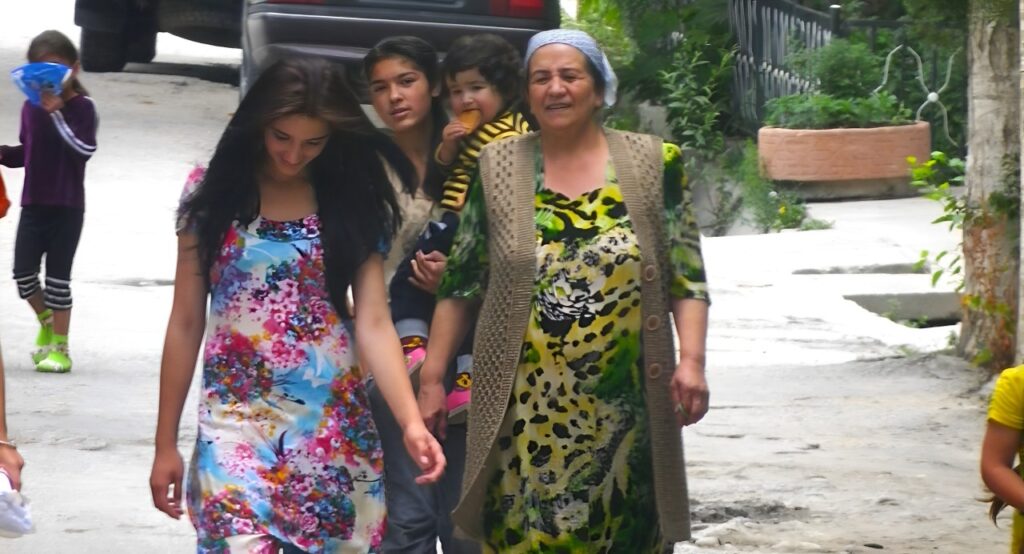
Residents of Tajikistan will face fines ranging from 8,000 to 65,000 somoni for "importing and selling clothes that do not correspond to the national culture" and for wearing such clothes in public places, as reported by Radio Ozodi. These regulations are outlined in Article 18 of the new version of the law "On Regulation of Traditions and Rites" and the Code of Administrative Offenses. The drafts were adopted by parliamentarians on May 8 this year. "In the draft law 'On the Regulation of Traditions and Rites,' a corresponding prohibiting norm is included in part two of Article 18. For its violation, amendments and additions to Article 481 of the Code of Administrative Offenses provide for administrative responsibility," explained Mavludakhon Mirzozoda, a deputy of the lower house of Tajikistan's parliament. Article 481 of the current Code of Administrative Offenses addresses not only Article 18, but also broader non-compliance with the norms of the Law on the Regulation of Traditions and Rites. According to this article: Individuals will be fined 7,920 somoni ($733). Officials will be fined 39,600 somoni ($3,665). Legal entities will be fined 57,600 somoni ($5,333). Individual entrepreneurs, scientists, and religious figures will be fined 54,000 somoni ($4,998). For repeated violations, fines will range from 46,000 to 86,000 somoni. The recent amendments have updated this article, although changes to the fine amounts are yet to be confirmed. The average wage in Tajikistan is approximately $172 a month. According to the current legislation, the amendments to the law come into force upon publication in the official press after approval by the Majlisi Milli (lower house) and the president's signature. However, citizens are already being compelled to comply with these new regulations. The current law does not specify which clothing is considered alien to Tajik national culture. Experts suggest that the law likely pertains to women's national dress, although the text itself does not differentiate between men's and women's clothing. Reactions within Tajik society have been mixed. Some residents of Dushanbe, during a street survey, expressed their opinion that people should have the freedom to choose their own attire without compulsion. Tajik authorities have long campaigned to encourage the wearing of national dress and to discourage the adoption of foreign styles. They prohibit women from wearing black clothing, black headscarves, and hijabs, considering them alien to Tajik culture and traditions. Although mini-skirts, sweaters, dresses with cleavage, tops, and transparent fabrics were also banned at one point, these restrictions were quickly "forgotten."