• KGS/USD = 0.01144 0%
  • KZT/USD = 0.00198 -0%
  • TJS/USD = 0.10901 0%
  • UZS/USD = 0.00008 0%
  • TMT/USD = 0.28490 0%
  • KGS/USD = 0.01144 0%
  • KZT/USD = 0.00198 -0%
  • TJS/USD = 0.10901 0%
  • UZS/USD = 0.00008 0%
  • TMT/USD = 0.28490 0%
  • KGS/USD = 0.01144 0%
  • KZT/USD = 0.00198 -0%
  • TJS/USD = 0.10901 0%
  • UZS/USD = 0.00008 0%
  • TMT/USD = 0.28490 0%
  • KGS/USD = 0.01144 0%
  • KZT/USD = 0.00198 -0%
  • TJS/USD = 0.10901 0%
  • UZS/USD = 0.00008 0%
  • TMT/USD = 0.28490 0%
  • KGS/USD = 0.01144 0%
  • KZT/USD = 0.00198 -0%
  • TJS/USD = 0.10901 0%
  • UZS/USD = 0.00008 0%
  • TMT/USD = 0.28490 0%
  • KGS/USD = 0.01144 0%
  • KZT/USD = 0.00198 -0%
  • TJS/USD = 0.10901 0%
  • UZS/USD = 0.00008 0%
  • TMT/USD = 0.28490 0%
  • KGS/USD = 0.01144 0%
  • KZT/USD = 0.00198 -0%
  • TJS/USD = 0.10901 0%
  • UZS/USD = 0.00008 0%
  • TMT/USD = 0.28490 0%
  • KGS/USD = 0.01144 0%
  • KZT/USD = 0.00198 -0%
  • TJS/USD = 0.10901 0%
  • UZS/USD = 0.00008 0%
  • TMT/USD = 0.28490 0%
07 December 2025

Viewing results 853 - 858 of 1034

Open Society to Close its Foundation in Kyrgyzstan, Citing Law on Foreign-Funded NGOs

The Open Society Foundations said it will close its national foundation in Kyrgyzstan after the country’s parliament passed a new law that tightens control over non-governmental groups that receive foreign funding. Open Society, which was founded by billionaire investor and philanthropist George Soros, said Monday that the law“imposes restrictive, broad, and ill-defined regulations” on internationally funded NGOs. The decision to pull out of Kyrgyzstan came two weeks after the country’s president, Sadyr Japarov, signed the law, saying more rigorous registration requirements and financial oversight would make non-governmental groups more accountable. The dispute between the government of Kyrgyzstan and foreign-funded groups represent a wider struggle over the direction of the Central Asian country. Opponents of Japarov believe he is systematically rolling back relative freedoms inKyrgyzstan. The president says local NGOS are embezzling money from foreign donors, an allegation denied by civil society groups. The Soros Foundation-Kyrgyzstan has spent more than $115 million on projects in education, public health, criminal justice, supplying water to rural communities and other areas since it opened in 1993, a year in which the Central Asian nation was mired in crisis after the fall of the Soviet Union, Open Society said. Under the new law, foreign-funded NGOs must “report broadly defined ‘political’ activities to the authorities” and risk uncertain consequences, Open Society said in a statement. Its president, Binaifer Nowrojee, said “this repressive new law will see civil society operate in a climate of uncertainty and intimidation.” The Open Society Foundations, which funds activities in more than 120 countries, says it aims to promote justice, human rights and democratic governance. It says it joins “policy debates on controversial issues that other funders might avoid” and the group has attracted criticism from conservative and authoritarian leaders in a number of countries. The United Nations has expressed concern about Kyrgyzstan’s so-called “foreign representatives” law. Jeremy Laurence, spokesperson for the UN High Commissioner for Human Rights, said on April 8 that many affected NGOs could close to avoid possible arbitrary checks by the authorities or having to pay for annual audits, or might end up self-censoring if they continue operations.

Uzbekistan Proposes Ban on E-Cigarettes

Uzbekistan is drafting a law banning the import, sale and production of electronic cigarettes and tobacco heating systems. The bill has been published on the regulation.gov.uz portal and its discussion will last until April 18, The Times of Central Asia has learned. The draft law mentions that over the past seven years, "modern" or "innovative" types of nicotine and tobacco products have appeared in Uzbekistan. The result is a dramatic increase in the number of smokers -- especially among children and young adults. According to an explanatory addendum to the bill, interest in e-cigarettes is skyrocketing among high school students. The number of devices seized from students during raids in schools and public places has increased every year since the government has been keeping track. There were six cases in 2019, 27 in 2020, 31 in 2021, 856 in 2022, and 1,040 in 2023. Among the 18-29 year old population, the use of tobacco heating systems is more than 2.5 times higher than in the 30-69 year old population. Unless action is taken, the bill states that one in five young people will suffer from nicotine addiction in the future. "This law prohibits the circulation of electronic nicotine delivery systems, liquids for them, and electronic cigarettes on the territory of the republic," the bill says. Once passed, Uzbek e-cigarette smokers will face heavy fines and criminal liability for breaking the new law.

Turkmenistan Stops Selling Tickets to Russia for Migrant Laborers

In a number of regions of Turkmenistan, the sale of air tickets to citizens who have received an official offer to work in Russia has been suspended, according to news portal Turkmen.news. The halting of ticket sales is related to the terrorist attack on the Crocus City Hall near Moscow on March 22 of this year. Following the attack on March 22, the departure of labor migrants from Turkmenistan to Russia suddenly stopped. Those who have received invitations to work and applied for visas have learned that they cannot purchase tickets for the time being. Recently, twelve undocumented workers from Turkmenistan, who worked in one of the markets in Domodedovo near Moscow, were arrested. Four were released after being fined, and eight were transferred to a special detention center in the city of Yegoryevsk, Moscow region, for deportation. According to Chronicles Turkmenistan, there are 47 citizens of Turkmenistan being held at a pre-trial detention center in Vidnoye who are awaiting deportation. The Ministry of Foreign Affairs of Turkmenistan and the Russian Government has begun discussing the possibility of suspending the issuance of visas for Turkmens for at least one and a half years. An exception will be made only for diplomats and representatives of large businesses, according to a report.

Experts in Kyrgyzstan Sound Alarm Over Acute Shortage of Medicines

Doctors in the Central Asian republic are saying that medical institutions lack emergency, intensive care, pediatric, and cardio-pulmonary drugs, as well as contraceptives and the supplies needed for safe medical abortions. Kyrgyzstan's hospitals lack basic medicines and basic daily medications, according to Bermet Baryktabasova, head of the Kyrgyz Medical Trade Union. The Health Ministry cannot solve the problem on its own, she said, so resolution of the issue must involve the government, members of parliament (MPs) and national security services - otherwise, there will be a social catastrophe. "There are distress signals from all regions - there are no medicines, or they are running out. Requests to [Kyrgyzpharmacy] for the supply of medicines according to needs have been lying for the second quarter since the beginning of the year... The medicines arrive without accompanying documents (delivery notes, certificates, without specifying the purchase price and other financial and authorization papers)," Baryktabasova posted on social media. In March last year, the Kyrgyz authorities created the state enterprise, Kyrgyzpharmacy, to implement a new approach to providing hospitals with medicines at an affordable price. Later, the Cabinet of Ministers decided that the supply of drugs to public clinics will be handled by a single operator. Kyrgyzpharmacy also controls the quality of medicines, their storage and delivery, adding a 5% mark-up on the cost of goods. "State and municipal health care organizations pay for medicines and medical devices supplied to the state enterprise Kyrgyzpharmacy from the funds provided in the budget of the organizations for the relevant year. They may also purchase medicines not on the list from Kyrgyzpharmacy if supplies are available," the new law states. Problems with drug availability began mainly because of a decree prohibiting the importation of medicines that had not previously passed state registration and were not included in the relevant lists. The document was supposed to reduce the risks of importing low-quality medicines. However, most foreign pharmaceutical companies did not go through the complicated registration procedure; they often aren't interested in Kyrgyzstan's small market. Dastan Bekeshev, a member of the Supreme Council (Jogorku Kenesh), conducted a survey among citizens to find out what medicines are in short supply. As a result, the MP made a list of 50 items. "I decided to find out what is the reason for the shortage of medicines and sent a list of necessary medicines to the Ministry of Health. As it turned out, the geopolitical situation and the lack of registration of many drugs are to blame. The registration procedure should be simplified: if a medicine is registered in the U.S., U.K., Europe, Japan or Russia, we should by default register it in our country. So far, the bureaucratic procedure is more important than the lives of citizens," Bekeshev said. Responding to the deputy, the Ministry of Health explained that 30 "items" from the list are not registered in the Kyrgyz Republic. That means these drugs cannot be imported into the country. "In the absence of a prescribed drug in pharmacy organizations, citizens...

Kazakhstan and Uzbekistan Enhance Strategic Partnership

On April 5th, President of Uzbekistan Shavkat Mirziyoyev and President of Kazakhstan Kassym-Jomart Tokayev met in Khiva to discuss further strengthening of the Kazakh-Uzbek strategic partnership and allied relations. The presidents exchanged views on a wide range of economic interactions, including increasing mutual trade, cooperation in the fields of energy, transport, water management, and the IT industry. It was reported that last year, bilateral trade turnover amounted to $4.4 billion, and joint projects are now being implemented in the fields of industry, energy, transport and logistics, and agriculture. The Kazakh-Uzbek portfolio currently includes 60 collaborative projects with investment exceeding $2.5 billion and the creation of more than 13 thousand jobs. Progress is also forging ahead on the construction of an International Centre for Industrial Cooperation between the two countries. The Kazakh president stated that Kazakh-Uzbek collaboration is a vital necessity, and only by working together can sustainable development be ensured. In this regard, Tokayev supported plans to adopt and implement a Program of Strategic Partnership and Allied Relations between Kazakhstan and Uzbekistan until 2034. The leaders also welcomed mutually beneficial initiatives between their countries’ railway administrations. Once in operation, the proposed joint venture will provide cargo terminals on the Kazakh-Chinese border and cargo transportation along the China-Kazakhstan-Uzbekistan route, as well as developments of the Trans-Afghan route.

Bishkek Tightens Grip on NGOs

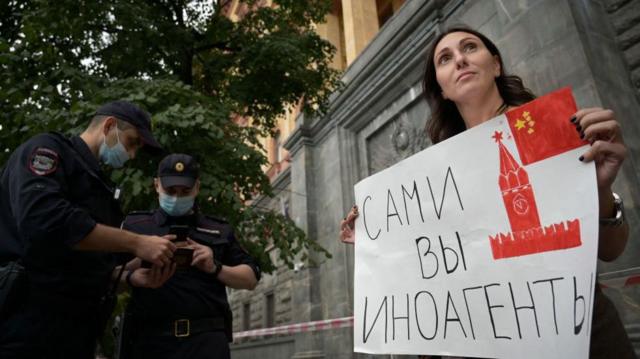
BISHKEK, Kyrgyzstan - Kyrgyzstan´s President said on Tuesday that he has approved a law that tightens control over non-governmental organizations which receive foreign funding, despite concerns that the measure could erode basic freedoms and services. President Sadyr Japarov defied international pressure to refrain from signing the law, which was passed by an overwhelming margin in Kyrgyzstan’s Parliament on March 14. In a Facebook post, he said the measure would make NGOs more accountable and increase transparency, an assertion that critics say is misleading. For decades, NGOs “just opened bank accounts, took money from foreign donors and used it as they saw fit, including for personal purposes,” Japarov said. “From now on they will be registered with the Ministry of Justice like everyone else. They will open bank accounts. They will start to work openly. There will be no more confusion.” NGOs “spread false information, saying 'we will be persecuted, we will be arrested as agents of a foreign state'. And the donors believed it,” said Japarov, adding that “there will be no persecution” of the groups. Critics say the law represents a slow-moving crackdown that rolls back efforts to develop civil society with the help of foreign governments and other institutions. “We're deeply disappointed that Kyrgyzstan's president Sadyr Japarov has signed the repressive law on 'foreign representatives,' citing misleading, untrue arguments about NGOs,” said the International Partnership for Human Rights, a Brussels-based group.  “At least get the facts straight,” Syinat Sultanalieva, a Central Asia researcher for Human Rights Watch, said of Japarov’s statement, adding that it was wrong of Japarov to suggest that NGOs “never registered and did not submit reports and basically ran amok unchecked.” In his statement, Japarov bristled at criticism from Western-affiliated institutions and said there was a double standard. “Why do non-governmental organizations in developed Western countries register with the Ministry of Justice, the Tax Service, open a bank account and not do the same when they come to us?” he said. “Or are we a second-class country? No, we are not. We will no longer allow such dubious actions.” Japarov had previously accused NGOs of spreading “inaccurate information,” emphasizing that the draft law “is close to the Foreign Agents Registration Act (FARA) adopted in 1938 in the United States.”. Some opponents claim it is based on Russia´s “foreign agents” law, and could be used as an instrument of oppression.