• KGS/USD = 0.01143 0%
  • KZT/USD = 0.00202 0%
  • TJS/USD = 0.10433 0%
  • UZS/USD = 0.00008 0%
  • TMT/USD = 0.28575 0%
  • KGS/USD = 0.01143 0%
  • KZT/USD = 0.00202 0%
  • TJS/USD = 0.10433 0%
  • UZS/USD = 0.00008 0%
  • TMT/USD = 0.28575 0%
  • KGS/USD = 0.01143 0%
  • KZT/USD = 0.00202 0%
  • TJS/USD = 0.10433 0%
  • UZS/USD = 0.00008 0%
  • TMT/USD = 0.28575 0%
  • KGS/USD = 0.01143 0%
  • KZT/USD = 0.00202 0%
  • TJS/USD = 0.10433 0%
  • UZS/USD = 0.00008 0%
  • TMT/USD = 0.28575 0%
  • KGS/USD = 0.01143 0%
  • KZT/USD = 0.00202 0%
  • TJS/USD = 0.10433 0%
  • UZS/USD = 0.00008 0%
  • TMT/USD = 0.28575 0%
  • KGS/USD = 0.01143 0%
  • KZT/USD = 0.00202 0%
  • TJS/USD = 0.10433 0%
  • UZS/USD = 0.00008 0%
  • TMT/USD = 0.28575 0%
  • KGS/USD = 0.01143 0%
  • KZT/USD = 0.00202 0%
  • TJS/USD = 0.10433 0%
  • UZS/USD = 0.00008 0%
  • TMT/USD = 0.28575 0%
  • KGS/USD = 0.01143 0%
  • KZT/USD = 0.00202 0%
  • TJS/USD = 0.10433 0%
  • UZS/USD = 0.00008 0%
  • TMT/USD = 0.28575 0%

Viewing results 859 - 864 of 1241

NGOs in Kyrgyzstan Have Two Months to Register as “Foreign Agents”

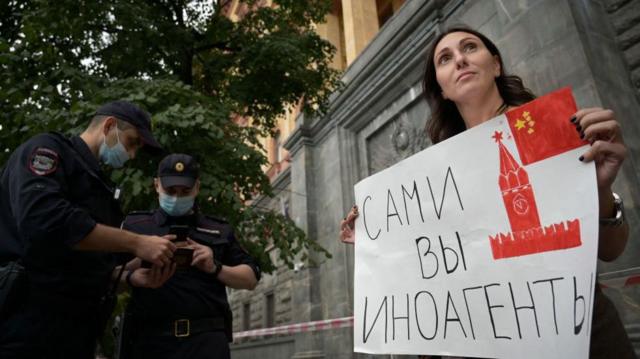
Kyrgyzstan's Ministry of Justice has approved the creation of a register for "non-governmental organizations performing the functions of a foreign representative", which gives authorities the right to inspect their activities. All non-profit agencies that receive foreign funding have been given two months from 16 May to submit documents to the ministry. Kyrgyz president Sadyr Zhaparov signed the law "on Foreign Representatives" on April 2, despite over 100 organizations and civil society figures appealing for him not to do so. Zhaparov made assurances at the time that non-governmental organizations would not be persecuted. Local NGOs funded from abroad that are engaged in political activities in Kyrgyzstan are now recognized as "performing the functions of a foreign representative", and are placed in a separate register. Organizations included in this register -- so-called 'foreign agents' -- may be subjected to various unscheduled inspections. Several international organizations, as well as the United States and certain countries in the European Union, have voiced criticisms of the new law. After it came into force, the Soros-Kyrgyzstan Foundation announced that it would be terminating its activities in Kyrgyzstan.

Prospective Kazakh Citizens Must Know Country’s Language and History

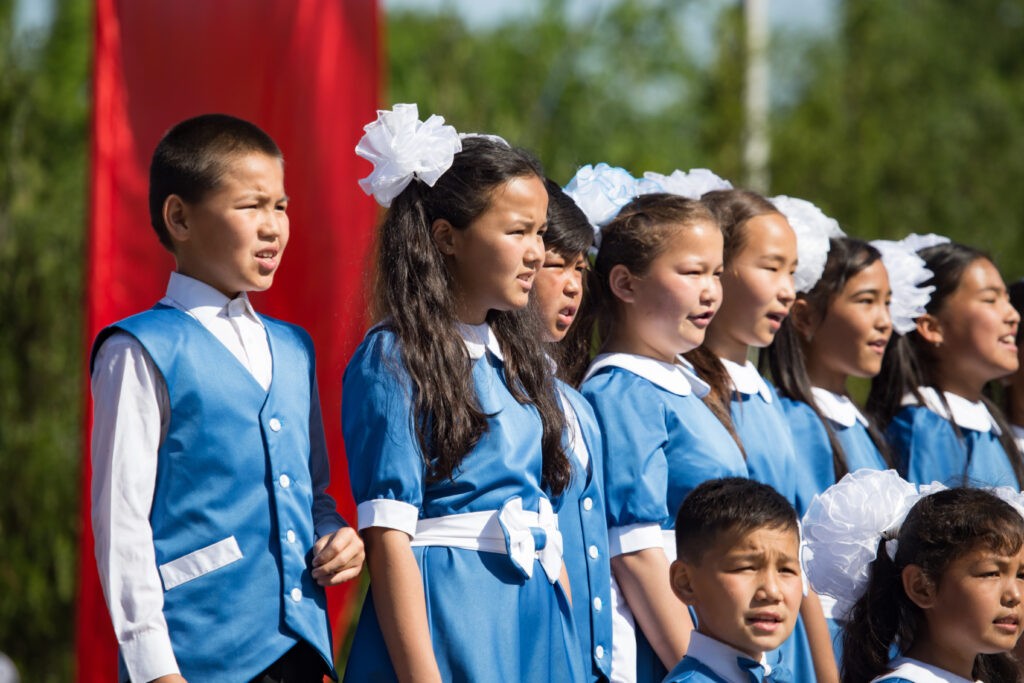
Under a new law, people applying for Kazakh citizenship will be refused if they do not show at least basic knowledge of the country's language, history and constitution, reports Kursiv. Ministry of Internal Affairs representative Shyngys Alekeshev commented on the law: "The elementary level will be determined by the Ministry of Science and Higher Education. The purpose of the amendments is rapid adaptation and integration into society. Knowledge of the language, first of all, is necessary for the citizens themselves, wishing to obtain our citizenship, to more quickly integrate into society and participate in the life of the state". The ministry added that the legislative amendments are in line with global practice. Earlier it was reported that the authorities intend to teach the Kazakh language to Russian-speaking children and toddlers who have arrived from other countries. For this purpose, the Ministry of Education will create a program of "early immersion in the Kazakh language" in kindergartens and schools. Officials emphasize that this will help to form "Kazakh identity in young citizens".

Turkmenistan Bans People From Talking About the Weather

For almost ten days Turkmenistan's capital Ashgabat has been flooded with rain, in what local meteorologists think have been the worst downpours since the 1970s. The rain has caused significant damage to the city's infrastructure. The Akhal province has also been badly affected, with agricultural land flooded. Mudflows hit the cities of Anev and Kahka, and in many areas electricity and part of the rail network were shut down. However, there have been no reports in Turkmen media about the rains and the damage they are causing. Turkmenistan's law enforcement agencies have taken unprecedented measures to prevent photos and videos of the downpours from appearing on social networks. According to Radio Azatlyk, internet speed has slowed down, working VPNs are blocked, and IMO messenger has almost stopped working. A Turkmenabad police officer, who spoke on condition of anonymity, said of the order from above: "We have been ordered to prevent the leakage of defamatory photos and videos abroad. It was explained to us that if defamatory information gets into the hands of the West or the U.S. State Department, this information can be used to destabilize the domestic situation." The situation is the same in Ashgabat. Security services are identifying and taking to police stations citizens who have shared photos and videos on social media of the rains, and the damage caused by the rains in Ashgabat and the provinces. "In Ashgabat, cars could not move along the streets, people were swept away by the water pressure, and some of them were badly hurt. In the suburbs, houses and farms were flooded, farmers may be left without any income. There are many casualties, but there are no fatalities among the residents. Now the situation is gradually normalizing, and the authorities are eliminating the consequences of the flooding," one Ashgabat resident told The Times of Central Asia.

A Demographic Phenomenon in Kazakhstan — the Population is Rapidly Getting Younger

Kazakhstan stands out sharply on the demographic map of the world, according to Alexei Raksha, a Russian demographer. The republic's government supports high birth rates, which not only bring significant benefits but can also be a source of risk. Independent demographer Raksha has repeatedly said that Kazakhstan does not fit into global fertility trends. By all parameters (relatively high GDP, rising living standards, urbanization, etc.), the republic belongs to countries that should have already completed the first demographic transition. This term means a decline in mortality and fertility due to improved nutrition and medicine, resulting in simple generational replacement. That is, women no longer give birth to 10-15 children, hoping that two or three of them will survive. The first demographic transition has ended almost everywhere except in Africa, scientists believe. Nevertheless, according to Raksha, Kazakhstan -- along with Israel -- shows other indicators. In both countries, both religion and the desire for some kind of historical justice play a role. However, the demographer emphasizes that Kazakhstan's fertility figures are unevenly distributed regionally and ethnically. The fertile southern and western regions contrast sharply with the north, where the population is aging. Raksha recently commented on Kazakhstan's birth rate by women's ethnicity in 2022-2024. "If Kazakhs, Uzbeks and Uyghur women have birth rates at 2.9 to 4.2 children per woman, then representatives of European nations have an average of 1.3-1.5 children (average European level). It is obvious that there is a deep difference in cultural attitudes, both in the degree of social conservatism and in the level of religiosity," he wrote online. According to his data, in recent years, Kazakhstan has been steadily overtaking Uzbekistan, formerly considered the regional leader in population "production". This is confirmed by the data of the study of the leading medical journal The Lancet "Institute for Health Metrics and Evaluation" (IHME) on fertility in 204 countries and territories in the period from 1950 to 2021 with forecasts up to 2100. According to the report, Kazakhstan has surpassed all its neighbors in Central Asia and all countries in the Northern Hemisphere in terms of fertility over 70 years. For contrast, Raksha constantly cites data on prolonged depopulation in Europe, North America, China, Korea, and Japan. Countries whose population is inexorably aging and whose birth rate is below the level of simple reproduction (less than two children per woman) are doomed to attract labor migrants, the expert believes. In addition, the SWO plays a destructive role in the post-Soviet space. Russia has faced precisely unrecorded but obvious demographic losses, while Ukraine is on the verge of social catastrophe. Kazakhstan will not face the fate of an endangered country in the coming generations. In late April, the Bureau of National Statistics of Kazakhstan reported that the total fertility rate in 2023 amounted to 19.52 per 1000 people. In 2022 it was at the level of 20.57 births per 1000 people. The highest birth rates are noted in Mangistau region (26.74 people per 1000 people), Turkestan region (26.18) and Shymkent...

Floods in Kazakhstan: Affected Citizens Make Demands to the Authorities

The situation with floods in several regions of Kazakhstan remains critical. In Atyrau region, it has already acquired the character of a political crisis; in the city of Kulsary, since May 15, residents, dissatisfied with the amount of compensation offered have continued to speak out. On May 20, the Ministry of Emergency Situations of the RK provided operational information on the flood situation. In Petropavlovsk, work on pumping out the remaining flooded 29 territories continue. During the day 153,320 cubic meters were pumped out. Due to the stabilization of flood situation in general, work in the region also involved rescuers from Almaty, Abay, Ulytau, Akmola, Karaganda, Kostanay, Pavlodar and Turkestan regions. In Atyrau region 66,770 cubic meters of water were pumped out from flooded areas, whilst around-the-clock monitoring of the water level of the River Zhaiyk and additional bank reinforcement works were undertaken in Atyrau and Makhambet districts. "Disinfection work is being carried out in drained houses and territories. Over the past six days, the units of radiation, chemical and biological protection of the Ministry of Emergency Situations in the villages of Teplichnoye, Olshanka, Sokolovka, Vishnevka, Beskol, Pribrezhnoye of Kyzylzhar district of North Kazakhstan region disinfected 307 houses in the city of Kulsary of Atyrau region and some 165,000 square meters," officials stated. Some 61,348 evacuated people have returned to their homes, whilst 5,460 remain in temporary accommodation centers. About 22.4 million cubic meters of water from 11,319 private residences and 3,593-yard territories have been drained. Nevertheless, the water level in the River Zhaiyk remains at a critical level. In this regard, Kazakhstan continues to reduce spending on hospitality events, and today the International IT Forum Digital Bridge 2024, which was to be held from September 5-7 in Astana, was canceled. The organizers of Digital Bridge - the Ministry of Digital Development, Innovation and Aerospace Industry of the Republic of Kazakhstan and the international technology park Astana Hub - reported that given favorable circumstances, it will resume its work in 2025. Last week, on May 15, residents in the town of Kulsary went to the building of the district Akimat (local authority) to demand compensation in the amount of 400,000 tenge ($905) per square meter of flooded houses. On May 16, eyewitnesses reported that outraged residents were still outside the Akimat having pitched tents and blocked the central street. Internet outages were observed in the city. On May 17, Atyrau Oblast Akim Serik Shapkenov arrived in Kulsary, where he said that when assessing the damage and determining the amount of compensation, many parameters were considered, from the quality of building materials, "down to the number of doors in the house... Now the average compensation per square meter when recognizing a house unfit for habitation is about 200-240,000 tenge per square meter ($540)," - he stated. Following the results of the tour, the head of the region instructed the Akim of the district to strengthen their explanatory work when familiarizing residents with the results of the assessment. On May 18, President...

An Uneasy Calm After Unrest in Bishkek

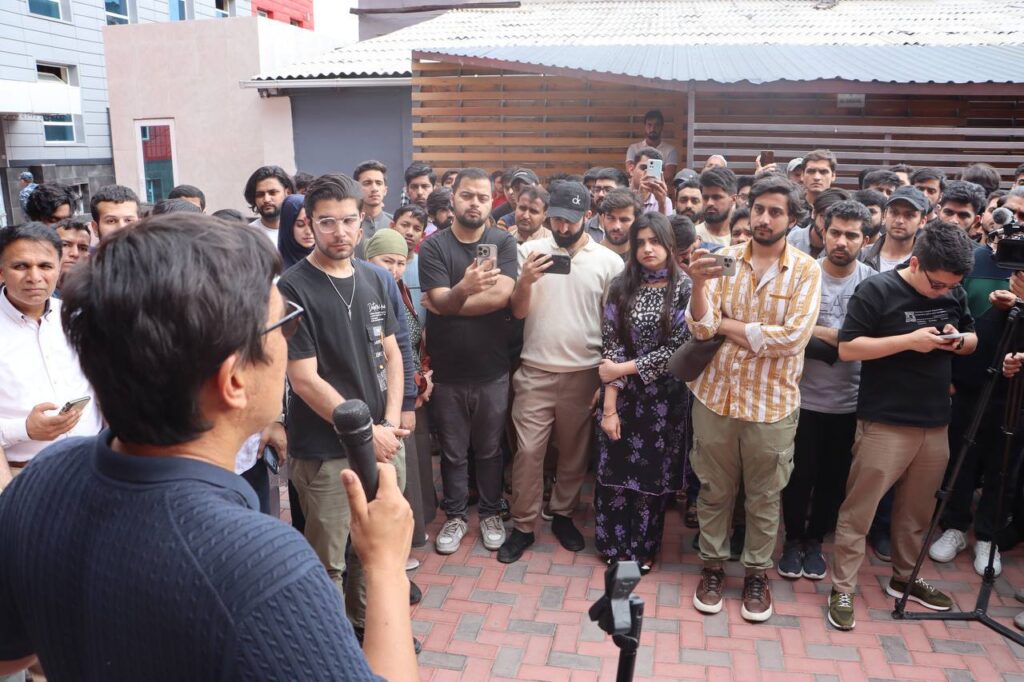
On the night of May 18, riots took place in Bishkek. The reason - a fight between foreign medical students and local youth. The trigger was a video of a scuffle, which occurred on May 13, when Egyptian citizens beat several locals. This video was then widely circulated on social networks. Local politicians have stated that they believe the situation was fueled from the outside.   What happened? On the night of May 18, protesters blocked several streets in the center of Bishkek. According to the Interior Ministry, the number of people continued to grow, and there was a threat of mass disorder, so all personnel from the capital's police were placed on alert. All hostels and dormitories in the city where foreign citizens live were put under guard. The protesters expressed dissatisfaction with the large number of migrants coming into the country from Egypt, Pakistan, India, and Bangladesh. The head of Kyrgyzstan's National Security Committee said law enforcement agencies detained several provocateurs who were calling for the overthrow of the government. By morning, the participants in the unauthorized rally had been dispersed. In total, about 1,000 people took part in the unrest, according to the capital's police. Law enforcement urged citizens not to give in to provocations and show a high-level of civil responsibility. The Ministry of Health of the Kyrgyz Republic reported that following the incident, 41 people sought medical assistance in Bishkek. Four Egyptians were detained - local media claim they were participants in the conflict that took place on May 13. Later, it became known that some Kyrgyz citizens had also been detained. The confrontation between local residents and foreigners has acquired an international dimension, with a number of government agencies in neighboring countries expressing their concern. For example, Kazakhstan introduced a special regime on the border with Kyrgyzstan. The authorities in Pakistan, meanwhile, have organized emergency flights, and a number of their students and workers are leaving Kyrgyzstan. Several thousand students from India, Pakistan, Egypt, Bangladesh and Nepal study at Bishkek's medical institutes. There are also migrant workers from these countries living in the country, who are mainly employed in the production of garments.   Who benefits from the unrest? According to deputy Dastan Bekeshev of the Jokorku Kenesh, the unrest is an attempt to find the authorities' vulnerabilities. "One of the indicators of economic growth is when citizens of the country hire foreign citizens as workers. And there is no way for us to avoid conflicts with foreign citizens. Conflicts are also arranged by our own citizens abroad. Of course, guests should not forget that they are guests and must coexist peacefully with the citizens of the country they are in. But we should also learn tolerance and wisdom when various conflicts occur. There are law enforcement agencies and they have every opportunity to punish a foreigner and expel him from Kyrgyzstan for a long time. Our laws on external migration are very strict," the parliamentarian wrote on his Telegram channel. The MP said...