• KGS/USD = 0.01144 0%
  • KZT/USD = 0.00213 0%
  • TJS/USD = 0.10456 0%
  • UZS/USD = 0.00008 0%
  • TMT/USD = 0.28490 0%
  • KGS/USD = 0.01144 0%
  • KZT/USD = 0.00213 0%
  • TJS/USD = 0.10456 0%
  • UZS/USD = 0.00008 0%
  • TMT/USD = 0.28490 0%
  • KGS/USD = 0.01144 0%
  • KZT/USD = 0.00213 0%
  • TJS/USD = 0.10456 0%
  • UZS/USD = 0.00008 0%
  • TMT/USD = 0.28490 0%
  • KGS/USD = 0.01144 0%
  • KZT/USD = 0.00213 0%
  • TJS/USD = 0.10456 0%
  • UZS/USD = 0.00008 0%
  • TMT/USD = 0.28490 0%
  • KGS/USD = 0.01144 0%
  • KZT/USD = 0.00213 0%
  • TJS/USD = 0.10456 0%
  • UZS/USD = 0.00008 0%
  • TMT/USD = 0.28490 0%
  • KGS/USD = 0.01144 0%
  • KZT/USD = 0.00213 0%
  • TJS/USD = 0.10456 0%
  • UZS/USD = 0.00008 0%
  • TMT/USD = 0.28490 0%
  • KGS/USD = 0.01144 0%
  • KZT/USD = 0.00213 0%
  • TJS/USD = 0.10456 0%
  • UZS/USD = 0.00008 0%
  • TMT/USD = 0.28490 0%
  • KGS/USD = 0.01144 0%
  • KZT/USD = 0.00213 0%
  • TJS/USD = 0.10456 0%
  • UZS/USD = 0.00008 0%
  • TMT/USD = 0.28490 0%

Viewing results 2269 - 2274 of 5758

China to Invest $500M in Corn Processing in Kazakhstan

Chinese biopharmaceutical company Yili Chuanning Biological Co. will invest $500 million in a large-scale corn processing project in Kazakhstan’s Almaty region. The announcement came during the China-Central Asia Industrial and Investment Cooperation Forum held in Astana, where a memorandum of cooperation was signed between the Almaty region’s Akimat (local government) and Yili Chuanning, one of China’s leading biopharmaceutical firms. The agreement outlines the construction of a major processing facility in the Yenbekshikazakh district’s Shelek industrial zone. The project will incorporate advanced biotechnology for the production of amino acids, probiotics, and biodegradable materials, including packaging and medical products. The investment, valued at approximately $500 million, is expected to create up to 1,000 new jobs. The plant is projected to process hundreds of thousands of tons of corn annually. Chinese specialists are currently conducting a comprehensive assessment of the site, examining infrastructure, logistics, and economic factors, and preparing a phased implementation strategy. During the forum, additional agreements were signed regarding Chinese investments in Kazakhstan’s agricultural processing sector, several of which also target corn processing. One such initiative is an $800 million project by the Fufeng Group in the Zhambyl region. This facility will process up to one million tons of corn per year to produce high-value-added goods such as lysine and amino acids. It is expected to generate around 1,500 jobs and provide stable demand for regional farmers. Offtake contracts have already been signed for the supply of 300,000 tons of corn in 2025. In the Turkestan region, Xinjiang Lihua Group Co., Ltd. is developing a $420 million integrated cotton cluster. The project encompasses the entire production chain, from cotton cultivation to the manufacture of finished textile goods. Separately, the Investment Committee of Kazakhstan’s Ministry of Foreign Affairs signed a contract with Qingdao Wanlin Food Corporation for an $89 million facility dedicated to onion dehydration and deep vegetable processing. The plant will primarily export to China, the United States, and Europe. Kazakhstan is intensifying its efforts to advance deep agricultural processing, driven in part by challenges in exporting raw commodities.

Kazakh Nomads and Authentic Tourism: Interview with Mongolia’s Cultural Envoy Dr. Gantemur Damba at CAMCA

This week The Times of Central Asia will be attending the CAMCA Regional Forum, which this year is being held in Ulaanbaatar, Mongolia.  The CAMCA network is a collection of professionals and policymakers dedicated to sharing ideas, knowledge and inspiration to develop the Eurasia region; its name stands for Central Asia, Mongolia, the Caucasus and Afghanistan. Ahead of the Forum, The Times of Central Asia spoke with Mongolia’s Cultural Envoy, and the Vice Chair of the Asian Ecotourism Network, Dr. Gantumur Damba, about the country's Kazakh nomads, and what the CAMCA program means for Mongolian culture and tourism. TCA: Central Asia is geographically quite close to Mongolia, but Mongolia's culture is distinct. What parts of Mongolian life do you think make journeys here unique for visitors? GD: Indeed. While Mongolia has some cultural similarities with Central Asia due to historical links, it has developed its own distinct identity. We are a unique culture with influences from Buddhism, shamanism and animism in our pastoralist herder’s way of life. Eastern Mongolia is rich in historical sites, including Deluun Boldog, where Genghis Khan was born, and the historical ruins of 13th and 14th-century towns. Central Mongolia is centered on the ancient town of Kharkhorum – with UNESCO-inscribed intangible cultural events – and the beautiful Orkhon Valley.  This region is also enriched by Mongolian Buddhist traditions and architectural sites.   North Mongolia is the home of nomadic reindeer herders, who have strong shamanistic beliefs. They are one of the last groups in the world to still herd reindeer as their primary way of life. Mongolia's largest ethnic minority are Kazakhs, who live in the country's western regions. What opportunities do visitors to Mongolia have to discover the Mongolian Kazakh way of life? The Kazakhs of Mongolia have distinct cultural practices, and live mainly in western Mongolia, particularly in Bayan-Ölgii province.  While they share a common heritage with Kazakhs in Kazakhstan and other Central Asian nations, their experience in Mongolia is shaped by their minority status and the influence of Mongolian culture and Buddhism, alongside their own Turkic language and Islamic traditions.  Activities like eagle hunting demonstration events, trekking in the Altai Mountains, and exploring authentic nomadic life offer unique travel experiences.  Travelers can experience authentic nomad Kazakh culture through homestays, participating in festivals, and witnessing traditional crafts, traditional music, epic storytelling and vibrant dances like the eagle dance. What places and activities in Mongolia do you most recommend to foreign visitors? Are you working on any new destinations? Mongolia offers a high degree of freedom and flexibility for travelers, especially when it comes to camping and exploring the vast landscapes. There are relatively few restrictions on where you can go and camp, and you can often choose your own route and pace.  However, choosing the right travel partner is vital. I categorize our destinations according to three “Ms”. The first M stands for modified places – basically those that are spoiled. That includes Terelj, Kharkhorum and West Khuvsgul Lake, where you will find many resorts,...

Is Central Asia China’s Backdoor to Global Power?

As Russia remains preoccupied with the war in Ukraine and the United States is focused on the ongoing Israel-Iran conflict, China is seeking to increase its presence in Central Asia. In the current circumstances, the European Union and Beijing appear to be the most active players in the strategically important region; but who is in a better position? Central Asia has become a region where various foreign powers are competing for influence. On June 5, New Delhi hosted the 4th India-Central Asia Dialogue, during which the foreign ministers of the regional nations, along with their Indian counterpart, Subrahmanyam Jaishankar, discussed anti-terrorism cooperation amid rising regional extremism. Earlier, on April 3–4, the European Union sought to expand its ties with the region through the EU–Central Asia Summit format. Given China’s extensive economic cooperation with Kazakhstan, Uzbekistan, Kyrgyzstan, Turkmenistan, and Tajikistan, it is unsurprising that Beijing is seeking to strengthen its strategic influence in the region. The 2nd China-Central Asia Summit, taking in Astana on June 16-17, is yet another opportunity for Beijing to demonstrate that it has the capacity to position itself as an alternative to the growing European presence in the region. According to Dr. Habib Al-Badawi, Professor of International Relations at the Lebanese University, China is also aiming to limit the influence of other powers in the region – especially the United States, and to a lesser extent, Russia. “Moscow appears to accept China's growing economic dominance while trying to maintain its traditional security role. However, Beijing's expanding presence represents a long-term challenge to Russia's historical sphere of influence in the region,” Dr. Al-Badawi told The Times of Central Asia, emphasizing that Moscow and Beijing are more inclined to cooperate rather than compete in the region. Mark N. V. Temnycky, a Nonresident Fellow at the Atlantic Council’s Eurasia Center, believes that Moscow is showing a high degree of tolerance toward Beijing’s increased economic, energy, and security presence in Central Asia. Both countries, in his view, share similar objectives in the region, where they act as major trading partners and energy suppliers. The European Union seems to be their major rival in the Central Asia. In Dr. Al-Badawi’s view, unlike the EU that is “solely pursuing the region’s critical minerals,” China appears focused on broader economic integration through infrastructure development and trade partnerships. Dr. Tugrul Keskin, Professor at Cappadocia University and Moderator of Global China Academic Network, seems to share this view. “Beijing’s objectives in Central Asia are driven by a blend of strategic, economic, and security imperatives. While access to critical minerals – including rare earth elements vital for green technologies – is an emerging interest, it is not the primary driver. Unlike the European Union, whose recent engagement has focused heavily on securing raw materials, China’s approach is more comprehensive. It aims to shape the region’s long-term political alignments and economic structures in ways that favor Chinese leadership and diminish Western influence,” Dr. Keskin told The Times of Central Asia. At the same time, Beijing is actively increasing...

Kazakhstan’s Nuclear Diplomacy – With China Set to Build Second, Who Will Construct Third Nuclear Power Plant?

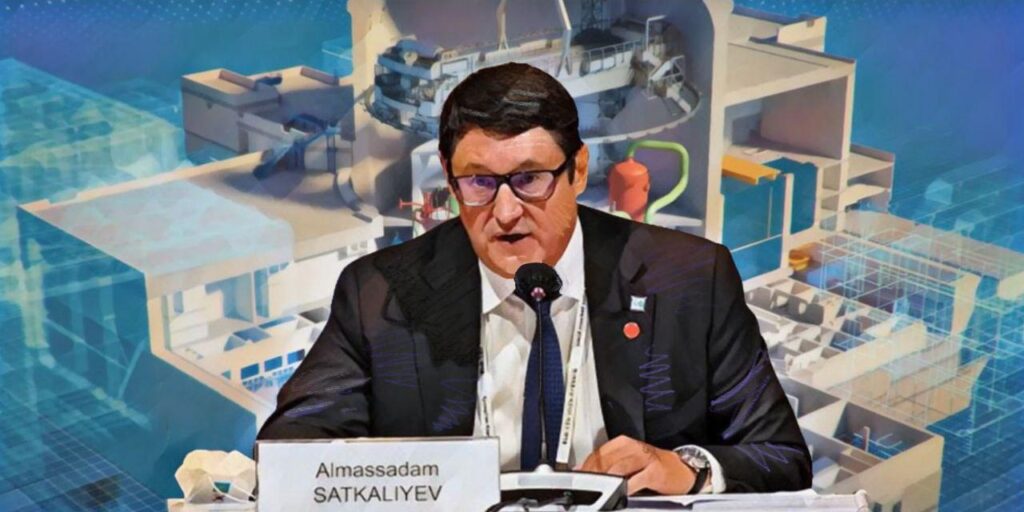
Kazakhstan’s famed hospitality, long enshrined in its national proverbs, has also become a guiding principle in its foreign policy. One recent example is the Kazakh government’s diplomatic maneuvering in the selection of partners for its nuclear power program. Leader of the Race Initially, Kazakhstan planned to build a single nuclear power plant by 2035 to address potential electricity shortages. However, following the October 6, 2024, referendum, where 71.12% of voters approved a plant in the Almaty Region, President Kassym-Jomart Tokayev instructed the government to explore the construction of at least two additional facilities. This directive, as it turns out, was both timely and strategic. In March 2025, the newly formed Atomic Energy Agency, reporting directly to the president, was tasked with overseeing the selection of international consortium leaders. On June 14, the agency announced that Russia’s state-owned Rosatom would lead the consortium to build Kazakhstan’s first nuclear power plant. Rosatom CEO Alexey Likhachev welcomed the decision, stating that the VVER-1200 Generation 3+ reactors, already operating in Russia and Belarus and selected by partners in Hungary, Egypt, Turkey, Bangladesh, and China, would be used. These reactors, he emphasized, meet international safety standards and integrate both active and passive safety systems. Tricks Up Their Sleeves Behind the scenes, the selection process revealed a quiet tug-of-war between Chinese and Russian interests. Ultimately, Rosatom prevailed, thanks, in part, to two strategic moves. First, Rosatom’s supporters enlisted Assystem, an ostensibly independent nuclear engineering consultancy, to assist Kazakhstan Atomic Power Plants LLP in the evaluation process. The firm’s analysis favored Rosatom. Second, to pre-empt concerns about Western sanctions, the Kazakh authorities emphasized that Kazakhstan would be the sole owner and operator of the facility. Atomic Energy Agency head Almasadam Satkaliev stated that Kazakhstan would control the entire production cycle from uranium mining to fuel processing and plant maintenance, thereby limiting direct Russian involvement post-construction. This arrangement may allow the creation of a Kazakh legal entity immune to Western sanctions, as it would be wholly state-owned. Whether this could offer Rosatom a loophole for acquiring restricted components remains an open question but one that few may press given the global interest in nuclear safety. Another Contender Emerges Just hours after Rosatom’s contract was announced, Satkaliev made a second, equally strategic statement: China National Nuclear Corporation (CNNC) would lead the construction of Kazakhstan’s second nuclear power plant. Satkaliev cited CNNC’s “strongest proposals” and revealed plans for a broader agreement on nuclear cooperation with China. “Objectively, few countries can master the entire nuclear cycle. China is one of them,” Satkaliev noted. Back in February, prior to the agency’s creation, Kazakhstan’s Ministry of Energy, then also led by Satkaliev, had identified Kurchatov and Aktau as potential sites for future nuclear facilities. Kurchatov lies near the former Semipalatinsk nuclear test site, while Aktau once hosted the Soviet-era BN-350 fast neutron reactor. The timing of Satkaliev’s announcement is no coincidence. Chinese President Xi Jinping is scheduled to visit Kazakhstan on June 16 for the second China-Central Asia Summit. For a nation that...

Kazakhstan Launches Construction of Strategic Center-West Highway Corridor

Kazakhstan has officially commenced construction of the long-anticipated Center-West highway corridor, a strategic infrastructure project designed to enhance national connectivity and boost the country’s transit capacity. The groundbreaking ceremony took place in the Kostanay region on June 14, marking a major milestone in the implementation of Kazakhstan’s national transport development strategy. According to the Ministry of Transport, the new highway will stretch 865 kilometers along the route Astana-Zhanteke-Egindikol-Arkalyk-Torgai-Irgiz. Once completed, the corridor will directly link the central and western regions of Kazakhstan and integrate into the Trans-Caspian International Transport Route (TITR), a critical freight corridor connecting China and Europe via Kazakh territory. One of the most significant logistical benefits of the project is a 573-kilometer reduction in travel distance between Astana and Irgiz, which is expected to substantially cut transit times and enhance freight movement efficiency. Construction began simultaneously in two directions: one from the town of Arkalyk toward Astana, and the other from the village of Torgai toward Irgiz. This dual-front approach is intended to accelerate the project timeline and streamline construction efforts across Kazakhstan’s expansive steppe terrain. Speaking at the launch event, Deputy Minister of Transport Satzhan Ablaliyev emphasized the strategic importance of the initiative. He noted that the corridor would not only improve national transport infrastructure and transit capabilities but also enhance regional interconnectivity and accessibility. Beyond its national scope, the project is expected to deliver substantial local benefits by boosting economic activity in adjacent areas. Increased mobility, expanded trade routes, and job creation, both during construction and in the long term, are among the anticipated outcomes. The Center-West highway corridor forms a key component of Kazakhstan’s broader strategy to modernize its transport network and solidify its role as a pivotal transit hub between East and West.

Kyrgyzstan Sees Notable Drop in Poverty Rate

Kyrgyzstan’s national poverty rate dropped to 25.7% in 2024, marking a 4.1% decrease from the previous year, according to new data released by the National Statistical Committee of the Kyrgyz Republic. In 2023, approximately 1.871 million people in the country lived below the poverty line, with nearly 62% residing in rural areas. For 2024, the poverty threshold was set at 65,417 Kyrgyz soms (around USD 748) per capita annually. The extreme poverty line was defined at 41,349 soms (approximately USD 472). As of January 2025, Kyrgyzstan’s population stood at 7.3 million. Many Kyrgyz households, particularly in rural communities, depend on remittances from family members working abroad, primarily in Russia. According to The Times of Central Asia, around 600,000 Kyrgyz nationals currently live outside the country, with Russia remaining the primary destination. By the end of 2024, over 379,000 Kyrgyz citizens were registered with Russia’s migration authorities. A recent World Bank report on migration trends in Europe and Central Asia highlighted the significant economic impact of these remittances. In 2024, remittances accounted for approximately 24% of Kyrgyzstan’s GDP. The report also found that the poverty rate among households with a family member working abroad was under 10% but would exceed 50% without these external income flows. In a related development, China pledged USD 3.7 billion in assistance to Central Asian countries, including Kyrgyzstan, to support poverty alleviation initiatives. The commitment was announced by Chinese President Xi Jinping at the inaugural China-Central Asia Summit, held in May 2023 in the city of Xi’an. Xi stated that China would develop a plan for scientific and technological cooperation with Central Asia in the area of poverty reduction and encourage Chinese companies operating in the region to generate more employment opportunities.