• KGS/USD = 0.01144 0%
  • KZT/USD = 0.00212 0%
  • TJS/USD = 0.10456 0.19%
  • UZS/USD = 0.00008 0%
  • TMT/USD = 0.28490 0%
  • KGS/USD = 0.01144 0%
  • KZT/USD = 0.00212 0%
  • TJS/USD = 0.10456 0.19%
  • UZS/USD = 0.00008 0%
  • TMT/USD = 0.28490 0%
  • KGS/USD = 0.01144 0%
  • KZT/USD = 0.00212 0%
  • TJS/USD = 0.10456 0.19%
  • UZS/USD = 0.00008 0%
  • TMT/USD = 0.28490 0%
  • KGS/USD = 0.01144 0%
  • KZT/USD = 0.00212 0%
  • TJS/USD = 0.10456 0.19%
  • UZS/USD = 0.00008 0%
  • TMT/USD = 0.28490 0%
  • KGS/USD = 0.01144 0%
  • KZT/USD = 0.00212 0%
  • TJS/USD = 0.10456 0.19%
  • UZS/USD = 0.00008 0%
  • TMT/USD = 0.28490 0%
  • KGS/USD = 0.01144 0%
  • KZT/USD = 0.00212 0%
  • TJS/USD = 0.10456 0.19%
  • UZS/USD = 0.00008 0%
  • TMT/USD = 0.28490 0%
  • KGS/USD = 0.01144 0%
  • KZT/USD = 0.00212 0%
  • TJS/USD = 0.10456 0.19%
  • UZS/USD = 0.00008 0%
  • TMT/USD = 0.28490 0%
  • KGS/USD = 0.01144 0%
  • KZT/USD = 0.00212 0%
  • TJS/USD = 0.10456 0.19%
  • UZS/USD = 0.00008 0%
  • TMT/USD = 0.28490 0%

Viewing results 2623 - 2628 of 5755

Kazakhstan Targets Anonymous Telegram Channels Over Disinformation Concerns

Kazakhstan’s Ministry of Culture and Information has launched a vocal campaign against anonymous Telegram channels, accusing them of fueling misinformation and destabilizing public discourse. Minister Aida Balayeva has called for stricter controls and accountability from both platform administrators and users. Breeding Grounds for Misinformation Minister Aida Balayeva described anonymous Telegram channels as “breeding grounds for lies,” arguing that their content undermines public stability and trust. Balayeva accused their operators of systematically disseminating fake news and orchestrating provocations designed to manipulate public opinion. The ministry, she said, is pursuing legal mechanisms to identify and block such platforms. “Our clear position is the issue of strengthening responsibility for the deliberate spread of fakes. I believe that anonymity should not be a shield for provocateurs,” Balayeva stated, emphasizing that rules should apply equally online and offline. Balayeva cited the recent case of the Telegram channel Qirsabyn, whose administrators were detained in Astana and Karaganda. According to Kazakhstan’s Prosecutor General’s Office, the individuals allegedly extorted money by threatening to publish false and compromising information. “I think it is time to sit down at the negotiating table with the Telegram administration,” Balayeva added. Battling War Propaganda Balayeva also addressed efforts by her ministry to counter war-related propaganda, particularly content originating from Russian platforms. According to her, some social networks promote mercenary enlistment for the war in Ukraine, targeting citizens across the Commonwealth of Independent States, including Kazakhstan. The ministry reportedly monitors these platforms and alerts site administrators when illegal or harmful content is identified. “The volume of throw-ins and unlawful materials is huge. In any case, it affects the mood of society, and causes resonances,” Balayeva noted. No Blanket Ban on Platforms While advocating for accountability, Balayeva clarified that Kazakhstan does not aim to impose a blanket ban on social networks. She emphasized that maintaining information integrity is a shared responsibility between government bodies, platform operators, and users. “They often talk about blocking different social networks. I want to say: all this depends not only on the administrators of social networks and the actions of government agencies. First of all, it concerns the users of social networks, who must understand their responsibility in that they are directly responsible for stability in society and for the non-proliferation of false information.” Social Media Restrictions for Minors The conversation on regulating online content has also reached Kazakhstan’s Parliament, where Mazhilis deputy, Zharkynbek Amantayuly recently submitted a request to the Prime Minister proposing restrictions on social media use by minors. Amantayuly referenced models in countries such as China, South Korea, France, the United States, and Australia, where age-based limitations are legally enforced, arguing that Kazakhstan should adopt similar laws to regulate minors’ access to social networks and online games. Telegram Under Global Scrutiny Telegram has come under fire in several countries over its resistance to content moderation. In August 2024, the platform’s founder Pavel Durov was briefly detained at Paris-Le Bourget Airport on suspicions ranging from terrorism to drug trafficking and child exploitation. Durov was released, but French authorities...

Ecologists Warn Central Asian Dams May Threaten UNESCO Heritage Site

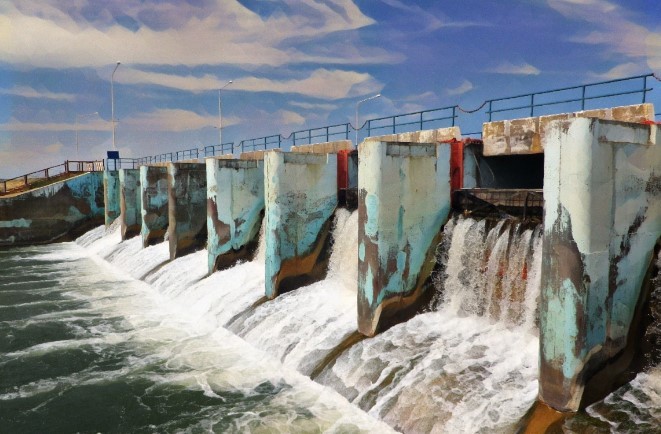
A coalition of international environmentalists is sounding the alarm over the impact of large-scale dam construction in Central Asia, warning that it could cause irreversible harm to the Western Tien Shan, a UNESCO World Heritage Site jointly shared by Kazakhstan, Kyrgyzstan, and Uzbekistan. Dam Projects Multiply Across Region According to a recent report by the coalition Rivers Without Boundaries, dozens of new hydropower projects are either in development or under construction across the region. The group says this wave of dam-building poses a significant threat to the unique ecosystems and biodiversity of the Western Tien Shan, which was inscribed on the UNESCO World Heritage List in 2016 due to its exceptional natural value. The report identifies more than five dams already constructed in recent years, with an additional 15 to 40 projects currently in the pipeline. These developments are affecting key river systems, including the Chatkal, Ugam, Pskem, and Aksu, which play a vital role in sustaining the region’s delicate ecological balance. Protected Areas Under Pressure Some of the most contentious projects are unfolding inside or near designated conservation zones. In Kyrgyzstan, a dam is planned within the Besh-Aral Nature Reserve, while gold mining activities have already degraded parts of the Chatkal River valley. In Kazakhstan, officials are considering a series of dams in Sayram-Ugam National Park. Uzbekistan is also pressing ahead with new hydropower schemes, including one on the Pskem River, drawing criticism from environmental advocates. “Short-term economic goals are being prioritized over the long-term need to protect this globally important natural area,” said Eugene Simonov, international coordinator of Rivers Without Boundaries. He urged UNESCO and the broader international community to intervene before further damage is done. Threats to Rare Species and Ecosystems Environmentalists argue that dam construction is fragmenting river systems and isolating animal habitats, particularly those of rare and endemic species. The snow leopard and several native fish species are among the wildlife at risk. Floodplain forests and wild fruit tree habitats, critical components of the area’s biodiversity, are also under threat. Alexander Kolotov, regional director of Rivers Without Boundaries, highlighted the dangers of building dams within protected national parks. “We are not properly measuring the impact on fish and river ecosystems,” he said. “If this continues, we could lose many species forever.” Legal and Diplomatic Concerns The group further contends that several dam projects may be violating international agreements, including the World Heritage Convention and the Espoo and Aarhus Conventions. These treaties require environmental impact assessments, public consultation, and cross-border cooperation, all of which may be lacking or inadequately implemented. Rivers Without Boundaries has formally petitioned UNESCO to add the Western Tien Shan to its List of World Heritage in Danger. The proposal is expected to be reviewed at the UNESCO World Heritage Committee session scheduled for July 2025. Previously, Evgeny Vinokurov, Vice-Chairman and Chief Economist of the Eurasian Development Bank, issued a stark warning about Central Asia’s looming water and energy crisis, noting that regional development must be carefully balanced with environmental protection.

Kyrgyzstan Prepares for First-Ever Ultramarathon Around Lake Issyk-Kul

Kyrgyzstan is set to host its first-ever ultramarathon around Issyk-Kul Lake, one of the world’s largest high-altitude lakes, between May 5 and 10. The event, titled the 1st Issyk Kul Six-Day Challenge, is billed as the world’s longest six-stage foot race, covering a total distance of 460 kilometers. The ultramarathon will take place over six days and six grueling stages: 90 km, 74 km, 87 km, 85 km, 79 km, and 45 km. Participants will race on a mix of asphalt, gravel roads, and dirt trails at elevations reaching up to 2,000 meters above sea level. Participation is capped at 100 runners. The racecourse has been carefully planned not only to circumnavigate the entire lake but also to showcase some of Kyrgyzstan’s most dramatic landscapes, including the otherworldly Fairy Tale Canyon and the striking rock formations of the Seven Bulls. “Issyk-Kul has been a place of power for many great marathoners, including Olympic champion Valentina Egorova and Olympic bronze medalist Satymkul Dzhumanazarov,” said Alex Golowin, Race Director and Head Coach at Running Expert. “We at Running Expert have been coming here for years to train for both marathons and ultras. The working altitude, mild weather, food familiar to Europeans, and the stunning nature make training here not only effective but also inspiring.” Organizers hope the event will help establish Kyrgyzstan as an emerging destination for sports tourism, drawing endurance athletes from around the world to the heart of Central Asia.

Shadows of Power: Assassination Attempt Exposes Kazakhstan’s Turbulent Past

The assassination attempt on the deputy akim (head of the local government) in Shymkent, Kazakhstan’s third-largest city with a population exceeding one million, has drawn intense public attention. Shymkent, designated a city of republican significance, rarely sees violence of this nature targeting high-ranking officials. Ruslan Berdenov, the official in question, was wounded by shotgun fire from a smoothbore weapon on the steps of the city administration building, which struck him in the thigh and the shoulder. The attack appears less like a calculated contract killing and more like an act of personal retribution. Despite its entrenched presence in Russian criminal culture, the phenomenon of contract killings has not firmly taken root in Kazakhstan or the broader Central Asian region. Nonetheless, several contract-style assassinations have left a deep imprint on the public consciousness. The following cases are among the most significant. Alexander Svichinsky On December 28, 1992, Alexander Svichinsky, the general director of the Karaganda Metallurgical Plant, was gunned down in Temirtau. This was the first confirmed contract killing in post-Soviet Kazakhstan. Svichinsky, who had risen through the ranks at Karmet Combine from mechanic to general director, had recently succeeded Oleg Soskovets, who later served in both the Kazakh and Russian governments. He was shot in the back of the head at the plant’s gatehouse. President Nursultan Nazarbayev took personal control of the investigation. Gabdrakhim Mendeshev, a veteran criminal investigator, eventually uncovered the truth: the hit was arranged by a demoted former deputy of Svichinsky. The intermediary, a driver at the plant, enlisted three Lithuanian nationals staying at a local hotel to carry out the murder. Following Svichinsky’s death, the plant’s fortunes declined. It was eventually sold to Indian industrialist Lakshmi Mittal’s Ispat Corporation. Iosif Milgram A year later, in December 1993, Almaty saw its first major contract killing. Iosif Milgram, the head of the Almatygorstroy construction firm, and his driver Dmitry Tarasov were murdered in the courtyard of Milgram’s home. The case went unsolved until 1998 when a traffic stop led to the arrest of Zakir Salakhutdinov. After killing a police officer during the stop, Salakhutdinov was detained and eventually confessed to the murder of Milgram. Investigators discovered that Milgram had accused his business partner, Valentin Li, of embezzlement. Li allegedly paid Salakhutdinov $20,000 to carry out the killing. In 1999, Salakhutdinov was sentenced to death and Li received a 15-year sentence, although he was released early due to illness. Nurlan Turysov In 2002, businessman Nurlan Turysov and his wife Bayan Atabaeva were murdered in their Almaty apartment. Turysov was the son of Karatay Turysov, a prominent political figure in Soviet Kazakhstan who had served as vice-premier of the republic’s Council of Ministers. Investigators believe Turysov was acquainted with the killers, as he let them in himself. He was shot twice in the temple and once in the back of the head. Hearing the shots, his wife attempted to flee and was attacked at the window, stabbed, and then shot in the head. The apartment was ransacked, suggesting the killers...

Leonid Slutsky: Scandals, Nationalism, and the Migrant Blame Game

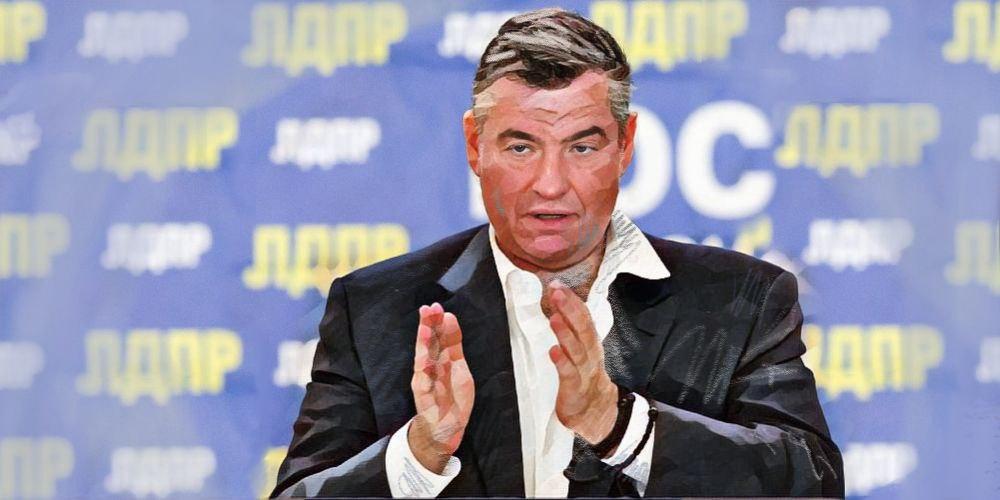
The leader of Russia’s Liberal Democratic Party (LDPR), Leonid Slutsky has long been a figure surrounded by controversy. A hardline nationalist, Slutsky’s career has been marked by allegations of corruption and harassment. Recently, his intensified rhetoric against labor migrants – including proposed restrictions on labor migrants bringing their families into the country, a requirement for foreign workers to learn Russian, and attacks on the former head of the Uzbek National and Cultural Autonomy Council in Moscow - have further spotlighted his controversial political career. “Our people... should not suffer from boors and criminals who consider themselves masters here, gather in packs and attack people,” Slutsky stated regarding migrant workers. “If you want to make money in Russia, learn Russian, and respect our laws and traditions. In any other case, go home. We will not experiment on ourselves or our children. Our great country must be respected.” This shift to the far-right aligns with a broader nationalist trend in Russia and raises questions about Slutsky’s intentions and the potential impact on the country and those working there. Slutsky’s Scandal-Ridden Career Slutsky's political reputation has been marred by allegations of sexual harassment that surfaced in 2018, with multiple female journalists accusing him of inappropriate conduct, including a BBC correspondent whom he reportedly touched inappropriately and whom he was recorded calling a “bunny”. Despite public disquiet, a State Duma ethics panel dismissed the complaints, leading to a media boycott but no political repercussions. This episode, as well as reports of hidden assets and extravagant wealth, including luxury properties and cars, point to a broader culture of impunity within the Russian political elite. Investigations have revealed that Slutsky's family enjoys a lavish lifestyle, including stays at a luxury Turkish villa, private jet travel, and an elite education for his children in Switzerland, despite his declared income in 2020 of $77,000. Additionally, reports link him to high-end vehicles such as Bentleys and a Mercedes-Maybach, often financed through questionable means. To paraphrase a piece by David Szakonyi in the American Political Science Review, in Russia, corrupt politicians work less but support the regime more. A member of the State Duma since 1999, Slutsky succeeded Vladimir Zhirinovsky as head of the LDPR in 2022. Under his leadership, the party has increasingly leaned on ultranationalist rhetoric and populist measures that appeal to disillusioned voters during times of economic strain. His recent attacks on labor migrants echo this strategy. Weaponizing Anti-Migrant Sentiment Slutsky’s outspoken criticism of labor migrants fits into a growing narrative in Russia that blames foreign workers for economic and social problems. Migrants, particularly those from Central Asia and the Caucasus, have been routinely scapegoated in nationalist circles, accused of taking jobs, disrupting social harmony, and contributing to crime. While there is little evidence to support many of these claims, Slutsky is capitalizing on prevailing anxieties as a means to rally support for his party. By portraying himself and the LDPR as defenders of a nostalgia-fueled Russian identity, he hopes to appeal to conservative voters who view...

Kazakhstan Weighs OPEC+ Exit, Raising Fears of Global Oil Price War

Kazakhstan is reportedly considering a reassessment of its participation in the OPEC+ alliance, raising concerns among major global oil market players, according to Reuters. Reuters columnist Ron Bousso Thomson noted that recent statements from Kazakhstan’s new Minister of Energy, Yerlan Akkenzhenov, emphasized prioritizing national interests over adhering to the cartel's production quotas. In an interview with Reuters, Akkenzhenov said, "Kazakhstan will proceed from its own interests in determining production volumes". Such rhetoric may signal Kazakhstan's de facto refusal to comply with OPEC+ quotas and could mark the first step toward a formal withdrawal from the alliance, which is led by Saudi Arabia. Since 2022, OPEC+ members had agreed to cut output by 5.85 million barrels per day to stabilize prices within a $70-90 per barrel range. Production Growth Despite Restrictions Kazakhstan has consistently exceeded its production limits. In March 2025, the country produced 1.85 million barrels of oil per day, 26% above its established quota of 1.468 million barrels. This surge is attributed to the expanded development of the Tengiz field. Such non-compliance has reportedly irritated Saudi Arabia, which, according to IMF estimates, needs oil prices above $90 per barrel to balance its national budget. In early April, Riyadh responded by slashing oil prices for the Asian market and accelerating production increases, signaling its displeasure toward undisciplined alliance members. Analysts warn that if tensions escalate further, Saudi Arabia could resort to drastic measures, potentially triggering a global price war. The Danger of a Price War The specter of a repeat of 2014, when Saudi Arabia flooded the market to push out U.S. shale producers, looms large. Should OPEC+ collapse, a supply glut could cause oil prices to plummet. Countries with higher production costs, such as Kazakhstan, would be particularly vulnerable to such a scenario. Risks for Kazakhstan's Budget and the Tenge According to analysts, Kazakhstan faces significant fiscal risks. Economist Arman Beisembayev explained that citizens would not immediately feel the impact of a sharp decline in oil prices due to existing contracts, which typically take three to six months to fulfill. However, he cautioned that economic repercussions could begin to surface by the fall. Financial analyst Andrei Chebotarev predicted that falling oil revenues would necessitate a budget revision. The current state budget is based on an oil price of $75 per barrel and an exchange rate of 470 tenge per U.S. dollar. In reality, oil prices are trending toward $65, and the tenge has depreciated to 518 per dollar. “Most likely, the government will increase withdrawals from the National Fund and revise budget expenditures. Devaluation may also become inevitable to balance the budget under new realities,” Beisembayev added. Global Turbulence and Geopolitical Factors Experts highlight that the policies of U.S. President Donald Trump's administration, particularly the escalation of trade conflicts, have played a significant role in destabilizing global markets. Newly imposed U.S. tariffs have already dampened global oil demand. “For developed countries, cheap oil is a boon. But for Kazakhstan, it poses risks and a threat of recession,” Beisembayev added....