• KGS/USD = 0.01144 0%
  • KZT/USD = 0.00208 0%
  • TJS/USD = 0.10456 0.19%
  • UZS/USD = 0.00008 0%
  • TMT/USD = 0.28571 0%
  • KGS/USD = 0.01144 0%
  • KZT/USD = 0.00208 0%
  • TJS/USD = 0.10456 0.19%
  • UZS/USD = 0.00008 0%
  • TMT/USD = 0.28571 0%
  • KGS/USD = 0.01144 0%
  • KZT/USD = 0.00208 0%
  • TJS/USD = 0.10456 0.19%
  • UZS/USD = 0.00008 0%
  • TMT/USD = 0.28571 0%
  • KGS/USD = 0.01144 0%
  • KZT/USD = 0.00208 0%
  • TJS/USD = 0.10456 0.19%
  • UZS/USD = 0.00008 0%
  • TMT/USD = 0.28571 0%
  • KGS/USD = 0.01144 0%
  • KZT/USD = 0.00208 0%
  • TJS/USD = 0.10456 0.19%
  • UZS/USD = 0.00008 0%
  • TMT/USD = 0.28571 0%
  • KGS/USD = 0.01144 0%
  • KZT/USD = 0.00208 0%
  • TJS/USD = 0.10456 0.19%
  • UZS/USD = 0.00008 0%
  • TMT/USD = 0.28571 0%
  • KGS/USD = 0.01144 0%
  • KZT/USD = 0.00208 0%
  • TJS/USD = 0.10456 0.19%
  • UZS/USD = 0.00008 0%
  • TMT/USD = 0.28571 0%
  • KGS/USD = 0.01144 0%
  • KZT/USD = 0.00208 0%
  • TJS/USD = 0.10456 0.19%
  • UZS/USD = 0.00008 0%
  • TMT/USD = 0.28571 0%

Viewing results 1 - 6 of 11

Rhetoric, Disinformation, and Regional Responses: Central Asia Reacts to Debates in the Russian Media Space

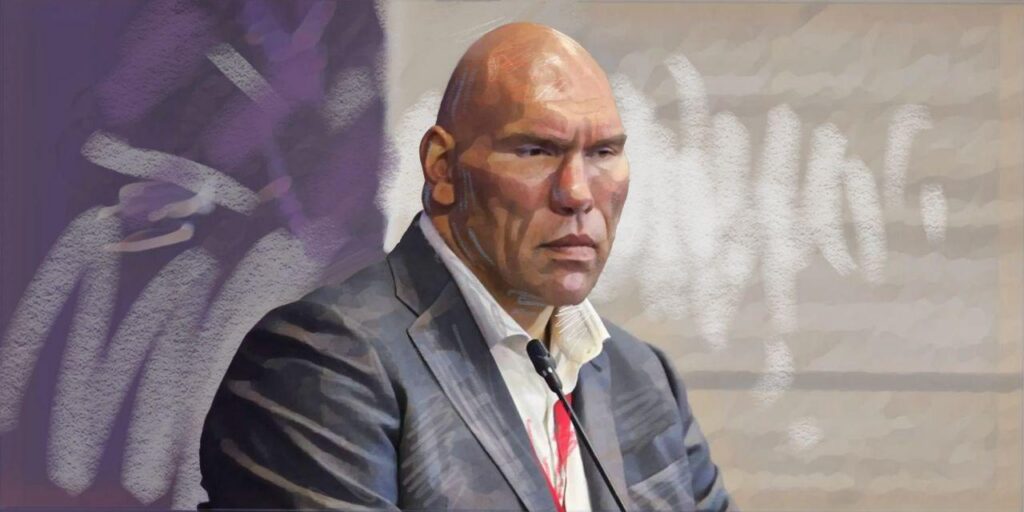
In recent months, a series of sharp and at times openly threatening statements circulating within the Russian media space have drawn growing attention in Central Asia. As previously reported by The Times of Central Asia, rhetoric targeting several Central Asian states has become increasingly frequent on Russian television and social platforms, raising concern among analysts and the public over issues of sovereignty, coercive tactics, and broader regional security. Russian officials have repeatedly stressed that commentary aired on television talk shows or circulated on social media does not necessarily reflect official state policy. Moscow has, on several occasions, distanced itself from provocative remarks made by media personalities, emphasizing that Russia’s foreign policy is articulated only through formal government channels. Analysts note that such episodes unfold within a highly polarized information environment, where sensational or confrontational statements can spread rapidly online, often detached from their original context or intent. Even when later denied or debunked, these narratives can contribute to heightened tensions by reinforcing existing anxieties and testing political and societal reactions in neighboring states. One recent and widely discussed episode involved a video that went viral on social media, allegedly showing Russian State Duma deputy and former heavyweight boxing champion Nikolai Valuev calling for a shift in Russia’s approach toward former Soviet republics from “carrots” to “sticks”, while also hinting at the possibility of a “special operation” in Central Asia. The footage sparked an immediate backlash and skepticism, particularly in Uzbekistan. According to RIA Novosti, Valuev later publicly denied the authenticity of the video, asserting that it was a deepfake. The Russian news agency quoted him as saying the video “has nothing to do with me” and had been produced using AI. “I’m glad that technologies are developing so fast, but this was done with artificial intelligence,” he said, noting that he often discusses AI and deepfakes and that “apparently, AI has taken offense at me.” Doubts about the video’s authenticity emerged almost immediately. Among those questioning it was Ruslan Chagaev, the former world boxing champion from Uzbekistan and one of Valuev’s former opponents, who publicly expressed his disbelief that the statements reflected Valuev’s actual views. Nonetheless, the incident fueled broader discussions in Central Asia about information manipulation, the role of deepfakes, and how aggressive narratives can gain traction, even when later debunked. These concerns were echoed at a recent session of the analytical forum “Fikrat,” held in Tashkent under the theme National Interest and Global Pressure. The gathering brought together political scientists, economists, and historians to assess the growing volume of inflammatory rhetoric emerging from Russia and its implications for Central Asia. Participants stressed that, even when such narratives do not reflect or translate directly into policy, they can shape public perception and test societal and governmental responses. [caption id="attachment_43140" align="aligncenter" width="1598"] The Firkat Forum in Tashkent; image: TCA, Sadokat Jalolova.[/caption] Economist Abdulla Abdukadirov, First Deputy Director General of Uzbekistan’s Agency for Strategic Reforms under the President, addressed the ideological underpinnings of these narratives, identifying Russian nationalist figure Alexander Dugin...

Kazakhstan Establishes Center for Countering Disinformation

Kazakhstan has announced the creation of a new Center for Countering Disinformation under the presidential administration. According to official statements, the center aims to protect citizens from false information and provide “objective, verified data.” The initiative, housed within the President's Central Communications Service, is being presented as a measure to identify and debunk falsehoods and promote “responsible information consumption.” Kazakhstan’s geographic location - bordering both Russia and China - makes information control a particularly sensitive issue. Since the Russian invasion of Ukraine, Astana has refused to recognize Russia’s annexations and generally observes Western sanctions. Much of Kazakhstan’s population consumes Russian-language media, however, which remains a source of governmental concern. Questions over how “disinformation” is defined remain, however. A 2023 law on online platforms and advertising, which penalizes the spread of false information, prompted warnings from Reporters Without Borders and others about potential state overreach. Kazakhstan has increasingly found itself on the frontline of regional information warfare, as waves of disinformation target its foreign policy and internal stability. Recent campaigns have sought to undermine the country’s relations with China, Russia, and the United States, exploiting its position between major powers. Officials in Astana have pointed to anonymous Telegram channels and coordinated online networks as sources of destabilizing narratives, ranging from economic panic to conspiracy theories about national security. In response, the government has intensified its efforts to counter these threats, including public awareness campaigns and new monitoring initiatives. Analysts note that operations like “Spider Web” highlight both the scale of the problem and the geopolitical sensitivities involved. While Kazakhstan is working to address disinformation, the challenge lies in balancing security concerns with the need to preserve media freedom.

Operation Spider Web Rattles Russia as Kazakhstan Battles Disinformation

Sunday, June 1, was described by some Russian commentators as the country’s own “Pearl Harbor” following a Ukrainian drone offensive that struck multiple Russian military airfields. Dubbed Operation Spider’s Web, the strikes, targeting air bases in Murmansk, Irkutsk, Ivanovo, Ryazan, and Amur regions were carried out by Ukraine’s Security Service (SBU) and sent shockwaves through Russian society. As criticism mounted over the failures of Russia’s air defense and intelligence apparatus, some voices in Russia began directing attention toward Kazakhstan, attempting to link it, however tenuously, to the Ukrainian operation. The Operation and Its Tactics The Russian Ministry of Defense confirmed the June 1 drone attacks but reported fires at only two bases, in Murmansk and Irkutsk, with no casualties. Ukrainian President Volodymyr Zelensky hailed the operation as an "absolutely brilliant result,” emphasizing that it had been in development for 18 months. The method of using vehicles disguised as civilian freight, such as trucks carrying wooden houses filled with drones, was not new. Russian special services have previously intercepted similar transport efforts, and some military bloggers had already documented such tactics. Kazakhstan’s Alleged Involvement According to the Russian authorities, operational preparations for the June 1 attack began in December 2024. Officials in Irkutsk announced a manhunt for 37-year-old Artem Timofeev, a Ukrainian former DJ suspected of organizing the drone launches from vehicles registered to him. Timofeev’s background remains murky: while some sources say he was born in Zhytomyr, others claim Donetsk. He reportedly lived in Kyiv before relocating to Russia’s Chelyabinsk region. The only known connection to Kazakhstan is unconfirmed reports of Timofeev’s departure - along with his wife, an erotic fiction writer  - to Astana just days before the strikes. This limited detail, however, fueled speculation on Russian Telegram channels that drone components may have entered Russia via Kazakhstan or that its proximity made it a convenient staging point, with one baselessly claiming that "All the spare parts and explosives arrived via fraternal Kazakhstan." Official Response from Kazakhstan Kazakh officials quickly dismissed these allegations. Foreign Ministry spokesperson Aibek Smadiyarov stated, “There is no official confirmation of this. I will leave it to the theorists among our experts. I cannot comment on conspiracy theories and all sorts of mysteries.” Mazhilis deputy Konstantin Avershin characterized the accusations as “information sabotage” aimed at destabilizing Kazakhstan’s relations with Russia. “I regularly visit such production facilities and can officially state that neither components nor finished products could have fallen into the wrong hands,” he said. Military analyst and retired colonel Darkhan Daniyarov echoed this view, calling the allegations external propaganda. “Kazakhstan complies with all international norms, ensures transparent export controls, and remains a supporter of peace, neutrality, and good neighborliness,” he stated, adding that since 2022, Kazakhstan has introduced strict controls on dual-use goods to prevent their re-export for military purposes. Former KNB Chairman Nartay Dutbayev also questioned the plausibility of the claims, stating it would be easier to obtain explosives within Russia than to smuggle them from Kazakhstan. A Broader Narrative Accusations implicating Kazakhstan...

Kazakhstan Targets Anonymous Telegram Channels Over Disinformation Concerns

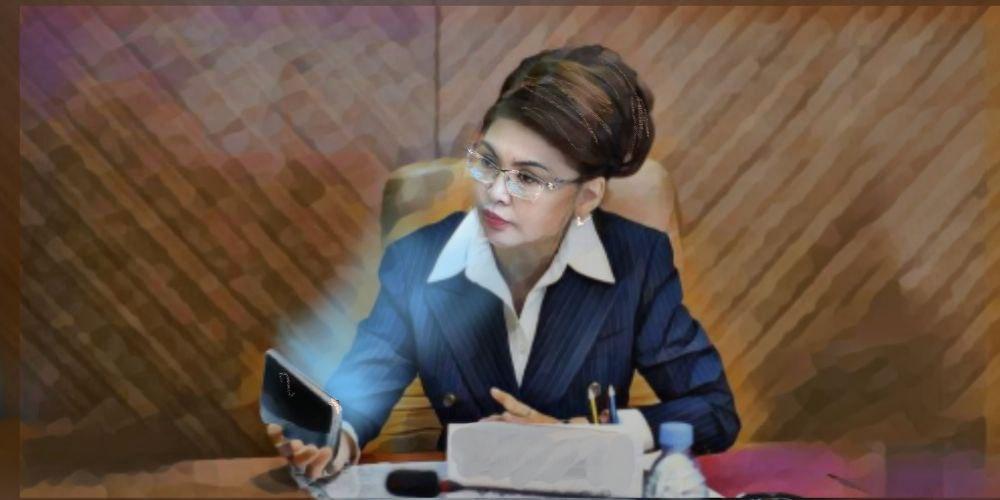
Kazakhstan’s Ministry of Culture and Information has launched a vocal campaign against anonymous Telegram channels, accusing them of fueling misinformation and destabilizing public discourse. Minister Aida Balayeva has called for stricter controls and accountability from both platform administrators and users. Breeding Grounds for Misinformation Minister Aida Balayeva described anonymous Telegram channels as “breeding grounds for lies,” arguing that their content undermines public stability and trust. Balayeva accused their operators of systematically disseminating fake news and orchestrating provocations designed to manipulate public opinion. The ministry, she said, is pursuing legal mechanisms to identify and block such platforms. “Our clear position is the issue of strengthening responsibility for the deliberate spread of fakes. I believe that anonymity should not be a shield for provocateurs,” Balayeva stated, emphasizing that rules should apply equally online and offline. Balayeva cited the recent case of the Telegram channel Qirsabyn, whose administrators were detained in Astana and Karaganda. According to Kazakhstan’s Prosecutor General’s Office, the individuals allegedly extorted money by threatening to publish false and compromising information. “I think it is time to sit down at the negotiating table with the Telegram administration,” Balayeva added. Battling War Propaganda Balayeva also addressed efforts by her ministry to counter war-related propaganda, particularly content originating from Russian platforms. According to her, some social networks promote mercenary enlistment for the war in Ukraine, targeting citizens across the Commonwealth of Independent States, including Kazakhstan. The ministry reportedly monitors these platforms and alerts site administrators when illegal or harmful content is identified. “The volume of throw-ins and unlawful materials is huge. In any case, it affects the mood of society, and causes resonances,” Balayeva noted. No Blanket Ban on Platforms While advocating for accountability, Balayeva clarified that Kazakhstan does not aim to impose a blanket ban on social networks. She emphasized that maintaining information integrity is a shared responsibility between government bodies, platform operators, and users. “They often talk about blocking different social networks. I want to say: all this depends not only on the administrators of social networks and the actions of government agencies. First of all, it concerns the users of social networks, who must understand their responsibility in that they are directly responsible for stability in society and for the non-proliferation of false information.” Social Media Restrictions for Minors The conversation on regulating online content has also reached Kazakhstan’s Parliament, where Mazhilis deputy, Zharkynbek Amantayuly recently submitted a request to the Prime Minister proposing restrictions on social media use by minors. Amantayuly referenced models in countries such as China, South Korea, France, the United States, and Australia, where age-based limitations are legally enforced, arguing that Kazakhstan should adopt similar laws to regulate minors’ access to social networks and online games. Telegram Under Global Scrutiny Telegram has come under fire in several countries over its resistance to content moderation. In August 2024, the platform’s founder Pavel Durov was briefly detained at Paris-Le Bourget Airport on suspicions ranging from terrorism to drug trafficking and child exploitation. Durov was released, but French authorities...

Kazakh Ex-Security Chief’s Wild Trump KGB Recruitment Story Gains Media Traction

A recent Facebook post by Major General Alnur Musayev, the former head of Kazakhstan’s National Security Committee (KNB), has drawn widespread attention after he claimed that the KGB recruited U.S. President Donald Trump in 1986 under the codename "Krasnov" (a Russian family name, derived from the word "krasniy," an adjective meaning "red"). The post apparently referenced Trump’s hair color in assigning him the pseudonym. Given Musayev’s checkered background, in Kazakhstan, the post was largely taken as satire - though it remains unclear whether it was meant as such. However, the claim was taken literally by several media outlets, particularly in Ukraine, where journalists and commentators circulated the story as fact. As a result, the post evolved into a larger media narrative. Falsehoods in Musayev’s Account Musayev’s version of events contains several factual inaccuracies that contradict both his own professional history and the operational structure of the KGB. Musayev began his post with the statement: "In 1987, I served in the 6th Directorate of the USSR KGB in Moscow." However, official records indicate that between 1986 and 1989, Musayev was assigned to the USSR Ministry of Internal Affairs, where he held senior positions in its 8th Main Directorate, overseeing Soviet law enforcement. He had no known connection to the 6th Directorate of the KGB. Musayev further stated: "The most important area of work of the 6th Directorate was the recruitment of businessmen from capitalist countries." This is also inaccurate. The 6th Directorate of the KGB, formed in 1982 from the former Directorate P of the 2nd Main Directorate, was not involved in foreign recruitment. Its primary responsibilities were: Industrial espionage - gathering intelligence on Western technology and economic developments, and Counterintelligence within the Soviet economy - protecting industrial assets from foreign espionage. The recruitment of foreign nationals, including businessmen, fell under the jurisdiction of the First Main Directorate (FMD) of the KGB, not the 6th Directorate. Finally, Musayev concluded with his most sensational assertion: "In that year, our Directorate recruited a 40-year-old businessman from the United States, Donald Trump, under the pseudonym Krasnov." While the pseudonym appears to be a play on Trump’s hair color, Musayev made no effort to clarify that his story was fabricated, allowing it to be widely circulated as a legitimate claim. Analysis from Kazakh Experts Kazakh political analyst Daniyar Ashimbayev dismissed Musayev’s statement as baseless, writing on his Telegram channel: "The global circus show continues. The former KNB (National Security Committee of the Republic of Kazakhstan) chairman, who is wanted for treason and enjoys portraying himself as a man with ‘inside knowledge,’ now claims that Donald Trump was recruited by the KGB’s 6th Directorate." Ashimbayev also pointed out that Musayev had failed to specify whether he personally recruited Trump, or if it was done by someone else. More importantly, he reaffirmed that the 6th Directorate was never responsible for recruiting foreigners. Musayev has a history of controversial intelligence claims. In the late 1990s, while serving as head of the KNB, he accused then-Kazakh Prime Minister Akezhan Kazhegeldin...

Kazakhstan and Uzbekistan Intensify Efforts to Combat Disinformation

Kazakhstan and Uzbekistan have agreed to deepen their collaboration in the information sector, focusing on combating disinformation and fake news. The agreement was formalized during a meeting between representatives from Kazakhstan’s Ministry of Culture and Information and Uzbekistan’s Agency of Information and Mass Communications under the President’s Administration in Tashkent. A cooperation plan for 2025 was signed, covering several initiatives, including media content exchange, training programs for journalists and press secretaries, and support for young media professionals. This agreement builds on commitments made during Uzbek President Shavkat Mirziyoyev’s visit to Kazakhstan on August 8, when both nations adopted a joint statement on mass communication cooperation. Kazakhstan’s Ministry of Culture and Information emphasized the importance of establishing robust mechanisms to counter fake news and fostering media integration through collaborative projects. The meeting also highlighted plans to organize press tours aimed at enhancing journalistic expertise and strengthening professional ties. A key focus was the development of the Silk Way TV channel, presented by Robert Muradyan, Managing Director of Kazakhstan’s Presidential TV and Radio Complex. The channel is envisioned as a platform for expanding content exchange among Central Asian nations. Additionally, Kazakhstan’s delegation is participating in the VI meeting of ministers and officials responsible for media, hosted by the Organization of Turkic States from December 17 to 19. Both sides expressed their readiness to bolster cooperation, which they see as integral to achieving strategic goals in media development and countering information threats. Kazakhstan and Uzbekistan are proactively addressing the issue of disinformation through legislative and educational measures. In Kazakhstan, the dissemination of false information is punishable by administrative and criminal penalties, including fines or imprisonment of up to seven years, with the severity of the punishment determined by the level of harm caused. Uzbekistan has also taken significant steps. In September 2024, the First Uzbekistan-Azerbaijan Media Forum was held in Tashkent, where participants discussed cooperative efforts to combat disinformation and improve media literacy. Uzbekistan is also implementing projects to establish cooperative mechanisms in the media sphere and organize press tours for journalists to enhance their skills. Both nations recognize the critical importance of combating disinformation to maintain the integrity of their media landscapes. By prioritizing educational initiatives, international collaboration, and media literacy, Kazakhstan and Uzbekistan are taking meaningful steps to ensure a more informed and resilient public.