• KGS/USD = 0.01144 0%
  • KZT/USD = 0.00211 0%
  • TJS/USD = 0.10460 0.19%
  • UZS/USD = 0.00008 0%
  • TMT/USD = 0.28490 0%
  • KGS/USD = 0.01144 0%
  • KZT/USD = 0.00211 0%
  • TJS/USD = 0.10460 0.19%
  • UZS/USD = 0.00008 0%
  • TMT/USD = 0.28490 0%
  • KGS/USD = 0.01144 0%
  • KZT/USD = 0.00211 0%
  • TJS/USD = 0.10460 0.19%
  • UZS/USD = 0.00008 0%
  • TMT/USD = 0.28490 0%
  • KGS/USD = 0.01144 0%
  • KZT/USD = 0.00211 0%
  • TJS/USD = 0.10460 0.19%
  • UZS/USD = 0.00008 0%
  • TMT/USD = 0.28490 0%
  • KGS/USD = 0.01144 0%
  • KZT/USD = 0.00211 0%
  • TJS/USD = 0.10460 0.19%
  • UZS/USD = 0.00008 0%
  • TMT/USD = 0.28490 0%
  • KGS/USD = 0.01144 0%
  • KZT/USD = 0.00211 0%
  • TJS/USD = 0.10460 0.19%
  • UZS/USD = 0.00008 0%
  • TMT/USD = 0.28490 0%
  • KGS/USD = 0.01144 0%
  • KZT/USD = 0.00211 0%
  • TJS/USD = 0.10460 0.19%
  • UZS/USD = 0.00008 0%
  • TMT/USD = 0.28490 0%
  • KGS/USD = 0.01144 0%
  • KZT/USD = 0.00211 0%
  • TJS/USD = 0.10460 0.19%
  • UZS/USD = 0.00008 0%
  • TMT/USD = 0.28490 0%

Viewing results 4753 - 4758 of 5683

In Kyrgyzstan, a Woman Kept Foreigners in Slave Labor

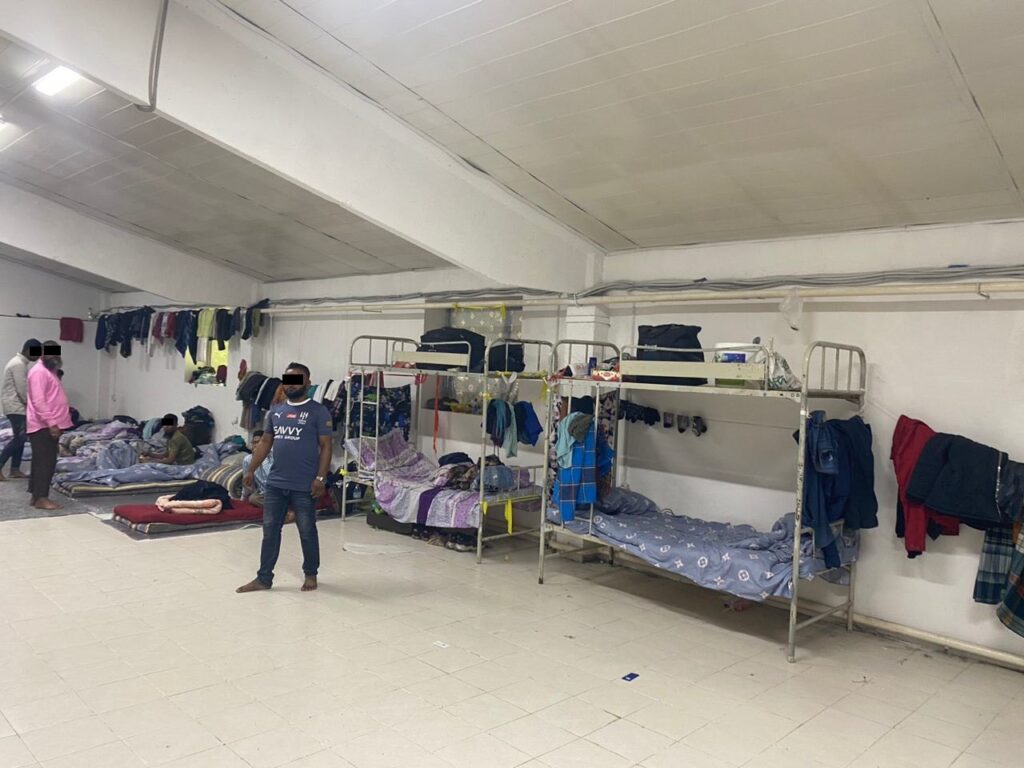
The State Committee for National Security of Kyrgyzstan (SCNS) has revealed gross violations in a sewing shop near Kyrgyzstan's capital, wherein its owners employed South Asians without providing them with proper working conditions. On the night of June 19-20th, 2024, operatives searched the sewing shop where 30 South Asians worked; the GKNB said that a Kyrgyz citizen fraudulently attracted foreigners to work. Violating her obligations, the boss did not pay the promised wages, and exploited the workers' labor to make the greatest profit. "She, having entered into a criminal conspiracy with a district police officer, confiscated passports from foreigners and intimidated them regularly, threatening to imprison them for an illegal stay on the territory of the Kyrgyz Republic," law enforcers said. The foreigners were kept in conditions that did not meet basic sanitary requirements, and they were barely fed. The owner of the sewing shop and a district police officer were detained and placed in a temporary detention center. Due to the increasing demand for garment products, many workshop owners bring workers from Pakistan, Bangladesh, and other South Asian countries for cheap labor.

Kazakhstan: Preconceived Notions and Changed Minds

When I received the email stating that I had received a fellowship to move to Almaty, Kazakhstan, to teach English for a year, I nearly fell out of my office chair in Midtown Manhattan. I worked in a market research company fresh out of college but knew I needed to do something more exciting in my early 20s. I began studying Russian when I was 13 years old. I’m unsure what the exact catalyst for my language endeavor was. Still, coupled with my Ukrainian ancestry, Putin’s annexation of Crimea, and the Sochi Olympics, it seemed like a no-brainer to me. At this point in my life, I lived outside of Boston, Massachusetts, and began taking Russian classes on Saturdays in Brookline to satiate my desire to learn. After a year of classes, I enrolled in a Russian language immersion camp in Bemidji, Minnesota, for three summers. Following that, I received a grant from the US State Department to immerse myself in the culture for a summer in Narva, Estonia. I knew where and what I wanted to study after graduating high school. I started my studies at the Elliott School of International Affairs at George Washington University in Washington, DC, declared a major in international affairs with a minor in Russian language and literature, and never looked back. After graduation, my plans were in the air. I had been looking into opportunities to move to Russia or Ukraine, but this was now off the table due to the war. I worked in New York to get sorted, earn money, and start a new chapter of my life. At some point in April 2023, I received an email from a fellowship I had applied for in October 2022. I was initially placed on the waitlist, but I was notified that I had been accepted for the 2023-2024 cohort to relocate to Almaty, Kazakhstan. “Oh my god,” I said at my desk. My coworker asked me what had happened. I said, “I’m moving to Kazakhstan. “Kazakhstan, like Borat’s Kazakhstan?” she asked. [caption id="attachment_19278" align="aligncenter" width="370"] Horses graze along the way to Furmanov Peak – Almaty, KZ[/caption] Preconceived notions After the excitement had settled and my family and friends were informed of my plans, questions began to arise. “Why Kazakhstan?” “Is it safe there?” “Is that next to Serbia?” “Does the Taliban rule Kazakhstan?” It is shocking how little most Americans know about the 9th largest country on the planet. Spanning two continents with nearly 20 million people, most Americans only know Kazakhstan from Sasha Baron Cohen’s 2006 film, Borat, and nothing more. When they hear the word “Kazakhstan,” they picture a backward and socially undeveloped post-communist country in which people commute by donkey carts, are misogynistic, and are openly antisemitic. While the depiction of Kazakh culture is inherently incorrect, the message is stuck, and the film has become synonymous with Kazakhstan in the American mind. However, most Americans probably can’t find it on the map. I explained, “Kazakhstan is in Central Asia,...

Who is Aidos Sadykov?

The tragic shooting of Kazakh journalist, Aidos Sadykov is suspected to be collateral damage in Russia’s war of aggression against Ukraine and the ensuing geopolitical subversions. Aidos Sadykov and his wife Natalya Sadykova host the YouTube channel @base-kazakh, which, according to their description, “covers events in Kazakhstan and the world and does not depend on the authorities, oligarchs and grants”. The couple left Kazakhstan in 2014 following allegations of slander against Sadykova by Kazakh MP Maral Sergazievich Itegulov, a charge no longer considered a criminal offense as of 2020. Since 2014, they have resided in Kyiv, where they have received refugee status. Sadykov has criticized the Kazakh authorities in the regional press since 2000. Also a former chair of the Aktobe NSDP Party Azat branch, Aidos Sadykov was imprisoned for hooliganism in 2010, but was released early under amnesty. He later founded the "Gastat" opposition movement after leaving the NSDP and establishing an independent trade union at CNPS-Aktobemunaigas, a local oil and gas enterprise. He is associated with another outspoken controversial figure, Mukhtar Ablyazov, who has sought political asylum in France. Ablyazov faced murder charges in Kazakhstan following the death of a bank CEO – the same bank that Ablyazov later took over and reportedly defrauded. He now faces judgements against him exceeding $5 billion in UK and U.S. courts related to laundering stolen funds. Sadykova worked for the newspaper Respublika, which was allegedly funded by Ablyazov. The apparent assassination attempt of Sadykov has raised questions about motive. Kazakhstan parliamentary deputy, Ermurat Bapi has suggested that the assassination attempt was due to “third forces” that want to create a “quarrel between Kazakhstan and some countries”. Sadykova has accused President Tokayev of ordering the assassination. The couple’s YouTube channel has been consistently critical of Kazakhstan’s government, starting with President Nazarbayev’s term and continuing under new President Tokayev. Since the war broke out in Ukraine, Sadykov and his wife have claimed that Kazakhstan’s leadership is colluding with the Kremlin. According to The Guardian, Sadykov is a “prominent blogger with more than 1 million subscribers on YouTube.” While the YouTube channel does in fact show 1.01 million followers, Washington University’s public tool demonstrates that at least 88% of these are dead accounts (meaning they show no activity), according to an analysis conducted three days after the attack on Sadykov. On June 20, the Prosecutor General of Kazakhstan announced that they had reached out to the Prosecutor General of Ukraine and offered their full assistance in solving the crime by involving highly-skilled investigators from Kazakhstan.

Companies from the Netherlands Consider Investing in Turkmenistan’s Agricultural Sector

A special session on opportunities for Dutch companies in the Turkmen agricultural market was held at the Green Tech Amsterdam 2024 international exhibition. Representatives from the Netherlands and Turkmenistan's business circles and heads of European research and financial institutions attended, Turkmenportal has reported. Turkmenistan's Ambassador to Belgium, Sapar Palvanov, stated that the country's economic situation and business climate provide favorable conditions for foreign investors. "The government creates equal rights for Turkmenistan's private companies and foreign investors. Foreign investors in business in Turkmenistan will receive full support from the government," Palvanov said. Following the presentation, participants asked about entering the Turkmen agricultural market, with Dutch companies expressing a desire to visit Turkmenistan and familiarize themselves with market opportunities. An agricultural mission to Turkmenistan with the participation of interested Dutch companies and institutions is to be organized. The program will include meetings with the relevant government bodies, Turkmen partners, and private sector representatives.

Testing Limits: Marathoners Head For the Shrinking Aral Sea to Run in the Desert

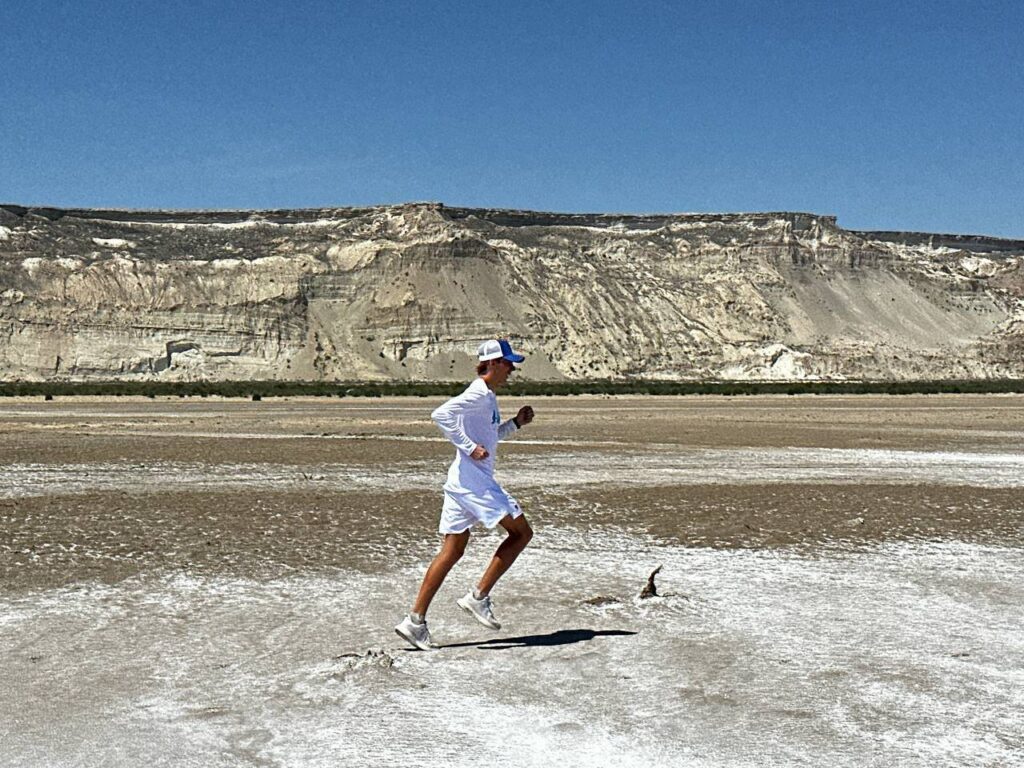
The dry bed of the Aral Sea, a symbol of ecological disaster in Central Asia, will host one of the world’s more extreme marathons on Sunday. Supported by aid stations and medical staff, a small band of athletes will run on sand, gravel and stones, inhaling salty air in scorching temperatures and bracing themselves against strong winds. The Aral Sea Eco Marathon is being held in Karakalpakstan, Uzbekistan and planners aim to draw attention to what was once the fourth biggest saltwater lake and is now about 10 percent of its original size. Race promoters also want to highlight the need for sustainable use of water. The marathon roughly coincides with the United Nations-designated day to combat desertification and drought, which falls on June 17.  Andrey Kulikov, founder of the ProRun running school in Uzbekistan, ran a marathon distance in the area last year with American ultramarathoner Dean Karnazes in 4:51:18. Kulikov planned this year’s event with the help of Aziz Abdukhakimov, Uzbekistan’s minister of ecology, environmental protection and climate change. A limit of 100 runners was set, though far fewer signed up. Still, Kulikov said participants are from countries including Japan, China, France, Pakistan, Kenya, Togo and the Philippines. He hopes to expand the event next year. Uzbek participant Denis Mambetov said in a text interview on Telegram that he is taking part because of “a passion for adventure, for something new and unusual, to test one’s strength, and, of course, to draw the attention of others to an environmental problem of global proportions.” The Aral Sea, which lies between northern Uzbekistan and southern Kazakhstan, began shrinking significantly in the 1960s when water from the rivers that fed it was rerouted for Soviet-led agricultural irrigation. The subsequent emergency of the Aralkum Desert and the sand and dust storms arising from the world’s newest desert have polluted the environment and severely affected health in local communities. There are regional and international efforts to restore the Aral Sea ecosystem, including seed-planting and the implementation of water-saving technologies. The five Central Asian countries - Uzbekistan, Kazakhstan, Kyrgyzstan, Tajikistan and Turkmenistan – formed a group three decades ago, soon after independence from Soviet rule, to address the problem. The gap between goals and results is wide, though the countries are recognizing the wider threat of water scarcity as the planet becomes hotter.  “Colleagues are well aware that the problem of water shortage in Central Asia has become acute and irreversible and will only worsen in the future,” Uzbek President Shavkat Mirziyoyev said at a regional meeting on the Aral Sea last year. “Experts believe that in some regions of Central Asia pressure on water resources will increase three times by 2040. Economic damage could eventually reach 11 percent of regional gross product.” Nurbek Khusanov, who will run the marathon on Sunday,  works at SQB, a top bank in Uzbekistan, and is a leader of its efforts to promote “green” policies that aid the environment. The marathon will “attract more people to the Aral...

Rice Production on the Rise in Turkmenistan

According to the publication ' Turkmenistan Golden Age', over 8,000 hectares of rice were planted in the north of Turkmenistan this year. In response to a marked increase in the state's purchase price , farmers in the Toshkhovuz region are actively expanding rice cultivation with the greatest volume being grown on two specialized farms in the Saparmurod Turkmanboshi district. Thanks to the rice cleaning enterprise built several years ago in the territory  and specialized equipment provided by the renowned brand Satake,  high-quality seed material is available to all of the region's rice farms. At the root of this year's harvest are disease-resistant, and excellent-tasting “Nöküs-2” and “Bereket” varieties. Rice cultivation is traditional to northern Turkmenistan. A leader in the field, the Dashoguz province produces over 35,000 tons of different varieties per year. Farmers in the Lebap region planted rice on more than 10,000 hectares in 2023, of which 50,000 tons went to the state, and  farmers in Chorjevo  harvested over 15 thousand tons from 3,800 hectares.