• KGS/USD = 0.01144 0%
  • KZT/USD = 0.00212 0%
  • TJS/USD = 0.10456 0.19%
  • UZS/USD = 0.00008 0%
  • TMT/USD = 0.28490 0%
  • KGS/USD = 0.01144 0%
  • KZT/USD = 0.00212 0%
  • TJS/USD = 0.10456 0.19%
  • UZS/USD = 0.00008 0%
  • TMT/USD = 0.28490 0%
  • KGS/USD = 0.01144 0%
  • KZT/USD = 0.00212 0%
  • TJS/USD = 0.10456 0.19%
  • UZS/USD = 0.00008 0%
  • TMT/USD = 0.28490 0%
  • KGS/USD = 0.01144 0%
  • KZT/USD = 0.00212 0%
  • TJS/USD = 0.10456 0.19%
  • UZS/USD = 0.00008 0%
  • TMT/USD = 0.28490 0%
  • KGS/USD = 0.01144 0%
  • KZT/USD = 0.00212 0%
  • TJS/USD = 0.10456 0.19%
  • UZS/USD = 0.00008 0%
  • TMT/USD = 0.28490 0%
  • KGS/USD = 0.01144 0%
  • KZT/USD = 0.00212 0%
  • TJS/USD = 0.10456 0.19%
  • UZS/USD = 0.00008 0%
  • TMT/USD = 0.28490 0%
  • KGS/USD = 0.01144 0%
  • KZT/USD = 0.00212 0%
  • TJS/USD = 0.10456 0.19%
  • UZS/USD = 0.00008 0%
  • TMT/USD = 0.28490 0%
  • KGS/USD = 0.01144 0%
  • KZT/USD = 0.00212 0%
  • TJS/USD = 0.10456 0.19%
  • UZS/USD = 0.00008 0%
  • TMT/USD = 0.28490 0%

Viewing results 4789 - 4794 of 5755

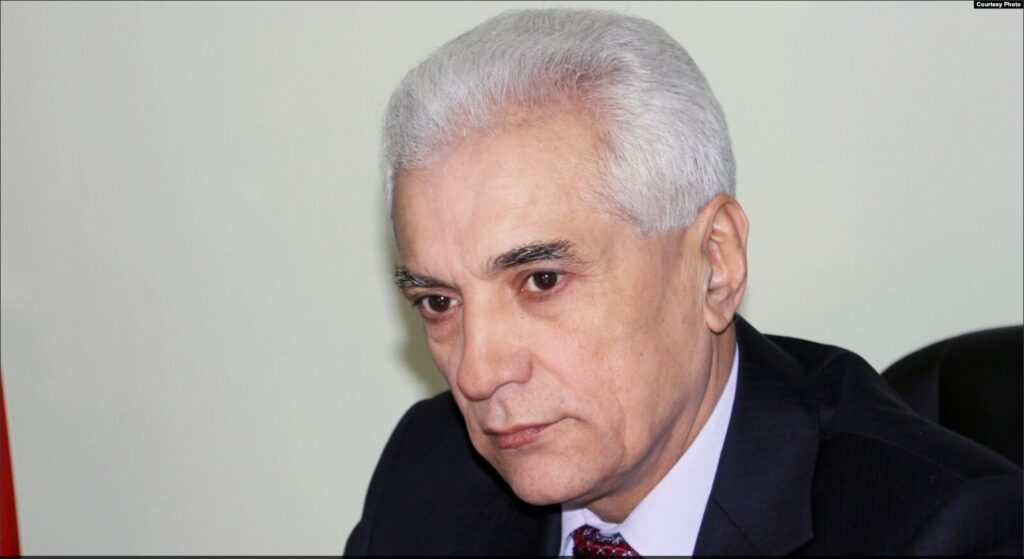
Tajikistan’s Former Foreign Minister Hamrokhon Zarifi Detained in Dushanbe

Several informed sources have confirmed that Tajikistan's former foreign minister Hamrokhon Zarifi had been detained in Dushanbe. It is reported that law enforcement agencies detained Zarifi on June 12th. Until June 16th he was held in Dushanbe's temporary Ministry of Internal Affairs detention center. Still, the source has no information about where he was transferred for further detention. There were also reports that he was released after interrogation. A source in Tajikistan's law enforcement agencies said that "the detention and interrogation are related to an economic crime that was committed during the construction of the Foreign Ministry building during Zarifi's time as head of the ministry." Hamrokhon Zarifi was arrested on the same day as Saidjafar Usmonzoda, a member of the Tajik parliament who was detained on charges of "attempting to seize state power." The Tajik opposition links Zarifi's detention to the Usmonzoda case. The authorities have not commented.

Kazakhstan’s Parliament To Consider Ban on Religious Clothing

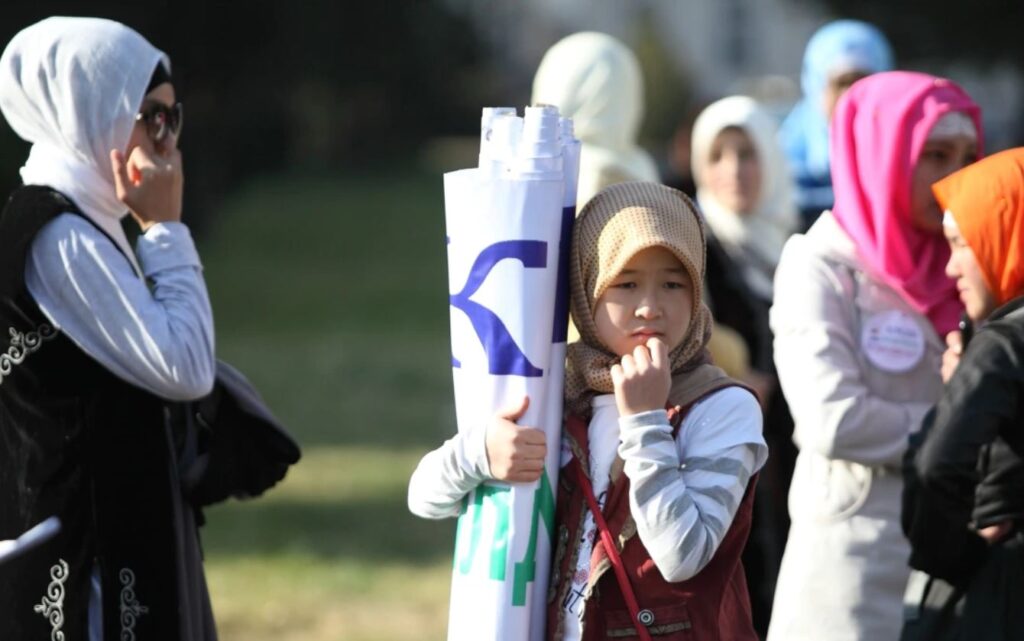
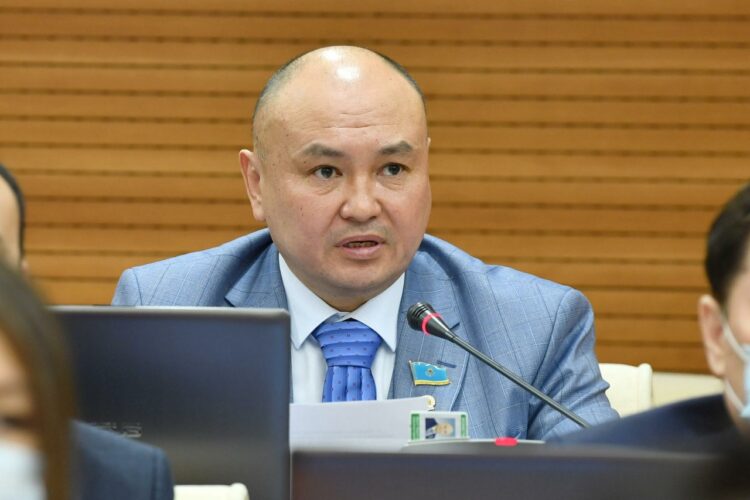
The Kazakh authorities are once again trying to restrict the wearing of religious clothing -- hijabs and niqabs -- in public places. There have been heated discussions on social media, and Muslim women have appealed to President Kassym-Jomart Tokayev himself. The hijab (headscarf) has long become an everyday accessory, and today, the secular part of society is trying to prevent its wearing in schools. However, women wearing niqabs -- a long, usually black cape that covers the face -- are increasingly common on the streets. Many Kazakhs consider the niqab categorically unacceptable. The issue of wearing religious clothing in public places may be considered in Kazakhstan's parliament, said Yermurat Bapi, a member of the Mazhilis (lower house of parliament). "Now, the most important issue for us is to preserve our country's national interests, traditions, and culture. And if we look at the current situation, more Kazakhs are dressed in black in society. This situation seriously harms our future national interests," Bapi said. "That is why we, a group of deputies, have prepared such a bill. It will be submitted to the Parliament at the fall session. I think that the issue of hijab, niqab, and other religious clothing in society will be solved after its adoption. Then we will be able to regulate the issues of religious dress in some way," he added. In May this year, President Tokayev spoke sharply about covered faces. "Dressing in all black contradicts the worldview of our people, is thoughtless copying of foreign norms, conditioned by religious fanaticism. We must not break away from our spiritual roots and erode our national identity," he said. Also, in October 2023, Minister of Culture and Information Aida Balayeva said that the new law on religion will prohibit wearing religious clothing in public places. Kazakhstan has been trying to solve the problem of wearing religious clothing in schools, universities, courts, and other organizations for years. In the past, the ban on wearing hijabs to school repeatedly caused clashes between school administrations, akimats (mayor's offices), and parents of female students. For example, in Atyrau region in 2023, more than 150 girls refused to attend classes without a hijab. As the Ministry of Education explained, the parents were spoken with, after which the children returned to classes. Experts believe the hijab and niqab have become fashion elements imposed by foreign influences alien to Kazakhstanis. However, local theologians are virtually unanimous: Kazakh women have never covered their faces. "After gaining independence, our youth began to study in foreign educational institutions and began to instill in our people certain clothes and dress codes, which were abroad: in Pakistan, Saudi Arabia, and other Muslim countries. These are their customs, especially about covering the face. Popularly it is called a burqa -- a headscarf with slits for the eyes -- but in Arabic it is called a niqab. The niqab, which completely covers the face, is generally unacceptable for our people, and our people do not use it. Today, in some regions of our...

Suspected Attackers of Kazakhstan Blogger Aidos Sadykov Identified

Three days ago, Kazakhstan political blogger and erstwhile opposition figure, Aidos Sadykov was shot in the head at a parking lot near his residence in Kyiv whilst standing next to his wife, Natalya Sadykova. Sadykov is the author of the Telegram channel, ‘Base’, which has 59,000 subscribers, and has been permanently residing in Kyiv since 2014. Two suspects have already been identified. Both are Kazakhstan citizens, 33-year-old Meiram Karataev and 36-year-old Altay Zhakanbaev, whose names have been corroborated by the Prosecutor General of Ukraine's website. According to the Kazakhstan Ministry of Internal Affairs, M. Kartayev was dismissed from the ministry in January of 2019 and is not currently a police officer.  They further elaborated that the Head of State (of Kazakhstan) had instructed the Ministry to clarify all circumstances of the case. Immediately following the attack, President Tokayev of Kazakhstan said that “the official bodies of the Republic of Kazakhstan are ready to join the investigation.” The Prosecutor General’s Office of Ukraine reported that on the day of the crime the suspects crossed the border into Moldova and according to Ukrinform, the Ukrainian National News Agency, they have been placed on the international wanted list. Over the years, Sadykov has frequently criticized the Kazakh authorities, including the current president. In 2020, Base, together with the initiative to create the opposition Democratic Party, were co-organizers of a rally in Almaty demanding a boycott of the parliamentary election. The Democratic Party of Kazakhstan, an unregistered political party, was founded and led by Zhanbolat Mamai, a former journalist who in 2017 was convicted of receiving funds from Mukhtar Ablyazov, a fugitive former minster with judgements against him in numerous jurisdictions, including the U.S. and the U.K., where he was found to have committed "fraud on an epic scale." Natalya Sadykova previously worked for Ablyazov's since shuttered newspaper, Respublika. Aidos Sadykov and Mamai both actively supported protests in January 2022 in Kazakhstan, which were widely seen as an attempted coup. Sadykov is wanted in Kazakhstan under articles on the incitement of discord.

Chinese Company to Build Automobile Plant in Uzbekistan for $1.5 bln

China Xiaou Group intends to launch a large automobile manufacturing complex in the Ferghana region of Uzbekistan, the Khokimiyat (regional authority) of the Ferghana press service has reported. The agreement on constructing a large automobile complex with China Xiaou Group for $1.5 billion, at the expense of direct Chinese investments, was signed during a visit by a delegation of officials and businessmen from the Ferghana region to China. It is reported that in the first stage of the project, a $50 million investment is planned to set up production lines for 60,000 electric, hybrid, and special cars per year. In the second phase, $350 million will be invested, and $1.1 billion in the third phase. Most of the components will be localized, and the number of cars produced will be increased to 110,000 per year. The project is planned to be fully completed within five years.

Kazakh MP Accuses Nazarbayev’s Relatives of Raiding

MP Yerlan Sairov believes that relatives of former president Nursultan Nazarbayev, Rakhat Aliyev and Kairat Satybaldy are involved in a business seizure. The parliamentarian demanded that the General Prosecutor's Office return the property to the affected businessmen, Kursiv has reported. During a meeting of the Mazhilis, the deputy stated that representatives of the Old Kazakhstan, taking advantage of their impunity, had initiated a series of business takeovers. "Such a system was formed by Rakhat Aliyev (Nazarbayev's former son-in-law) and his supporters," Sairov stated. Now, the victims have begun demanding the return of seized property. According to him, Nurlan Bimurzin and Megdat Kaliyev lost their oil business worth 170 million tenge ($369,000) in 2003. Zharkyn Kurentayev and Sholpan Karaneeva also "fell victim to the greed of the above-mentioned persons. The same group selected several vacation spots in the town of Konaev and the Altyn Bulak sanatorium in the Turkestan region," Sairov specified. Referring to the victims' posts on social networks, Sairov said that a group linked to Nazarbayev's nephew, Kairat Satybaldy, and his former sister-in-law, Gulmira, allegedly annexed the Hilton Hotel in Almaty and German citizen Robert Schumacher's construction company. The latter is now considered bankrupt. "The Prosecutor General's Office needs to take steps to protect the economic interests of the victims from representatives of the Old Kazakhstan and return the property," added Sairov. Rakhat Aliyev, the husband of Dariga Nazarbayeva from 1983 to 2007, was one of the most influential people in Kazakhstan in the early 2000s. In 2007, he was charged with kidnapping and preparation for a coup d'état and sentenced in absentia to 40 years; Aliyev fled to Austria, where he was arrested in 2014, and found hanged in a cell in Vienna in 2015. The official cause of death was suicide. In late February 2024, businessmen Bimurzin and Kaliyev announced that they had applied with the Prosecutor General's Office to reclaim assets they claimed to have transferred under duress to the former president's daughter, Aliya Nazarbayeva, in 2003. Nazarbayeva sued them for libel and lost Furthermore, earlier this year, businesswoman Sholpan Karaneeva reported that the Hilton Hotel was taken by Kairat Satybaldy and his supporters in 2021. After the nephew of the former president was behind bars, the transfer of his assets to the state, among them the hotel, was initiated. Kairat Satybaldy and his former wife, Gulmira Satybaldy, have been sentenced under articles on laundering money and the embezzlement of others property.

Threat of Cholera Prompts Tajikistan to Test Its Water

Due to reported cholera cases in Afghanistan, Tajikistan's health ministry has taken strict control of water quality in the border areas of the Panj River and some districts of the Khatlon region. The deputy head of Tajikistan's sanitary surveillance service, Navruz Jafarov, said that a large-scale inspection of open water sources in the border areas of Khatlon region has been underway since June 3rd. Specialists are taking water samples and conducting tests to prevent the possible spread of infection. The main reason for the inspections is the cholera outbreak in Afghanistan, which reached dangerous levels last year. "The disease has spread to the districts of Balkh, Kunduz, Tahor, and Badakhshon, as well as areas bordering Tajikistan. In this regard, the water in the Panj River in the border areas is under strict control of specialists of the Republican Center for Quarantine Disease Control of the Ministry of Health," Jafarov said. He said five rivers in Tajikistan cross the border with Afghanistan. The disease may come to Tajikistan if floods or sewage from Afghan villages enter the rivers.