• KGS/USD = 0.01144 0%
  • KZT/USD = 0.00212 0%
  • TJS/USD = 0.10456 0.19%
  • UZS/USD = 0.00008 0%
  • TMT/USD = 0.28490 0%
  • KGS/USD = 0.01144 0%
  • KZT/USD = 0.00212 0%
  • TJS/USD = 0.10456 0.19%
  • UZS/USD = 0.00008 0%
  • TMT/USD = 0.28490 0%
  • KGS/USD = 0.01144 0%
  • KZT/USD = 0.00212 0%
  • TJS/USD = 0.10456 0.19%
  • UZS/USD = 0.00008 0%
  • TMT/USD = 0.28490 0%
  • KGS/USD = 0.01144 0%
  • KZT/USD = 0.00212 0%
  • TJS/USD = 0.10456 0.19%
  • UZS/USD = 0.00008 0%
  • TMT/USD = 0.28490 0%
  • KGS/USD = 0.01144 0%
  • KZT/USD = 0.00212 0%
  • TJS/USD = 0.10456 0.19%
  • UZS/USD = 0.00008 0%
  • TMT/USD = 0.28490 0%
  • KGS/USD = 0.01144 0%
  • KZT/USD = 0.00212 0%
  • TJS/USD = 0.10456 0.19%
  • UZS/USD = 0.00008 0%
  • TMT/USD = 0.28490 0%
  • KGS/USD = 0.01144 0%
  • KZT/USD = 0.00212 0%
  • TJS/USD = 0.10456 0.19%
  • UZS/USD = 0.00008 0%
  • TMT/USD = 0.28490 0%
  • KGS/USD = 0.01144 0%
  • KZT/USD = 0.00212 0%
  • TJS/USD = 0.10456 0.19%
  • UZS/USD = 0.00008 0%
  • TMT/USD = 0.28490 0%

Viewing results 4795 - 4800 of 5755

Central Asian Countries Gather to Share Air Pollution Solutions

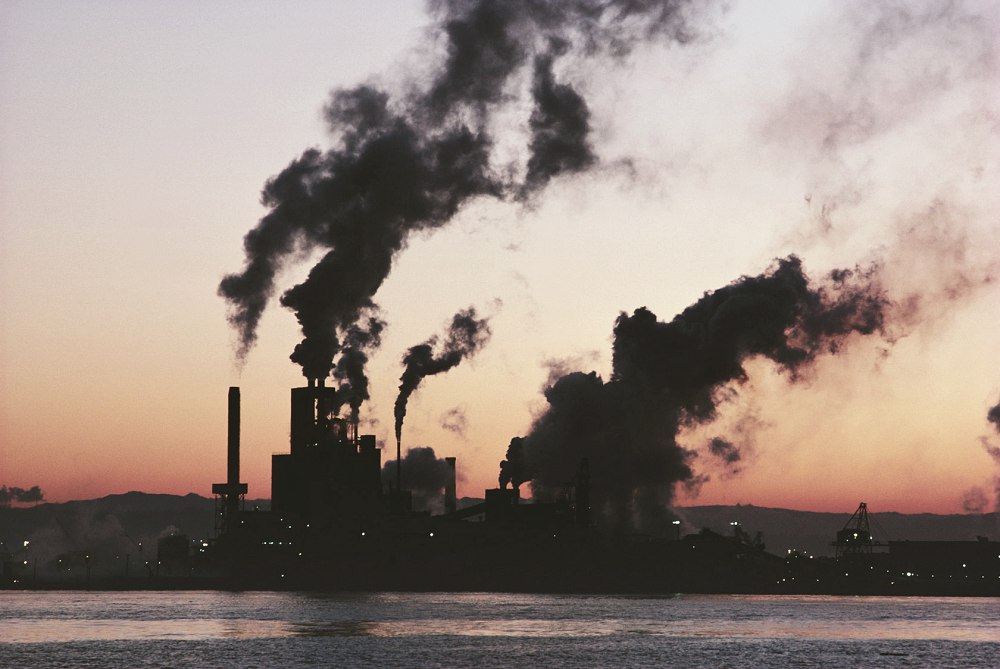
On June 19th a political and regional forum was organized in Tashkent under the slogan “Building a Clean Air Future in Central Asia”. The forum was organized in partnership with the Uzbek Ministry of Ecology, the World Bank, and the United Nations Environment Program (UNEP). Participants included senior officials from the governments of Kazakhstan, Kyrgyzstan, Tajikistan, Turkmenistan, and Uzbekistan. The forum was created to allow the countries of Central Asia to exchange knowledge on how to prevent air pollution. Air quality in both urban and rural areas is affected by transboundary pollution, caused by emissions from burning fossil fuels in industry, the heating sector, and transport. Another source of pollution in cities is sand and dust storms. Most air quality-related illnesses and premature deaths in Central Asia are attributable to delicate particulate matter 2.5 microns or less in diameter (PM2.5). Their concentration in large cities is often several times higher than the permissible air quality parameters recommended by the World Health Organization. This is especially noticeable during winter, when the heating sector uses coal and gas for power. According to the IQAir portal, which monitors global air quality, Central Asian cities are often among the most polluted cities in the world. The participants at “Building a Clean Air Future in Central Asia” studied each other's measures and practices in air quality management. They then defined some priority directions for accelerating regional cooperation on these issues. Valerie Hickey, the World Bank's global director for environment, natural resources and the blue economy, commented: “Air quality management is a complex challenge that requires understanding where the pollution comes from and prioritizing actions in those sectors. This will take better data and stronger regulations harmonized across borders, credible institutions, and clean infrastructure. Working together, the countries can clean the air across Central Asia.” Sylvie Motar, deputy director of the European office of the UNEP, added: “Air pollution knows no borders, so cooperation between Central Asian countries in this area is essential. This dialogue will help increase investments in clean air to protect the health of the people of Central Asia.”

Tajikistan Killings Happened in Isolated Area with Volatile History

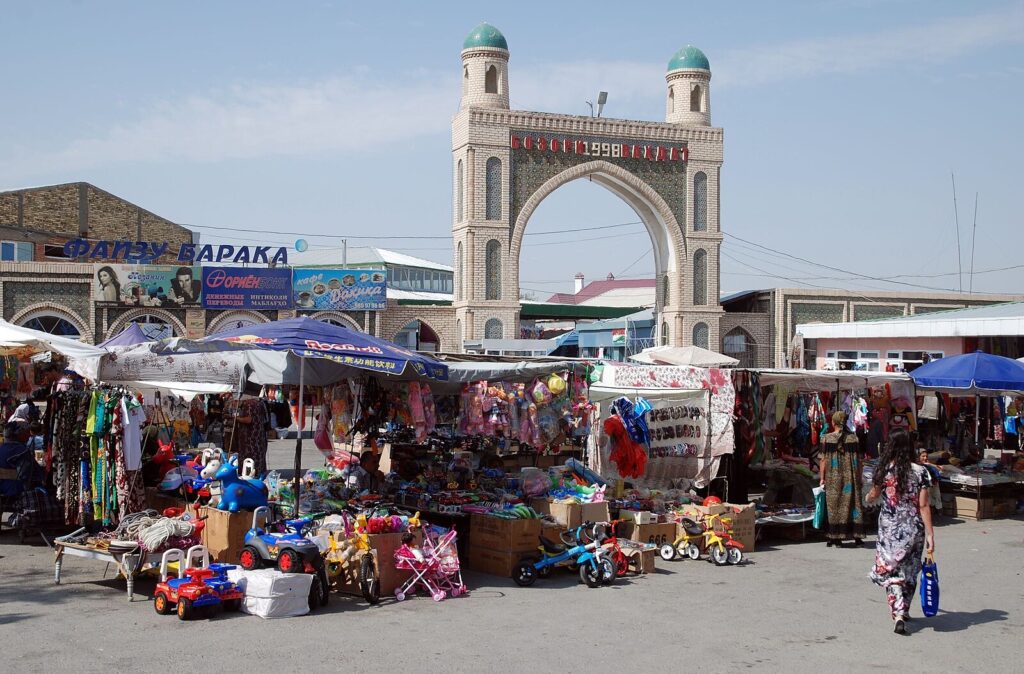
A part of northern Tajikistan where a series of mysterious killings has happened in the last few months lies in the Ferghana Valley, a fertile, ethnically mixed region that is shared with neighboring Uzbekistan and Kyrgyzstan and has been prone to border tensions and periodic concerns over religious extremism.Police investigators and journalists have gathered accounts from terrified residents of a man or men dressed in black and trying to break into homes at night. So far, there are no suggestions that the 13 murders reported in and around the Ferghana town of Konibodom since late March are connected to wider social or political fault lines in one of Central Asia’s poorest countries. Still, the killings evoke the volatile history of an isolated area of Tajikistan, separated from the rest of the country by mountains and the sliver-like shape of the northern part of the country, jammed between Uzbekistan and Kyrgyzstan. The biggest portion of the Ferghana Valley lies to the east in Uzbekistan; Tajikistan received its section of it a century ago when rulers in Moscow were divvying up territory among the new Soviet republics. People used to move with relative ease around the valley but the borders hardened over the years, especially after independence from the Soviet Union in 1991. There were numerous border clashes between Tajikistan and Kyrgyzstan in the Ferghana Valley in recent years, though the two sides are now negotiating. Tajikistan’s part of the Ferghana Valley is in the country’s Sughd region and the main city is Khujand, a transit point on the ancient “Silk Road” trading network that was conquered by Alexander the Great. Konibodom is an agricultural center, known for almonds, cotton and other products – as well as, according to authorities, a rise in the recruitment of young people into extremist groups. “It was noted that terrorist and extremist crimes have increased by 17.5% in the Sughd region, and the majority of such undesirable incidents, including the involvement of young people in extremist parties and movements, have been registered in the cities of Konibodom and Isfara compared to other cities and districts of the country,” the office of Tajik Prosecutor-General Yusuf Rahmon said after he visited Konibodom in April 2023. Concerns that Tajikistan is vulnerable to terrorist recruiters are longstanding. They appear to have been validated by the alleged involvement of several Tajik citizens in a March 22 attack on a Moscow venue that killed about 145 people. The Islamic State group claimed responsibility for the mass killings in Russia. This month, U.S. media reported the arrests in New York, Philadelphia and Los Angeles of eight Tajik nationals with possible terror links.The Tajik government has downplayed questions about whether some of its severe internal restrictions, including on expressions of Islamic piethy, might be contributing to radicalization. In 2021, Tajik President Emomali Rahmon made the trip to Konibodom to preside over 21st anniversary commemorations of the accord that ended Tajikistan’s civil war after the Soviet disintegration. He denounced political Islam and recalled the cost...

Rosatom Begins Construction of NPP in Uzbekistan

Construction of a nuclear power plant has begun in Uzbekistan, 55 km from the border with Kazakhstan, near Tuzkon Lake in the Jizzakh region. The main contractor for this project is Rosatom, Russia's state-owned nuclear energy company. Uzbek companies are also participating. More than three million residents of Turkestan and Shymkent live near the planned site of the nuclear power plant. “The Russian reactor RITM-200N will be used at the new power plant," the Ministry of Energy of Kazakhstan stated. "The reactor, an adaptation of marine technology for land-based use, has a thermal output of 190 MW and an electrical output of 55 MW with a lifespan of up to 60 years. RITM-200 reactors are used on Russian icebreakers. Reactor safety is ensured by multi-level protection systems that prevent accidents.” Uzbekistan and Russia have been holding discussions on the NPP project since 2017. In 2019, a site near Tuzkon Lake was chosen for its development. In addition to a large nuclear power plant, there are plans to build small modular reactors with a total capacity of 330 MW.

Kazakhstan and EU Negotiating on Simplification of Visa Procedures

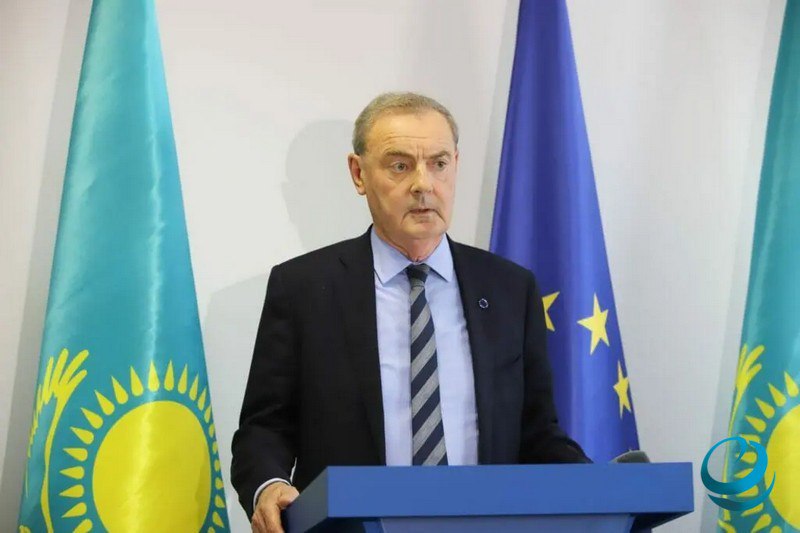
Negotiations on simplifying visa procedures have been launched between Kazakhstan and the European Union, as announced by the EU International Special Envoy for Sanctions, David O'Sullivan, Kazinform reported. At a press conference following his visit, O'Sullivan noted the active development of relations between the EU and Kazakhstan. "We are important partners," he stated. "The EU is Kazakhstan's largest trading partner and the largest source of foreign direct investment. We have also established an essential strategic partnership. Within this partnership, we are also developing and committing, which is going very well now, to economic cooperation between the EU and Kazakhstan." O'Sullivan also spoke about the ongoing work in visa liberalization. "It is gratifying to note that we were able to launch negotiations on the simplification of visa procedures, which in turn will contribute to further strengthening of our cooperation," he stated. Many media outlets link the EU special envoy's visit to Kazakhstan's compliance with anti-Russian sanctions. However, Kazakh political scientist, Eduard Poletayev believes the meetings are just a continuation of the dialog between the EU and Kazakhstan. "It is important to understand that the visit of the special envoy is within the framework of his duties as a high-ranking official, is not a 'check,' but is carried out within the framework of Kazakhstan's agreements with the EU and was planned with the consent of Astana. Kazakhstan imposes no sanctions on Russia, and trade between the two countries continues. But the sanctions requirements of the West are observed, which has been repeatedly emphasized by the country's leadership," Poletaev wrote on his Telegram channel.

Kazakhstan and Uzbekistan: A Partnership Born From Rivalry

Kazakhstan and Uzbekistan are the largest countries in Central Asia in terms of their economy, population, and vital infrastructure. In the first decades after the collapse of the USSR, the two republics visibly competed for regional supremacy, but this situation has changed dramatically. A Test of Sovereignty Uzbeks and Kazakhs are related Turkic peoples who have lived side by side for centuries, and, therefore, have experienced many mutual offenses from each other in their shared history. Perhaps this is the semi-official explanation for the rivalry between Tashkent and Astana during the reigns of the first presidents of these republics - Islam Karimov and Nursultan Nazarbayev. Another explanation for the struggle for leadership in Central Asia between Nazarbayev and Karimov lies in an old Kazakh proverb: "Two heads (of sheep) cannot fit in one pot." The implication is that there cannot be two leaders in one region at this level of multiple countries and personalities. Nazarbayev and Karimov, out of rivalry between the Soviet party nomenklatura, to which they both belonged, could not allow either of the other to rise. In the end, Moscow chose closer relations with Astana, which led to Tashkent withdrawing from the Collective Security Treaty Organization. Kazakh political scientist Maxim Kaznacheev has stated that this happened because Kazakhstan participated in various alliances, whilst Uzbekistan refused to do so, an indication that Tashkent had passed the sovereignty test, to the chagrin of Russia. "The ability of the government to pursue a sovereign policy should be put at the top of the list when determining a real regional leader. Uzbekistan has done better on this exam. Over the past decades, officially Tashkent has relied mainly on bilateral arrangements, avoiding active participation in multilateral integration formations," the political scientist stated. The Devil in the Details Despite these characteristics, Tashkent does not appear to have gained any advantages from this strategy, whether forced or chosen, due to a weak diplomatic corps. However, perhaps an Uzbek renaissance is yet to come. In late 2022, the Eurasian Development Bank published a report, "Central Asia's Economy: A New Look," which analyzed the prospects for interaction between Central Asian countries and the potential for the region to become a significant player in the world's economic map. According to this document, Kazakhstan remains the leading Central Asian economy, with its nominal 2021 GDP of $197.1 billion, 1.3 times the combined volume of the other four countries in the region. The report noted that by the end of 2022, Kazakhstan accounted for almost 60% of the total GDP of Central Asia. At the same time, GDP growth at the end of 2022 amounted to 3.2% compared to an average annual growth rate of 3.9% from 2010-2021. Uzbekistan is the next-largest economy in Central Asia after Kazakhstan, with a GDP of $69.2 billion in 2021, and $80.4 billion by the end of 2022. Although its nominal GDP is far smaller than Kazakhstan's, and its annual growth rate ($11 billion vs. $27 billion) does not seem to threaten Kazakhstan's...

Kyrgyzstan to Take Chinese Loan to Build Railroad

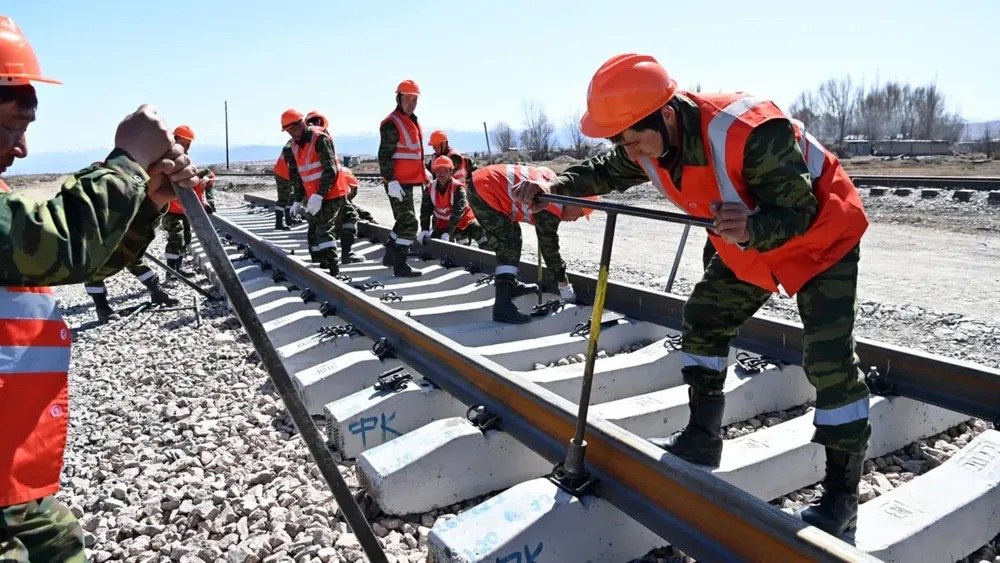
Kyrgyzstan intends to take a loan from China to construct the China-Kyrgyzstan-Uzbekistan railroad. Azamat Sakiyev, the General Director of Kyrgyz Temir Jolu NC, stated at the Parliamentary Committee on Transport, Communications, Architecture, and Construction meeting, 24.kg has reported. The Speaker noted that the feasibility study for the project has already been developed, and the agreement amounts to $4 billion 700 million. "According to the agreement, 51% of the costs will be covered by the People's Republic of China, and the Kyrgyz and Uzbek sides will assume 24.5% each," Sakiyev said. "Where will we find $1 billion?" MP Baktybek Sydykov asked, to which Sakiev replied that the Kyrgyz Republic intends to borrow money from Chinese banks. Sakiyev specified that the Chinese side would lend the joint venture half of the total project cost—$2 billion 350 million—and the parties would cover the other $2 billion 350 million at their own expense. As a result, Kyrgyzstan's share will amount to $783 million. The China-Kyrgyzstan-Uzbekistan railroad is a projected 454-kilometer railroad designed to connect the railroads of China and Uzbekistan through the territory of Kyrgyzstan and further through Turkmenistan, Iran, and Turkey, to connect with the European railroad network within the framework of the New Silk Road transport system. Previously, Kyrgyz President Sadyr Japarov had said the construction would cost between $3 and $5 billion.