Viewing results 1411 - 1416 of 2215
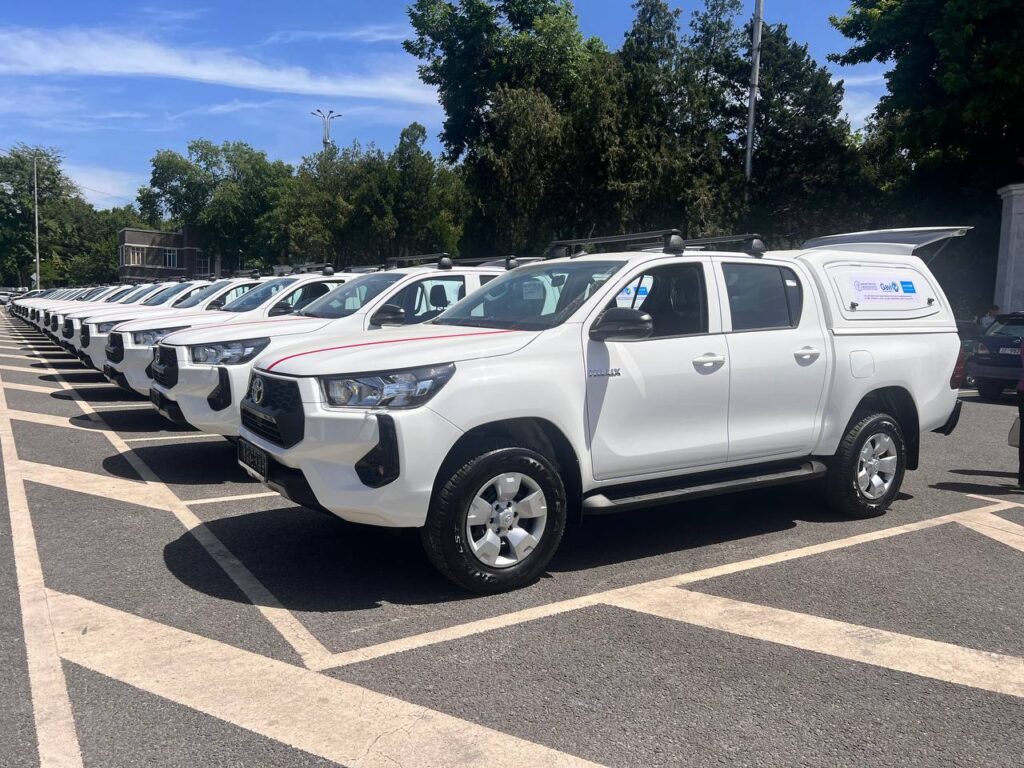
The Global Alliance for Vaccines and Immunization (GAVI) and UNICEF have donated 16 vaccine transport vehicles to Kyrgyzstan. The special cars were provided to the Kyrgyz Ministry of Health to increase immunization rates across the country. The vehicles will help improve the distribution of vaccines from regional to district storage facilities, ensuring their timely availability in remote regions of the country. “Vaccines against dangerous diseases such as measles, rubella, or pertussis require special storage and transportation conditions to be safe and effective. Therefore, improving this infrastructure directly affects the availability of life-saving vaccines for every child in Kyrgyzstan,” said UNICEF's acting representative in Kyrgyzstan Cristina Bruggiolo. Akchabar reports that this is the first batch of 26 vehicles that the ministry will receive. The remaining ten cars will arrive in the country by the end of July.
A copper smelting plant with a capacity of 300,000 tons of copper per year is to be built in Kazakhstan's eastern Abay region, according to a government press release. An agreement for the plant's construction has bee signed by KAZ Minerals Smelting LLP, the customer, and China Nonferrous Metal Industry's Foreign Engineering and Construction Co., Ltd. (NFC), a design services supplier and process equipment procurement company. NFC Kazakhstan LLP will also be involved as a construction and commissioning work contractor. The plant will be built near the village of Aktogay. The raw materials will be the copper concentrate from Vostoktsvetmet LLP's Bozshakol and Aktogay mining and processing plants. “Following the plant's construction, a cluster will be created, combining one of the world's largest copper mines and modern copper smelting production. With a preliminary cost of $1.5 billion, the project will create more than 1,000 new jobs. It is planned to be put into operation by the end of 2028,” the press release says. The high-tech enterprise for producing high-value-added products will be the largest in the country. The applied technologies in copper smelting production meet world environmental standards. The enterprise will provide the internal market needs for processing copper-containing raw materials and copper cathode. “It should be noted that cathode copper is widely used in the electric power industry, machine building, and other industrial sectors. In addition, the new plant plans to produce refined gold, silver, and sulfuric acid,” the release added.
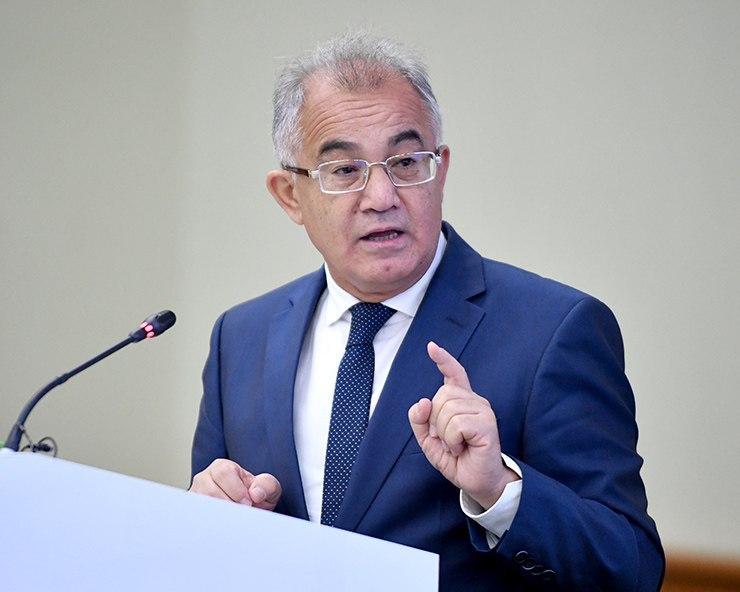
Academician Akmal Saidov, director of the National Center for Human Rights in Uzbekistan, has been elected as a member of the UN Human Rights Committee for the 2025-2028 term. Uzbekistan is the first Central Asian country to join this key UN committee. The election took place on May 29 at the United Nations headquarters in New York, during the 40th session of the member states of the International Covenant on Civil and Political Rights. Nine members were elected to the Human Rights Committee for the 2025-2028 term. In addition to Uzbekistan, candidates from 16 other countries vied for the nine available seats. In the secret ballot, Saidov received the most votes from the member states of the International Covenant on Civil and Political Rights. The Human Rights Committee is a UN body composed of independent experts who monitor the implementation of the International Covenant on Civil and Political Rights by its member states. There are 173 countries in this pact, which Uzbekistan joined in 1995. The committee's role is to ensure that civil and political rights are fully respected.
From January to April 2024, Russia retained the status of Tajikistan's leading trade partner, with trade between the countries increasing by 24.2% compared to the same period last year and reaching $636.8 million, according to the Statistics Agency under the President of Tajikistan. Symptomatic of the deeply unequal relationship is that during this period, Tajikistan bought Russian goods worth $600.7 million, while the Russian Federation only bought $36.1 million from Tajikistan. According to the Statistics Agency, Tajikistan's other top trading partners are China (+19.7%, up to $548.7 million), and Kazakhstan ($441.6 million). From January to April, Tajikistan's total foreign trade volume exceeded $2.7 billion, an increase of 28.7% compared to last year.
By Robert M. Cutler On May 10–11, Kazakhstan's President Kassym-Jomart Tokayev hosted peace talks between the Azerbaijani and Armenian foreign ministers. These constructive negotiations were strictly bilateral, with Kazakhstan absent from the room and only providing the venue for the meeting. The event illustrates the dedication by Tokayev and his foreign policy to regional stability and mediation. Kazakhstan has done this sort of thing in the past; it hosted Russia–Turkey–Iran talks over Syria until last year. It was also mentioned as a place for bilateral Russia–Ukraine negotiations, although that idea never materialized. Armenia's Future is in the South Caucasus and Asia Tokayev had offered to provide the venue during his first official visit to Armenia, which took place on April 15 this year. His trip to Armenia may in retrospect be seen as a turning point. Former President Nursultan Nazarbayev had been forced to cancel a visit in 2016, following protests in Yerevan against Astana's support of Baku in the Karabakh conflict. Armenia’s participation in the new peace efforts, now under way for a couple of years, marks a significant shift after decades of rejecting such cooperation. It offers the prospect of renewed regional relations. Under Prime Minister Nikol Pashinyan, Armenia has lately been trying to shift its foreign policy, reaching out to Western countries such as France and the U.S. in order to decrease its long-standing dependence on (some would say, vassalage to) Russia. But Armenia is a state in the South Caucasus, not in Europe or America. For this reason, the state’s objective interests (as opposed to those of the far-flung diaspora) are geopolitically compatible with those of Azerbaijan and Turkey, and also of Kazakhstan more distantly. Astana’s ties with Baku and Ankara, and Azerbaijan’s strengthening of its own ties with Central Asia, reflect strategic manoeuvring in the region. These partnerships enhance Kazakhstan's and Turkey's roles in promoting stability and development in the South Caucasus. They consequently offer Armenia a new path to prosperity. Peace with Azerbaijan would lead to the lifting of the Turkish embargo on Armenia and open the possibility of Armenia's integration into the Trans-Caspian International Trade Route (TITR, "Middle Corridor"). Such an opening would further widen Armenia's diplomatic vistas and decrease its dependence on Russia. Turning to Europe and the U.S. can offer some advantages, but Armenia must be cautious of the influence of a bellicosely irredentist Armenian diaspora, whose interests are not first and foremost the well-being of Armenians living in Armenia. Prioritizing regional integration and cooperation with its South Caucasus neighbours and other TITR participants will enable Armenia proper to build a more stable and prosperous future. Infrastructure and Connectivity Initiatives With the assistance of the international financial institutions, the European Union and Central Asia are developing the TITR as a critical trade corridor that will also contribute significantly to the prosperity and stability of the countries lying along its route. Azerbaijan and Kazakhstan have long been key players in the promotion and realization of this plan. The Middle Corridor,...
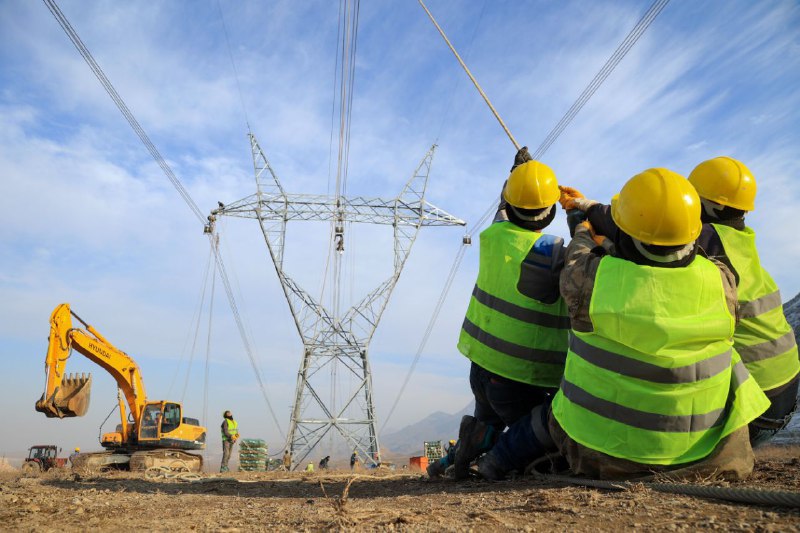
Kyrgyzstan's energy ministry has presented a project to develop the country's National Energy Program until 2035. As part of this project, both Kyrgyzstan and Tajikistan will export electricity to Pakistan next year. The CASA-1000 (Central Asia - South Asia) program plans to supply electricity to Afghanistan and Pakistan. The Kyrgyz side forecasts that around 1.25 billion kilowatt-hours of summertime electricity will be exported to South Asia in 2025. In summer Kyrgyzstan's reservoirs are full, and hydroelectric power plants produce a lot of electricity, which has nowhere to go -- unlike in winter, when there is an electricity shortage in the country. At the same time, officials plan to increase electricity production and exports yearly. In 2026 supplies are expected to grow to 1.7 billion kWh. Electricity exports starting from 2028 will average 1.75 billion kWh. At the beginning of this year Kyrgyzstan signed a joint declaration with Pakistan and Tajikistan to resume the CASA-1000 project. It began constructing high-voltage power lines near the border with Tajikistan, after construction had been halted due to the border conflict between Bishkek and Dushanbe. Power lines were also resumed in Afghanistan, where construction was also stopped after the Taliban came to power.