Viewing results 1465 - 1470 of 2215
Kyrgyz MPs have ratified a bill that will allow customs duties between certain member countries of the Eurasian Economic Union (EEU) to be paid in rubles. The new law allows funds to be transferred in rubles between Russia, Belarus and Kyrgyzstan, at the exchange rate of the national banks of the sending countries. "Armenia, Kazakhstan and Kyrgyzstan between themselves will make transfers of mutual obligations on distributed import customs duties, as before, in U.S. dollars," the Kyrgyz parliament emphasized. During the transition period, interest for late transfer of import duties will not be accrued. EEU member countries distribute revenues from import duties according to the size of their own economies. Kyrgyzstan's share is 2%.
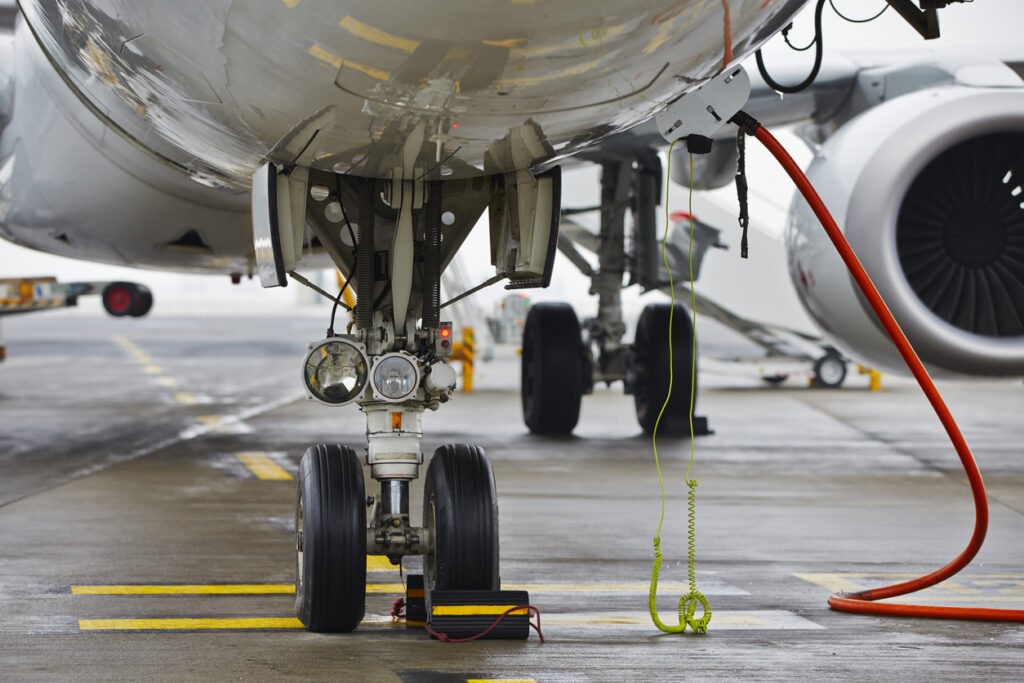
Kazakhstan has become the first CIS nation to sign an agreement with the International Civil Aviation Organization (ICAO) and join the program in the field of environmentally-friendly aviation fuel (ACT-SAF). "ICAO has set a goal of achieving net zero emissions from international flights by 2050. To achieve this goal, during the visit to Kazakhstan of the Regional Director of the European/North Atlantic Bureau of ICAO, Nicolas Rallo, an agreement was signed between Kazakhstan and ICAO on the accession of the Republic of Kazakhstan to the Program for Capacity Building Support and Training in the Field of Sustainable Aviation Fuels (ACT-SAF)," reported the press service of the Ministry of Transport of the Republic of Kazakhstan. According to this document, ICAO will assist Kazakhstan in developing and participating in ACT-SAF program activities, including the exchange of best practices and relevant information, participation in training seminars and workshops, technical assistance in issues related to SAF in national action plans, and the implementation of specific projects on SAF. As previously reported, the use of SAF reduces CO2 emissions by 80% compared to the use of conventional fuel. However, in 2024, the availability of clean jet fuel is expected to account for no more than 1% of total global demand. As a transit state between Europe and Asia, Kazakhstan could play a greater role in expanding the use of SAF in international flights. As a raw materials base for SAF production, bio-ethanol, municipal solid waste, and in the future, blast furnace and coke gases are being considered in Kazakhstan. The project for the creation of the Regional Hub of Clean Aviation Fuel (SAF) in Almaty will be presented by the European Bank for Reconstruction and Development on June 21 in Astana during the forum, Central Asia - Silk Road in the Sky, by ISF, an international consulting company which won the EBRD tender to become the project consultant.
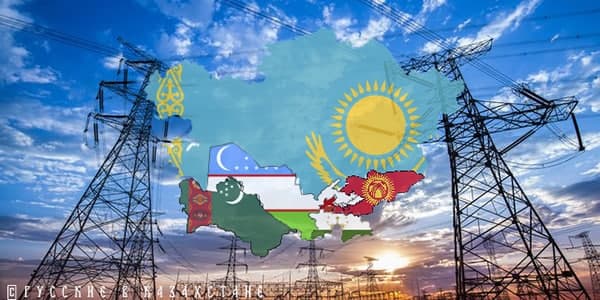
Tajikistan will soon connect itself to Central Asia's unified energy system. The unified system for energy distribution was created in 1960, when the systems of Uzbekistan, southern Kyrgyzstan, northern Tajikistan and southern Kazakhstan's Shymkent junction were connected to work in parallel through 110- and 220-kV power lines. This system operated in isolation from the Soviet Union's general scheme. In 2003 Turkmenistan left the energy system, having decided that it was able to provide itself with electricity on its own. And in early November 2009, the entire southern part of the Tajik energy system was automatically de-energized due to a spontaneous shutdown of units at the Nurek HPP. Tajikistan and the south of Uzbekistan remained without electricity for a day. After that Uzbekistan announced its withdrawal from the energy "ring". After that Uzbekistan completely de-energized the lines connecting its energy system with the Tajik system. As a result, Tajikistan's energy system automatically remained isolated from the rest of the region. Thus, the system ceased to exist as such in 2009, but was recreated again in 2019. Currently, it includes Kazakhstan, Uzbekistan, and Kyrgyzstan.
The International Finance Corporation (IFC) is allocating $5 million to a new fund that will be used to support technology startups in Central Asia, Gazeta.uz reports. IFC is reportedly investing in Sturgeon Emerging Opportunities, a new venture capital fund managed by Sturgeon Capital, a major venture capital investor in emerging markets. Sturgeon Emerging Opportunities will focus on supporting startup projects in areas such as fintech, business-to-business platforms, agri-tech, healthcare and education. The investment in Sturgeon is part of IFC's Startup Catalyst program, which aims to address financial challenges in undervalued venture capital ecosystems by investing in incubators, gas pedals and funds in emerging markets. "The fund will help start-up entrepreneurs to expand their businesses, improve operational efficiency and create long-term employment opportunities," the statement said. Besides investing in projects in Central Asia, the fund also intends to work in other emerging markets such as Egypt and Pakistan. Sturgeon Capital estimates that the IT startup market in these countries could generate nearly $300 million in annual digital revenue by 2030. However, startups in these countries are currently struggling to raise capital to launch and scale their products and services.
Teri Hakala, Special Representative of the European Union for Central Asia, has recently spoken about the EU's goals for its presence in the Central Asian region, and plans for the coming years. Speaking at the conference, "Turkmenistan and the EU: 30 years of cooperation", Ms Hakala said: "The EU has a very strong presence in the Central Asian region. And our goal is to contribute to the development and welfare of these countries and sustainability. In the next 30 years we plan to continue our work in Turkmenistan and in other Central Asian countries, partners, for the benefit of these countries and the EU." She also spoke about the EU-Central Asia Transport Investment Forum, which was held in Brussels earlier this year. "In January, the EU organized an investment forum and in March too there were discussions about our commitment and obligations related to the allocation of $10 billion from the EU for the Trans-Caspian Corridor project, which will help to expand trade relations, to include more and more people in their activities. This will contribute to the expansion of not only the transport corridor, but also the energy corridor," Ms Hakala added. The Trans-Caspian Transport Corridor is a route connecting Europe and Central Asia. It is expected that once complete, cargo will be delivered along it in just 15 days.
The United Nations Development Program (UNDP) in Turkmenistan, in partnership with the UNDP Knowledge Project, is joining the global FutureSkills4All initiative to increase employment opportunities for women and young people in the country. According to Turkmenportal, this initiative will involve at least 660 people from Turkmenistan. They will have access to the cutting-edge online learning platform Coursera, where they will be able to complete various training programs to acquire in-demand professional skills. In addition to accessing online courses, learners will also receive guidance and mentoring from local experts, to help them acquire interpersonal skills, such as resilience.