• KGS/USD = 0.01144 0%
  • KZT/USD = 0.00201 0%
  • TJS/USD = 0.10475 0%
  • UZS/USD = 0.00008 0%
  • TMT/USD = 0.28571 0%
  • KGS/USD = 0.01144 0%
  • KZT/USD = 0.00201 0%
  • TJS/USD = 0.10475 0%
  • UZS/USD = 0.00008 0%
  • TMT/USD = 0.28571 0%
  • KGS/USD = 0.01144 0%
  • KZT/USD = 0.00201 0%
  • TJS/USD = 0.10475 0%
  • UZS/USD = 0.00008 0%
  • TMT/USD = 0.28571 0%
  • KGS/USD = 0.01144 0%
  • KZT/USD = 0.00201 0%
  • TJS/USD = 0.10475 0%
  • UZS/USD = 0.00008 0%
  • TMT/USD = 0.28571 0%
  • KGS/USD = 0.01144 0%
  • KZT/USD = 0.00201 0%
  • TJS/USD = 0.10475 0%
  • UZS/USD = 0.00008 0%
  • TMT/USD = 0.28571 0%
  • KGS/USD = 0.01144 0%
  • KZT/USD = 0.00201 0%
  • TJS/USD = 0.10475 0%
  • UZS/USD = 0.00008 0%
  • TMT/USD = 0.28571 0%
  • KGS/USD = 0.01144 0%
  • KZT/USD = 0.00201 0%
  • TJS/USD = 0.10475 0%
  • UZS/USD = 0.00008 0%
  • TMT/USD = 0.28571 0%
  • KGS/USD = 0.01144 0%
  • KZT/USD = 0.00201 0%
  • TJS/USD = 0.10475 0%
  • UZS/USD = 0.00008 0%
  • TMT/USD = 0.28571 0%

Viewing results 1603 - 1608 of 2215

EEU Leaders Seek to Strengthen Position of Economic Bloc

A meeting of the Supreme Eurasian Economic Council was held in St Petersburg on December 25th. The meeting was attended by leaders of the Eurasian Economic Union (EEU) member countries - the Prime Minister of Armenia, Nikol Pashinyan, President of Belarus, Alexander Lukashenko, President of Kazakhstan, Kassym-Jomart Tokayev, President of Kyrgyzstan, Sadyr Japarov, and President of Russia, Vladimir Putin. Opening the meeting, Russian President Putin said that the Eurasian Economic Union will soon be ten years old, and over this period, the mutual trade between its member countries has almost doubled and the aggregate GDP of the EEU countries has grown from US$1.6 trillion to US$2.5 trillion. “We have created deep common markets for goods, services, capital, and workforce, which are operating in line with agreed-upon rules. The main point is that the Eurasian Union has become an authoritative international integration association with an efficient structure and a good foundation,” he said. Putin added that the work on aligning integration processes within the EEU and China's Belt and Road Initiative is also yielding results. The Council’s meeting adopted the declaration “Eurasian Economic Path,” which is aligned with China’s Belt and Road Initiative.

Uzbek Foreign Ministry Summons Russian Ambassador over Annexation Comments

According to the press service of the Ministry of Foreign Affairs, the Uzbek Foreign Ministry has called upon the Russian Ambassador, Oleg Malginov, expressing concern over the proposal made by Zakhar Prilepin, co-chairman of the Fair Russia – For Truth Party, regarding the Republic’s potential accession to the Russian Federation. The Uzbek Ministry emphasized that such a proposal is deliberately provocative and could have adverse effects on the relationship between the peoples of both countries. "During the meeting, the representative of Russia was informed in principle that in our country the statement of the co-chairman of the Fair Russia - For Truth Party, Zakhar Prilepin, at a conference at the Rossiya Segodnya press center regarding a proposal to annex the territory of Uzbekistan to Russia was received with a sense of deep concern," the statement says, noting that such thoughtless remarks by party leaders of a friendly country such as the Russian Federation do not correspond to the spirit of comprehensive strategic partnership and alliance between Uzbekistan and Russia. In turn, Malginov "with full responsibility" stated that Prilepin's remarks do not reflect the official position of the leadership of the Russian Federation "in relation to friendly and independent Uzbekistan." The Ambassador emphasized that the “sovereignty, independence and territorial integrity of the Republic of Uzbekistan have never been questioned." Malginov also noted that the Russian Foreign Ministry plans to comment on this incident in the near future. Prilepin has previously proposed the annexation of Uzbekistan and other territories of the former USSR to Russia, stating that "Since two million of your citizens are on our territory, we claim your territory. Because most of your people are here… Who will forbid us to do anything useful on the territory of the Eurasian territory after the parade in Kiev? No one," Prilepin has also said that he would continue to promote the topic of "disavowing documentation about the collapse of the Soviet Union." Deputies from Uzbekistan asked the Ministry of Foreign Affairs to send a letter warning about criminal liability for encroachments on the constitutional system of Uzbekistan.

Company in Uzbekistan Sanctioned by UK

British authorities have recently imposed fresh sanctions targeting individuals and entities suspected of aiding the "Russian military apparatus," which notably includes Uzbekistan-based company Mvizion. This expanded sanctions list encompasses 46 entities linked to weapons production or the import of defense goods for Russia, comprising thirty foreign enterprises, among them those from Uzbekistan. A statement from UK authorities outlined, "Today's measures will prevent Putin from outfitting his military through intermediary supply chains in Belarus, China, Serbia, Turkey, the UAE, and Uzbekistan," citing Mvizion's role as an intermediary in supplying spare parts to Russia. Mvizion had previously been sanctioned by the United States in November, linked by the US Department of Commerce to drone production for the Russian armed forces. The Unified State Register of Enterprises and Organizations shows Mvizion's registration on June 14, 2022, with its primary activity listed as the "wholesale of electronic and telecommunication equipment and related spare parts." Igor Nikolaevich Ievlev is identified as the sole founder and director. David O'Sullivan, the EU Special Envoy for Sanctions, addressed Uzbekistan's efforts to counter the re-export of European goods under sanctions to Russia, emphasizing the significance of economic diversification for the country. "We do not intend to disrupt Uzbekistan's traditional trade relations," he emphasized.

Kyrgyzstan, Tajikistan Agree on More Disputed Border Areas

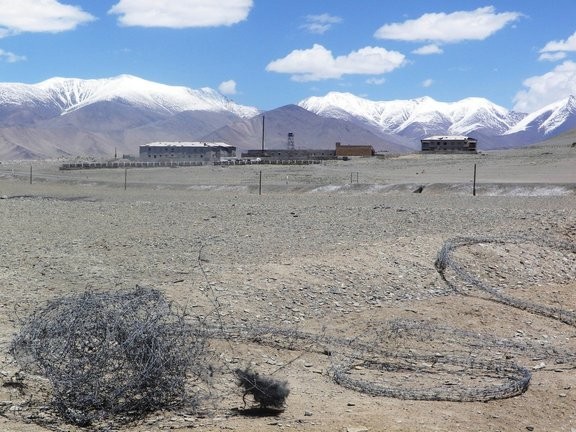
As reported by RFE/RL, officials from Kyrgyzstan and Tajikistan say the two countries agreed on another 24 kilometers of the border between the two former Soviet republics after special talks on the issue were held over the past week, RFE/RL's Kyrgyz Service reported. Tajikistan's State Committee for National Security said on December 5th that the talks were held in the northern town of Buston, near the Kyrgyz border. According to the Kyrgyz government, the next round of talks regarding other parts of the border will be held on Kyrgyzstan's territory on a day that is yet to be determined. In a sign of thawing relations, back on November 9th 2023, the Cabinet of Ministers of the Kyrgyz Republic announced that a further 17.98 kilometres of its border with Tajikistan had been agreed upon, with another meeting of the of topographic working groups due to be held in Batken from November 11th to17th. A long-standing source of conflict between the two nations, it is emblematic of the problem that even the length of the border - sometimes cited as being 975-kilomtres long, and at others times 972-kilomteres - is rarely agreed upon. As of January 2023, Tajikistan’s President Rahmon stated that 614-kilometres have been agreed upon, backtracking on a previously stated figure of 664. The delimitation and demarcation of the Kyrgyz-Tajik border has been an issue for decades, but turned into an extremely urgent problem in recent years after several deadly clashes took place along disputed segments of the frontier. With its scant natural resources and dwindling water supplies, the border has been the scene of numerous skirmishes for many years. In 2014, all borders between Kyrgyzstan and Tajikistan were closed indefinitely to Kyrgyz and Tajik citizens following clashes over a bypass road in disputed territory; mortars were fired and both armies suffered casualties. In the spring of 2021, trouble flared up again when an armed conflict along one segment of the border left 36 Kyrgyz nationals, including two children, dead, and 154 injured on the Kyrgyz side. The Tajik authorities officially said that 19 Tajik citizens were killed and 87 were injured during the clashes. Many border areas in Central Asian former Soviet republics have been disputed since the collapse of the Soviet Union in 1991. The situation is particularly complicated around the numerous exclaves in the volatile Ferghana Valley, where the borders of Tajikistan, Uzbekistan, and Kyrgyzstan meet.

Window to Europe for Uzbekistan to Remain Open Until December 2027

The European Union has decided to extend the validity of the General System of Preferences Plus (GSP+) for beneficiary countries, including Uzbekistan, for the next four years until December 31st 2027. This decision gives serious impetus to the development of Uzbekistan's private sector, providing easier access to the European market, stimulating closer cooperation between European and Uzbek companies, and leading to significant savings at borders. As a result of the measures taken to strengthen trade relations with the EU and expand the global geography of Uzbekistan's exports by the end of 2022, 628 enterprises (an increase of 116 on the corresponding period in 2021) were exporting local products to European markets in the amount of U$647-million. This is more than double the $292-million figure recorded in 2020. In particular, within the framework of the GSP+ textile industry products worth $177.4-million were exported to the EU markets (an increase of 126.4% compared to 2021), agriculture and food industry products totaled $19.7-million (a 103% increase), the electrical industry recorded $9-million (a 117% increase), whilst the chemical industry totaled $138.3-million (a 4.7-times expansion). In 2022, thanks to GSP+, Uzbek exporters saved $30.65-million in duties, thus signaling a major contribution by the EU to the development of the private sector in Uzbekistan. Over the period from 2019 to 2022, EU investment in the private sector in Uzbekistan has grown more than tenfold.

CAREC Countries Endorse New Vision to Fight Climate Change Together

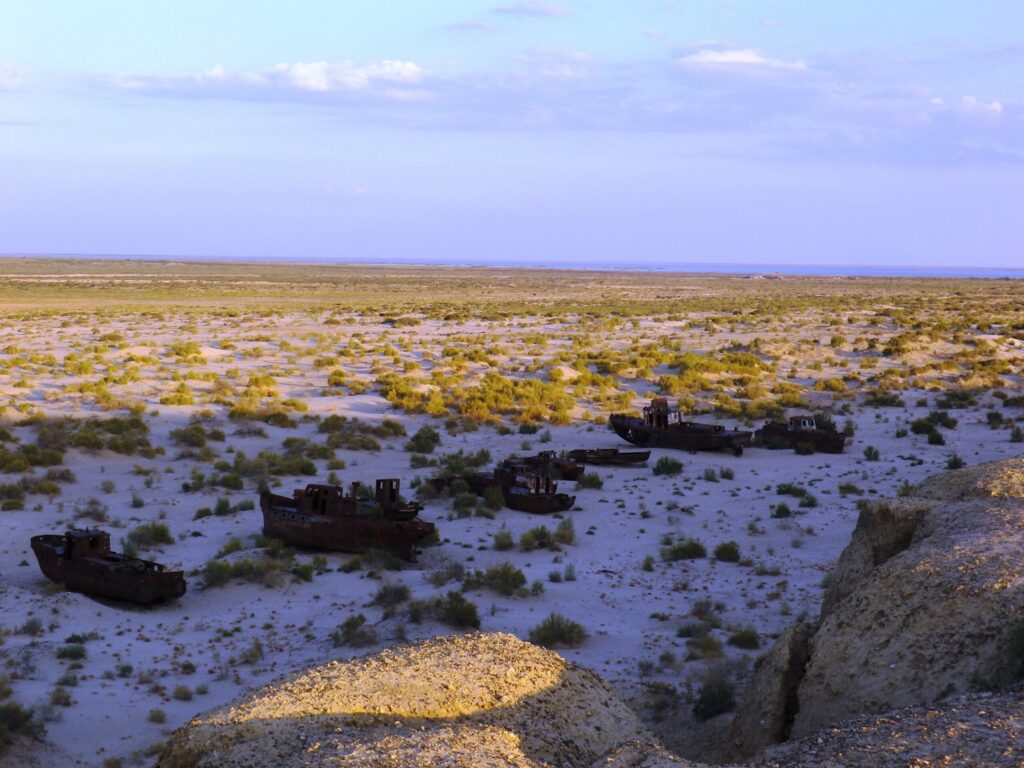
Member countries of the Central Asia Regional Economic Cooperation (CAREC) program committed to working together to cut greenhouse gas emissions and build resilience to climate change. “We endorse the Regional Action on Climate Change: A Vision for CAREC to help countries implement their commitments under the Paris Agreement”, said a joint ministerial statement issued at the 22nd CAREC Ministerial Conference held on November 30th in Tbilisi. The statement was endorsed by ministers and high-level officials from Azerbaijan, the People’s Republic of China, Georgia, Kazakhstan, the Kyrgyz Republic, Mongolia, Pakistan, Tajikistan, Turkmenistan, and Uzbekistan. “I am confident this shared Vision will enhance the CAREC program’s impact on this most critical climate challenge facing the subregion”, said Asian Development Bank (ADB) President, Masatsugu Asakawa. “I look forward to concrete progress on bringing forward more climate projects - including in renewable energy, sustainable agriculture, efficient water use, economic diversification, and strengthening supply chains - to improve the region’s climate resilience and adaptation”. The Vision emphasizes the importance of energy transition and the improved use of renewable energy sources, strengthening the regional electricity trade, deploying innovative financing solutions, and investing in climate-resilient infrastructure and policies. It calls for strengthened collaboration and coordination with the program’s development partners in supporting the region’s climate agenda. A scoping study published earlier this year showed climate change is expected to have severe impacts in the CAREC region, including higher-than-average temperature rises, water scarcity, expanded desertification, and glacial melting. To address water issues in the region, CAREC will support countries to improve their expertise and capacities in transboundary water management, water productivity, and to invest in more efficient irrigation systems to boost agricultural productivity. CAREC will also support efforts to decarbonize transport and continue deepening regional connectivity with efficient transport technologies and infrastructure. Other priority areas include developing climate-smart cities with electrified mass transit systems and promoting climate and disaster resilience through regional risk management and financing initiatives. The CAREC program is a partnership of countries and development partners working together to promote sustainable development, accelerate economic growth, and reduce poverty. The ADB hosts the CAREC secretariat.