• KGS/USD = 0.01144 0%
  • KZT/USD = 0.00208 0%
  • TJS/USD = 0.10439 0%
  • UZS/USD = 0.00008 0%
  • TMT/USD = 0.28571 0%
  • KGS/USD = 0.01144 0%
  • KZT/USD = 0.00208 0%
  • TJS/USD = 0.10439 0%
  • UZS/USD = 0.00008 0%
  • TMT/USD = 0.28571 0%
  • KGS/USD = 0.01144 0%
  • KZT/USD = 0.00208 0%
  • TJS/USD = 0.10439 0%
  • UZS/USD = 0.00008 0%
  • TMT/USD = 0.28571 0%
  • KGS/USD = 0.01144 0%
  • KZT/USD = 0.00208 0%
  • TJS/USD = 0.10439 0%
  • UZS/USD = 0.00008 0%
  • TMT/USD = 0.28571 0%
  • KGS/USD = 0.01144 0%
  • KZT/USD = 0.00208 0%
  • TJS/USD = 0.10439 0%
  • UZS/USD = 0.00008 0%
  • TMT/USD = 0.28571 0%
  • KGS/USD = 0.01144 0%
  • KZT/USD = 0.00208 0%
  • TJS/USD = 0.10439 0%
  • UZS/USD = 0.00008 0%
  • TMT/USD = 0.28571 0%
  • KGS/USD = 0.01144 0%
  • KZT/USD = 0.00208 0%
  • TJS/USD = 0.10439 0%
  • UZS/USD = 0.00008 0%
  • TMT/USD = 0.28571 0%
  • KGS/USD = 0.01144 0%
  • KZT/USD = 0.00208 0%
  • TJS/USD = 0.10439 0%
  • UZS/USD = 0.00008 0%
  • TMT/USD = 0.28571 0%

Viewing results 1639 - 1644 of 2315

Window to Europe for Uzbekistan to Remain Open Until December 2027

The European Union has decided to extend the validity of the General System of Preferences Plus (GSP+) for beneficiary countries, including Uzbekistan, for the next four years until December 31st 2027. This decision gives serious impetus to the development of Uzbekistan's private sector, providing easier access to the European market, stimulating closer cooperation between European and Uzbek companies, and leading to significant savings at borders. As a result of the measures taken to strengthen trade relations with the EU and expand the global geography of Uzbekistan's exports by the end of 2022, 628 enterprises (an increase of 116 on the corresponding period in 2021) were exporting local products to European markets in the amount of U$647-million. This is more than double the $292-million figure recorded in 2020. In particular, within the framework of the GSP+ textile industry products worth $177.4-million were exported to the EU markets (an increase of 126.4% compared to 2021), agriculture and food industry products totaled $19.7-million (a 103% increase), the electrical industry recorded $9-million (a 117% increase), whilst the chemical industry totaled $138.3-million (a 4.7-times expansion). In 2022, thanks to GSP+, Uzbek exporters saved $30.65-million in duties, thus signaling a major contribution by the EU to the development of the private sector in Uzbekistan. Over the period from 2019 to 2022, EU investment in the private sector in Uzbekistan has grown more than tenfold.
CAREC Countries Endorse New Vision to Fight Climate Change Together

Member countries of the Central Asia Regional Economic Cooperation (CAREC) program committed to working together to cut greenhouse gas emissions and build resilience to climate change. “We endorse the Regional Action on Climate Change: A Vision for CAREC to help countries implement their commitments under the Paris Agreement”, said a joint ministerial statement issued at the 22nd CAREC Ministerial Conference held on November 30th in Tbilisi. The statement was endorsed by ministers and high-level officials from Azerbaijan, the People’s Republic of China, Georgia, Kazakhstan, the Kyrgyz Republic, Mongolia, Pakistan, Tajikistan, Turkmenistan, and Uzbekistan. “I am confident this shared Vision will enhance the CAREC program’s impact on this most critical climate challenge facing the subregion”, said Asian Development Bank (ADB) President, Masatsugu Asakawa. “I look forward to concrete progress on bringing forward more climate projects - including in renewable energy, sustainable agriculture, efficient water use, economic diversification, and strengthening supply chains - to improve the region’s climate resilience and adaptation”. The Vision emphasizes the importance of energy transition and the improved use of renewable energy sources, strengthening the regional electricity trade, deploying innovative financing solutions, and investing in climate-resilient infrastructure and policies. It calls for strengthened collaboration and coordination with the program’s development partners in supporting the region’s climate agenda. A scoping study published earlier this year showed climate change is expected to have severe impacts in the CAREC region, including higher-than-average temperature rises, water scarcity, expanded desertification, and glacial melting. To address water issues in the region, CAREC will support countries to improve their expertise and capacities in transboundary water management, water productivity, and to invest in more efficient irrigation systems to boost agricultural productivity. CAREC will also support efforts to decarbonize transport and continue deepening regional connectivity with efficient transport technologies and infrastructure. Other priority areas include developing climate-smart cities with electrified mass transit systems and promoting climate and disaster resilience through regional risk management and financing initiatives. The CAREC program is a partnership of countries and development partners working together to promote sustainable development, accelerate economic growth, and reduce poverty. The ADB hosts the CAREC secretariat.

EDB Proposes Ten Steps to Preserve Irrigated Land Potential and Support Water Conservation in Central Asia

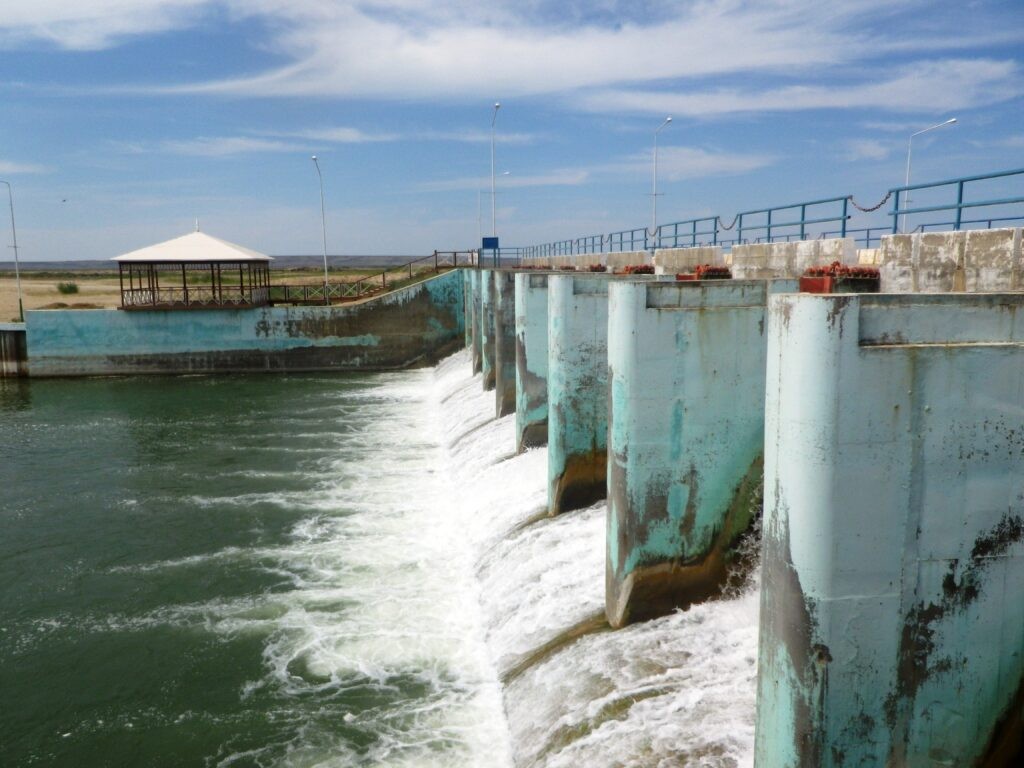
As outlined in a press release on the EDB website, in the summer of 2023, Central Asia was faced once again with water shortages, which have a significant impact on agriculture. The sector relies on irrigation, which consumes up to 80% of available water, and has a poor track record with regard to the efficient use of water resources. The irrigation infrastructure is over 50 years old. More than half of all irrigated land has become salinized, and 40% of water is lost through irrigation canals. A new Eurasian Development Bank (EDB) study entitled “Efficient Irrigation and Water Conservation in Central Asia” outlines ten practical steps for preserving irrigated land potential and promoting water conservation. The list includes four recommendations for adoption at a regional level and six at a national level. The measures are designed to save enough water each year to support sustainable development. Implementing the measures will require collaboration between governments, farmers and multilateral development institutions. The need for urgent action is intensified by the anticipated reduction in the flow of the Amu Darya River. Water deficit is a key structural constraint to socio-economic development in Central Asia. This region is among the most vulnerable to climate change, with temperatures rising at a faster rate than the global average. Periods of drought and low water are becoming more frequent, and the hydrological patterns of rivers and groundwater supplies are undergoing change. Glacier areas have been diminishing rapidly, with a 30% decrease over the last 50 years. Climate change is leading to reduced river flows at a time when the region’s demand for water is growing rapidly. The primary solution to the water deficit lies in improving irrigation practices. Agriculture in Central Asia is the largest consumer of water, with irrigation accounting for 100.4 km3 of the total 127.3 km3 (80%) of water used in the region in 2020. Historically, irrigation has played a vital role in developing agriculture and ensuring food security in the region. Central Asia boasts 10.1 million hectares of irrigated land, representing approximately 2.9% of the world’s total. This irrigated land generates nearly 66% of the region’s gross agricultural output in terms of value. However, Central Asia’s irrigation infrastructure is highly degraded and technically inadequate. It lacks the equipment needed for metering and distributing water for irrigation and controlling its use in the field. The average age of the irrigation infrastructure is over 50 years. Up to half of irrigated land is salinized. Water use in agriculture is inefficient, with 40% of water lost in the irrigation canal system. A commitment to conserving water appears to be the only solution to protecting the potential of irrigated land and food security in Central Asia. This shift in approach is imperative not only because of climate change and escalating water demand, but also to mitigate the anticipated decrease in the flow of the Amu Darya River from Afghanistan. By 2028, the combined effects of climate change, low-water periods and the commissioning of the Kosh-Tepa Canal in...

Kazakhstan and Uzbekistan to Bring Mutual Trade to $10 Billion

On November 9th, Alikhan Smailov, the Prime Minister of Kazakhstan, made an official visit to Tashkent, Uzbekistan, for the 16th summit of the Economic Cooperation Organization. Prior to the event, he met with the President of Uzbekistan, Shavkat Mirziyoyev. During their meeting, Smailov extended warm greetings from the President of Kazakhstan, Kassym-Jomart Tokayev, and highlighted the strong strategic partnership between the two nations, based on trust and mutual understanding3. Smailov pointed out that "Uzbekistan is one of the largest trade partners of Kazakhstan. Our countries account for about 70% of all trade in Central Asia. At the end of last year, trade turnover increased by 30%, and for the first time reached the milestone of $5 billion. We are actively working to bring mutual trade to $10 billion”. Mirziyoyev reciprocated the sentiment, noting that the strategic agreements between Kazakhstan and Uzbekistan were being systematically realized across various sectors, including trade, transportation, and water management5. He added, “All issues we have are moving forward; I think there is not a single unresolved issue. In terms of trade, the projects we have agreed on with the President of Kazakhstan will help us reach new frontiers”. In line with these discussions, Arman Shakkaliev, Kazakhstan’s Minister of Trade and Integration, and Laziz Kudratov, Uzbekistan’s Minister of Investment, Industry and Trade, signed an agreement to regulate the activities of the International Centre for Industrial Cooperation “Central Asia”7. This center, set to be established on the border of the two countries, will house production sites, warehouses for goods and equipment storage, and transport infrastructure. The aim is to expedite cargo delivery and reduce logistics costs. The Industrial Cooperation Centre is expected to stimulate the creation of new production facilities and jobs, aid in the processing of agricultural and industrial products, and provide logistics services for goods transportation. It's hoped that the centre will enhance transport efficiency and expedite customs clearance processes. The signing of this agreement is a practical step towards the realization of the project. The launch of the Industrial Cooperation Centre is poised to serve as a catalyst for the further development of international trade and economic integration between Kazakhstan and Uzbekistan. It's also projected to contribute to increasing bilateral trade turnover to up to $10 billion.

Promoting Sustainable Development in Central Asia: Key Highlights from the Eurasian Development Bank’s Roundtable

According to a press release issued by the Eurasian Development Bank (EDB), on November 16th, 2023, Almaty, Kazakhstan, served as the venue for a critical roundtable hosted by the EDB, titled "Promoting Sustainable Development in Central Asia". This gathering saw the participation of representatives from a wide range of international organizations and multilateral development banks. Attendees included the likes of the World Bank, the Asian Development Bank, the Asian Infrastructure Investment Bank, the Islamic Development Bank, FAO, UNIDO, UNEP, ESCAP, UNDP, the World Health Organisation, the International Fund for Saving the Aral Sea, and CICA. The agenda was packed with discussions revolving around irrigation, water challenges, environmental and social standards of international financial institutions, and case studies that showcased collaborations in project implementation12. The EDB's latest report, "Efficient Irrigation and Water Conservation in Central Asia", was introduced during the roundtable's first session. Nikolai Podguzov, Chairman of the EDB Management Board, underscored the essential interrelationship between water, food, and energy in Central Asia. He declared the development of the region’s water and energy resources as a strategic priority for the EDB. He also expressed concerns over an impending water deficit in Central Asia within the next five years, urging for collective action supported by multilateral development banks3. Tatiana Proskuryakova, the Regional Director for Central Asia at the World Bank, also spoke at the event. She emphasized the importance of sustainable development in Central Asia to international organizations and multilateral financial institutions. She revealed that the World Bank has allocated approximately a quarter of its $12 billion investment portfolio in Central Asia to water, energy, and environmental sectors. This proportion is expected to rise to almost half in the near future4. Following this, Evgeny Vinokurov, EDB Chief Economist, presented the study "Efficient Irrigation and Water Conservation in Central Asia". He proposed a ten-step solution to address the prevalent issues. The steps include establishing an International Water and Energy Consortium; fostering collaboration among multilateral banks; creating a regional cluster to produce irrigation equipment; consolidating efforts to strengthen cooperation with Afghanistan; using PPP instruments; instituting proper water accounting; gradually integrating investment charges into the tariff structure; improving land conditions; implementing digital technology, and leveraging state-of-the-art irrigation technology and laser levelling.

Armenian PM to Stay Away from CIS Summit in Bishkek

As reported by RFE/RL, Armenian Prime Minister Nikol Pashinyan has opted out of the upcoming summit of the Council of the Leaders of the Commonwealth of Independent States (CIS), slated to be held in Bishkek, the capital of Kyrgyzstan, on October 13. According to the Kyrgyz presidential office on October 10, Pashinyan conveyed to Kyrgyz President Sadyr Japarov his inability to attend the gathering during a phone conversation. This absence underscores a widening gap between Yerevan and Moscow, particularly as Russian President Vladimir Putin is set to participate in the summit. Earlier, Armenia had announced the non-participation of its troops in the ongoing military exercises led by the Russia-led Collective Security Treaty Organization (CSTO) in Kyrgyzstan.