• KGS/USD = 0.01144 0%
  • KZT/USD = 0.00208 0%
  • TJS/USD = 0.10440 -0.19%
  • UZS/USD = 0.00008 0%
  • TMT/USD = 0.28571 0.28%
  • KGS/USD = 0.01144 0%
  • KZT/USD = 0.00208 0%
  • TJS/USD = 0.10440 -0.19%
  • UZS/USD = 0.00008 0%
  • TMT/USD = 0.28571 0.28%
  • KGS/USD = 0.01144 0%
  • KZT/USD = 0.00208 0%
  • TJS/USD = 0.10440 -0.19%
  • UZS/USD = 0.00008 0%
  • TMT/USD = 0.28571 0.28%
  • KGS/USD = 0.01144 0%
  • KZT/USD = 0.00208 0%
  • TJS/USD = 0.10440 -0.19%
  • UZS/USD = 0.00008 0%
  • TMT/USD = 0.28571 0.28%
  • KGS/USD = 0.01144 0%
  • KZT/USD = 0.00208 0%
  • TJS/USD = 0.10440 -0.19%
  • UZS/USD = 0.00008 0%
  • TMT/USD = 0.28571 0.28%
  • KGS/USD = 0.01144 0%
  • KZT/USD = 0.00208 0%
  • TJS/USD = 0.10440 -0.19%
  • UZS/USD = 0.00008 0%
  • TMT/USD = 0.28571 0.28%
  • KGS/USD = 0.01144 0%
  • KZT/USD = 0.00208 0%
  • TJS/USD = 0.10440 -0.19%
  • UZS/USD = 0.00008 0%
  • TMT/USD = 0.28571 0.28%
  • KGS/USD = 0.01144 0%
  • KZT/USD = 0.00208 0%
  • TJS/USD = 0.10440 -0.19%
  • UZS/USD = 0.00008 0%
  • TMT/USD = 0.28571 0.28%

Viewing results 19 - 24 of 690

Kazakhstan Moves to Regulate Chinese Medicine Clinics

Amanzhol Altai, a deputy of the Mazhilis, has submitted a formal request to the Ministry of Health proposing tighter oversight of centers operating under labels such as “Eastern medicine,” “Chinese medicine,” “acupuncture,” and “manual therapy.” The central proposal is the creation of an open digital register of such institutions, particularly those involving foreign specialists. According to the deputy, he regularly receives complaints from citizens about the provision of medical services without proper licenses or verified qualifications, the performance of invasive procedures in violation of sanitary standards, the use of unregistered medicines, and misleading advertising that promises to “cure” serious illnesses. Altai also said that some centers operate for only short periods before changing their names or addresses in order to evade oversight. Of particular concern, he noted, are cases in which foreign nationals without confirmed medical education present themselves as doctors. “We are talking about citizens of the People's Republic of China who present themselves as qualified specialists, see patients for several months, and then close the center and leave the country,” the deputy said. In his view, such practices pose a direct threat to patients’ life and health and undermine trust in the healthcare system. At the same time, some services offered under the branding of “traditional Chinese medicine” are classified as medical activities under Kazakh law and therefore require licensing, certified qualifications, and compliance with established regulatory standards. In this context, Altai proposes not only establishing a digital register of these organizations but also issuing official legal clarifications on the status of such services, strengthening interagency control over the circulation of unregistered medicines, and tightening oversight of online advertising for these centers. The Times of Central Asia previously reported on the risks of drug shortages in Kazakhstan amid proposed changes to tax policy.
Why Kazakhstan Is Not Celebrating Its Multi-Billion-Dollar Win in the Karachaganak Oil Arbitration Just Yet

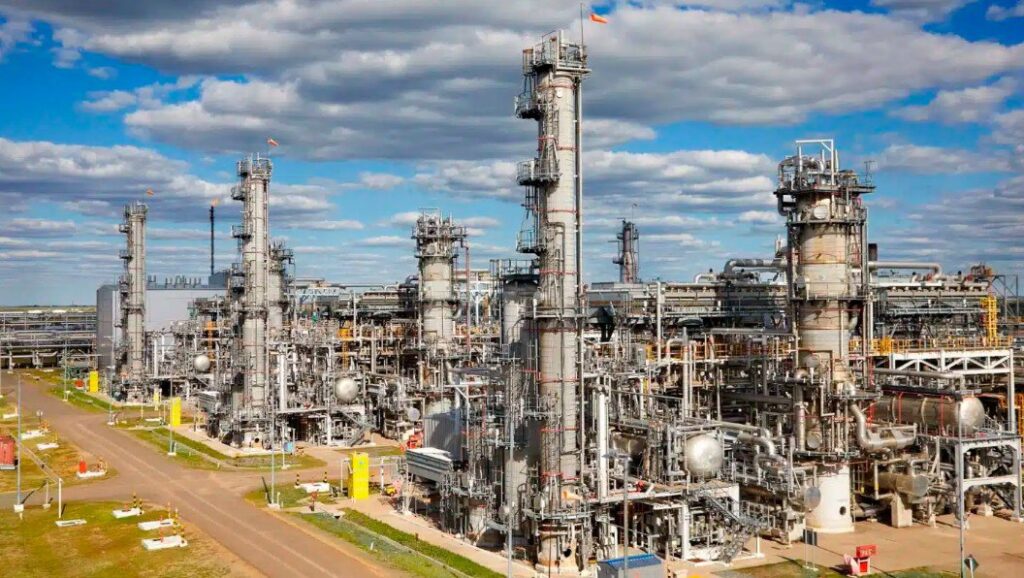
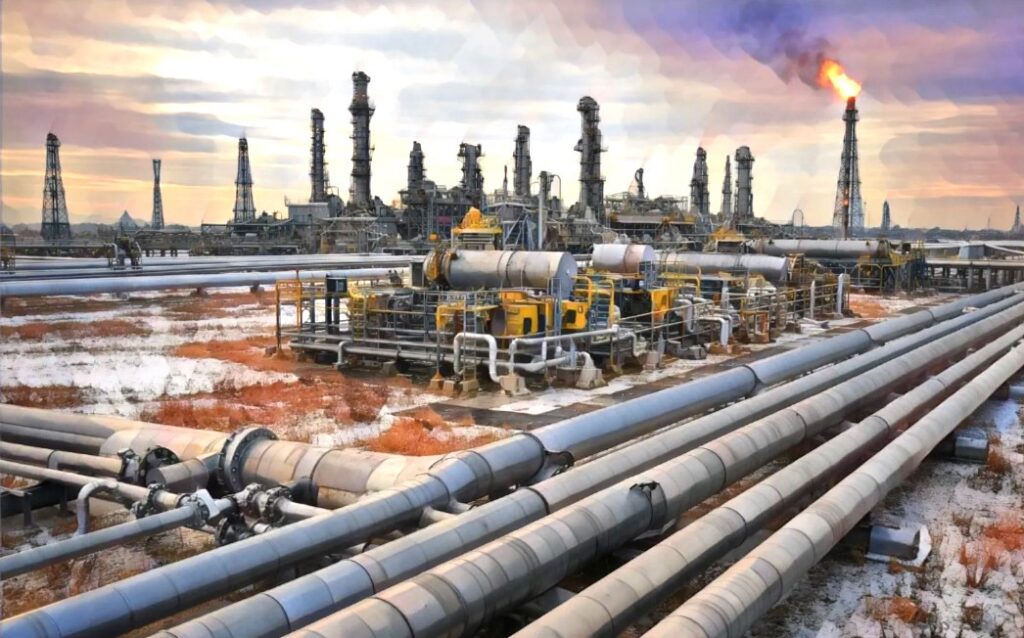
In late January 2026, international media reported that Kazakhstan had won a significant arbitration case against the shareholders of the Karachaganak oil field, with compensation estimated between $2 billion and $4 billion. The Ministry of Energy has not commented on the substance of the ruling, citing confidentiality, though experts say it strengthens Kazakhstan’s position in ongoing legal proceedings related to the Kashagan oil field. According to Bloomberg and Reuters, the Kazakh government initiated legal action in 2023 over what it described as unjustified cost deductions. Originally filed for $3.5 billion, the claim later expanded to include additional allegations, such as inflated expenses tied to corruption. In 2025, the shareholders of Karachaganak Petroleum Operating proposed settling the dispute by financing a domestic gas processing plant in Kazakhstan. The government rejected the proposal, however, and arbitration continued, resulting in a ruling in favor of Kazakhstan. Sources familiar with the proceedings said the consortium, led by Eni and Shell, has been ordered to pay compensation of up to $4 billion. The tribunal has yet to finalize the exact amount. As the arbitration process remains confidential, sources requested anonymity, noting that the Karachaganak consortium still has the option to appeal. While the ruling represents a partial victory, Kazakhstan had originally sought a significantly higher sum; the tribunal accepted the government's core argument: under the production sharing agreement (PSA), the consortium charged the state for unapproved and non-reimbursable expenses. Kazakhstan’s external legal advisers estimate the final payment will range between $2 billion and $4 billion. According to sources familiar with the proceedings, the recovery mechanism will likely involve revisions to the oil distribution formula within the PSA. In its written decision, the tribunal referenced Kazakhstan’s own admission that it had tolerated “corruption and kleptocracy” until 2022. A source familiar with the ruling said Kazakh officials had accepted bribes to approve inflated costs at Karachaganak, expenses that were then inappropriately reimbursed by the state. During the arbitration, Kazakhstan’s legal team presented documents from criminal proceedings in Italy. These revealed that, in 2017, several Italian contractors pleaded guilty to bribing Kazakh officials to secure contracts at both Karachaganak and the Kashagan offshore field. Oil and gas analyst Olzhas Baidildinov said the ruling gives Kazakhstan a stronger position in the Kashagan case. He asserted that Kazakhstan can now “firmly defend its rights in major oil and gas projects,” and that the "decades of privileged status enjoyed by foreign oil and gas majors in Kazakhstan's oil industry are over.” Baidildinov added that the operating models at Karachaganak and Kashagan are likely to be restructured and possibly “de-Italianized”. He also criticized the national oil company, KazMunayGas, for its silence on the Tengizchevroil (TCO) expansion project, whose capital expenditure has surged from $12 billion to $48.5 billion. Drawing comparisons to Uzbekistan, Baidildinov noted that former Uzbekneftegaz head Bahodir Sidikov was dismissed in December 2025 and later detained on corruption charges. In the same month, presidential energy adviser Alisher Sultanov was also removed. “I’m astonished that, while regional Kazakh officials are being...

Uzbekistan Fires Counter-Narcotics Chief as Drug Trade Surges

In late January, Uzbek President Shavkat Mirziyoyev sacked a series of high-ranking officials in the Interior Ministry, National Guard, and the Emergency Situations Ministry. Their dismissals for corruption overshadowed the firing of the director of the Agency for Control of Narcotics and Illegal Firearms, who was let go for failing badly to combat illegal trafficking and use of drugs. Poor Results Ravshan Mamatov was appointed director of the National Center for Narcotics Control in August 2024. In July 2025, a presidential decree transformed the center into the Agency for Control of Narcotics and Illegal Firearms. On January 27, President Mirziyoyev criticized the work of the Narcotics Control Agency and warned Mamatov to engage in more than simply “analytical work and international cooperation.” Mirziyoyev dismissed Mamatov the next day, and it was not a surprise. Exactly two weeks earlier, Bahodir Kurbanov, the head of Uzbekistan’s State Security Service (SGB), spoke at a session of the country’s Security Council, chaired by President Mirziyoyev. Kurbanov detailed security measures along Uzbekistan’s borders, including the use of military surveillance drones. The security chief also spoke about illegal narcotics, noting the amount of drugs seized in 2024 was some 1,700 kilograms and that figure more than doubled to 3,600 kilograms in 2025. Kurbanov noted the 2025 figure included more than 180 kilograms of synthetic drugs and more than one million doses of psychotropic drugs. Additionally, the number of people arrested for illegal narcotics went from some 2,600 in 2024 to some 4,500 in 2025. In his January 27 comments, President Mirziyoyev said that during the last three months, the authorities in the capital Tashkent, had detained members from approximately 50 major narcotics trafficking groups and seized some 500 kilograms of illegal drugs. “Last year, more than 1,500 drug users were officially registered in the capital,” Mirziyoyev said, noting, “The saddest part is that the number of drug addicts living in the shadows is even higher.” The Uzbek president added that most were young people and that “in their quest to raise money, drug addicts naturally resort to crime.” Mirziyoyev also criticized the penal system, remarking that a significant number of people convicted for illegal narcotics were released from jail before serving even half their sentences. Mirziyoyev said that this has led to a 25% increase in the number of repeat offenders. Mamatov addressed Uzbekistan’s parliament on December 17, admitting the amount of synthetic drugs being seized had increased phenomenally during the last five years and that the number of crimes involving illegal narcotics had doubled during that time. Mamatov claimed that in a number of cases, “drug trafficking was being facilitated by officials,” though he did not name any specific officials. A Regional Problem The other Central Asian countries are facing the same problems as Uzbekistan. The amounts of drugs seized and people arrested have been growing in the last few years and continue to increase. Part of the problem is that the region’s counter-narcotics agencies are facing a new situation in combating the illegal drug...

German Court Restricts Media Claims About Russian-Uzbek Billionaire Alisher Usmanov

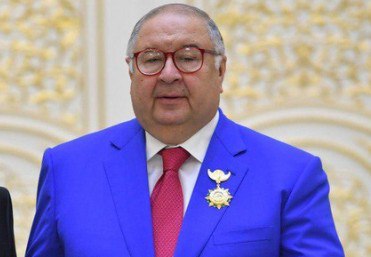
A German court has ruled in favor of Russian-Uzbek billionaire Alisher Usmanov, barring the publication of several contested statements made about him by the Frankfurter Allgemeine Zeitung (FAZ), according to court documents cited by Reuters. In a decision dated January 23, the Hamburg Regional Court prohibited FAZ from further disseminating specific sections of its April 2023 article titled On the Kremlin’s Instructions. The statements in question allegedly linked Usmanov to senior Russian officials. The court determined that these claims may no longer be repeated in their current form. Usmanov, who was born in Uzbekistan, has an estimated net worth of $18.8 billion, according to the Bloomberg Billionaires Index. He is subject to European Union and United States sanctions, including a travel ban, imposed following the start of the war in Ukraine. Over the past two years, he has launched multiple legal challenges in European courts, contesting media reports that he argues were used as justification for the sanctions. Reacting to the ruling, Usmanov’s lawyer, Joachim Steinhöfel, said the statements banned by the court “repeated essential parts of the reasoning behind the sanctions against Mr. Usmanov.” He added that the decision supports the argument that the sanctions were based on what he described as “defamatory and groundless allegations,” Reuters reported. FAZ said it is considering an appeal. A spokesperson for the newspaper warned that the court’s legal criteria could make it more difficult to report on individuals in authoritarian systems, raising broader concerns about press freedom. Separately, in 2024, another Hamburg court ruled against the German broadcaster ARD over a report that linked Usmanov to a scheme involving alleged bribes to judges at the International Fencing Federation. The court banned further distribution of the report, describing it as “news based on suspicion.” Violations of the order could lead to fines of up to €250,000 per incident or imprisonment. Reuters also reported that German authorities agreed last month to close a foreign trade law investigation involving Usmanov after he paid €10 million. A separate money laundering probe was dropped in 2024.

Shell and Eni Face Up to $4 Billion Payout to Kazakhstan After Arbitration Ruling

Oil and gas majors Shell and Eni, key stakeholders in Kazakhstan’s Karachaganak field, have lost a key stage in an international arbitration case in London and may be required to pay the Kazakh government between $2 billion and $4 billion in compensation. The decision was first reported by Bloomberg. According to the ruling, the arbitration panel upheld Kazakhstan’s argument that the project operators had charged the state under a production sharing agreement (PSA) for unapproved cost overruns and other ineligible expenses. The tribunal found that a significant share of the disputed costs should not have been recovered from the state, siding with Kazakhstan on the central legal question. The arbitration proceedings were conducted behind closed doors, in line with standard practice for PSA disputes. The final compensation amount has yet to be determined, and the ruling remains subject to appeal. However, Bloomberg reported that the tribunal concluded the consortium must return a substantial portion of the contested funds, a decision that could require changes to the PSA’s oil and gas distribution formula. Karachaganak is one of Kazakhstan’s largest oil and gas projects and a cornerstone of the country’s energy sector. The field is operated by the Karachaganak Petroleum Operating consortium, which includes Shell, Eni, Chevron, Kazakhstan’s national oil and gas company KazMunayGas, and Russia’s Lukoil. The Kazakh government initially sought more than $6 billion in compensation, arguing that improper cost recovery had reduced state revenues over several years. The dispute was formally launched in 2023 and followed a broader effort by Kazakhstan to assert stricter oversight over major hydrocarbon projects governed by PSAs. In 2024, international partners reportedly proposed resolving the dispute by constructing a long-delayed gas processing plant at Karachaganak to supply the domestic market, an offer seen as an attempt to reach a negotiated settlement. The plant has long been a point of contention, with Kazakhstan pushing for increased gas processing capacity inside the country rather than exporting raw gas. Kazakhstan’s Ministry of Energy has declined to provide further details on the arbitration, citing confidentiality provisions. In response to an inquiry from BAQ.KZ, the ministry said: “All arbitration materials are subject to the confidentiality of the production sharing agreement and the arbitration agreement between the parties. Until the restrictions are lifted, it is not possible to provide any information.” The ruling marks one of the most significant recent legal setbacks for foreign oil companies operating in Kazakhstan in recent years and could have broader implications for how costs are approved and recovered under PSAs across the country’s energy sector.

Killing of Uzbek Migrant Woman in Istanbul Sparks Protests in Turkey

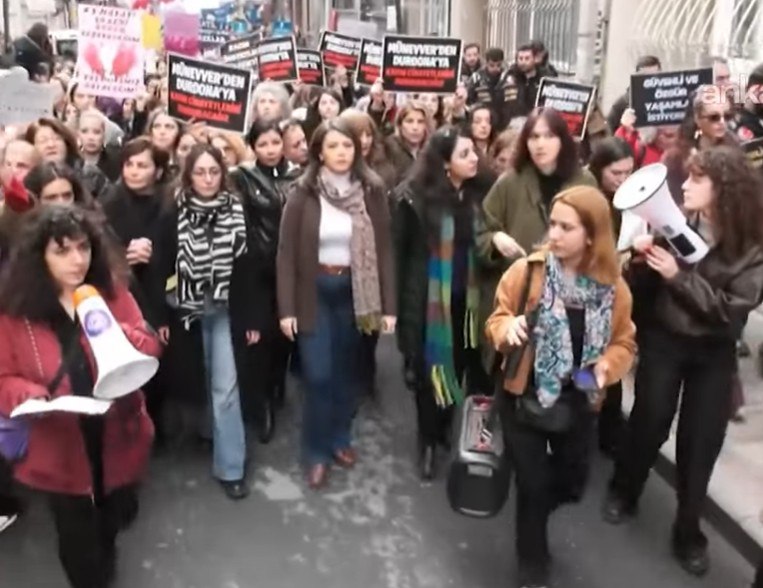
The killing of an Uzbek migrant woman in central Istanbul has sparked protests in Istanbul and Ankara, and reignited debate over violence against women, the safety of migrants, and the effectiveness of state protection mechanisms. The body of a 36-year-old Uzbek national was discovered on January 24 in a waste container in Istanbul’s Şişli district, one of the city’s busiest areas. According to Turkish media reports, the body was found by a person collecting recyclable materials, who immediately alerted the authorities. Police later confirmed that the victim had been wrapped in bedding material and that parts of her body were missing at the time of discovery. Initial searches failed to locate all of her remains. Turkey’s Interior Ministry and law enforcement agencies launched an immediate investigation. Surveillance footage reviewed by investigators showed two individuals leaving a suspicious suitcase near another container in the area. Turkish media outlets, including WELG and Cumhuriyet, reported that three men have been detained in connection with the crime, two of whom are citizens of Uzbekistan. Two suspects were apprehended at Istanbul Airport while allegedly attempting to flee the country. One suspect reportedly confessed during police questioning. However, the investigation remains ongoing, and judicial proceedings have not yet concluded. The victim was identified as Durdona H., an Uzbek citizen. This information was confirmed by the Consulate General of Uzbekistan in Istanbul, which issued an official statement expressing deep sorrow. Identification was made in coordination with Turkish law enforcement, forensic experts, and prosecutors. “The investigation into this case is under the close supervision of the Consulate General,” the statement read. Uzbek diplomats have contacted the victim’s family and are providing consular and legal assistance. The consulate also extended its condolences and stated that further updates would be shared through official channels. The killing provoked immediate public outrage. Large numbers of women took to the streets in Istanbul and Ankara to protest what they described as systemic violence against women, particularly migrant women. Feminist groups and women’s rights organizations organized a march in Şişli, starting near Osmanbey metro station and ending on the street where the body was found. Protesters carried banners and chanted slogans, stressing that the killing was not an isolated case but part of a broader pattern of gender-based violence. Demonstrators also highlighted the heightened vulnerability of migrant women and called for stronger protection and prevention mechanisms. Police briefly intervened in the protests, warning against the use of certain slogans deemed unlawful, according to Turkish media. Nevertheless, demonstrations proceeded peacefully, with participants demanding accountability and transparency. Similar protests took place in Ankara on the same day. Women’s organizations gathered near the Human Rights Monument on Yüksel Street, echoing calls for systemic reform. Activists argued that violence against women is not an individual problem but a structural one. Turkish women’s rights groups, including the We Will Stop Femicide Platform and the Federation of Turkish Women’s Associations, issued statements in response. They criticized the inadequate enforcement of protection orders and what they described as a culture of...