• KGS/USD = 0.01144 0%
  • KZT/USD = 0.00207 0%
  • TJS/USD = 0.10463 0%
  • UZS/USD = 0.00008 0%
  • TMT/USD = 0.28490 0%
  • KGS/USD = 0.01144 0%
  • KZT/USD = 0.00207 0%
  • TJS/USD = 0.10463 0%
  • UZS/USD = 0.00008 0%
  • TMT/USD = 0.28490 0%
  • KGS/USD = 0.01144 0%
  • KZT/USD = 0.00207 0%
  • TJS/USD = 0.10463 0%
  • UZS/USD = 0.00008 0%
  • TMT/USD = 0.28490 0%
  • KGS/USD = 0.01144 0%
  • KZT/USD = 0.00207 0%
  • TJS/USD = 0.10463 0%
  • UZS/USD = 0.00008 0%
  • TMT/USD = 0.28490 0%
  • KGS/USD = 0.01144 0%
  • KZT/USD = 0.00207 0%
  • TJS/USD = 0.10463 0%
  • UZS/USD = 0.00008 0%
  • TMT/USD = 0.28490 0%
  • KGS/USD = 0.01144 0%
  • KZT/USD = 0.00207 0%
  • TJS/USD = 0.10463 0%
  • UZS/USD = 0.00008 0%
  • TMT/USD = 0.28490 0%
  • KGS/USD = 0.01144 0%
  • KZT/USD = 0.00207 0%
  • TJS/USD = 0.10463 0%
  • UZS/USD = 0.00008 0%
  • TMT/USD = 0.28490 0%
  • KGS/USD = 0.01144 0%
  • KZT/USD = 0.00207 0%
  • TJS/USD = 0.10463 0%
  • UZS/USD = 0.00008 0%
  • TMT/USD = 0.28490 0%

Viewing results 469 - 474 of 687

Uzbekistan’s Supreme Court Vacates Convictions of 198 Victims of Stalinist Repressions

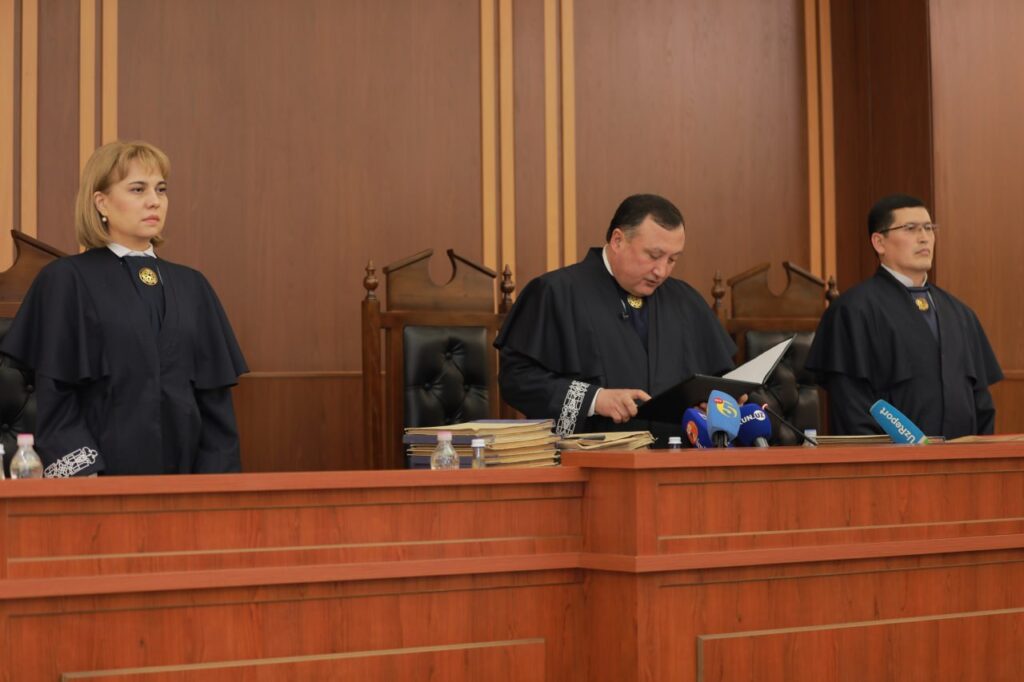
On May 6, the criminal trial panel of the Supreme Court of Uzbekistan considered 11 criminal cases involving 198 people who were unjustly punished by court verdicts over the period of 1930–1938, according to the press services of the Supreme Court of the Republic of Uzbekistan. Among those acquitted are high-ranking officials who held positions in the judicial system. Most of them were sentenced to death or long-term imprisonment with confiscation of property according to verdicts handed down by the Criminal Trial Committee of the Supreme Court of the Union of Soviet Socialist Republics on June 21, 1930. The vacating of those convictions was carried out according to a decree issued by President Shavkat Mirziyoyev dated October 8, 2020, titled “On further study of the legacy of repression victims and additional measures to perpetuate their memory." In order to ensure the implementation of the decree, a working group at the republican level was established to further study the legacy of repression victims, as well as organizing and coordinating the work of perpetuating their memory. After the approval of that “road map” for clearing the names of the victims of repression and perpetuating their memory, the scope of research on identifying victims was expanded, and officials were given the opportunity to use the departmental archives of ministries and agencies. Over the course of its efforts, the working group identified 1,031 people who were repressed during the Soviet-era, who subsequently had their convictions vacated.

Central Asian Entrepreneurs in Russia Shutting Down Hospitality Businesses Due to Xenophobia, Police Inspections

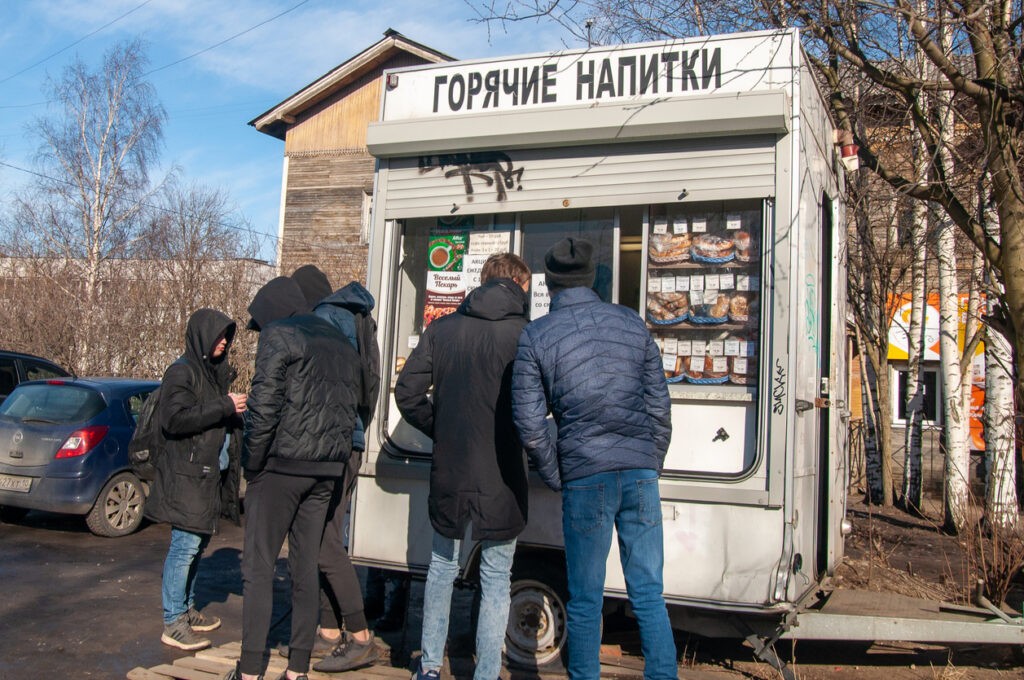
As previously reported by TCA, cafes and restaurants in Russia run by business owners from Central Asia have begun to close en masse. Following the terrorist attack on Crocus City Hall near Moscow on March 22, for which several Tajik nationals have been detained and charged as the perpetrators, preexisting anti-migrant sentiment in Russia has intensified. Since that time, 75% of cafes and restaurants run by Central Asian migrants in Moscow alone have shut, with their owners citing xenophobia and harassment by the police. According to the Current Time news portal, police have sharply stepped up checks on newcomers, mostly Central Asians, over the past month. Raids against migrants are going on all over the country. Many migrants have already left Russia because of this - or refused to visit public places, including cafes. Café and restaurant owners have therefore suffered losses, and many have been forced to cease operations altogether. Police inspections of cafes and restaurants frequented by migrants have also increased - which is also not good for business. Migrants from other countries who work in the hospitality industry in Russia have also stated that increased xenophobia and raids after the terrorist attack have hit the restaurant business particularly hard. Those pressures - coupled with painfully high Russian inflation for food, goods, labor, and more  - have made operations in the hospitality sector unprofitable for many whose livelihoods depend on it.

Kazakh Embassy Counselor in UAE Recalled After Domestic Violence Allegations

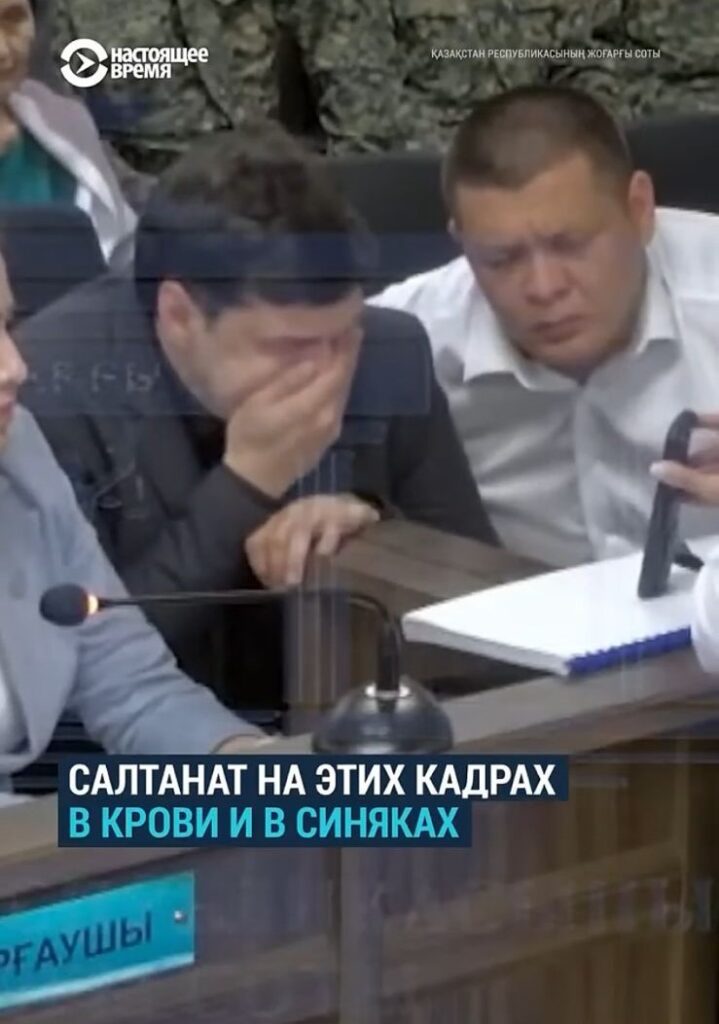
The Ministry of Foreign Affairs of Kazakhstan has recalled an Embassy Counselor from the United Arab Emirates (UAE), Saken Mamash, after the publication of a video message by his wife, Karina Mamash, who alleged ongoing domestic violence, according to a report in Kursiv.kz. "We urgently recalled this employee to Kazakhstan. Further, his case will be dealt with by law enforcement agencies," said an official representative of the ministry. Karina Mamash's appeal was published on an Instagram page run the public foundation, "NeMolchi" (Don't Remain Silent"). In the video, Mamash accuses her husband of years of violence, and expresses fear for her own safety and the safety of their children. "My name is Karina Mamash Gosmanovna. My husband, counselor to the Ambassador of the Republic of Kazakhstan to the UAE, yesterday beat me and my sister, who came to visit me on the 3rd [of May]. I demand help from our state. I am tired of being silent. I am tired of tolerating. For ten years he has been raping me, beating me. I am in danger, and my children are in danger around him. I demand help from our state. Help me," she said, attaching photos of herself and her sister with bruises on their faces to the post. Karina Mamash also insisted that her husband be "stripped of his status as a diplomat and put in jail for all the abuse." Domestic violence has become a key topic of discussion in Kazakhstan amid the high-profile case of Kuandyk Bishimbayev for allegedly killing his common-law wife, Saltanat Nukenova. On April 15, President Tokayev signed into law amendments and additions passed by Kazakhstan’s parliament ensuring the rights of women and the safety of children. The initiative represents a first in the CIS in terms of how far it goes to provide protection for women and children in the country.

Bishimbayev Trial: Will the “Show” Shift Reality?

The trial of Kuandyk Bishimbayev, accused of murdering his common-law wife, Saltanat Nukenova, is coming to an end with the verdict now in the hands of the jury. The trial has resonated widely in Kazakhstani society, but according to Gulmira Ileuova, a sociologist and head of the public foundation, Strategy: Center for Social and Political Research, Kazakhstan still has a long way to go to successfully fight abusive relationships. Ileuva commented on the case in an interview with the Times of Central Asia.   TCA: In Kazakhstan, Bishimbayev's trial has received a huge amount of attention, and Nukenova's death is being discussed at home and abroad, with rallies being held in her memory. Moreover, a law toughening penalties for domestic violence has recently been passed. Will that help to radically change the situation with violence to which thousands of Kazakhstani women are subjected every year? Ileuova: It seems to me that Bishimbayev's trial has influenced some categories of people - those who are ready to listen and draw conclusions. But society in a broader sense will not be overtly affected by this situation. Specialists are watching the trial, examining the behavior of lawyers, prosecutors, and other participants. Conclusions are also being drawn that the arguments used by the defense remain childish, infantile. Public opinion attributes to Bishimbayev's lawyers, let's say, the moral image of Bishimbayev himself. Psychologists will also draw conclusions: about problems with upbringing, family relations, etc. But in general, the feeling is that of a show having been created, captivating the audience, and making [the audience] terrified or delighted. Emotional swings are created, adrenaline is produced, and accordingly, people watch and get involved. But I doubt that there has been a profound shift in society against the backdrop of the trial. There needs to be a lot of additional activities, outreach, to tie the new law on domestic violence, in particular, to direct practice. Just the other day, the wife of a Kazakhstani diplomat appealed to the authorities for protection, saying that her husband had been torturing her for years and had beaten her again. This particular man did not draw any conclusions from Bishimbayev's story, including concerning his own actions. This official should have realized that the president was one of the most active initiators of the law on domestic violence. Of course, further public reaction will also be influenced by the expected decision of the court in the Bishimbayev case. If the principle of the inevitability of punishment and changes in the judicial system are demonstrated, there will be a certain shift. However, for now it is perceived mainly as a show. There is still an educational effect [only] in a small segment of society.   TCA: Why doesn't society perceive such clear signals? Why isn't there a shift to zero tolerance for domestic violence? Ileuova: We want change too fast, which is hardly possible because the inertia within society is huge. If women are sold for kalym (bride price or dowry), then they are still...

Czech Authorities Suspend Investigation of 2014 Explosions; One Suspect Allegedly Posed as a Tajik Citizen

The Czech Republic has suspended an investigation of ammunition depot explosions in 2014 that it blames on Russian military intelligence, including an agent who allegedly used a Tajik passport during the operation. Two Czech citizens died in the first of two explosions at warehouses in the village of Vrbětice, an alleged act of sabotage that led to years of unexploded ordnance cleanup, an international investigation and Russian denials of involvement, and a tit-for-tat expulsion of Russian and Czech diplomats from each other’s countries. Tajikistan was pulled into the case in 2021 when Czech investigators said they were looking for two suspects who used Russian passports, and then used different identities under Tajik and Moldovan passports. At the time, Tajikistan’s Ministry of Internal Affairs said it had not issued a passport to a person matching the reported name and birthday of the suspect. Reports said the suspects had posed as potential arms buyers from the National Guard of Tajikistan, though an analysis by a group of media organizations said it was unclear whether that particular ruse enabled them to get onto the ammunition storage sites. Czech law enforcement halted the probe into the Vrbětice blasts because the suspects are in Russia, which is not cooperating, said Col. Jiří Mazánek, head of the organized crime division of the police. He said in a statement on Monday that all other avenues of investigation in the Czech Republic, and in countries that have cooperated with requests for help, “have been exhausted.” Therefore, Mazánek said, additional information that would allow a criminal prosecution to move forward can’t be obtained for now. Evidence indicates that the explosions were “part of a long-term diversionary operation by Russian military intelligence on the territory of the European Union and Ukraine,” the police official said, blaming members of the Russian agency GRU whose alleged aim was to prevent the delivery of weapons and ammunition to areas where the Russian Army was operating. In 2014, Russia annexed Crimea and fighting erupted in eastern Ukraine between Ukrainian forces and Russia-backed separatists, in a prelude to Russia’s invasion in 2022 and the ongoing war today. Russia denied it was responsible for the Vrbětice explosions and noted media reports that the ammunition depots were controlled not by the Czech government, but by a private company owned by a Bulgarian citizen.

Kazakhstan Charges Former Minister Yerlan Turgumbayev With Abuse of Power

Kazakhstan's General Prosecutor's Office has confirmed its detention of a former high-ranking police officer. Yerlan Turgumbayev, the country's former minister of internal affairs, has been charged with abuse of power, resulting in grave consequences, during the public unrest and political upheaval in January 2022. "The Prosecutor General's Office continues to investigate criminal cases related to the January 2022 events. On April 29, ex-Minister of Internal Affairs Yerlan Turgumbayev was detained for abuse of power and official authority that caused grave consequences," the prosecutor's office said in an official statement. The office mentioned that the criminal case contains information that includes classified state secrets; therefore, the data, findings and statements included in the pre-trial investigation are not subject to disclosure. As has already been widely reported, in early 2022 in Kazakhstan thousands of protests were organized across the country, which, when brutally suppressed by government forces, went down in history as Qandy Qantar -- "Bloody January." What began as peaceful anti-government demonstrations turned into uncontrolled riots with numerous casualties among the civilian population. Rapid response forces from the Collective Security Treaty Organization (CSTO), which includes Armenia, Russia, Kyrgyzstan, Belarus and Kazakhstan, were deployed. After the violent suppression of the protests, a number of high-ranking officials were arrested and accused of attempting a coup d'état. In March 2024, the General Prosecutor's Office reported that Turgumbayev was being questioned as part of ongoing investigations against security officials for failing to ensure law and order and public security during the January events, as well as for torturing citizens. Turgumbayev became head of the Interior Ministry in 2019. Before that he headed the police department of Kazakhstan's largest city, Almaty. In February 2022 he was dismissed from his post and appointed as an adviser to Kazakhstan's president, Kassym-Jomart Tokayev.