• KGS/USD = 0.01144 0%
  • KZT/USD = 0.00218 0%
  • TJS/USD = 0.10610 -0.09%
  • UZS/USD = 0.00008 0%
  • TMT/USD = 0.28530 0%
  • KGS/USD = 0.01144 0%
  • KZT/USD = 0.00218 0%
  • TJS/USD = 0.10610 -0.09%
  • UZS/USD = 0.00008 0%
  • TMT/USD = 0.28530 0%
  • KGS/USD = 0.01144 0%
  • KZT/USD = 0.00218 0%
  • TJS/USD = 0.10610 -0.09%
  • UZS/USD = 0.00008 0%
  • TMT/USD = 0.28530 0%
  • KGS/USD = 0.01144 0%
  • KZT/USD = 0.00218 0%
  • TJS/USD = 0.10610 -0.09%
  • UZS/USD = 0.00008 0%
  • TMT/USD = 0.28530 0%
  • KGS/USD = 0.01144 0%
  • KZT/USD = 0.00218 0%
  • TJS/USD = 0.10610 -0.09%
  • UZS/USD = 0.00008 0%
  • TMT/USD = 0.28530 0%
  • KGS/USD = 0.01144 0%
  • KZT/USD = 0.00218 0%
  • TJS/USD = 0.10610 -0.09%
  • UZS/USD = 0.00008 0%
  • TMT/USD = 0.28530 0%
  • KGS/USD = 0.01144 0%
  • KZT/USD = 0.00218 0%
  • TJS/USD = 0.10610 -0.09%
  • UZS/USD = 0.00008 0%
  • TMT/USD = 0.28530 0%
  • KGS/USD = 0.01144 0%
  • KZT/USD = 0.00218 0%
  • TJS/USD = 0.10610 -0.09%
  • UZS/USD = 0.00008 0%
  • TMT/USD = 0.28530 0%

Viewing results 481 - 486 of 741

Kyrgyz Writer Oljobai Shakir Sentenced to Five Years in Prison

On 14 May, the Alameda District Court of the Chui Oblast in Kyrgyzstan sentenced 52-year-old activist and writer Oljobai Shakir to five years imprisonment for inciting mass riots on social media against the government. At the previous hearing, Shakir a frequent and popular blogger, pleaded not guilty to the charges of slander and argued that the aim of his posts was to encourage open dialogue  between the country's leadership and its people on how the government is run. During the trial, the writer's lawyer, Akmat Alagushev, demanded the acquittal of his client and announced his intention to appeal. Olzhobai Shakir has been held in the pre-trial detention center of the SCNS since August 2023 on account of the “provocative nature” of material he posted on Facebook, TikTok and YouTube. Throughout his incarceration, the writer has denied the validity of the criminal charges against him. Renowned for his critical statements against the authorities, Shakir was arrested shortly after he had publicly scrutinized the government’s controversial transfer of four hotels on the shores of Lake Issyk-Kul to Uzbekistan. In a period when the government is increasingly clamping down on political opposition through social media, neither President Sadyr Japarov nor GKNB head Kamchybek Tashiev accepted Shakir’s invitation to be interviewed on the issue. Shakir is a well-established author and supporter of contemporary Kyrgyz literature, but like his activities on social media, his own work at times has proved highly controversial. Published in 2021 in a country where open discussion of LGBT+ rights is still taboo, his novel “Adam+” caused public outcry by relating the emotional challenges he faced during his daughter’s transgender transition.
Kuandyk Bishimbayev Given 24 Years in Prison — But Kazakhs Ask How Long He Will Really Serve

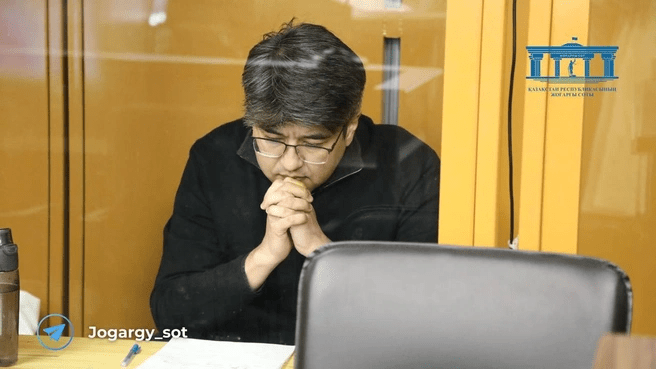
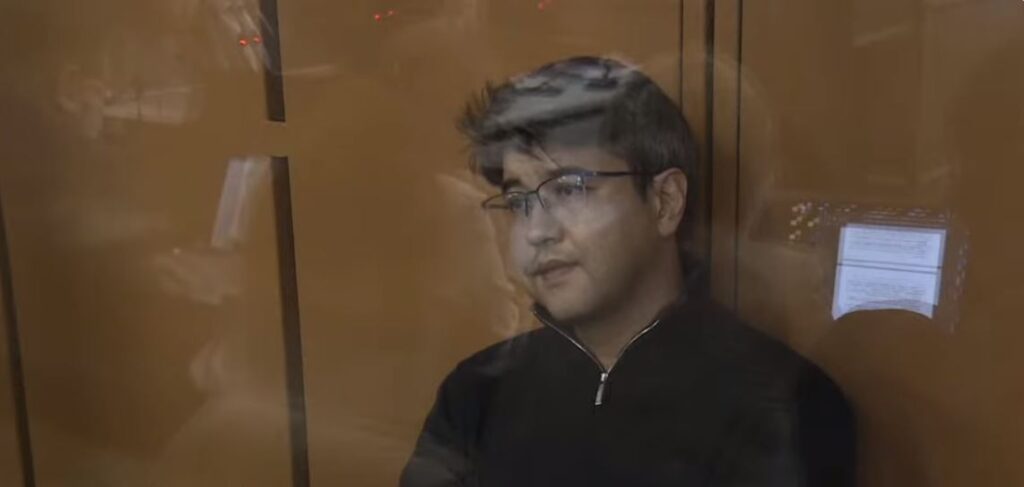
On May 13, Kazakhstan’s former Minister of National Economy Kuandyk Bishimbayev was sentenced to 24 years in prison for the torture and murder of his common-law wife Saltanat Nukenova in November 2023. While the length of the sentence is a victory for advocates against gender-based violence, both within Kazakhstan and in the many parts of Europe where the trial was also followed closely, many Kazakhs feel that it is still too early to say that justice has been done. In an open discussion that is rare in Central Asia, many citizens are posting their concerns on social media that the Nazarbayev-era official will find a way to get out of prison early: there is already speculation that Bishimbayev, a former member of the country’s elite, will leverage his political connections to secure an early release – or be recognized as terminally ill. Attempting to quell these fears, state prosecutor Aizhan Aimaganova has said that under Kazakhstani law, Bishimbayev will be able to apply for parole only after serving 16 years, two-thirds of his sentence – and only then with the consent of Saltanat Nukenova’s family, guided by her brother, Aitbek Amangeldy. Saltanat Nukenova's murder has shown that civil society is very much alive in President Kassym-Jomart Tokayev’s Kazakhstan. As previously reported, shortly after her death in November last year, a public movement called Zhana Adamdar organized an authorized rally in Almaty to raise awareness about violence against women and children. Yesterday, on the day of the sentencing, supporters of another Kazakh feminist movement, Feminita, protested in Almaty, Kazakhstan's biggest city. The group is demanding life imprisonment for Saltanat Nukenova’s murderer. "We do not agree with this sentence; [Bishimbayev] should sit in prison for life. He will come out sooner anyway – we urge you never to be silent: if you have the desire and will for it, resist," Vlast.kz quoted Feminita co-founder Zhanar Sekerbaeva as saying. The spokesperson for the Astana court where Bishimbayev was sentenced, Alma Yesymova, has commented that he has received the maximum possible sentence for the crimes he was found guilty of: murder and torture. "The punishment was imposed for committing a particularly grave crime – murder. The sanction for this is a maximum of 20 years of imprisonment. And by partial addition of terms [Bishimbayev] was given four more years for torture. Under the law the very maximum sentence is 25 years, while he was given 24 years," Yesymova said at a press conference after the trial. The trial itself drew criticism from Kazakhstan’s legal professionals. Lawyers and human rights activists are unsatisfied with how both the prosecution and the defense were conducted. Following Nukenova's death, President Tokayev signed a Decree in December 2023 to improve human rights and the rule of law, including by promoting gender equality, combating any form of domestic violence and enhancing the performance of the criminal justice system (which, among other things, involved increasing penalties for perpetrators of domestic violence). The human rights components of the President’s reform agenda was...

Prosecutor General’s Office of Tajikistan and U.S. State Department Sign Memorandum of Cooperation

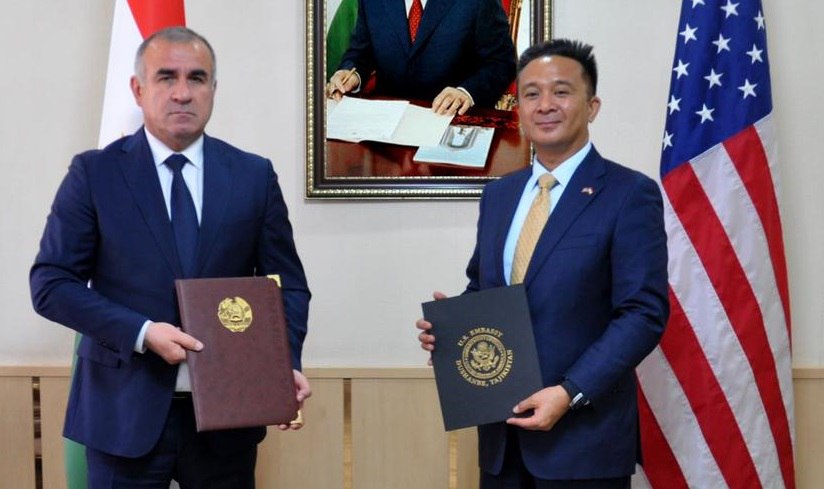
Tajikistan and the U.S. have agreed to continue bilateral legal cooperation in various areas, as reported by the General Prosecutor's Office of the Republic of Tajikistan. During the meeting, Prosecutor General of Tajikistan, Rahmon Yusuf Ahmadzoda and the U.S. Ambassador to the Tajikistan, Manuel Mikaller discussed issues related to the exchange of information on challenges and threats to the security of both states, the protection of the rights and interests of citizens, preventing and combating manifestations of violent extremism and terrorism, cyber-crime, transnational organized crime, and other issues. A Memorandum of Intent on cooperation on the implementation of the Personal Identity Comparison and Evaluation System to Regulate the Movement of Terrorists (PISCES) was signed. "This system allows the movement of terrorists to be tracked through extensive technological surveillance, as well as assisting in their capture and apprehension," the report stated.

Kuandyk Bishimbayev Sentenced to 24 Years for the Murder of Saltanat Nukenova

Kuandyk Bishimbayev, a former Minister of National Economy of Kazakhstan under then-President Nursultan Nazarbayev, was sentenced on Monday to 24 years in prison in the specialized inter-district investigative court of Astana for torturing and murdering his common-law wife, Saltanat Nukenova, at the Gastrocenter Restaurant on November 9, 2023. The verdict and sentence in an Astana courtroom followed a live-streamed trial that galvanized discussion about domestic violence in Kazakhstan and tested the ability of the criminal justice system to hold the powerful and influential to account. Rallies in support of Nukenova spread outside of Kazakhstan, and were staged in Czechia, Georgia, Italy, Spain, and numerous other countries. [caption id="attachment_17886" align="alignnone" width="2048"] A rally in Prague in support of Saltanat Nukenova. Image Source: Asel Kamiyeva [/caption] Judge Aizhan Kulbaeva read out the ruling after a jury trial as Bishimbayev stood in the glass-paneled dock, his head bowed at one point. He had acknowledged beating Nukenova and said his actions, which were captured on CCTV video, led to her death. But he claimed he did not intend to kill her. "Bishimbayev Kuandyk Alikhanovich has been found guilty of committing criminal offenses under p. 1. 2 part 2 of article 110 ("Torture") and point 5 part 2 of article 99 ("Murder"). 2 part 2 of article 99 ("Murder") of the Criminal Code," stated the judge. He was sentenced to 7 years on the first count, and 20 years on the second, which after a partial addition of terms amounted to 24 years in prison. [caption id="attachment_17896" align="alignnone" width="1200"] Image from the Astana court session[/caption] In addition, the director of Gastrocenter, Bakhytzhan Baizhanov was found guilty of harboring a particularly serious crime in advance and sentenced to four years in prison in a medium security penal institution, with time already served being taken into account. During the trial, as public outrage over Nukenova’s killing simmered in Kazakhstan, President Kassym-Jomart Tokayev signed a new law in April in line with OECD standards which tightens the penalties for domestic violence and provides more help for survivors. The legislation became widely-dubbed, "Saltanat's Law." The response to Saltanat Nukenova's harrowing attack signals a positive trend for women’s rights in the region. The case quickly advanced to a jury trial, given full transparency via a live broadcast, with a female prosecutor at the helm — a clear stance on gender violence in Kazakhstan. Human Rights Watch commended the law as a step forward, but say it should have designated domestic violence as “stand-alone offense,” which would allow other types of violence within the family, such as psychological or sexual, to be thoroughly investigated and prosecuted. The UNDP, meanwhile, commended “legislative initiatives protecting women’s [and] children’s rights,” calling them a “crucial step towards equality, justice [and] safety for all citizens” that “lay a foundation for a stable, prosperous society.” This is not be the first time that Bishimbayev has been sentenced. In 2018 he received a ten-year sentence for accepting bribes, but after less than a year later he was pardoned...

Dushanbe Conference to Discuss New Mass Media Law

On May 14, Dushanbe will host a conference entitled "Favorable Media Environment - an Important Factor of Legal Education in Society." The meeting is being organized by the Tajik Parliament and the nonprofit organization, Homa, with the support of the European Union (EU). The purpose of the discussion is to review the draft law "On Mass Media" with participation from a wide range of representatives of government agencies, international, multilateral, nonprofit, non-governmental organizations (NGOs) and the media. According to representatives of civic organizations, the rapid development of technology and international norms oblige the government to adapt legislation to international standards and modern best practices. In March 2023, a working group was established to draft a law on the mass media. It included representatives of government agencies and civil society, who together studied the experience of various countries in the region and analyzed legislative acts regulating media activities. In Tajikistan, the activities of the media are regulated mainly by two laws: the law "On Periodical Press and Other Mass Media" and the law "On Television and Radio Broadcasting." Following crackdowns, only two significant independent media voices remain in Tajikistan; the privately owned Asia-Plus, and the U.S. Congress-funded Radio Free Europe/Radio Liberty’s local service, both of which have long been subjected to partial shutdowns.

Uzbek Businesswoman Diora Usmanova Recounts Own History of Marital Violence

Diora Usmanova, the owner of two restaurants and some clothing brands in Uzbekistan, has spoken on her Instagram page about the beatings she suffered from her first husband, Babur Usmanov, who was the nephew of the billionaire Alisher Usmanov. Usmanova herself is related to Ziroatkhon Mirziyoyeva, the wife of Uzbek president Shavkat Mirziyoyev. Usmanova wrote that the story could cause her harm, but that she believes the benefits will "outweigh the risks a hundredfold" and will "change perceptions or somehow affect women who endure domestic violence and abuse," Gazeta.uz reported. "We loved each other and fought very hard for our marriage. Subsequently, when he started to raise his hand against me and when these beatings went on, and the beatings continued for four years, there were concussions, and a lot of blood, and bruises, and [my] whole body in bruises, and a lot of broken furniture, doors, everything," she said. Domestic violence is not only the man's fault, but also the woman's, Usmanova said. "We don't value ourselves enough, we're not brave enough, we're not strong enough, we're afraid to give a backhand, we're afraid to tell our parents, we're afraid to go back to our parents, we're afraid to start everything again. For the fact that we hope that it will change, that it will [bear] some good fruits in the future, that it will survive -- this is all our problem," Usmanova said. In her opinion, women should terminate harmful relationships and find the strength to leave -- and most importantly, learn to respect themselves. "You have to leave such relationships. [That's] because of the fact that you forgive once, forgive the second time, and then it becomes a habit, a person realizes that it is forgiven, it can end very badly, [a] whole life just poisoned. I did not find the strength then, and now after 10 years, I look back and realize how many mistakes were made on my part and how much is my fault. Just like [it was] his," she stated. On May 8, 2013, Babur Usmanov was involved in a fatal car accident in Tashkent. In 2016, Usmanova married businessman Batyr Rakhimov.