• KGS/USD = 0.01143 0%
  • KZT/USD = 0.00213 0%
  • TJS/USD = 0.10593 0.47%
  • UZS/USD = 0.00008 0%
  • TMT/USD = 0.28571 0%
  • KGS/USD = 0.01143 0%
  • KZT/USD = 0.00213 0%
  • TJS/USD = 0.10593 0.47%
  • UZS/USD = 0.00008 0%
  • TMT/USD = 0.28571 0%
  • KGS/USD = 0.01143 0%
  • KZT/USD = 0.00213 0%
  • TJS/USD = 0.10593 0.47%
  • UZS/USD = 0.00008 0%
  • TMT/USD = 0.28571 0%
  • KGS/USD = 0.01143 0%
  • KZT/USD = 0.00213 0%
  • TJS/USD = 0.10593 0.47%
  • UZS/USD = 0.00008 0%
  • TMT/USD = 0.28571 0%
  • KGS/USD = 0.01143 0%
  • KZT/USD = 0.00213 0%
  • TJS/USD = 0.10593 0.47%
  • UZS/USD = 0.00008 0%
  • TMT/USD = 0.28571 0%
  • KGS/USD = 0.01143 0%
  • KZT/USD = 0.00213 0%
  • TJS/USD = 0.10593 0.47%
  • UZS/USD = 0.00008 0%
  • TMT/USD = 0.28571 0%
  • KGS/USD = 0.01143 0%
  • KZT/USD = 0.00213 0%
  • TJS/USD = 0.10593 0.47%
  • UZS/USD = 0.00008 0%
  • TMT/USD = 0.28571 0%
  • KGS/USD = 0.01143 0%
  • KZT/USD = 0.00213 0%
  • TJS/USD = 0.10593 0.47%
  • UZS/USD = 0.00008 0%
  • TMT/USD = 0.28571 0%

Viewing results 493 - 498 of 735

Kuandyk Bishimbayev Pleads Guilty to Negligent Homicide

  The judicial inquiry into the case of Kuandyk Bishimbayev concluded on April 24 in Astana. Aitbek Amangeldy, the brother of Saltanat Nukenova, announced that further court dates are scheduled for April 29, 30, and May 2-4. Bishimbayev, who formerly served as Kazakhstan's National Economy Minister, faces allegations of murdering his partner Saltanat Nukenova in November 2023, at the Bau restaurant in Astana. He was detained on the day of the incident. The trial commenced towards the end of March. Bishimbayev could receive a sentence ranging from 15 to 20 years to life imprisonment, depending on the severity of the crime as determined by the court. A jury will be instructed to reach a verdict regarding his culpability.   At the end of the session, Judge Aizhan Kulbaeva sought to clarify whether Bishimbayev has changed his position via-a-vis the charges - "In the main trial, when the prosecutor read out the indictment, brought charges and clarified your position on those charges, at that time your position was that you do not fully admit guilt on two episodes of the charges brought against you… Does your position remain the same?" the judge inquired. "I do not plead guilty to the charge of torture. In the part of the charge of premeditated murder with particular cruelty, I admit that I inflicted beatings that led to the death of Nukenova. But I do not admit that I did it deliberately, that I wanted her dead and acted with particular cruelty," replied Bishimbayev. "Do you plead guilty to having inflicted grievous bodily harm, which caused Nukenova's death through negligence?" the judge sought to clarify. "Yes," the ex-minister replied. Photo screenshot from the broadcast of the trial; text reads "she is covered in blood and bruises."   Meanwhile, the second defendant, Bykhytzhan Bayzhanov, stated before the court that he pleads not guilty to charges of under-reporting and concealment.
Growth of Non-Custodial Sentences in the Kyrgyz Republic Since 2020

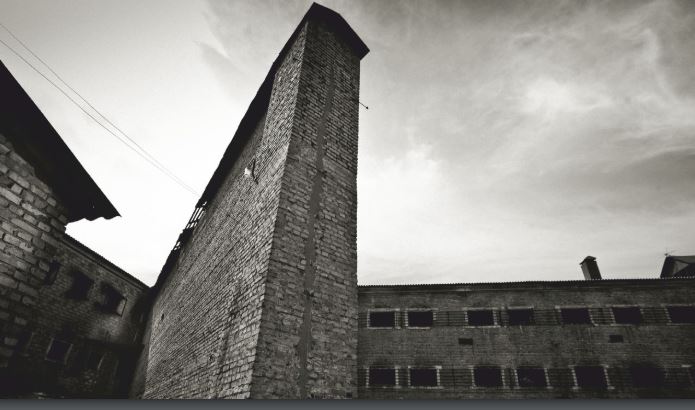
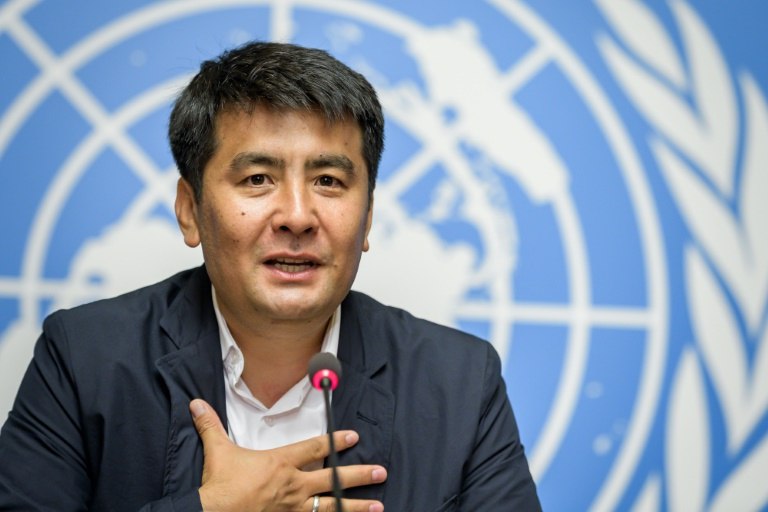
The Kyrgyz Republic has reported a decrease of its prison population, which speaks to the ongoing humanization of its criminal justice system. In 2023, the prison population amounted to just 7,728 persons, a 20% decrease compared to 2020 (9,658 prisoners). Despite a 22% increase in the number of convictions, from 5,074 in 2020 to 6,202 in 2023, the number of non-custodial sentences has risen by 55 %. This information was relayed at a roundtable discussion organized by the Ministry of Justice and the UNODC Programme Office in the Kyrgyz Republic on 17 April 2024. Within the framework of the EU-co-funded project, JUST4ALL, which focuses on the establishment of a probation and criminal justice information management systems, the UNODC conducted an analytical review on the judicial practice of custodial and non-custodial sentences between 2020 and 2023. This research was aimed at analyzing court decisions on alternatives to incarceration, and collecting data to inform evidence-based technical assistance within the aforementioned project. An intra-agency working group was tasked with conducting an analytical review by representatives from the Supreme Court, the General Prosecutor's Office, the Prison Service, and the Probation Department. Zarylbek uulu Almazbek, Deputy Minister of Justice of the Republic emphasized that this analysis would help identify positive aspects and shortcomings in the current system. "This work is necessary and relevant, and we are convinced that it will contribute, among other things, to the harmonization of regulatory legal acts, as well as improved cooperation and interaction with government agencies," Almazbek stated. Cosimo Lamberti-Fossati, Project Manager for the EU delegation noted that the EU-funded “JUST4ALL project plays a key role in promoting the humanization of the criminal justice system in Kyrgyzstan through strengthening the probation system. The collection and analysis of data on criminal justice is key to informing evidence-based sustainable policies and decision making.” Participants at the roundtable highlighted the positive role of the probation service, and the need for tailored approaches when it comes to the social reintegration and rehabilitation. Further challenges include ensuring staff are well-equipped to address the needs of their clients by creating appropriate working conditions and tackling the high turnover rate of probation officers. The participants also agreed on the need to strengthen multistakeholder synergies when implementing alternatives to detention, bringing stakeholders together and allowing them to have an open exchange in a trusted environment. JUST4ALL builds on the United Nations Standard Minimum Rules for Non-custodial Measures (the Tokyo Rules), which encourages Member States to develop non-custodial measures within their legal system to provide alternatives, thus reducing the use of imprisonment, as well as to rationalize criminal justice policies, consider human rights, the requirements of social justice, and the rehabilitation needs of the offender.   Vasilina Brazhko is a specialist at the United Nations Office on Drugs and Crime in Central Asia

Kyrgyzstan’s Law on NGOs: What Alarms Human Rights Activists?

In April 2024 Kyrgyz President Sadyr Japarov signed a law on non-governmental organizations (NGOs). Now all NGOs must submit full financial reports and register with the Ministry of Justice. Despite the authorities' statements about the need for a document regulating the financing of such organizations, the law has numerous opponents. President Japarov himself claims that some NGOs have deceived donors by using foreign funds -- meant for roundtable discussions, training sessions and projects -- for personal purposes. "If you say that this is not true, I can prove it. Why do NGOs in developed countries register with the Ministry of Justice, tax service, open a bank account and do not do the same when they come to us? Or are we a second-rate country? No, we are not. We will not allow such dubious actions anymore," Japarov said after criticism from NGO representatives. Under the new legislation, an NGO that has received foreign aid will be called a "foreign representative". Public activists claim that the rule is consonant with the Russian law on foreign agent status for nonprofits that accept foreign funding. Such a situation will carry certain reputational risks: according to the law, organizations that receive funding from abroad and deal with political issues must be included in a special register and operate under the control of state bodies. In an interview with The Times of Central Asia, Azisbek Ashurov, head of the NGO 'Lawyers of Fergana Valley Without Borders' and a human rights activist, spoke about the pitfalls of the law. In Ashurov's opinion, the document is designed to limit the activities of the private sector. "We are concerned about the re-registration procedure itself. Either it is just an application procedure, or someone will approve, make decisions. When decisions are made, how transparent and non-corrupt will it be?" he asked. Ashurov gave the example that in Kyrgyzstan there are NGOs providing legal assistance to citizens. If there is a dispute with a government body, the decision is challenged in the courts. However, now such structures will be dependent on the state and will not be able to work fully independently. "State bodies have been authorized to interfere in the activities of NGOs. This is participation in their internal activities. We discuss some of our cases [via] collegiums, when lawyers discuss the strategy for different cases. Now, imagine, a representative of the state will sit and listen to confidential information that in the interest of the citizen we should not disclose. The balance is grossly upset. The adversarial principle is violated if we are preparing for court hearings against state bodies, for example, against the Ministry of Justice," Ashurov added. According to him, the Ministry of Justice was given the opportunity to suspend the activities of NGOs for violations. However, the current legislative framework doesn't specify the violations for which an NGO can be suspended. The law prescribes that state bodies may request information from NGOs -- however, it's not specified what kind of information should be provided. In...

Kyrgyzstan’s Special Services Take On The Drug Mafia

The head of Kyrgyzstan's National Security Service, Kamchybek Tashiyev, has commented that unless it is curbed, the country's already highly complex drug situation is likely to be beyond control within ten years. Speaking at a meeting with heads of Kyrgyzstan's police departments, Tashiyev said that the number of both drug distributers and drug users has soared recently, largely among people under 25, and growing drug abuse threatens to reduce the contribution that young Kyrgyz can make to the country. In a move to combat the problem, when evaluating the work of law enforcement agencies, their success in stopping drug trafficking will be factored in. Tashiyev admitted that 12 law enforcement officers have been found to have links to the drug mafia in the past year alone. According to operational data, drug traffickers have flourished in the online space, using modern technology -- even payment goes through electronic wallets. Tashiyev added: "Drugs which used to be [farmed] have now been replaced by synthetic drugs, and the number of laboratories manufacturing these drugs has increased. Substances are sourced from abroad and the drugs are then manufactured in our country." "If the drug situation in the country remains at the same level as it is now, our society will face a big problem in ten years at most. Therefore, all law enforcement agencies must begin a ruthless fight against those who distribute drugs. All measures within the law will be applied to such persons," Tashiyev emphasized. He demanded special control over schools, universities, nightclubs and cafes. Kyrgyzstan is considered a transit country for illegal drugs because of its close proximity to Afghanistan. The estimated number of people who use substances on a regular basis has reached 50,000.

Traffickers of Human Organs Detained in Kyrgyzstan

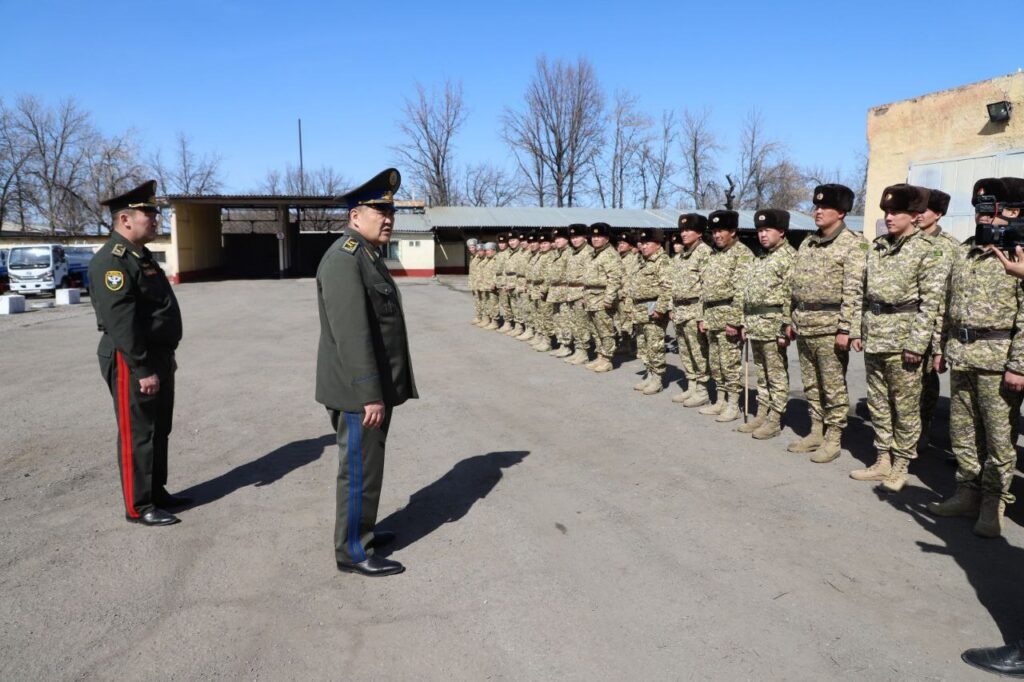
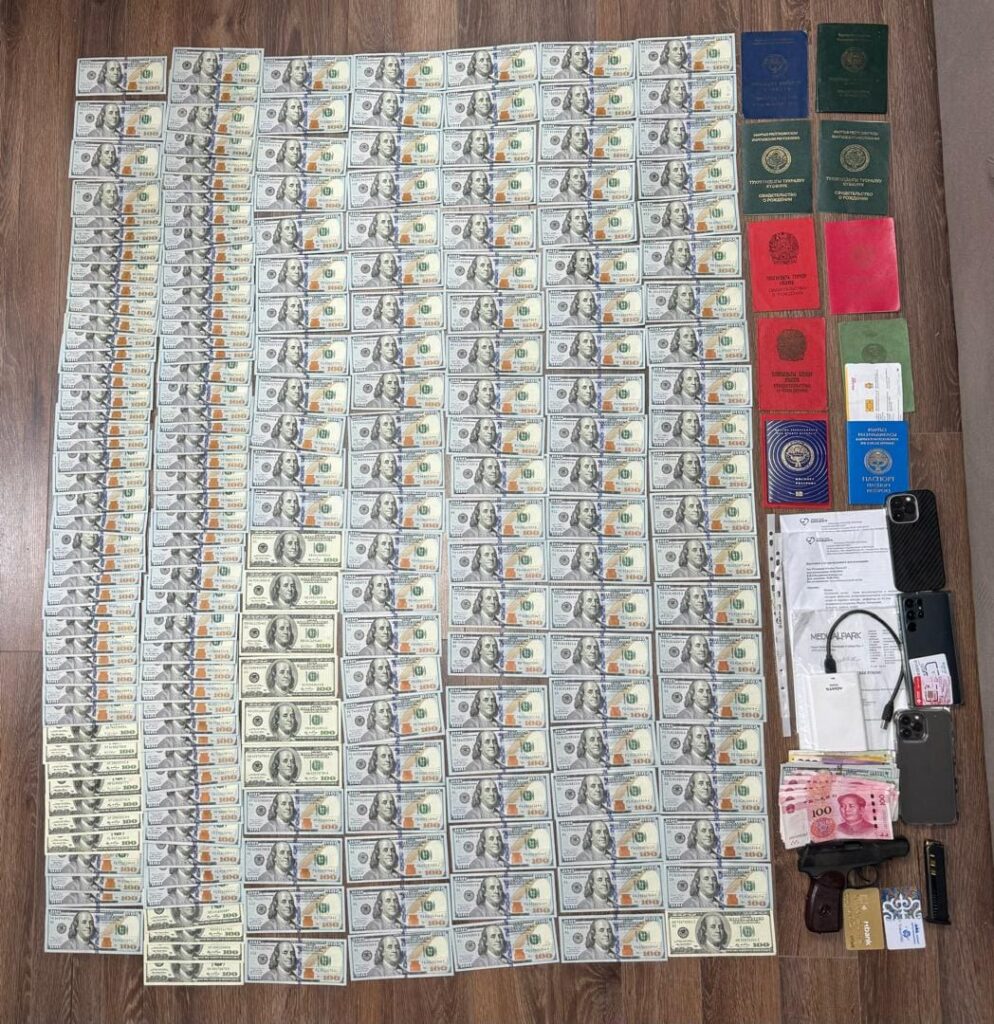
The State Committee for National Security (SCNS) of Kyrgyzstan has detained members of an international criminal group at Manas Airport. The criminals had organized a black-market channel for the illegal sale of human organs abroad. All detainees are citizens of the Kyrgyzstan. According to the investigation, the criminal group looked for patients in foreign clinics who were willing to pay large sums of money for the transplantation of a healthy organ. The gang then found donors in Kyrgyzstan, who were fraudulently induced into undergoing organ-harvesting operations. "Donors necessarily underwent a medical examination, where, regardless of [their overall health], always issued a positive conclusion, after which the organizers through corrupt schemes made false documents on the relationship with the patient necessary for submission to the clinic, where the operation will be held," said the SCNS. Investigators found that the donors received between $1,000 and $7,000 for their kidneys. The recruiters of those donors earned about $3,000, and the organizers of the criminal channel received between $30,000 and $70,000. The SCNS said that all necessary measures are currently being taken to identify all those involved in this crime. Earlier this year, Kyrgyz president Sadyr Zhaparov signed a law on the protection of citizens' health, according to which private and public hospitals can engage in organ transplantation. However, a major stipulation requires that the organ recipient must be a relative of the donor. This loophole in the legislation was exploited by criminals by issuing fictitious documents on family kinship.

Islamic State – Khorasan Province: An Element of Geopolitical Rivalry?

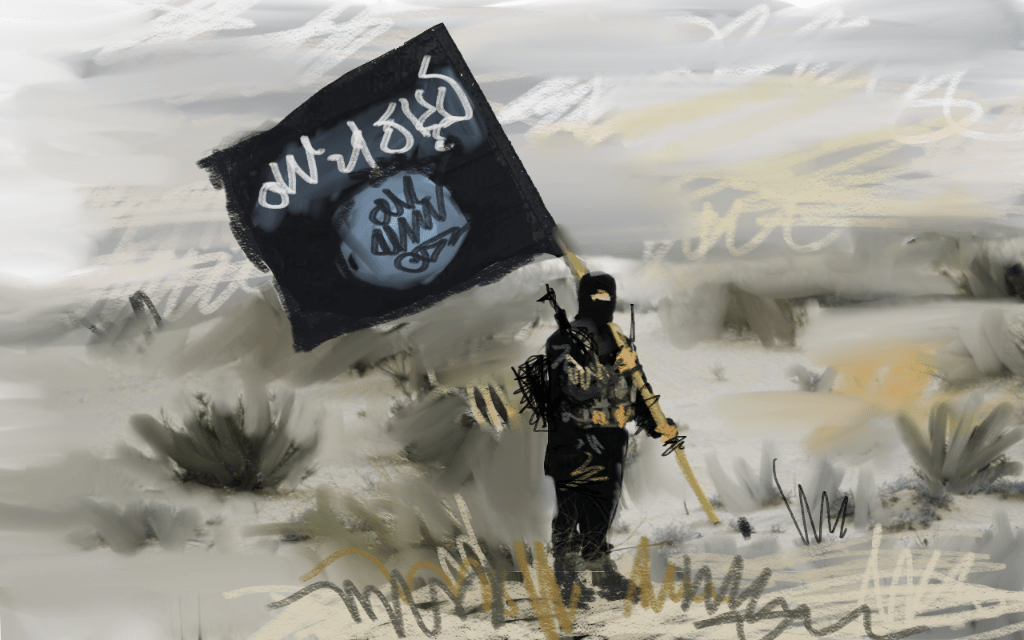
In the aftermath of the terrorist attack in Moscow, the media has once again been saturated with discussions about the terrorist group Islamic State – Khorasan Province (ISKP), also known as ISIS-Khorasan and “Wilayat Khorasan.” At this point, most of the coverage has focused on the Afghan wing of Islamic State, and not its other “wilayats,” such as on the Arabian Peninsula, “Wilayat Sinai” (Islamic State – Sinai Province) or “Wilayat Caucasus” (Islamic State – Caucasus Province). The international media covering the ISKP attack in Moscow, including journalists from Russia, widely speculated that the terrorist group is looking at Central Asia as its next base. Such media coverage included a variety of sentiments indicating that Central Asia should be worried. Reports have suggested that the alliance of Central Asian leaders with Moscow makes them look weak in the eyes of ISKP and that the terrorist threat emanating from Central Asia has become a point of weakness for the Putin regime. It has also been suggested that Islamic terrorism in Central Asia remains a real problem for the FSB, and even though the FSB has extensive experience in fighting extremists in the Caucasus, having committed enormous resources to the issue, Central Asia is a blind spot. Alarm bells sounded that regional jihadist groups have become more powerful. Thus, the terrorist attack in Moscow significantly increased media attention on ISKP in the context of Central Asia. Overall, the ISKP theme fits into existing narratives regarding threats to the southern border of the CIS. Sanaullah Ghafari, Emir of ISIS-K; image: rewardsforjustice.net   The more likely reality is that in Central Asia, ISKP has been more of a challenge to regional security than an existential threat. In recent years, the region has been broadly successful in dealing with threats from Afghanistan.   How real of a threat is the ISKP? A very narrow circle of experts can give a truly objective assessment of ISKP. Information about ISKP membership is contradictory and seemingly based on political considerations. As such, it is difficult to back these up with statistics. The number of fighters reported vary greatly from 2,000 to several tens of thousands. What remains indisputable are two facts: 1. Despite measures declared by the Taliban to eliminate the ISKP, terrorist acts by the group are still recorded throughout Afghanistan, and 2. The group lacks a serious infrastructure in Afghanistan. The activity of ISKP in Afghanistan consists of carrying out targeted, low-level terrorist acts, mainly against local Hazara Shiites. Based on the assessments of the UN Afghanistan monitoring team, the potential of ISKP success looks dubious. In its reports, UN experts point to a decrease in ISKP activity in Afghanistan. Recently, the UN has avoided estimating the size of the group, but previous estimates put it at 1,500-2,200 fighters. At the same time, according to a UN report in January, “ISKP adopted a more inclusive recruitment strategy, including by focusing on attracting disillusioned Taliban and foreign fighters.” Taliban officials, meanwhile, tend to play down the situation....