• KGS/USD = 0.01143 0%
  • KZT/USD = 0.00213 0%
  • TJS/USD = 0.10593 0.47%
  • UZS/USD = 0.00008 0%
  • TMT/USD = 0.28571 0%
  • KGS/USD = 0.01143 0%
  • KZT/USD = 0.00213 0%
  • TJS/USD = 0.10593 0.47%
  • UZS/USD = 0.00008 0%
  • TMT/USD = 0.28571 0%
  • KGS/USD = 0.01143 0%
  • KZT/USD = 0.00213 0%
  • TJS/USD = 0.10593 0.47%
  • UZS/USD = 0.00008 0%
  • TMT/USD = 0.28571 0%
  • KGS/USD = 0.01143 0%
  • KZT/USD = 0.00213 0%
  • TJS/USD = 0.10593 0.47%
  • UZS/USD = 0.00008 0%
  • TMT/USD = 0.28571 0%
  • KGS/USD = 0.01143 0%
  • KZT/USD = 0.00213 0%
  • TJS/USD = 0.10593 0.47%
  • UZS/USD = 0.00008 0%
  • TMT/USD = 0.28571 0%
  • KGS/USD = 0.01143 0%
  • KZT/USD = 0.00213 0%
  • TJS/USD = 0.10593 0.47%
  • UZS/USD = 0.00008 0%
  • TMT/USD = 0.28571 0%
  • KGS/USD = 0.01143 0%
  • KZT/USD = 0.00213 0%
  • TJS/USD = 0.10593 0.47%
  • UZS/USD = 0.00008 0%
  • TMT/USD = 0.28571 0%
  • KGS/USD = 0.01143 0%
  • KZT/USD = 0.00213 0%
  • TJS/USD = 0.10593 0.47%
  • UZS/USD = 0.00008 0%
  • TMT/USD = 0.28571 0%

Viewing results 1255 - 1260 of 2003

EBRD Acquires Stake in Air Astana

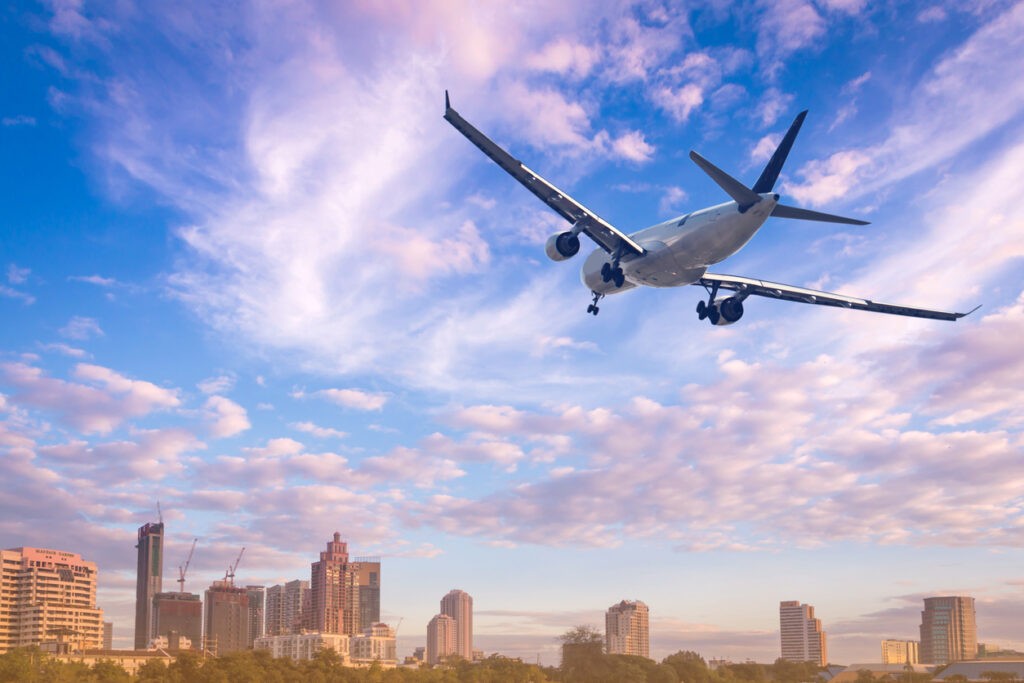
The European Bank for Reconstruction and Development (EBRD) on February 14th said it has invested $41.1m (€39m) into shares of Kazakhstan’s flagship carrier, Air Astana, supporting the country’s first partial privatization through an initial public offering (IPO). The EBRD’s investment represents a 5% shareholding in Air Astana. The shares will be listed on both the London Stock Exchange and the Kazakhstan Stock Exchange. The IPO is a significant privatization benchmark for Kazakhstan’s economy, which is predominantly controlled by the state.  The IPO funds, including the EBRD’s investment, will be used to support Air Astana’s fleet expansion and renewal program, the construction of an aircraft maintenance facility and the acquisition of a flight simulator, the EBRD press service said. Air Astana plans to expand its current fleet to 80 aircraft by 2029 by acquiring new fuel-efficient planes. The EBRD said it will be working with Air Astana towards achieving its target of becoming carbon neutral by 2050. The bank will also use this opportunity to play a greater role in the decarbonization of aviation and to assist in setting up the sustainable aviation fuels industry in Central Asia.

Air Astana: LSE’s largest IPO of 2024 Set to Test Appetite of Investors

Shares of Central Asia's largest airline Air Astana are now for sale to the public in London, with the company's global depositary receipts (GDRs) trading on the London Stock Exchange (LSE). The GDRs were priced for this month's IPO at $9.50 a piece last week when conditional dealings in began on the LSE and Kazakhstan's Astana International Exchange (AIX). Today, Air Astana's local shares trading on the Almaty's KASE bourse are up 6.1% to 1,241 tenge, whilst dollar-priced GDRs trading on Astana's AIX are down 1.1% to $10.08 at an intra-day volume of just under 30,000 GDRs. The LSE's largest IPO of 2024 to date is set to gauge the demand of frontier and emerging market equity investors for exposure to Central Asian stocks in the aftermath of Russia's 2022 attack on Ukraine. Companies like Air Astana, and notably its low-cost carrier unit Fly Arystan, have in some ways benefited from the disruptions caused by the war and its consequent matrix of international sanctions as people and goods are re-routed through Kazakhstan. Conversely, the threat of more instability in the region and the risks of higher inflation, fuel and operating costs will undoubtedly remain on the minds of potential investors. The IPO in London and Kazakhstan represents a meaningful step for the latter's sovereign wealth fund, Samruk Kazyna, which plans to continue putting the shares of state companies on public markets. According to one former IPO manager from a European bank who declined to be named as the IPO process was underway, Air Astana's offering is the "clearest test in the IPO market to date of investor belief in Kazakhstan’s continued economic development." He also noted that it's "positive to see that four of the nine directors are independent, with three of those independent directors being from outside Kazakhstan" in terms of corporate governance. Air Astana's results for the first nine months of 2023, which were published on December 12th, showed positive top-line growth in revenue, operating profit, and passenger-kilometers flown metrics versus 2022, though the carrier did see a 1% dip in EBITDAR margin (operating profit as a percentage of its revenue) to 28% which investors may focus on going forward.

Doha Hosts Kazakhstan–Qatar Investment Roundtable

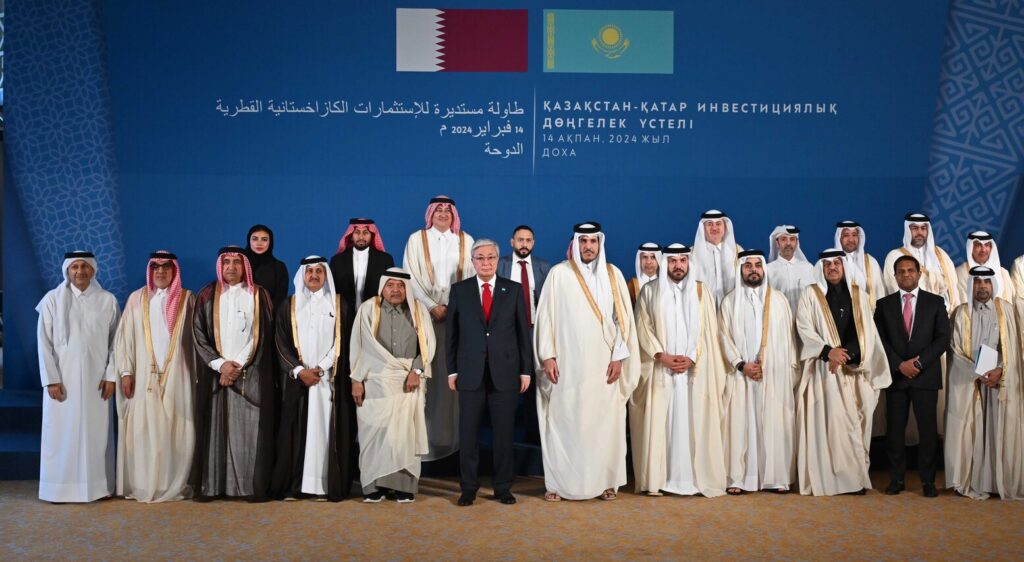
During his visit to Qatar on February 14th, Kazakhstan’s president Kassym-Jomart Tokayev took part in the Kazakhstan–Qatar Investment Roundtable in Doha.  Mr Tokayev invited Qatari companies to invest in the Kazakh economy and explore new business opportunities, mentioning that his government is ready to provide tax and customs preferences, project co-financing, partial guarantees and export support mechanisms, the president’s press office reported. Mr Tokayev also suggested expanding the work of the Kazakhstan-Qatar Joint High-Level Commission and Business Council. The Kazakh president said that during his meeting with the Amir of Qatar, Sheikh Tamim bin Hamad Al Thani, earlier in the day, he proposed to increase bilateral trade up to $500m as a first step. “We can offer the Qatari market high-quality goods such as machinery, iron, steel, and agricultural products. Our market also offers access to the Eurasian Economic Union market with a total GDP of $2.6tn. We have a common border with China as well, which gives good opportunities to make trade with this juggernaut using the Belt and Road project,” Tokayev said.  Today Kazakhstan and Qatar are more closely connected than ever before, due to a visa-free regime and several direct flights per week.  Mr Tokayev invited Qatari energy companies to cooperate with their Kazakh counterparts in geological exploration, petrochemicals, transportation, and oil and gas processing projects.  He emphasized that Kazakhstan's renewable energy potential, estimated at one trillion kilowatt-hours, has attracted the attention of global players who have committed to projects with a capacity of 43 gigawatts. “We welcome Nebras Power’s intentions to implement a 350 megawatt hydroelectric power plant and Pearl Overseas’ plans to construct a 1.1 gigawatt combined-cycle plant in Kazakhstan,” he said.  The Kazakh president also encouraged Qatari companies to participate in the extraction and processing of critical raw materials such as cobalt and lithium.  In the agricultural sector, Kazakhstan can supply halal and organic agricultural products to the Qatari market, Tokayev said, adding that Kazakhstan is also interested in developing the production of meat, fruit, vegetable, grain, flour and other products with further direct supply to Qatar.

Kazakhstan Uses Income Declaration to Fight the Shadow Economy

Kazakhstan's third stage of universal income declaration is underway. As part of the current stage, declarations must be submitted by entrepreneurs, company founders and directors, and their spouses. In 2025 yet another new stage of declarations, will commence which will oblige all adult citizens to submit declarations. Currently, many entrepreneurs and small business owners use mobile transfers, which are intended for personal purposes. Such actions are illegal and violate the guidelines of the Entrepreneurial Code - Article 27, which stipulates that an entrepreneur may only use business accounts when carrying out commercial activities. It's specified in the law that mobile transfers and payments made for personal purposes are not taxable. Regarding taxation of individuals in Kazakhstan, every adult citizen is obliged to pay taxes to fund the budget. Currently, individuals pay taxes applicable to their wages. One tax and two mandatory contributions are withheld from an employee's official salary in Kazakhstan: Individual Income Tax (IIT); contributions for compulsory medical insurance (VOSMS); and mandatory pension contributions (MPC). Individual income tax (IIT) is levied on the income of employees and transferred to the state treasury by the employer. According to Article 322 of the Tax Code, such income includes wages and salaries. In addition, income classified as in-kind (transfer of goods, securities, provision of services to an employee, non-paid transfer of property, etc.) and material benefit (cancellation of debt to an employee, sale of goods to them, etc.) are subject to personal income tax. According to paragraph 1 of Art. 320 of the Tax Code, the individual income tax rate for all types of income is 10%. All Kazakhstan citizens who have a car are also subject to transportation tax. It includes excise tax on fuel and lubricants -- the larger the engine volume of the car, the higher the tax burden due to high consumption of fuel and lubricants; a vehicle tax -- the larger the engine displacement, the higher the tax burden; utilization fee, and fee for the initial registration of a motor vehicle. Real estate owned by citizens is also taxed in Kazakhstan. The amount of tax depends on one's type of property and is calculated for each object separately. The value of property for tax purposes is determined on the basis of a formula by multiplying several indicators: the base cost per square meter, which depends on the specific city or type of settlement; usable area of the property ( in sq. m.); a coefficient indicating the physical deterioration of the dwelling, which is determined by taking into account the age of the building from the date of commissioning and depreciation; a functional wear coefficient, which depends on the floor, location, amenities, engineering condition and type of heating; a zoning coefficient, which takes into account the location of the property in a particular community; and the MRP change factor, which shows how much this indicator has increased compared to the previous year.

Kazakhstan to Team Up With Turkish Partner to Produce Warships at Caspian Port

One of Turkey's leading shipbuilding companies will soon begin producing warships in Kazakhstan, according to a report posted on Dearsan Shipyard's website. An agreement has already been signed between the two countries to establish a shipyard at a Kazakh port. Dearsan Shipyard is known for building small warships, submarines, frigates and patrol vessels with integrated weapons systems. It is owned by Aziz Yildirim, former president of the Fenerbahçe sports club. In 2023, the shipyard delivered two patrol ships to the Nigerian Navy. Dearsan is also building ships for Turkmenistan. The company currently produces almost all of its ships in Tuzla, Turkey.

Kazakhstan’s Government aims For 6% Economic Growth

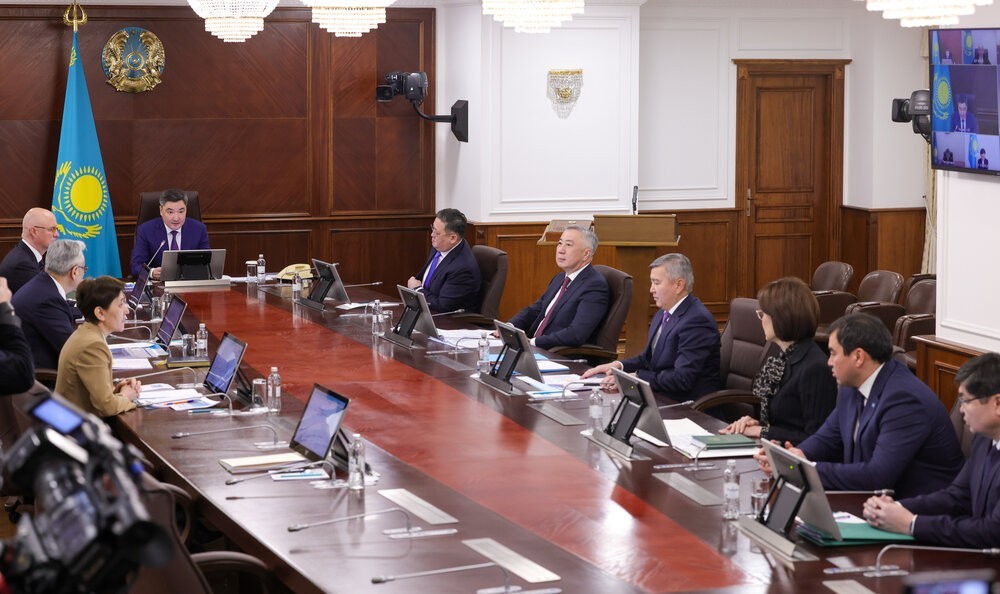
In January 2024, Kazakhstan’s economic growth was 3.9%, it was announced at a government meeting on February 13th. The country’s new prime minister, Olzhas Bektenov emphasized that the government’s priority task for this year is to ensure growth of no less than 6%. Bektenov stressed that priority should be given to manufacturing products with high added value, as well as to exporting manufactured products. “Financial support should be provided proportionally depending on the level of technological complexity of production. That is, the more complex the production and the more technologically advanced, the lower the loan rate or the longer the loan term,” the prime minister said. Bektenov also announced that there will be no increase in the value-added tax rate. “We must look for other ways to replenish budget revenues,” he said.  On February 9th, at the first government meeting after he was appointed Kazakhstan’s prime minister, Bektenov outlined urgent tasks for his new cabinet, emphasizing that state budget expenditures must be clearly prioritized with an emphasis on obtaining full economic returns, and unproductive expenses should be completely excluded.  The prime minister demanded that large industrial enterprises, primarily in the extractive industries, submit specific plans for the creation of new facilities manufacturing products with high added value. He also recommended domestic industrial giants increase the purchases of Kazakh goods, works, and services.