• KGS/USD = 0.01144 0%
  • KZT/USD = 0.00212 0%
  • TJS/USD = 0.10523 0%
  • UZS/USD = 0.00008 0%
  • TMT/USD = 0.28530 0%
  • KGS/USD = 0.01144 0%
  • KZT/USD = 0.00212 0%
  • TJS/USD = 0.10523 0%
  • UZS/USD = 0.00008 0%
  • TMT/USD = 0.28530 0%
  • KGS/USD = 0.01144 0%
  • KZT/USD = 0.00212 0%
  • TJS/USD = 0.10523 0%
  • UZS/USD = 0.00008 0%
  • TMT/USD = 0.28530 0%
  • KGS/USD = 0.01144 0%
  • KZT/USD = 0.00212 0%
  • TJS/USD = 0.10523 0%
  • UZS/USD = 0.00008 0%
  • TMT/USD = 0.28530 0%
  • KGS/USD = 0.01144 0%
  • KZT/USD = 0.00212 0%
  • TJS/USD = 0.10523 0%
  • UZS/USD = 0.00008 0%
  • TMT/USD = 0.28530 0%
  • KGS/USD = 0.01144 0%
  • KZT/USD = 0.00212 0%
  • TJS/USD = 0.10523 0%
  • UZS/USD = 0.00008 0%
  • TMT/USD = 0.28530 0%
  • KGS/USD = 0.01144 0%
  • KZT/USD = 0.00212 0%
  • TJS/USD = 0.10523 0%
  • UZS/USD = 0.00008 0%
  • TMT/USD = 0.28530 0%
  • KGS/USD = 0.01144 0%
  • KZT/USD = 0.00212 0%
  • TJS/USD = 0.10523 0%
  • UZS/USD = 0.00008 0%
  • TMT/USD = 0.28530 0%

Viewing results 1285 - 1290 of 1951

Russia Reopens Market for Kazakhstan’s Livestock Products

As of January 15th, the Russian Federation has lifted restrictions on the import of livestock products from Kazakhstan. The decision was made following negotiations last December between the Ministers of Agriculture of Kazakhstan and the Russian Federation, Aidarbek Saparov and Dmitry Patrushev, the Ministry of Agriculture of Kazakhstan has reported. “This is an important step for the agricultural industries of Kazakhstan and Russia, which helps strengthen trade and economic ties between our countries,” Saparov stated. The import of Kazakh livestock products to Russia was suspended in January 2022 due to veterinary problems in several regions of Kazakhstan. After a two-year break, the Russian market has reopened to suppliers of livestock products from those regions of Kazakhstan where the vaccination of cattle has been confirmed by the World Organization for Animal Health. In other regions, the vaccination campaign is still ongoing. Saparov pointed to the fact that trade turnover between the two countries is uneven, with imports to Kazakhstan from Russia far exceeding exports. Therefore, Saparov focused on the potential for increasing the supply of Kazakh products to the Russian market. In other news, as Russia is currently experiencing an acute shortage of chicken eggs, the Russian side has asked Kazakhstan to increase the supply of eggs. The issue was discussed on January 17th by the Deputy Prime Ministers of Kazakhstan and Russia, Serik Zhumangarin and Alexey Overchuk. Zhumangarin instructed the Ministry of Agriculture to urgently consider this issue and find ways of increasing the supply to border regions of the Russian Federation. In 2022, Kazakhstan produced more than five billion chicken eggs, 102% of the population’s needs. From January-November 2023, 4.9 billion eggs were produced. During that period, Kazakhstan exported 186.6 million eggs — 114 million to Afghanistan, 70 million to Kyrgyzstan, and 2.6 million to Russia.
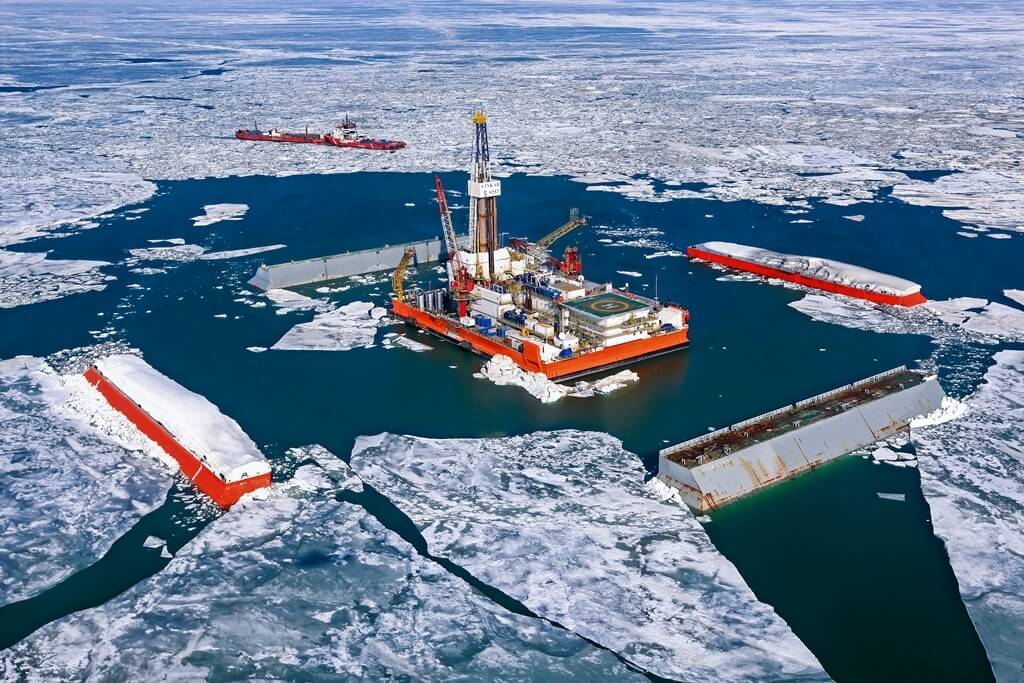
Preliminary Agreement for LPG Supplies from Kashagan to Domestic Market Reached

The Ministry of Energy of Kazakhstan says it has reached a preliminary agreement on the supply of liquefied petroleum gas produced at the Kashagan field to the domestic market of Kazakhstan. The agreement was reached with the shareholders of the Kashagan field, the ministry said on January 16th. Kashagan is a giant offshore oil and natural gas field in the north Caspian Sea, discovered in 2000, near the city of Atyrau. The field is run by the North Caspian Operating Company (NCOC) which includes Eni (16.81% stake), Shell (16.81%), TotalEnergies (16.81%), ExxonMobil (16.81%), KazMunayGas (16.88%), Inpex (7.56%), and the China National Petroleum Corporation (8.33%). According to the preliminary agreement, the national company, QazaqGaz will negotiate with the shareholders of the Kashagan field on future potential supplies of liquefied petroleum gas produced at the Bolashak integrated oil and gas processing plant. To date, the parties are collaborating towards making a Final Investment Decision on an infrastructure project in the field of liquefied petroleum gas in 2024. It is planned that supplies of liquefied petroleum gas to the domestic market will begin by the end of 2025. By 2027, after the completion of infrastructure work at the Kashagan field, LPG production volumes will reach 700,000 tons per year. Liquefied petroleum gas is a very popular motor fuel in Kazakhstan, which is relatively cheap compared to gasoline and diesel. A dramatic price hike for LPG was the initial stimulus for mass protests in the city of Zhanaozen in January 2022, which then spread across the country.

Kazatomprom Changes Work Plan for 2024

The National Atomic Company of Kazakhstan, Kazatomprom has announced that it was forced to make changes to its production plan for the current year. The main reason for the changes was a reduction in the supply of substances needed for uranium mining in Kazakhstan. In addition, it is reported that the heads of the nuclear company recognized the impossibility of implementing the approved plans to create the infrastructure necessary for new mines. The news was published by the official press service of the National Atomic Company. In 2022, the management of Kazatomprom announced the successful conclusion of a number of contracts and laid out a plan to increase uranium production over the next 2-3 years. In figures, it was set to produce 80% of the subsoil use contracts in 2023, and 90% in 2024. However, it became clear that these plans were not feasible due to concerns about increasing production. They were also rendered impossible due to changes in global imports, meaning Kazakhstan was unable to establish a supply chain of key materials and reagents for the plant, and alternative sources of necessary materials are yet to be found. Kazatomprom's press service also reported that a shortage of sulfuric acid is expected in 2024. The management of the National Atomic Company reports that it hopes to fulfill all its obligations to customers and will make every effort to do so. However, the 2025 development plan may also be revised if the supply problem persists. Changes to the current year's plan will be submitted by February 1st.

Dodo Brands joins growing list of companies moving HQs to Kazakhstan

The head office of Dodo Brands Pizzerias will move from the British Virgin Islands to Astana, Kazakhstan. The CFO of the large chain recently announced the decision in a telegram channel. "Today we would like to share with you the news that the Board of Directors has approved the redomiciliation of the holding company from the BVI to the International Financial Center Astana (Republic of Kazakhstan) on December 15, 2023. For the purpose of approval of this decision, an absentee vote of shareholders will be held from January 10 to January 26, 2024",  said Lina Naumova, the CFO of Dodo Brands. She added that they will hold an online meeting with the company's shareholders at the end of this month and will announce the details later. Naumova took office as CFO on January 1, 2024. Dodo Brands is one in a growing list of companies that in the past few years have decided to change their legal address to Kazakhstan. Several companies that closed their offices in Russia have already relocated to Kazakhstan, for instance. In fact, in the summer of 2022, the President of Kazakhstan, Kassym-Jomart Tokayev,  instructed the government to create all the necessary conditions for the relocation of companies that have left Russia. Tokayev has also said that 1,400 large foreign companies left the Russian market, emphasizing that this presented a good opportunity for Kazakhstan. More than 20 companies have moved their regional offices and relocated their teams of specialists to Kazakhstan in 2022. Among them there are large global giants such as InDriver (USA), Honeywell (USA), Weir Minerals (UK), Marubeni (Japan), and Koppert (Netherlands), among others. Furthermore, popular Chinese company TikTok opened its the regional office for Central Asia and the Caucasus in Almaty in October 2022 after freezing activities in Moscow and deciding to expand cooperation with Kazakhstan. In 2022, Kazakhstan also localized production of Ural Motorcycles (Russia/USA); car seat covers, interior and trunk mats from RIVAL (Russia); breathing circuits for ventilators R-Vent Medical (Turkey), and United Concrete Canvas (UK). Also in 2022, agreements were reached with German companies to begin construction of plants in Kazakhstan for the production of gypsum board (with Knauff) and trailed agricultural machinery (with Reimann). On November 16, 2022, President Tokayev gave the start of construction of another plant -- this one to produce Chery, Changan and Great Wall brand cars. In May 2023, Kazakhstani company Astana Motors received permission to produce the cars. Production is planned to start next year and the company intends to make about 90,000 cars a year. The chairman of the National Company "Kazakh Invest", Zhandos Temirgali, noted that 2023 results include 80 companies, 41 of which have already completed the move to Kazakhstan in 2022-2023, and the rest are in active negotiations. Temirgali said, "The total value of the projects amounted to about $1.5 billion. For example, Wabtec not only relocated a regional office, but also started a project to produce locomotives and components for them. Microsoft Corporation opened a multi-regional hub in Kazakhstan....

Kazakhstan’s Foreign Debt Inches Upwards

The external debt of Kazakhstan has reached $161.9 billion, an increase of $1.3 billion over the past year to October 2023, according to the National Bank of Kazakhstan. The main creditors of Kazakhstan are the Netherlands ($42.5 billion), Great Britain ($14 billion), international organizations ($13 billion), Russia ($12.5 billion), the USA ($11.3 billion), France ($11.2 billion), Bermuda ($9.4 billion), and China ($9.2 billion). Considering the structure of Kazakhstan's external debt as a whole, the bulk of loans is occupied by inter-company debt ($92.2 billion), obligations of other sectors ($44.4 billion), Government bodies ($12.5 billion), the banking sector ($10.6 billion), and the National Bank ($2.1 billion). According to the latest data, the volume of total external debt of all countries in the world by the end of 2022 reached a record $92 trillion. As of April of last year, the countries with the highest national debt in the world were considered to be the U.S.A. ($29.46 trillion), Japan ($13.05 trillion), China ($10.12 trillion), France ($3.3 trillion), and Italy ($3.17 trillion). In terms of its debt to GDP ratio, Kazakhstan ranks in a respectable 148th position with a debt to GDP ratio of 27.4% as compares to first place Japan, which has a debt to GDP ratio of 262%. Earlier, the Ministry of the National Economy of Kazakhstan proposed setting a limit on the external debt for 2024 for Samruk-Kazyna and the national holding, Baiterek - the two companies which most often borrow from other countries. This limit would be in the amount of almost $12.5 billion for Samruk-Kazyna, and just over $5 billion for Baiterek. In spring of the last year, President Tokayev declared that for Kazakhstan to reach the category of countries with high level incomes, the economy of the country would need to grow 6% annually. As of November of last year, this indicator was at 4.9%.

Kazakhstan Looks to Increase E-Commerce Share to 20%

The further development of e-commerce in Kazakhstan was considered at a government meeting on January 16th, chaired by Prime Minister Alikhan Smailov. The Minister of Trade and Integration, Arman Shakkaliev reported that in 2023 the volume of e-commerce in Kazakhstan exceeded 2.2 trillion tenge ($4.8 billion), equating to 13% of all retail trade, a 0.5% rise on the previous year. Household goods, clothing and footwear, food, cosmetics, and medicines are the most popular goods purchased online. The Ministry is looking to increase the share of e-commerce to 20% by 2030 by expanding the representation of domestic goods on popular marketplaces, developing warehouse and logistics infrastructure, and protecting consumer rights. The Prime Minister noted that globally, by 2025 the share of online trade is expected to exceed 25% of total retail. In Kazakhstan, a significant market share is occupied by foreign online marketplaces. “We must use this opportunity as an additional sales channel for Kazakh products on the world stage. At the same time, we need to develop domestic online stores. To do this, it is necessary to ensure the uninterrupted operation of payment systems, transport and logistics infrastructure, and courier services,” Smailov said. The Prime Minister instructed the relevant bodies to find effective solutions for the development of domestic online stores and broader representation of domestic commodity producers on foreign online marketplaces within a month. “We need our own bonded warehouses, which would simplify the process of delivering goods to both domestic customers and foreign ones. Therefore, it is necessary to launch the construction of bonded warehouses in Astana, Almaty, and Shymkent this year,” Smailov said.