• KGS/USD = 0.01144 0%
  • KZT/USD = 0.00204 0%
  • TJS/USD = 0.10422 -0.1%
  • UZS/USD = 0.00008 0%
  • TMT/USD = 0.28490 -0.28%
  • KGS/USD = 0.01144 0%
  • KZT/USD = 0.00204 0%
  • TJS/USD = 0.10422 -0.1%
  • UZS/USD = 0.00008 0%
  • TMT/USD = 0.28490 -0.28%
  • KGS/USD = 0.01144 0%
  • KZT/USD = 0.00204 0%
  • TJS/USD = 0.10422 -0.1%
  • UZS/USD = 0.00008 0%
  • TMT/USD = 0.28490 -0.28%
  • KGS/USD = 0.01144 0%
  • KZT/USD = 0.00204 0%
  • TJS/USD = 0.10422 -0.1%
  • UZS/USD = 0.00008 0%
  • TMT/USD = 0.28490 -0.28%
  • KGS/USD = 0.01144 0%
  • KZT/USD = 0.00204 0%
  • TJS/USD = 0.10422 -0.1%
  • UZS/USD = 0.00008 0%
  • TMT/USD = 0.28490 -0.28%
  • KGS/USD = 0.01144 0%
  • KZT/USD = 0.00204 0%
  • TJS/USD = 0.10422 -0.1%
  • UZS/USD = 0.00008 0%
  • TMT/USD = 0.28490 -0.28%
  • KGS/USD = 0.01144 0%
  • KZT/USD = 0.00204 0%
  • TJS/USD = 0.10422 -0.1%
  • UZS/USD = 0.00008 0%
  • TMT/USD = 0.28490 -0.28%
  • KGS/USD = 0.01144 0%
  • KZT/USD = 0.00204 0%
  • TJS/USD = 0.10422 -0.1%
  • UZS/USD = 0.00008 0%
  • TMT/USD = 0.28490 -0.28%

Viewing results 211 - 216 of 381

Kazakhstan Reports Another Big Jump in Saiga Antelope Numbers

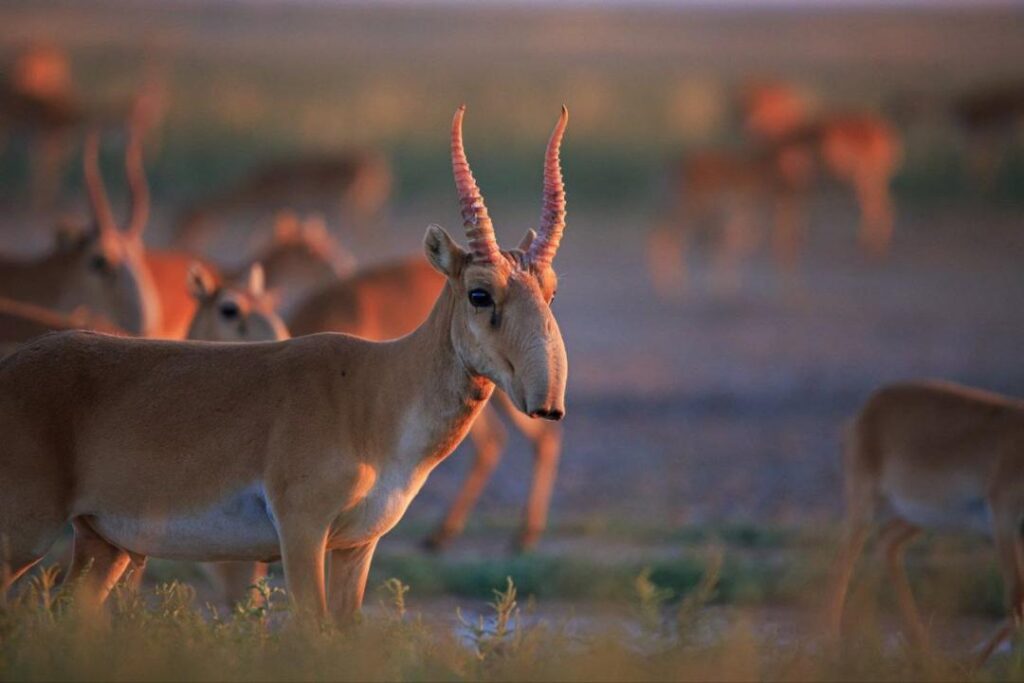
The number of saiga antelopes in Kazakhstan has surged to an estimated 2,833,600, an increase of well over 40% since last year, according to an aerial survey conducted between mid-April and May 1. The total number is likely to be much higher because the study was done before the calving season in May The new data represents another step in the extraordinary comeback of a species whose numbers were estimated at 20,000 in 2003 and then, after a period of growth, suffered another big population crash because of a bacterial disease outbreak in 2015. A reduction in poaching and the expansion of land earmarked for conservation helped the species recover in Kazakhstan, though saigas are vulnerable to several diseases and extreme weather. Some farmers say ballooning saiga numbers threaten their crops and the government has explored mass kills and other ways to regulate the population. Helicopters were used to count the antelopes over an area of about 150,000 square kilometers this year, logging 215 flight hours as they flew at a steady altitude of 120 meters, according to the Altyn Dala Conservation Initiative, which aims to restore the Kazakh steppe ecosystem. It said state agencies were involved and the science - survey route plans, data collection and result processing – was carried out by the Association for the Conservation of Biodiversity of Kazakhstan. “These annual figures are made using the same methodology which is well established,” the conservation initiative said on June 3. “They are derived by extrapolation and primarily reflect the trend in the species’ numbers, i.e. an increase of over 40%, and the approximate number. These data were obtained in April 2024, before calving, which took place in May, so now, by the beginning of June, considering the successful breeding season, the number of the species will have almost doubled.” The surveys were carried out in the regions of West Kazakhstan, Mangistau, Akmola, Aktobe, Kostanay, Karaganda, Ulytau, Pavlodar and Abay. The dry steppe grasslands and semi-arid deserts of Central Asia are the saiga’s natural habitat. The vast majority of saigas are in Kazakhstan; Russia and Mongolia have small populations. Saigas from Kazakhstan have migrated in and out of Uzbekistan, sometimes reaching Turkmenistan. But such cross-border movements have dropped. The number reaching Uzbekistan has declined, partly because a border fence was built, and saigas haven’t been seen in Turkmenistan for several years, according to the IUCN Red List of Threatened Species. IUCN stands for International Union for Conservation of Nature, a group based in Switzerland. Last year, the saiga’s conservation status on the red list was upgraded from “critically endangered” to “near threatened” because of its population gains. Saiga females start to breed when they are only eight months old and they often give birth to twins.

Heavy Chinese-Made Trucks Churning Up Kazakhstan’s Roads

Kazakhstan’s Ministry of Transport has blamed the premature wear of its roads on heavy Chinese trucks. Some 60 thousand trucks are currently registered in Kazakhstan, including around 40 thousand heavy Chinese-made trucks. The weight of the latter when combined with overloaded cargo hovers around 35-40 tons and thus exceeds the maximum weight of 25 tons permissible on the asphalt roads. As a result, the country’s roads are sustaining serious damage and traffic of concrete mixers and truck cranes of similar weight only exacerbates the problem. Back in December 2022, it became law that all vehicles with a capacity to carry 12 tons pass through specially installed automated weight measurement stations. To ensure more rigid transport control, the ministry plans to significantly increase the number of weight measurement stations. As part of a pilot scheme, six new stations have been installed on the peripheries of Astana this year.  

The Aral Sea: Addressing Water Issues, Crisis, and Striving for a Better Life in Central Asia

By Arindam Banik and Muhtor Nasirov   The world is currently grappling with the devastating impact of climate change, as rising temperatures have become an undeniable reality. In January 2024, the global temperature exceeded normal levels for the second consecutive month, pushing the global average temperature over the 1.5-degree threshold for the first time. Many human activities, such as unplanned water use, excessive groundwater extraction, and climate change, are thought to be contributing to this situation. One poignant example is the case of the Aral Sea in Central Asia. This once breathtaking and teeming endorheic lake, nestled between Kazakhstan and Uzbekistan, was not just a body of water. It was a symbol of life, a testament to the beauty and resilience of nature. Its azure waters and diverse marine life were a source of sustenance and livelihood for the region's people. It was a vibrant ecosystem, nourished by the almost entire flow of the two main rivers, the Amu Darya and the Syr Darya, in the upstream region of Central Asia. Interestingly, the Amu Darya River used to flow into the Caspian Sea through Uzboy Channel. However, a significant shift occurred during human settlement when the flow of these rivers was redirected into the Aral Sea, marking a crucial turning point in the region's hydrological history. Despite its former glory as the third-largest lake in the world, covering an area of 68,000 km2 (26,300 sq miles), the Aral Sea began shrinking in the 1960s after the rivers that fed it were diverted to support large-scale irrigation for cotton production intended for export. The irrigated area in the Aral Sea Basin has now expanded to eight million hectares. By 2007, it had decreased to only 10 percent of its original size, dividing into four lakes. By 2009, the southeastern lake had vanished, and the southwestern lake had shrunk to a thin strip at the western edge of the former southern sea. In the following years, occasional water flows partially replenished the southeastern lake. In August 2014, NASA satellite images revealed that the eastern basin of the Aral Sea had completely dried up, leading to the formation of the Aralkum Desert. This dramatic change has severely impacted the ecology, risking the survival of numerous fish subspecies and three endemic sturgeon species. The loss of these species disrupts the natural balance and affects the livelihoods of the local communities that depend on fishing. The herring, sand smelt, and gobies were the first planktivorous fish in the lake, and their decline led to the lake's zooplankton population collapse. Consequently, the herring and sand-smelt populations have not recovered. Except for the carp, snakehead, and possibly the pipefish, all introduced species survived the lake’s shrinkage and increased salinity. In an attempt to revive fisheries, the European flounder was introduced. This situation is urgent as the delicate balance of this ecosystem is on the verge of collapse. The region's once-prosperous fishing industry has been devastated, leading to unemployment and economic hardship. Additionally, the diverted Syr Darya River...

Endangered Wild Horses Return to Kazakhstan’s Golden Steppe

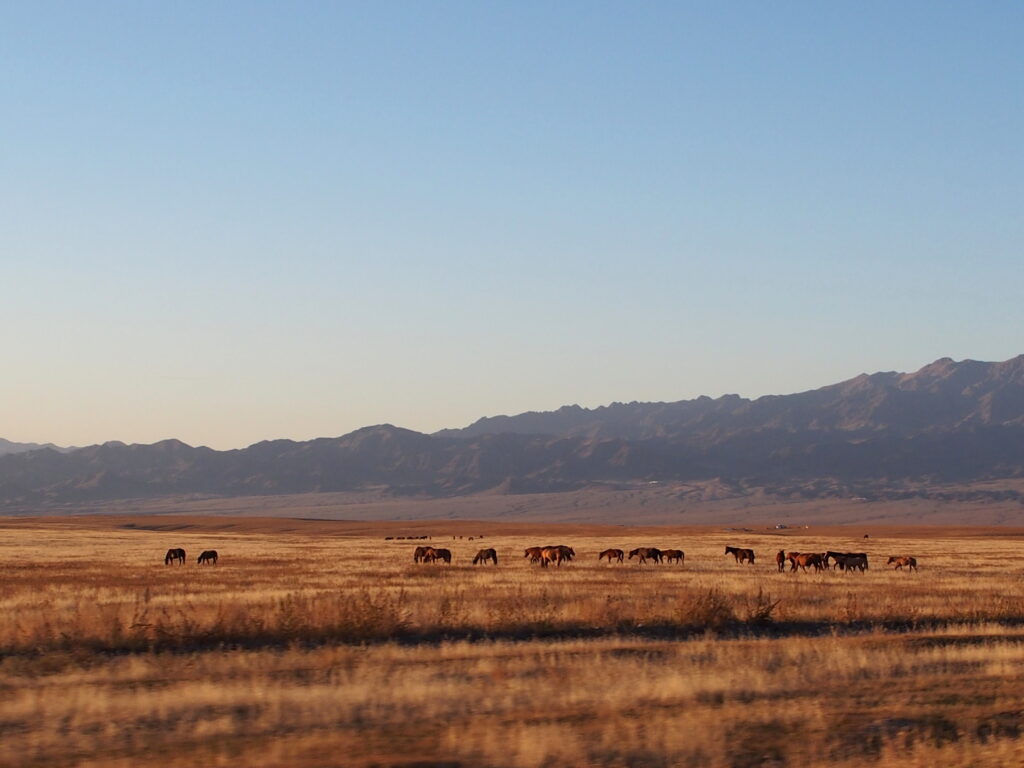
Three wild horses have been transported from the Prague Zoo to the vast grasslands of Kazakhstan, restoring the endangered species to one of its natural habitats after an absence of a century.  A Czech military plane helped to deliver the Przewalski's horses to the “Golden Steppe," or Altyn Dala, in central Kazakhstan, where they will stay for a while in enclosures to get used to conditions in their new environment. The Czech Ministry of Foreign Affairs said it co-funded repairs to the enclosures after damage caused by recent flooding in the Central Asian country.   “Congratulations to all those involved in these huge efforts to return these wild horses to the steppes of Kazakhstan,” said the Altyn Dala Conservation Initiative, a multinational partnership that is working to restore the Kazakh steppe ecosystem. It said on Tuesday that another group of the wild horses, which are named after the Russian geographer who identified the species in 1881, are on their way from Tierpark Berlin, a German zoo. Przewalski’s horse is “the last genetically wild horse on Earth” and its Russian namesake first came across the species in Mongolia, according to the multinational conservation group. The species vanished from the wild in the 1960s. But several European zoos kept some of the horses, saving the species from extinction, and reintroductions into the wild began in the 1990s, first in China and then in Mongolia.  The Prague Zoo is leading the relocation project in Kazakhstan, which aims to introduce a total of eight Przewalski’s horses to the steppe in the first year and several dozen horses over the next five years. Some of the wild horses will also come from Hungary’s Hortobagy National Park, which has the largest group of Przewalski’s horses outside Mongolia, as well as Nuremberg Zoo in Germany.  The reintroduction center for the horses is located in the Torgai steppe, which lies within a network of linked nature reserves that total 40,000 square kilometers, according to the Frankfurt Zoological Society, a partner in the Altyn Dala Conservation Initiative. The initiative, in turn, is led by the Association for the Conservation of Biodiversity of Kazakhstan. The conservation initiative has overseen a surge in the number of saiga antelope to more than 1.9 million, a 10-fold increase since a devastating disease outbreak in 2015.  “Unlike the Saiga, the Przewalski’s horse prefers a much broader selection of grasses, and in turn distributes the seeds of additional plant species across their shared steppe environment, playing a complimentary role.  In addition to this, their dung piles provide nutrients to other plants and decomposers, such as insects,” the initiative said.  A key part of the project is raising awareness about the wild horses among local communities. Conservationists are planning work with children and schools, providing educational materials and coloring books that outline the differences between wild and domestic horses. 

Green Light for Hydrocarbon Development in Kazakhstan’s Caspian Sea Sector

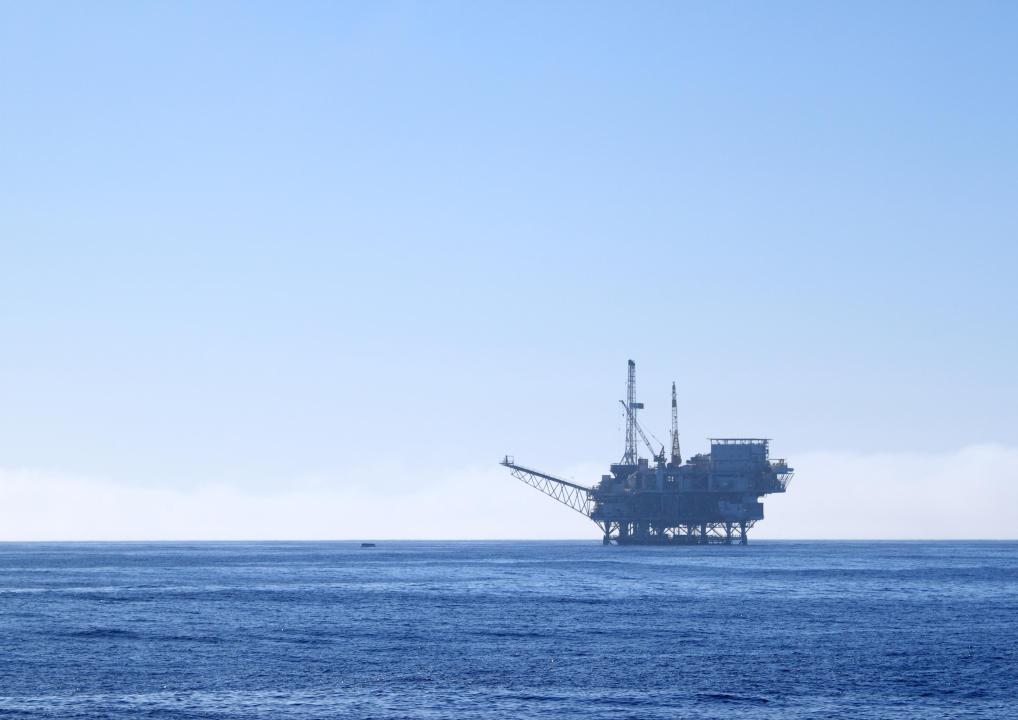
In a statement issued on 4 June, Kazakhstan’s Ministry of Energy announced that work on an oil and gas project to develop the Kalamkas-Sea and Khazar fields is now ready to begin. The Kalamkas-Sea and Khazar Fields Joint Development Project will be implemented by Kalamkas-Khazar Operating, a specially created venture comprising Kazakhstan’s national oil and gas company KazMunayGas (50%) and Russian oil company Lukoil (50%). Construction of the steel offshore platforms will begin in 2026 at Kazakh shipyards to ensure the earliest possible start of production at the Kalamkas-Sea field. The project aims to attract over $6 billion in direct investment and during its development phase, create up to 2,000 jobs. Once in operation, a further 300 posts will be added. The Kalamkas-Sea field, 50km long and 6km wide, sits in the central part of the north-eastern sector of the Caspian Sea, 64 km offshore at a depth of 6-7 meters. The Khazar field is located 30 km southwest of Kalamkas-Sea and 65 km northwest of the Buzachi Peninsula. The Kalamkas-Sea and Khazar fields are the only fields in the Kazakhstan sector of the Caspian Sea with confirmed reserves.    

Water Levels of Kazakhstan’s Reservoirs Continue to Rise

On June 3, the Ministry of Water Resources and Irrigation announced that to date, the country's reservoirs have collected 75 billion cubic meters of water, 15 billion cubic meters more than last year. Over 12 billion cubic meters of the accumulated water is flood water. The statement updates statistics cited in an earlier report by Times CA In total, Kazakhstan's reservoirs can hold 89 billion cubic meters of water. Last year the country's agricultural sector used 14 billion cubic meters of water, and 24.4 billion cubic meters of water were used by other sectors across the country. Welcoming the news, representative of the ministry Moldir Abdualieva said, “The collection of flood water continues. Since the beginning of the flood situation, 3.3 billion cubic meters of water have been sent to Lake Balkhash, and about 6 billion cubic meters of water have been directed to the Caspian Sea”