• KGS/USD = 0.01144 0%
  • KZT/USD = 0.00209 0%
  • TJS/USD = 0.10429 0.1%
  • UZS/USD = 0.00008 0%
  • TMT/USD = 0.28530 0%
  • KGS/USD = 0.01144 0%
  • KZT/USD = 0.00209 0%
  • TJS/USD = 0.10429 0.1%
  • UZS/USD = 0.00008 0%
  • TMT/USD = 0.28530 0%
  • KGS/USD = 0.01144 0%
  • KZT/USD = 0.00209 0%
  • TJS/USD = 0.10429 0.1%
  • UZS/USD = 0.00008 0%
  • TMT/USD = 0.28530 0%
  • KGS/USD = 0.01144 0%
  • KZT/USD = 0.00209 0%
  • TJS/USD = 0.10429 0.1%
  • UZS/USD = 0.00008 0%
  • TMT/USD = 0.28530 0%
  • KGS/USD = 0.01144 0%
  • KZT/USD = 0.00209 0%
  • TJS/USD = 0.10429 0.1%
  • UZS/USD = 0.00008 0%
  • TMT/USD = 0.28530 0%
  • KGS/USD = 0.01144 0%
  • KZT/USD = 0.00209 0%
  • TJS/USD = 0.10429 0.1%
  • UZS/USD = 0.00008 0%
  • TMT/USD = 0.28530 0%
  • KGS/USD = 0.01144 0%
  • KZT/USD = 0.00209 0%
  • TJS/USD = 0.10429 0.1%
  • UZS/USD = 0.00008 0%
  • TMT/USD = 0.28530 0%
  • KGS/USD = 0.01144 0%
  • KZT/USD = 0.00209 0%
  • TJS/USD = 0.10429 0.1%
  • UZS/USD = 0.00008 0%
  • TMT/USD = 0.28530 0%

Viewing results 1117 - 1122 of 1914

Soyuz Launch Successful

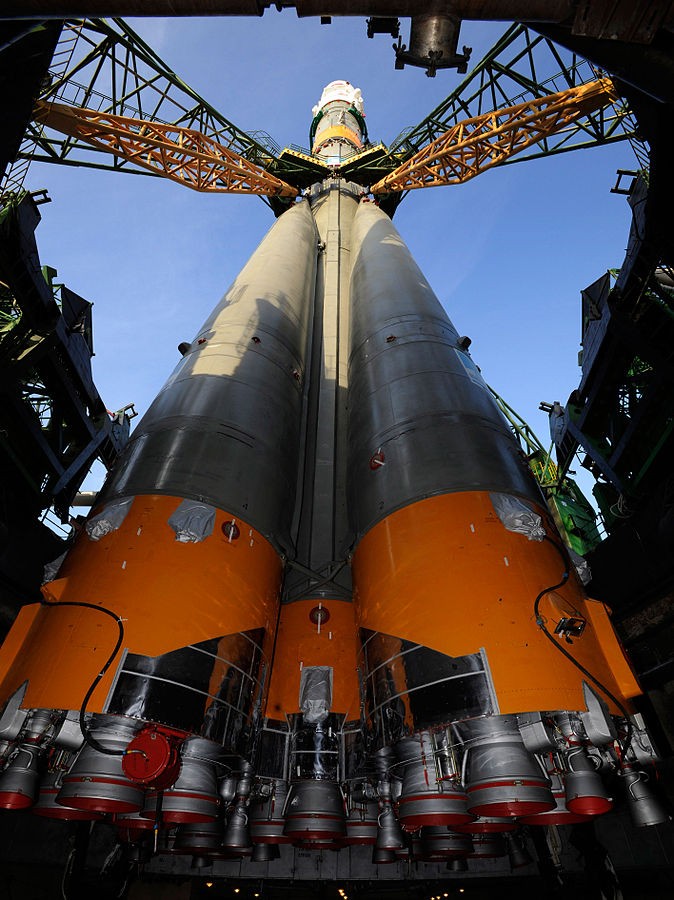
ALMATY, Kazakhstan - A Soyuz spacecraft is in orbit with three crew-members from Russia, Belarus and the United States after launching from the Baikonur Cosmodrome in Kazakhstan. The Soyuz is scheduled to dock at the International Space Station on Monday. Aboard are mission commander Oleg Novitsky of Russian space agency Roscosmos (his fourth trip to space), Belarusian Marina Vasilevskaya (her first trip) and NASA’s Tracy Caldwell Dyson (her third). The launch went smoothly from the Russia-operated site in southern Kazakhstan on Saturday. A previously planned launch was aborted with seconds to lift-off Thursday because of a technical problem. Coordination between the U.S. and Russian space agencies has continued despite international tension over the war in Ukraine. As previously reported by TCA, the launch was scheduled for the 21st, but was scrapped due to a “voltage drop in the chemical current source.”

Tajikistan Warns Against “Unverified” Reports About Moscow Attack

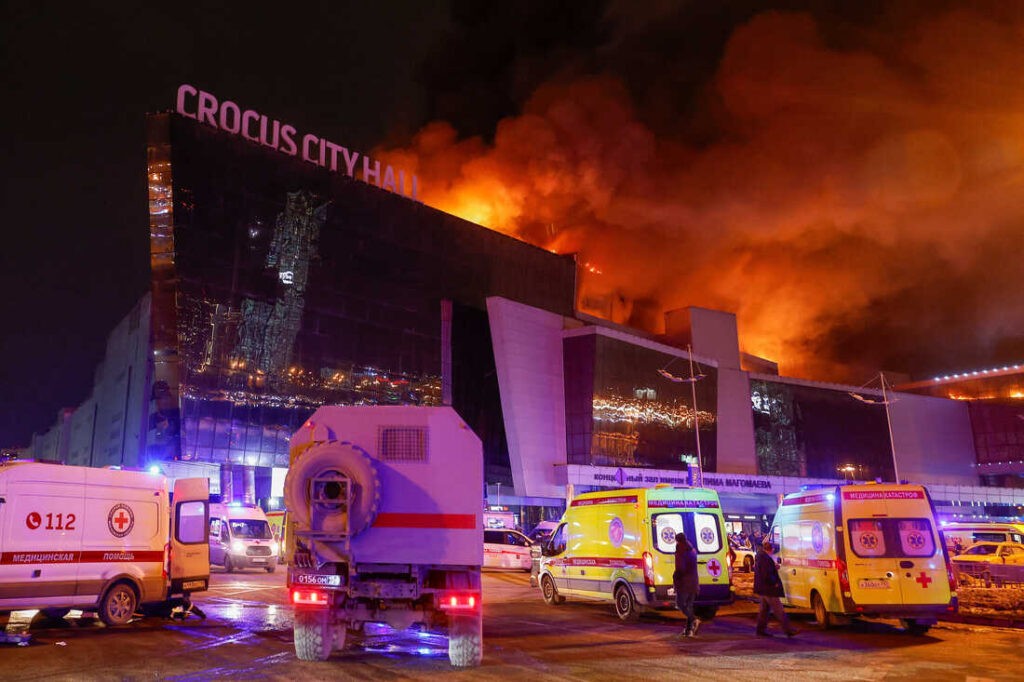
Tajikistan is warning against “fake information” about the alleged role of Tajik citizens in the attack that killed more than 100 people at a concert venue in Moscow. Tajikistan’s foreign ministry said on Saturday that it had not received confirmation from Russian authorities about any involvement of Tajiks in the attack at the Crocus City complex. The ministry asked media to rely on “official information” distributed by Russian authorities. The Afghanistan branch of the Islamic State group (ISKP) claimed responsibility for the mass shooting on Friday night. Telegram and other social media platforms are swirling with allegations that Tajik citizens were involved. Large numbers of Tajik migrants live in Russia, many enduring difficult conditions in hostels while struggling to find work. “We emphasize that the Tajik side has not received any confirmation from the Russian authorities regarding the currently circulating fake information about the involvement of citizens of Tajikistan,” the ministry said in a statement. “Keep in mind that the dissemination of unverified and unreliable information could harm the citizens of Tajikistan currently abroad,” the ministry said. Russia said it has arrested 11 suspects and that an investigation is ongoing. Tajikistan was among several Central Asian states that condemned the attack and sent condolences to relatives and friends of the dead. President Kassym-Jomart Tokayev of Kazakhstan spoke by telephone to Russian President Vladimir Putin on Saturday, Kazakhstan’s presidential press office said. “The head of our state strongly condemned the brutal act of violence against civilians and reaffirmed solidarity with Russia in the fight against terrorism,” the press office said. Kazakhstan has offered the help of its law enforcement agencies to Russia if needed and Uzbekistan’s presidential office said those responsible for the attack “will be assured of the inevitability of punishment.” Several bouquets of flowers were laid outside the Russian embassy in Astana, Kazakhstan. Video recorded by witnesses at the Moscow venue showed several gunmen roaming the atrium and other parts of the entertainment complex, opening fire on civilians. A large blaze also broke out at the building during the attack and was later extinguished. On Feb. 27, Russian Defense Minister Sergei Shoigu spoke of threats coming from extremists in Afghanistan and prioritized “ensuring military security in the Central Asian strategic area.” Shoigu said the number of ISKP militants in Afghanistan had increased by 15% in the past year. He said their key objectives were to spread radical ideology and to conduct subversive activities on the southern borders of the Collective Security Treaty Organization. The organization, CSTO, is a Russian-led security alliance that includes Belarus, Kazakhstan, Kyrgyzstan, and Tajikistan. “Radicals from Central Asia have accounted for a notable share of recent Islamic State-inspired or -directed plots and attacks in the United States, Europe, Turkey, and Iran,” Lucas Webber and Riccardo Valle wrote in a Hudson Institute analysis last year. In September 2022, ISKP – which vehemently opposes Russia’s support for the regime of Bashar al-Assad in Syria - claimed responsibility for a suicide bombing at the Russian embassy in Kabul...

Russia Detains Suspects with Tajik Passports – Death Toll Rises to 133

Russia has announced the arrest of eleven individuals, including four who are suspected of carrying out a deadly shooting at a concert hall near Moscow, marking the most lethal incident of its kind in the country in two decades. The attack, which resulted in the death of 143 people and counting, according to state TV, was claimed by the Islamic State militant group. However, Russian authorities are trying to forge a potential connection to Ukraine, despite strong denials from Ukrainian officials regarding any involvement. The death toll was later revised to 133. The Federal Security Service (FSB) of Russia has reported the apprehension of the "four terrorists" as they were allegedly attempting to cross into Ukraine, repeatedly mentioning that the suspects had connections within Ukraine. They are currently being transported to Moscow for further investigation. Maria Zakharova, a spokeswoman for the Russian Foreign Ministry, expressed on Telegram that the suspects had intended to flee to Ukraine to evade capture, stating, “Now we know in which country these bloody bastards planned to hide from pursuit.” In response to Moscow’s attempts to pin the atrocity on Ukraine and bolster waning support for Putin’s war, Andriy Yusov, a spokesman for Ukrainian military intelligence, refuted the claims of Ukraine's involvement, emphasizing his nation’s focus on defending its sovereignty and targeting military objectives, not civilians. He dismissed the FSB's assertion regarding the suspects' intended escape to Ukraine as another fabrication by Russian intelligence services. No evidence has been presented to support the theory of a Ukrainian link. Russian lawmaker Alexander Khinshtein revealed that the assailants had escaped in a Renault vehicle, which was later identified by police in the Bryansk region, approximately 210 miles southwest of Moscow. Upon refusal to comply with police instructions to stop, the vehicle was searched, uncovering a pistol, an assault rifle magazine, and passports from Tajikistan. In a video shown on state TV, a suspect stated that he had been paid 500,000 roubles ($5,425) by unknown people via Telegram to carry out the atrocity.

Central Asian States Respond to Moscow Attacks

ALMATY, Kazakhstan – Central Asian countries have denounced the attack on a Moscow concert hall that killed more than 60 people, with Kazakhstan offering the help of its law enforcement agencies to Russia if needed. The Islamic State group claimed responsibility for the mass shooting on Friday night. “Kazakhstan strongly condemns the terrorist act against civilians in Moscow," Kazakh President Kassym-Jomart Tokayev said in a statement. He expressed condolences in a message to Russian President Vladimir Putin and urged United Nations member states to unanimously condemn the attack. Uzbek President Shavkat Mirziyoyev also sent condolencesto relatives of the dead and wishes for the quick recovery of the injured. More than 140 people were injured, according to Russian authorities. Video recorded by witnesses showed several gunmen roaming the concert hall, opening fire on civilians. A large blaze also broke out at the building during the attack. Uzbekistan “firmly condemns this act of terrorism directed against civilians, and the organizers and executors of this crime will be assured of the inevitability of punishment,” the president’s press service said. The claim of responsibility could not be immediately confirmed, and it was unclear whether there was a link to Islamic State extremists in Afghanistan. On Feb. 27, Russian Defense Minister Sergei Shoigu spoke of threats coming from extremists in Afghanistan and prioritized “ensuring military security in the Central Asian strategic area.” Shoigu said the number of Islamic State militants in Afghanistan had increased by 15% in the past year. He said their key objectives were to spread radical ideology and to conduct subversive activities on the southern borders of the Collective Security Treaty Organization. The organization, CSTO, is a Russian-led security alliance that includes Belarus, Kazakhstan, Kyrgyzstan, and Tajikistan. Image above credit: Reuters

Kazakhstan Ranked Among 50 Happiest Countries in the World

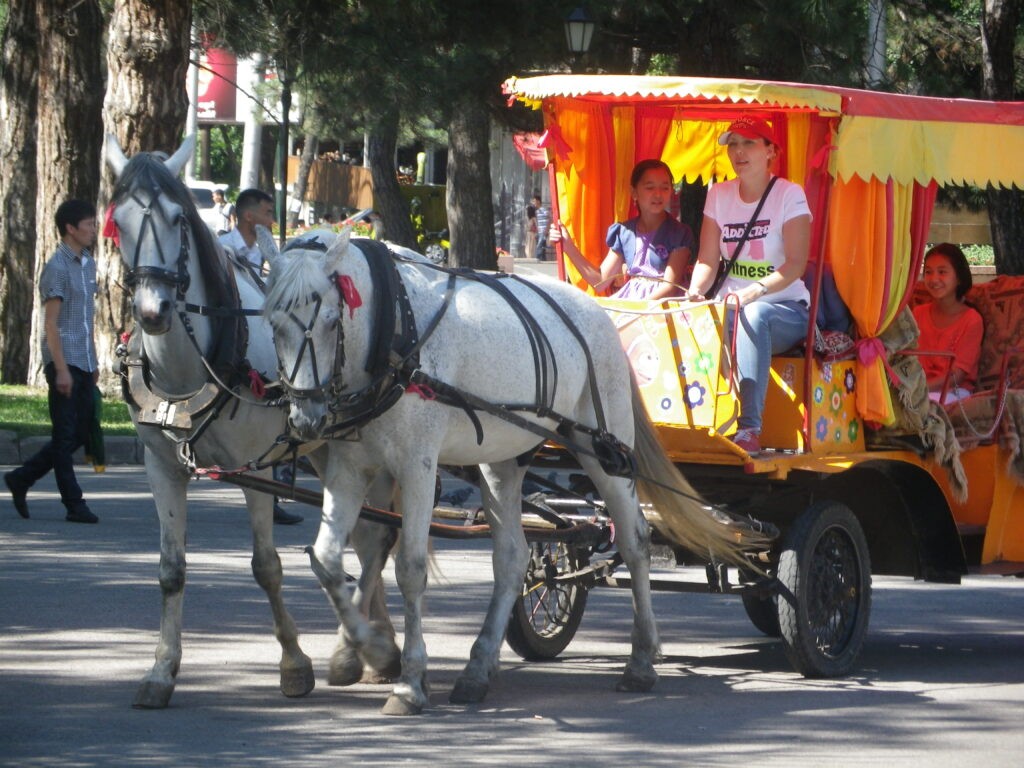
In the recently published UN and Gallup World Happiness Report 2024, Kazakhstan was ranked among the top 50 happiest countries in the world, ahead of Russia, Armenia and Georgia. However, the Baltic States and Uzbekistan returned higher happiness scores on the index. This rating, presented on March 20, was developed on the basis of a three-year study conducted by UN experts, Gallup and other scientists. Citizens of different countries assessed their quality of life by taking into account a variety of factors, including economic status, GDP, life expectancy, major life challenges, sense of freedom, public responsiveness, and the level of corruption. These interdisciplinary studies help the understanding of how different aspects of life interact and influence the overall sense of happiness. TCA asked citizens from across Kazakhstan about the their feelings regarding the level of happiness presented in the report, and met with mixed feelings. "Frankly speaking, I don't have such a feeling,” Alua, a 21-year-old pedagogical student from Taraz told TCA. “After all, food prices are rising almost daily, and wages are not growing as fast. Also, conditions in state institutions haven’t changed much, especially in healthcare and education." "I’ve seen this rating, but prices are rising so quickly that Almaty has become the most expensive city in Central Asia,” Sanzhar, a 22-year-old CMM specialist from Almaty commented. "To be honest, I don't think there have been any significant changes that mean we’re happier than before,” Merey, a 28-year-old singer from Astana told TCA. “The only thing maybe because the coronavirus pandemic was in full swing three years ago, so compared to that the situation is much better now, so people think they’ve become happier. However, the socio-economic situation in the country hasn't changed that much, so it's strange for me to hear that people in our country are happier than in Georgia, for example." Comments from others, however, suggest that life in Kazakhstan is improving year on year. "Yes, I feel the changes,” Raushan, a 40-year-old Art Historian from Almaty stated. “There is less discrimination due to language barriers, and there’s a growing interest in traditional nomadic culture which leads to the creative development of young talents who are able to make a name for themselves internationally. All this strengthens their faith and motivation to move forward with creative ideas and learn ways to promote their creativity." "Thanks to the internet and social networks people are aware of the inhuman things happening in the world. With all that is known, I think people in Kazakhstan are just happy to have a peaceful sky above their heads." Tair, a 25-year-old businessman from Taraz told TCA. "I’ve definitely seen an increase in happiness among people. It's like the confidence in our security has gotten higher for me personally," Merey, a 20-year-old student from Kostanai commented.

Kazakh Musicians Turn to Old Instruments to Make New Music

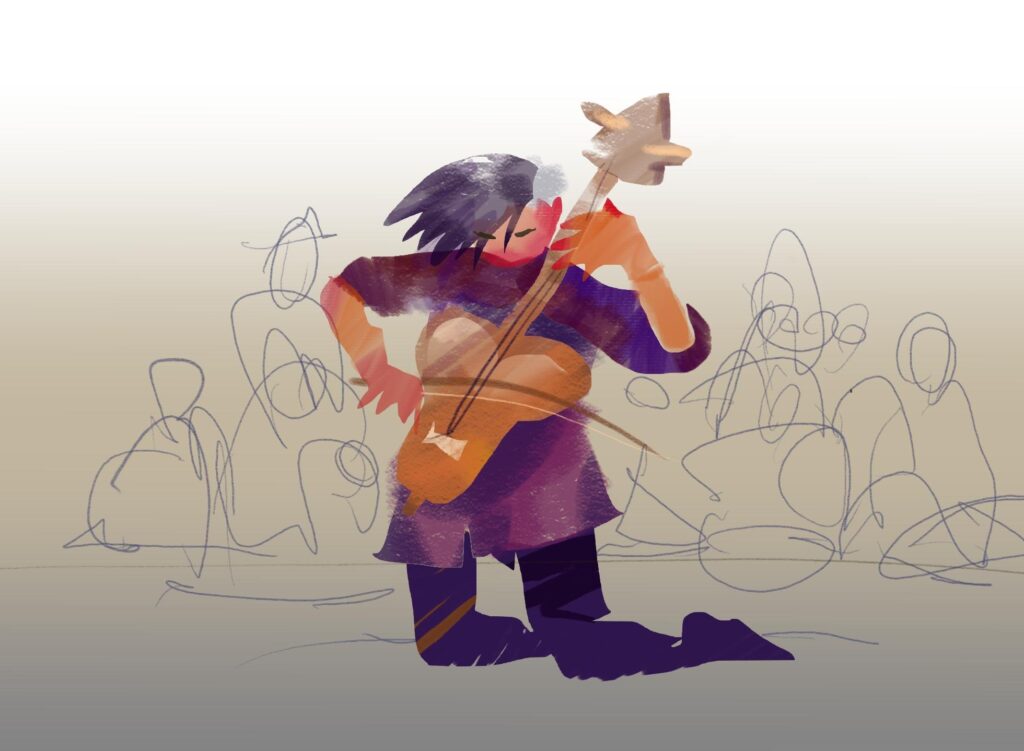
The dombra, the kyu, the kobyz, the zhetigen…. The list of traditional instruments in Kazakh music goes on. These aren’t dust-coated relics. The instruments are increasingly at the forefront of a lot of popular music in Kazakhstan today. They even get makeovers. The dombra is a long-necked, stringed instrument symbolizing Turkic culture. Now there is the electric dombra. Merey Otan, also known as Mercury Cachalot, knows about all of this. She is a musician and graduate student at Nazarbayev University in Astana and co-author of a book about the transformation of traditional instruments in Kazakhstan. In written responses to questions from The Times of Central Asia, Otan talked about contemporary Kazakh music and the role of the old instruments. After some replies, TCA includes brief explanations of her musical references. Researcher Merey Otan speaks last year at a launch for a book she co-authored about traditional instruments and contemporary music in Kazakhstan. Otan is a postgraduate student in the Eurasian Studies program at Nazarbayev University in Astana. Photo: Merey Otan   Merey, tell us how you first encountered Kazakh music and what attracted you to Kazakh instruments?   I have always been surrounded by Kazakh music. As long as I can remember we used to sing Kazakh folk songs at family gatherings, and various celebrations. My sister used to play dombra, a Kazakh traditional plucked two-stringed instrument, and when I started going to school I also started learning to play it. Unfortunately, I stopped taking lessons after a couple of years but I still remember how to play some compositions, kuys, and play it once in a while.   TCA: Kuys is a traditional instrumental piece of Kazakh, Nogai, Tatar and Kyrgyz musical cultures. It is performed on various folk instruments.   Which Kazakh instruments are considered the most popular among contemporary musicians, and why do they attract attention?   Dombra is probably the most popular traditional instrument among local musicians, including contemporary ones. It also has a sacred meaning for the people in terms of national identity. This is evident in the quote of a famous Kazakh poet Kadyr Myrza Ali "A true Kazakh is not a Kazakh but a dombra." This shows that Kazakh people associate their identity with the instrument and incorporating its sound in contemporary songs allows them to situate their music in the local context. Apart from that, musicians also use instuments like qobyz, shanqobyz, zhetigen. Authenticity was always important for musicians and including traditional instruments is one of the popular strategies to demonstrate authenticity for Kazakhstan's musicians. Among the most popular examples are songs by Yerbolat Kudaibergen, Irina Kairatovna, Aldaspan, The Buhars. A dombra and a kobyz, traditional instruments used in Kazakhstan, are shown in a book that was co-authored by researcher Merey Otan. Photo: TCA   TCA: The kobyz is an ancient bowed instrument preserved among the peoples of Siberia, Central Asia, the Volga region, Transcaucasia and other regions.  The shankobyz is an ancient Kazakh reed musical instrument, formerly used by shaman-worshipers to...