• KGS/USD = 0.01144 0%
  • KZT/USD = 0.00211 0%
  • TJS/USD = 0.10515 0.48%
  • UZS/USD = 0.00008 0%
  • TMT/USD = 0.28530 0%
  • KGS/USD = 0.01144 0%
  • KZT/USD = 0.00211 0%
  • TJS/USD = 0.10515 0.48%
  • UZS/USD = 0.00008 0%
  • TMT/USD = 0.28530 0%
  • KGS/USD = 0.01144 0%
  • KZT/USD = 0.00211 0%
  • TJS/USD = 0.10515 0.48%
  • UZS/USD = 0.00008 0%
  • TMT/USD = 0.28530 0%
  • KGS/USD = 0.01144 0%
  • KZT/USD = 0.00211 0%
  • TJS/USD = 0.10515 0.48%
  • UZS/USD = 0.00008 0%
  • TMT/USD = 0.28530 0%
  • KGS/USD = 0.01144 0%
  • KZT/USD = 0.00211 0%
  • TJS/USD = 0.10515 0.48%
  • UZS/USD = 0.00008 0%
  • TMT/USD = 0.28530 0%
  • KGS/USD = 0.01144 0%
  • KZT/USD = 0.00211 0%
  • TJS/USD = 0.10515 0.48%
  • UZS/USD = 0.00008 0%
  • TMT/USD = 0.28530 0%
  • KGS/USD = 0.01144 0%
  • KZT/USD = 0.00211 0%
  • TJS/USD = 0.10515 0.48%
  • UZS/USD = 0.00008 0%
  • TMT/USD = 0.28530 0%
  • KGS/USD = 0.01144 0%
  • KZT/USD = 0.00211 0%
  • TJS/USD = 0.10515 0.48%
  • UZS/USD = 0.00008 0%
  • TMT/USD = 0.28530 0%

Viewing results 1195 - 1200 of 2046

Earthquake related Fake News stirs concern among tense Almaty residents

In the wake of a magnitude 7.0 earthquake, Almaty residents went to social media to share their experiences and see what is happening to others. Reported misinformation included a story about the destruction and casualties in KazNU dormitories as well as the destruction of the hostel. Authorities urged everyone to be calm. N.B. Atygayev, the Emergency Situations Department urged not to spread false information and trust only official sources.

Kazakhstan Seeks FAO Support in Promoting Exports of Aport Apples

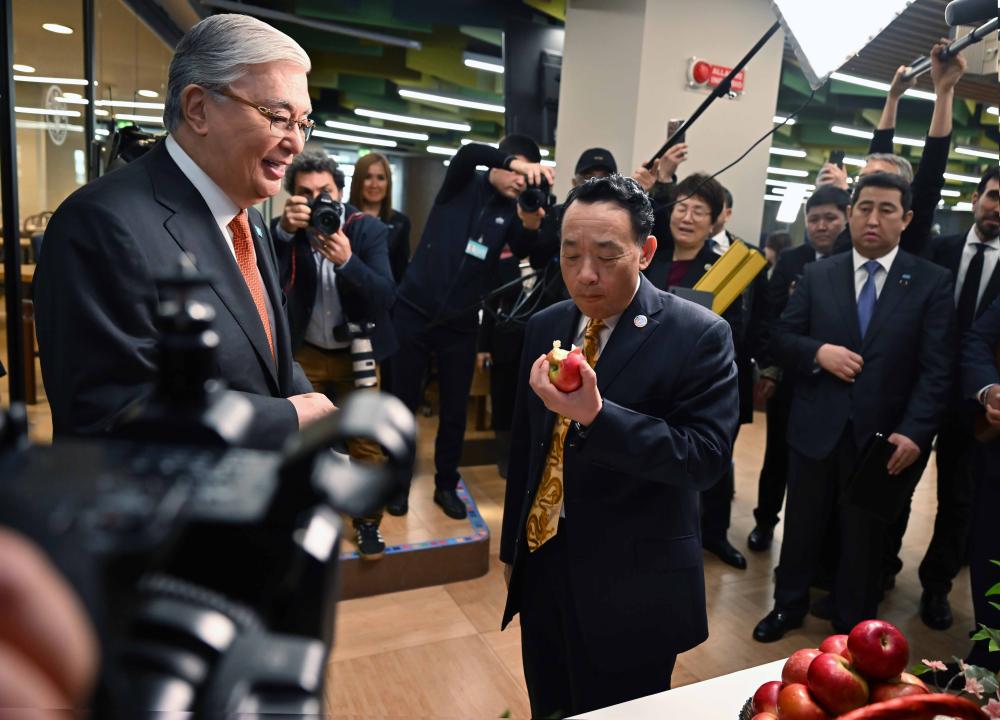
During his official visit to Italy on January 18th, President Kassym-Jomart Tokayev met with Director General of the Food and Agriculture Organization of the United Nations (FAO), Qu Dongyu. Tokayev and the FAO head attended a presentation of the famous Kazakh aport apples as part of the FAO’s One Country One Priority Product program, the Kazakh Ministry of Agriculture reported. “Kazakhstan is widely known as the birthplace of apples,” the President said. “Aport apples grow in the vicinity of Almaty, the largest metropolis in our country and my hometown. Translated from Kazakh, ‘Almaty’ means ‘place of abundance of apples.’” Aport apples are distinguished by their large size, distinct smell, and their succulent nature. One of the main landmarks in Almaty, the first sight to greet visitors to the Kok-Tobe Mountain which looms over the city is a granite statue of an apple with water gushing from its core.[/vc_column_text][vc_single_image image="13860" img_size="full" el_class="scond-image" parallax_scroll="no" woodmart_inline="no"][vc_column_text woodmart_inline="no" text_larger="no"]Tokayev expressed his hope that Kazakhstan’s initiative to promote aport exports on world markets will be supported by the FAO. In 1970, there were 3.8 million aport trees in Kazakhstan, but by 1984, only 1.4 million remained. In 2012, scientific research began on the revival and rejuvenation of the variety, including the establishment of an experimental garden of aport grafted onto Sievers apple trees, where in 2023, Kazakh scholars harvested the first large fruits weighing 400-500 g. FAO's One Country One Priority Product program was launched in September 2021. It focuses on initiatives for the green development of high-value agricultural products with unique qualities and special characteristics associated with a geographic region, agricultural practices, and cultural heritage. Other countries with their own distinct products also participate in the program. For example, Turkey is represented by figs, Moldova by table grapes, and Uzbekistan by cherries.

From Steppe to Subcontinent: The Indianisation of the Huns and Śakas from Kazakhstan

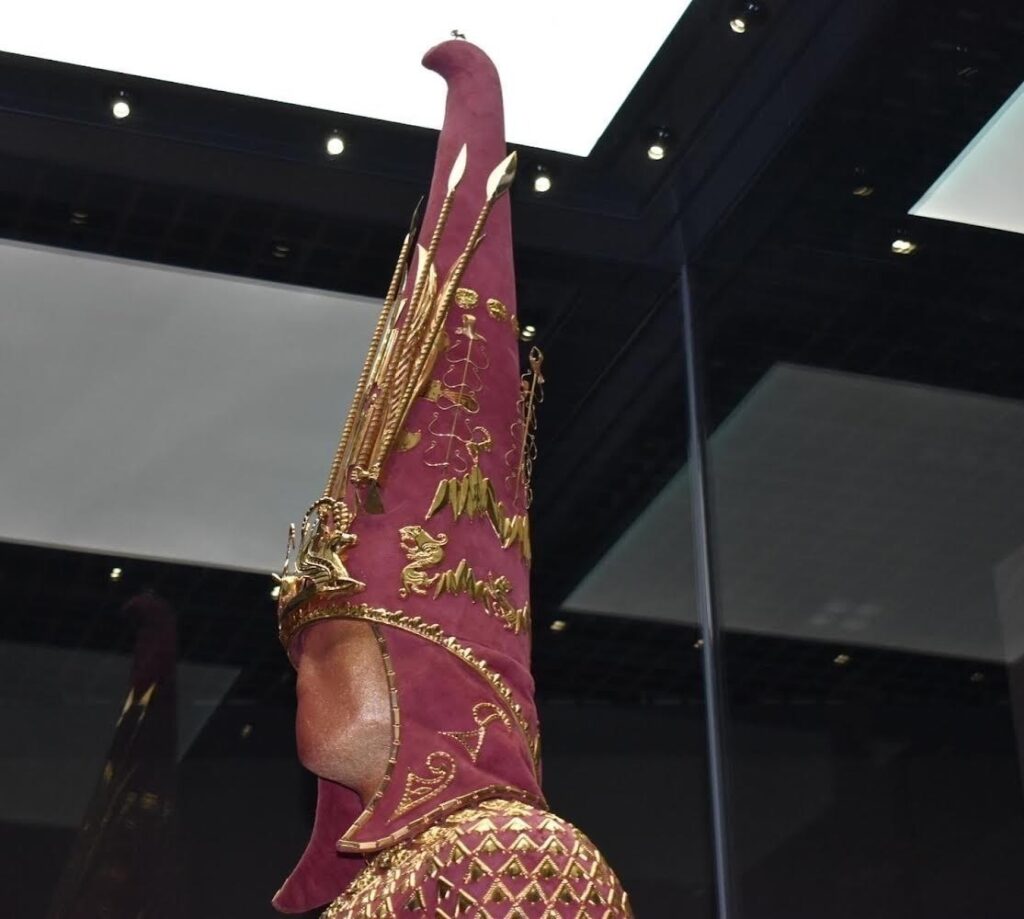
The historical connections between Kazakhstan and India span thousands of years, with the migration of Huns and Śakas from Central Asia to India playing a significant role in shaping the history of these two nations. The Huns, first mentioned by Roman historian Tacitus in the late first century A.D., originated near the Caspian Sea, in present-day Kazakhstan. They migrated to India, where they had a profound influence on the local population. Notable among the Huns was Toramana, who, around 500 A.D., launched attacks on India, eventually settling in Malwa in Central India and establishing himself as a powerful ruler. These historical ties are evident in archaeological finds in Kazakhstan, such as the 45 Hun burial mounds discovered near Almaty in the valley of the River Kegen in 2015. Similarly, the Saka people, another group of nomadic Eastern Iranian peoples, left their mark in the region with several burial mounds located near Almaty. The most notable among these was found in 1969, when the Kazakh archaeologist, Kemal Akishev, discovered a teenage Saka prince adorned with almost 4,800 gold items in an Issyk kurgan. Known as the “Golden Man,” the figure was adopted as one of the symbols of modern Kazakhstan, with a likeness standing atop the Independence Monument on the central square of Almaty.[/vc_column_text][vc_single_image image="13850" img_size="full" el_class="scond-image" parallax_scroll="no" woodmart_inline="no"][vc_column_text woodmart_inline="no" text_larger="no"]In India, the influence of the Huns is palpable in places like Gwalior, a metropolis recently designated as a Creative City of Music by the UNESCO Creative Cities Network. The earliest historical record of Gwalior is an inscription by the Hun ruler Mihirakula, the second and last Alchon Hun king of the north-western region of the Indian subcontinent between 502 and 530 CE, referencing his father, Toramana, as a "a ruler of the earth.” Mihirakula was a patron of Shaivism, and his reign left a lasting impact on the Indian landscape. The historical connections between Kazakhstan and India continue to be celebrated today, with India being one of the first countries to recognize Kazakhstan's independence. The two countries actively cooperate under various multilateral fora, including the Conference on Interaction and Confidence Building Measures in Asia (CICA), the Shanghai Cooperation Organization (SCO), and United Nations organizations.[/vc_column_text][vc_single_image image="13849" img_size="full" el_class="scond-image" parallax_scroll="no" woodmart_inline="no"][vc_column_text woodmart_inline="no" text_larger="no"]This historical connectivity is deeply rooted in the migration of two nomadic groups, the Huns and Śakas, from what is now known as Kazakhstan to India. Both these communities, though distinct in their origins - with the Huns being Turanic and the Śakas of Iranian descent - migrated to India, embraced the local culture, and significantly influenced the country's history and development. The first Saka king in India was Maues, also known as Moga, who established Saka dominion in areas covering Gandhara, the Indus Valley, and regions that are part of present-day Afghanistan. The Śakas ruled over vast territories, including the north-west frontier, Punjab, Sindh, Kashmir, western Uttar Pradesh, Saurashtra, Kathiawar, Rajputana, Malwa, and the north Konkan belt of Maharashtra. Saka ruler Nahapana held sway over Kathiawar and neighboring territories,...

President Tokayev Calls on Italian Businesses to Invest in Kazakhstan

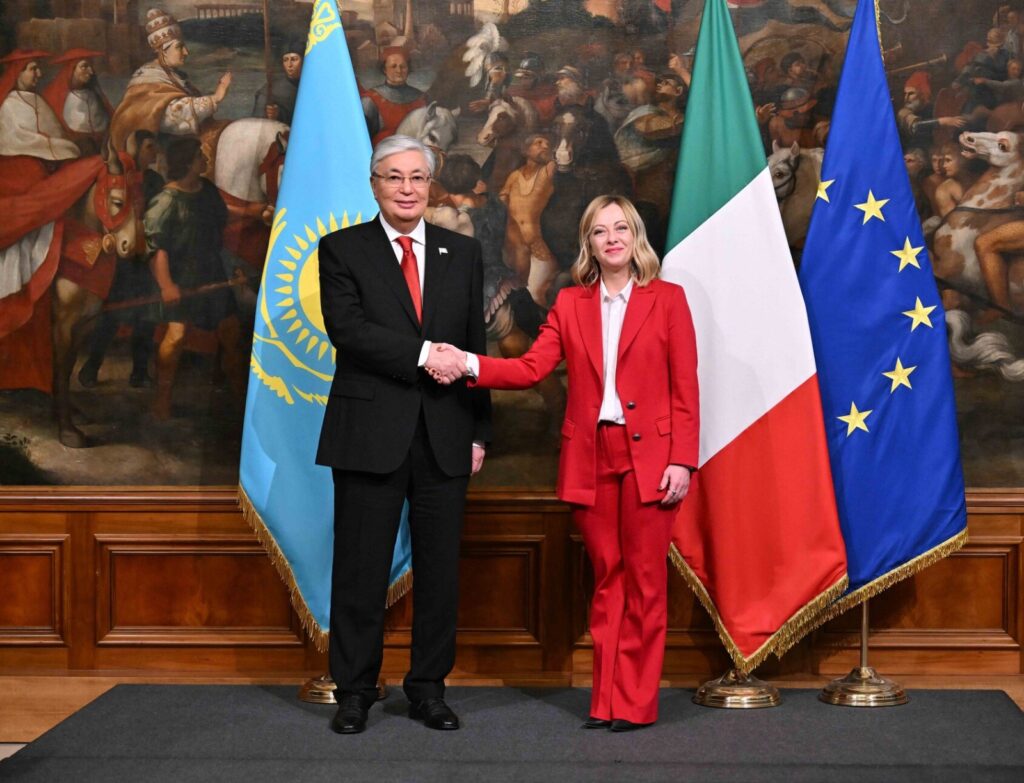
The President of Kazakhstan, Kassym-Jomart Tokayev on January 18th paid an official visit to Italy, holding talks with Prime Minister, Giorgia Meloni. During the discussion, Tokayev stated that Kazakhstan and Italy maintain a wide-ranging political dialogue and have established close economic cooperation, as well as fruitful cultural and humanitarian ties, his press service reported. “We are proud to be Italy's main partner in Central Asia. Our economic cooperation is developing dynamically and has enormous potential for further growth,” Tokayev said. Italy is among the largest investors in Kazakhstan’s economy, with trade turnover between the two countries amounting to approximately $15 billion, whilst direct foreign investment from Italy has reached $7.3 billion. More than 300 Italian companies currently operate in Kazakhstan, including such large investors as ENI, SDF Group, PetroValves, Maire Tecnimont, IVECO, and Tenaris. Meloni confirmed Italy’s commitment to developing contacts with Kazakhstan, stating that “We consider your visit an excellent opportunity to further strengthen Kazakh-Italian relations.” During the talks, the leaders focused on deepening cooperation in the spheres of trade, economy, investment, energy, transport and logistics, agriculture, culture, humanitarian, education spheres, and green energy. In their joint statement, Tokayev and Meloni noted the launch of major transport and connectivity initiatives in Central Asia, particularly those related to the development of the Trans-Caspian International Transport Route. They also emphasized the importance of holding the Central Asia + Italy format meeting in Rome later in 2024, and in Kazakhstan in 2025. As part of the visit, an agreement was signed between the Kazakh Samruk-Kazyna Fund and the Italian group of companies, Cassa Depositi i Prestiti on the creation of a joint investment fund and financing in manufacturing, energy and logistics, as well as a joint final investment decision between the Kazakh national oil and gas company, KazMunayGas, and the Italian company, ENI, on a joint project for the construction of a hybrid power plant (wind and solar) with a total capacity of 247 MW in Kazakhstan. On the same day, President Tokayev attended the Investment Roundtable, Kazakhstan-Italy, in Rome. Speaking to representatives of the Italian business community, Tokayev stated that the energy sector is the main area of economic cooperation between the two countries. “More than 80% of Kazakhstan’s oil is exported to Europe, which provides for about 10% of the EU’s needs. I would like to express my gratitude to Italy, a long-time and reliable energy partner of Kazakhstan. We highly appreciate the contribution of the Italian flagship company ENI to the economy of Kazakhstan. Kazakhstan provides ample opportunities in the field of oil and gas exploration. We implement the best global practices to discover significant deposits. We also invite Italian companies to participate in servicing the oil and gas industry,” the President said. Tokayev also called on Italian businesses to cooperate in the extraction and processing of critical raw materials. “According to World Bank estimates, there are more than 5,000 undiscovered deposits in Kazakhstan worth over 46 trillion dollars. Today, we already produce 19 of the 34 most important...

Kazakhstan to Send Peacekeepers on UN Missions

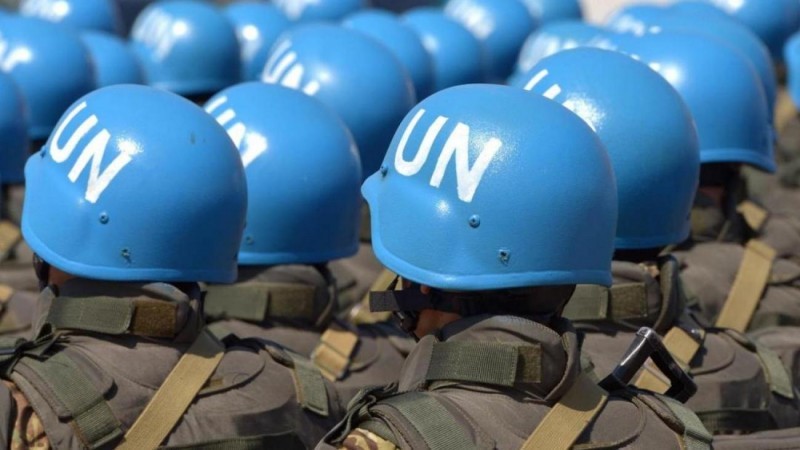
Kazakhstan has decided to send peacekeepers to the Middle East and Africa following a proposal by President Kassym-Jomart Tokayev. At a joint session of Parliament, deputies of the Mazhilis and Senate unanimously expressed their consent to send up to 430 service personnel to participate in the United Nations missions. The initiative envisages the participation of personnel from Kazakhstan in the following missions: UN Disengagement Observer Force in the Golan Heights (UNDOF, Syria - Israel), UN Truce Supervision Organization (UNTSO, Palestine - Israel), UN Mission in the Republic of South Sudan (UNMISS, South Sudan), and the UN Interim Security Force for Abyei (UNISFA, Sudan). "The Armed Forces of Kazakhstan are ready to allocate both individual servicemen as military observers and staff officers, and specialized units: infantry, medical, reconnaissance, engineering, which are most needed in UN missions," said Minister of Defense, Ruslan Zhaksylykov. To implement this decision, an international treaty will be concluded with the UN, which will determine the obligations of the parties, as well as the issues of financial and logistical support for the participation of the contingent in the mission. Transportation of service personnel and property will be at the expense of the Kazakhstani side. This decision reflects Kazakhstan's desire to look outward, take its place on the global stage, and participate more actively in international efforts. The deployment is set to begin in March 2024.

Visa-Free Travel from China Could Further Boost Kazakhstan’s Tourism Sector

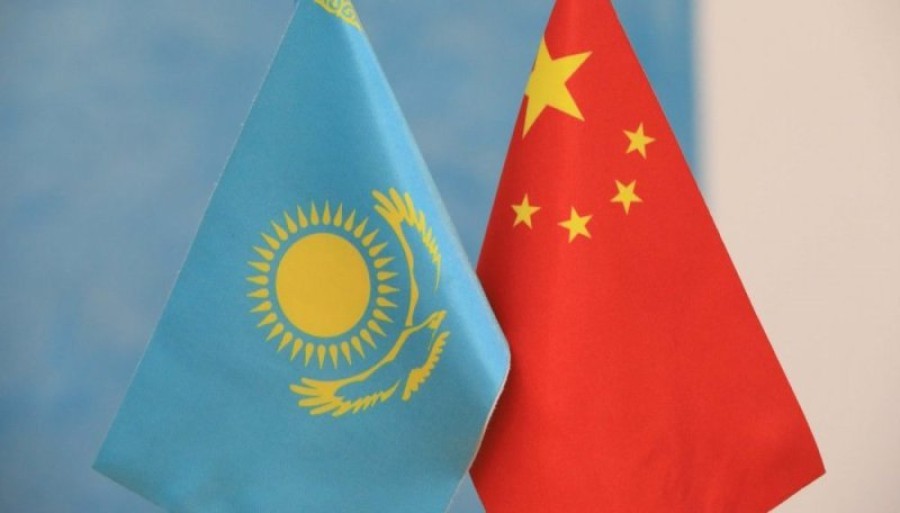
When China lifted pandemic-era restrictions on travel to Vietnam in March 2023, the Vietnamese welcomed the news as it promised to increase tourism revenues and boost their economy. Prior to COVID restrictions, Vietnam had hosted 5.8 million tourists from China in 2019, and generated income in excess of $5 billion. Despite centuries of conflict, the Chinese and Vietnamese governments embraced the motto, “bury the past, open up the future,” and encouraged their people to be pragmatic and capitalize on the opportunities presented by bilateral economic cooperation. Kazakhstan can likewise build on furthering existing opportunities for economic cooperation with China, such as visa-free travel, which came into effect in November 2023. China, the second largest economy in the world, has a growing middle class that is in search of new travel destinations. Kazakhstan, in turn, possesses many attractive sites that have the potential to become profitable tourism spots. One aspect of this initiative could be the additional hiring and vocational training of tourism personnel, with specific attention given to Chinese tourists. The number of Chinese tourists visiting Kazakhstan has already been growing since the start of last year, and reached 85,000 YTD by November 2023. On average, each Chinese tourist spends $100 a day in Kazakhstan. According to People’s Daily, Chinese tourists are becoming more interested in traveling to countries along the Belt and Road Initiative (BRI), and Kazakhstan is among them. Convenient visa-free travel, geographic proximity, picturesque sites, low travel expenditures, and the availability of flights all make Kazakhstan an attractive destination. Moreover, tourism companies in China now offer tours that include Kazakhstan. Possible fears among the hosting population that tourists could overstay their visas can be alleviated through the implementation of the relevant regulations in the above-mentioned agreement on visa-free travel, which limits tourists’ stay to 30 days, and allows for a 90-day cumulative stay within 180 days. As relationships develop between these two large nations in Asia, the people of Kazakhstan can adopt the pragmatic approach of the Vietnamese with respect to the opportunities arising from increased tourism with China.   Aizada Nuriddenova is an Assistant Professor at the Social Sciences Department, SDU University, Kazakhstan and currently is a visiting scholar at the Central Asia Program, George Washington University.