• KGS/USD = 0.01144 0%
  • KZT/USD = 0.00212 0%
  • TJS/USD = 0.10523 0%
  • UZS/USD = 0.00008 0%
  • TMT/USD = 0.28530 0%
  • KGS/USD = 0.01144 0%
  • KZT/USD = 0.00212 0%
  • TJS/USD = 0.10523 0%
  • UZS/USD = 0.00008 0%
  • TMT/USD = 0.28530 0%
  • KGS/USD = 0.01144 0%
  • KZT/USD = 0.00212 0%
  • TJS/USD = 0.10523 0%
  • UZS/USD = 0.00008 0%
  • TMT/USD = 0.28530 0%
  • KGS/USD = 0.01144 0%
  • KZT/USD = 0.00212 0%
  • TJS/USD = 0.10523 0%
  • UZS/USD = 0.00008 0%
  • TMT/USD = 0.28530 0%
  • KGS/USD = 0.01144 0%
  • KZT/USD = 0.00212 0%
  • TJS/USD = 0.10523 0%
  • UZS/USD = 0.00008 0%
  • TMT/USD = 0.28530 0%
  • KGS/USD = 0.01144 0%
  • KZT/USD = 0.00212 0%
  • TJS/USD = 0.10523 0%
  • UZS/USD = 0.00008 0%
  • TMT/USD = 0.28530 0%
  • KGS/USD = 0.01144 0%
  • KZT/USD = 0.00212 0%
  • TJS/USD = 0.10523 0%
  • UZS/USD = 0.00008 0%
  • TMT/USD = 0.28530 0%
  • KGS/USD = 0.01144 0%
  • KZT/USD = 0.00212 0%
  • TJS/USD = 0.10523 0%
  • UZS/USD = 0.00008 0%
  • TMT/USD = 0.28530 0%

Viewing results 1201 - 1206 of 2040

What the Proposed U.S. Ban on Russian Uranium Imports Could Mean for Kazakhstan

On Monday, 11 December 2023, the U.S. House of Representatives passed a new bill banning imports of Russian uranium. While the bill would need to pass the U.S. Senate and be signed off by President Joe Biden in order to become law, this first step towards legality raises questions about the future of nuclear energy in the U.S., and which country could provide the resources necessary to facilitate it going forwards. This bill represents a significant opportunity for Kazakhstan, the world’s largest producer of uranium, which could potentially step into the breach and provide the mineral necessary to meet the U.S.' nuclear energy needs. If successfully made into law, the bill entitled the “Prohibiting Russian Uranium Imports Act” will see a complete ban on unirradiated low-enriched uranium (the type used to make nuclear fuel) that is produced in Russia, and annual caps on the amount of low-enriched uranium that can still be imported from the country until 2027. Waivers have been built into the wording of the legislation to allow the U.S. Department of Energy (DOE) to work around the ban if no feasible alternative is found to sustain the functioning of a nuclear reactor or nuclear company. However, the bill also guides the DOE to submit a report outlining the alternatives to Russian-produced uranium, which could be utilized over the next five years. One country sure to be on their radar is Kazakhstan. A former powerhouse of the Soviet Union’s nuclear weapons testing program, Kazakhstan was left with significant infrastructure for uranium mining after the collapse of the bloc in 1991. Its nuclear production is currently monopolized by one company, Kazatomprom, which has emerged as a global leader in the field. Although the U.S. mines its own uranium, it does not produce enough to meet its domestic demands for nuclear power, which in the year 2022 was over 20,100 metric tonnes in total. That year, the U.S. produced 75 metric tonnes of uranium ore from its own mines. By comparison, Kazakhstan produced 21,227 metric tonnes in the same time period. Mukhtar Dzhakishev, the former head of Kazatomprom, has spoken about the necessity of increasing the volume of production in Kazakhstan if it were to be a viable candidate for replacing Russia’s supply to the U.S. Greater resources would need to be directed towards mining if the country were to increase its annual uranium yield to make up for the lost volume of Russian uranium. If the U.S. were to seek a trade agreement with Kazakhstan to bolster its nuclear power supplies, it would indicate an alignment with the European Union, which recently expressed a desire to conduct increased trade with countries in Central Asia. Given that the largest exports from Central Asian countries to Europe are of natural resources such as oil, gas and metals, it is safe to assume that energy will be one of the key goals in any trade deals the EU tries to negotiate. These announcements have arisen in the wake of Russia’s war in...

Dodo Brands joins growing list of companies moving HQs to Kazakhstan

The head office of Dodo Brands Pizzerias will move from the British Virgin Islands to Astana, Kazakhstan. The CFO of the large chain recently announced the decision in a telegram channel. "Today we would like to share with you the news that the Board of Directors has approved the redomiciliation of the holding company from the BVI to the International Financial Center Astana (Republic of Kazakhstan) on December 15, 2023. For the purpose of approval of this decision, an absentee vote of shareholders will be held from January 10 to January 26, 2024",  said Lina Naumova, the CFO of Dodo Brands. She added that they will hold an online meeting with the company's shareholders at the end of this month and will announce the details later. Naumova took office as CFO on January 1, 2024. Dodo Brands is one in a growing list of companies that in the past few years have decided to change their legal address to Kazakhstan. Several companies that closed their offices in Russia have already relocated to Kazakhstan, for instance. In fact, in the summer of 2022, the President of Kazakhstan, Kassym-Jomart Tokayev,  instructed the government to create all the necessary conditions for the relocation of companies that have left Russia. Tokayev has also said that 1,400 large foreign companies left the Russian market, emphasizing that this presented a good opportunity for Kazakhstan. More than 20 companies have moved their regional offices and relocated their teams of specialists to Kazakhstan in 2022. Among them there are large global giants such as InDriver (USA), Honeywell (USA), Weir Minerals (UK), Marubeni (Japan), and Koppert (Netherlands), among others. Furthermore, popular Chinese company TikTok opened its the regional office for Central Asia and the Caucasus in Almaty in October 2022 after freezing activities in Moscow and deciding to expand cooperation with Kazakhstan. In 2022, Kazakhstan also localized production of Ural Motorcycles (Russia/USA); car seat covers, interior and trunk mats from RIVAL (Russia); breathing circuits for ventilators R-Vent Medical (Turkey), and United Concrete Canvas (UK). Also in 2022, agreements were reached with German companies to begin construction of plants in Kazakhstan for the production of gypsum board (with Knauff) and trailed agricultural machinery (with Reimann). On November 16, 2022, President Tokayev gave the start of construction of another plant -- this one to produce Chery, Changan and Great Wall brand cars. In May 2023, Kazakhstani company Astana Motors received permission to produce the cars. Production is planned to start next year and the company intends to make about 90,000 cars a year. The chairman of the National Company "Kazakh Invest", Zhandos Temirgali, noted that 2023 results include 80 companies, 41 of which have already completed the move to Kazakhstan in 2022-2023, and the rest are in active negotiations. Temirgali said, "The total value of the projects amounted to about $1.5 billion. For example, Wabtec not only relocated a regional office, but also started a project to produce locomotives and components for them. Microsoft Corporation opened a multi-regional hub in Kazakhstan....

Nephew of ex-President Nazarbayev to be Tried

The criminal case against Samat Abish, nephew of the former President of Kazakhstan, Nursultan Nazarbayev, is set to proceed to trial in Astana. The investigation conducted by the General Prosecutor's Office has concluded, and the case has been transferred to the courts. This will be the first time a relative of Nazarbayev has been tried on charges related to the violent events of  January 2022. Details of the pre-trial investigation will not be made available to the public, as the case involves state secrets. Abish is being charged under Article 362 (Part 4) of the Criminal Code, "Exceeding official powers," which could result in up to five years imprisonment and the confiscation of property if he is convicted. Abish, aged 45, is the son of Satybaldy Abishevich Nazarbayev, the younger brother of the former president who died in a car accident in 1981. Abish took his surname in honor of his grandfather. Abish lost his position as the First Deputy Chairman of the National Security Committee of Kazakhstan on January 5th 2022, amidst riots across the country. Alongside him, the head of the KNB, Karim Massimov, and the Prime Minister, Askar Mamin, were also dismissed. Two days later, Abish was detained in Almaty and charged in connection with the January events. Investigators attributed primary responsibility for the tumultuous events of early 2022 to Karim Massimov, Abish's direct supervisor, and his three deputies. President Tokayev stated during an extraordinary session of the CSTO Collective Security Council on January 10th 2023, that the events were an attempt to seize power by high-ranking officials. Abish's sibling, Kairat Satybaldy, was convicted on corruption charges last year for embezzling tens of millions of U.S. dollars.

Kazakhstan Sums Up Democratic Reforms, Human Rights Efforts

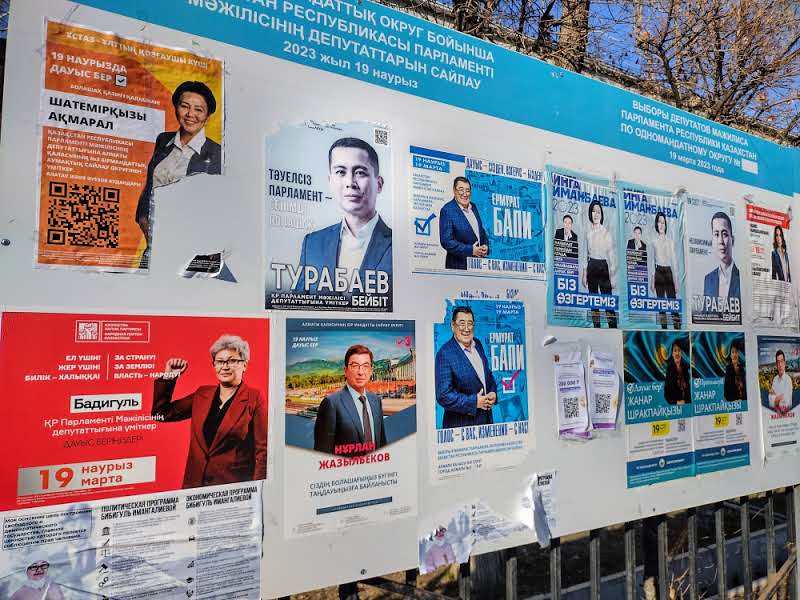
Kazakhstan has undergone “large-scale democratic transformations and made significant progress towards protecting human rights in full compliance with its international commitments,” states a factsheet published on the website of the President on January 12th. “Significant changes have been made to the legislation on democratic participation, human rights protection, and the rule of law. This has ensured greater participation of the population in the decision-making process as the concept of the ‘Listening State’ continues to evolve, and contributed to a more balanced political system and greater accountability to ensure the irreversibility of the ongoing political transformation towards a ‘Just and Fair Kazakhstan,’” the document says. Among the reforms enacted are the limit of a single seven-year term for presidents, the abolition of presidential power over local office-holders, the reduction of presidential authority over the Senate, and the reduction of the threshold for political parties to be registered from 20,000 to 5,000 members. “Such liberalization has resulted in the registration of new political parties - Baytaq and Respublica,” the document states, with the latter winning seats in the parliamentary election of March 2023. The reforms have also seen the powers of the Mazhilis (lower house of parliament) significantly expanded, whilst the election of mayors of districts and cities were held for the first time. The factsheet states that these “reforms have strengthened the system of human rights protection. Legislative amendments have been adopted to strengthen the independence of the courts [and] the categories of cases for jury trials have been expanded.” The factsheet goes on to say that the Constitutional Court has been reinstated with an enhanced mandate, aiming to fortify the protection of fundamental rights and freedoms by providing citizens with the direct right of appeal. The death penalty has also been abolished and criminal accountability for acts of torture reinforced. “Administrative and criminal liability for domestic violence has been significantly strengthened,” and a new law governing peaceful assemblies has been introduced, expanding the scope of peaceful gatherings and rallies in Kazakhstan. Human Rights Watch, in their World Report 2024, has raised concerns over the lack of accountability for human rights violations in Kazakhstan. The organization voiced their reservations about points in the new legislation that, while designed to protect women, does not specifically criminalize domestic violence as a separate offense. They have been consistently urging the Kazakhstan government to ensure justice and take necessary steps to prevent future violations.

Mass Die-Out of Swans in Mangystau: What are the Causes?

On December 27th, inspectors discovered a tragic picture on the shores of Lake Karakol in the Ustyurt State Nature Reserve, with the lifeless bodies of thirty swans lying on the ground. The Department of Ecology, which analyzed water from the lake, reported that at the time of sampling the maximum permissible concentration of harmful substances had been exceeded. However, the true extent of the situation has since become clearer, and according to updated information 826 dead swans have been recorded in Mangystau, with this figure continuing to rise daily. In the process of monitoring water sources associated with Lake Karakol, having found that permissible pollution levels had been exceeded, an unscheduled inspection of the Rixos Aktau hotel took place. This information was provided by Nurken Sharbiev, Deputy Minister of Ecology and Natural Resources of the Republic of Kazakhstan, and Zhomart Aliyev, head of the Committee for Environmental Regulation and Control of the Ministry. Rixos currently operates 34 hotels and resorts, the majority of which are located in Turkey, Kazakhstan, the UAE and Egypt, and seven of which were developed in partnership with the infamous Bayrock Group.[/vc_column_text][vc_single_image image="13641" img_size="full" el_class="scond-image" parallax_scroll="no" woodmart_inline="no"][vc_column_text woodmart_inline="no" text_larger="no"]The Rixos Water World Aktau Hotel is located on the coast of the Caspian Sea, 20 kilometers from the city of Aktau, whilst the protected territory of Lake Karakol is located within the boundaries of the Karagi-Karakol Zoological Reserve, which has republican significance. More than 20 species of birds listed in the Red Book of Kazakhstan and the international list of protected species inhabit this land, including the dalmatian pelican, pink flamingos, and the Savka. At this juncture, the extent of the involvement of Rixos Aktau is yet to be revealed, though the Department of Ecology of Mangystau is probing the hotel’s discharge into the lake. Specialists are currently analyzing samples, and if the results show contaminants the hotel may be fined up to an amount which would depend on the volume and composition of the discharged wastewater.[/vc_column_text][vc_single_image image="13640" img_size="full" el_class="scond-image" parallax_scroll="no" woodmart_inline="no"][vc_column_text woodmart_inline="no" text_larger="no"]However, a representative of the public commission tasked with investigating the cause of the mass die-out, Adilbek Kozybakov, posted a different supposition about the reason for the death of the birds on Facebook. "The cause of death is avian influenza, as confirmed by laboratory tests. Viruses of some forms of bird flu can be dangerous to both humans and poultry, but for some reason they still have not declared a quarantine and closed Lake Karakol to visitors. Due to the wide resonance around this topic, different groups of journalists, bloggers, activists and ordinary citizens passing by the lake come to Karakol every day. They walk along the shore, stepping on bird droppings, and can then carry the bird flu virus home," Kozybakov wrote. Kozybakov has suggested that experts from various fields - veterinarians and ornithologists, virologists and bacteriologists, specialists in epizootiology and epidemiology, and local independent biologists and ecologists - should form a commission. "Only through such a body will it be possible to...

Central Asia’s Untapped Potential: Key to Green Transition, Food Security, and Digital Economy Growth

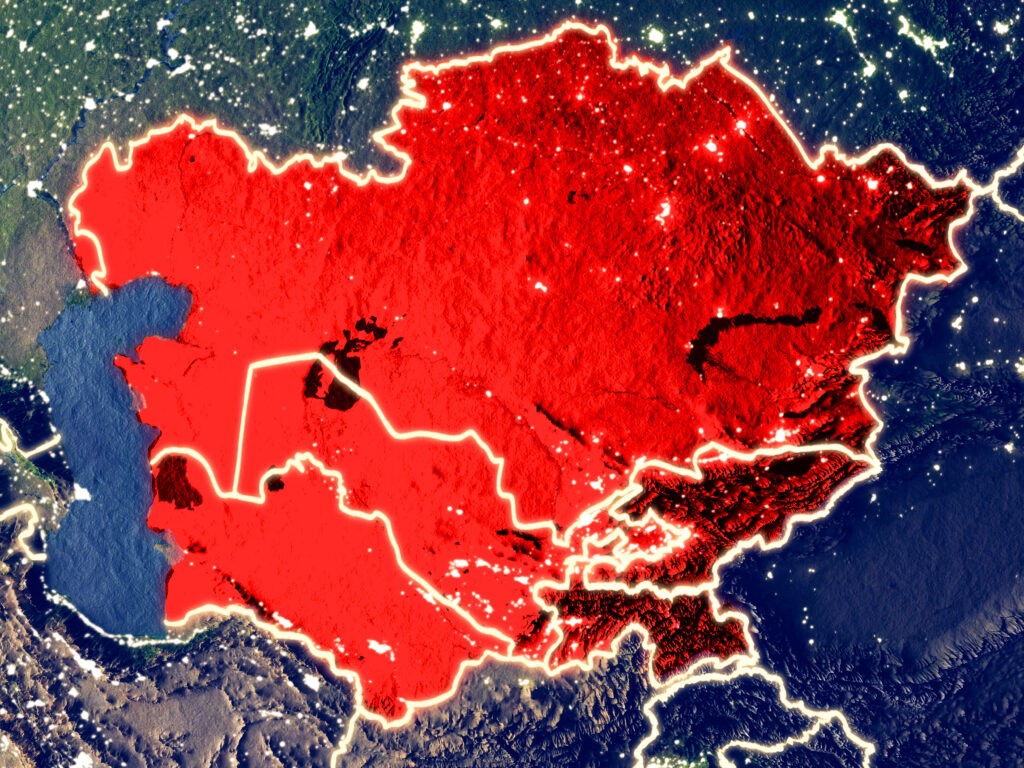
Central Asia, with its rich history as a crossroads of civilizations and a gateway between East and West, finds itself at a crucial juncture in its economic development. The region is showing signs of moving towards becoming a more cohesive economic group, an evolution that could have far-reaching implications for renewable energy development, food security, global commerce and geopolitics. Central Asian states are better positioned than ever to capitalize on their strengths and resources to help the rest of the world deal with climate change, security challenges associated with geopolitical shifts and the ongoing digital transformation of the global economy. Realizing this vast potential will require continued focus, commitment and cooperation from the region’s leaders, as well as long-overdue support from Western leaders for some of the most progressive reforms Central Asia has seen in recent years. Green energy potential Rich in natural resources, Central Asia is fast becoming pivotal for the global green energy transition. Leveraging vast reserves of rare earth elements (REEs) and other crucial minerals combined with its significant potential for renewable energy production, the region is increasingly recognized as a key contributor to realizing a more sustainable future. Kazakhstan, one of the region's major players, boasts over 56 identified deposits of REEs, with reserves and resources surpassing 450,000 tons. These elements, including lithium and cobalt production, are crucial for battery technologies powering renewable energy applications. This positions Kazakhstan as a significant supplier for the burgeoning green technology industry. Kyrgyzstan and Tajikistan also show promise. Inventory reviews of REE-bearing mineral occurrences and delineation of areas-of-interest suggest these countries could be home to considerable undiscovered resources, further boosting their contribution to green energy transitions. In addition to its abundant natural resources, Central Asia is an ideal candidate for green hydrogen production. Uzbekistan, with  PowerChina and the Saudi company ACWA Power is constructing the  country's first green hydrogen plant. Meanwhile, Kyrgyzstan and Tajikistan, with their surplus hydropower electricity, are well-positioned for hydrogen production. Once again, however, Kazakhstan boasts the most ambitious goal: The country aims to produce two million tons of green hydrogen annually by 2032, marking its intent to become a major player in the global green hydrogen market. In 2022, it inked a $50 billion deal with the German energy grou Svevind to build one of the world's largest green hydrogen plants supplying Europe. Kazakhstan, which holds 13% of the world’s uranium reserves, also leads the pack in uranium mining, meeting a significant portion of annual demand from  Europe and the U.S.. As nuclear power plays a crucial role in the green energy transition, Kazakhstan's role is set to grow. The country is exploring new avenues to access the international market. On the other hand, Kyrgyzstan, Uzbekistan and Tajikistan are also known for their uranium deposits but they are currently prioritizing the remediation of past mining sites over active uranium production. This responsible approach underscores the region's commitment to sustainable development. Central Asia's commitment to a greener future extends beyond resource development.. Several states, including Kazakhstan, Turkmenistan,...