• KGS/USD = 0.01144 0%
  • KZT/USD = 0.00210 0%
  • TJS/USD = 0.10528 0.19%
  • UZS/USD = 0.00008 0%
  • TMT/USD = 0.28490 0%
  • KGS/USD = 0.01144 0%
  • KZT/USD = 0.00210 0%
  • TJS/USD = 0.10528 0.19%
  • UZS/USD = 0.00008 0%
  • TMT/USD = 0.28490 0%
  • KGS/USD = 0.01144 0%
  • KZT/USD = 0.00210 0%
  • TJS/USD = 0.10528 0.19%
  • UZS/USD = 0.00008 0%
  • TMT/USD = 0.28490 0%
  • KGS/USD = 0.01144 0%
  • KZT/USD = 0.00210 0%
  • TJS/USD = 0.10528 0.19%
  • UZS/USD = 0.00008 0%
  • TMT/USD = 0.28490 0%
  • KGS/USD = 0.01144 0%
  • KZT/USD = 0.00210 0%
  • TJS/USD = 0.10528 0.19%
  • UZS/USD = 0.00008 0%
  • TMT/USD = 0.28490 0%
  • KGS/USD = 0.01144 0%
  • KZT/USD = 0.00210 0%
  • TJS/USD = 0.10528 0.19%
  • UZS/USD = 0.00008 0%
  • TMT/USD = 0.28490 0%
  • KGS/USD = 0.01144 0%
  • KZT/USD = 0.00210 0%
  • TJS/USD = 0.10528 0.19%
  • UZS/USD = 0.00008 0%
  • TMT/USD = 0.28490 0%
  • KGS/USD = 0.01144 0%
  • KZT/USD = 0.00210 0%
  • TJS/USD = 0.10528 0.19%
  • UZS/USD = 0.00008 0%
  • TMT/USD = 0.28490 0%

Viewing results 271 - 276 of 2028

Retired Kazakhstani, 66, Finds Calling as Long-Distance Swimmer

Askar Ospanov, a retired police major general in Kazakhstan, decided to become a serious swimmer relatively late in life, around the age of 60. Inspiration came when he was cheering from the sidelines at the 2018 Bosphorus Cross-Continental Swimming Race, an annual event in which about 2,500 people swim 6.5 kilometers from the Asian shore to the European side of Istanbul.  Ospanov's eldest son, Galym, himself an accomplished athlete, had completed the crossing in one hour and 18 minutes. A favorable current means many swimmers log fast times across the Bosphorus. “Then, about 30–40 minutes later, everyone on the shore suddenly started buzzing. I thought maybe someone had drowned… or perhaps Erdoğan (the president of Turkey) had arrived. I told my kids, ‘Find out what’s going on, quickly!'” 66-year-old Ospanov said.  It turned out that beloved Turkish swimmer Levent Aksüt, then in his late 80s, had just finished.  “Everyone stood and applauded his achievement,” said Ospanov, who saw Aksüt as a role model for his new passion.  In September, the Kazakhstani swam about 15 kilometers across the Strait of Bonifacio, from the French island of Corsica to the Italian island of Sardinia, in seven hours and 50 minutes. He has competed in international open-water swimming competitions, including OCEANMAN and X-WATERS events, in numerous places at various distances. He has won prizes in the 60+ category in Dubai, Thailand, at Issyk-Kul Lake in Kyrgyzstan and in Kazakhstan, a landlocked country with big lakes and reservoirs.  “If someone wants to start swimming after 60, it’s absolutely necessary to do stretching exercises. The arms and legs will gradually loosen up!” Ospanov said.  “Since childhood, I played volleyball,” the Almaty resident said. “Then my knees started hurting, and I couldn’t play volleyball at full strength anymore. Doctors said that for the knee joints, you need movement without load… That meant either cycling or swimming. I didn’t feel like buying a bike, so I chose swimming. With each passing year, swimming gave me more and more strength. Gradually, the results started coming.” Swimming coach Evgeny Alexandrov, who has been awarded the prestigious Master of Sport of International Class title by Kazakhstan’s government, has worked with Ospanov for several years.  The coach described his student as tough, punctual, and responsible. However, Alexandrov said, “turning him into an ideal swimmer quickly isn’t possible due to age-related limitations and some acquired health issues,” including knee pain and a right arm weakened by years of playing volleyball, which meant he only breathed on his left side in the pool. “When he was learning to swim, he couldn’t breathe every three strokes — he only inhaled on his left side, resulting in an asymmetrical freestyle stroke with excessive body roll. In open water, if the sun and waves are on the left, it becomes difficult for Askar,” the 44-year-old coach said.   Ospanov had that problem to some extent in the Strait of Bonifacio, where proper alignment in the water can offset the challenges of wind, waves and current.  “At his...

Tokayev in Moscow: Balancing Friendship and Strategy

Kazakh President Kassym-Jomart Tokayev begins a state visit to Russia in Moscow today, accompanied by a carefully calibrated message of diplomatic continuity. Ahead of his arrival, Tokayev published an article in Rossiyskaya Gazeta affirming Kazakhstan’s “eternal friendship” with Russia, a phrase that has become standard in bilateral rhetoric. While much of the piece reiterates familiar themes of cooperation in energy, trade, and culture, a few notable elements suggest deeper strategic positioning. From the outset, Tokayev appeared intent on striking a personal chord with Vladimir Putin. Mirroring the Russian president’s preference for historical framing, he wrote: “Our peoples have lived side by side for centuries, sharing joys and trials, and together creating a single cultural space in Eurasia. We are united by a common perception of traditional values, similar views on current issues of modern life, and joint work to ensure the well-being of our brotherly peoples.” The Kazakh leader also offered high praise for Putin’s leadership, describing bilateral ties as “mature and stable” and built on “deep trust, respect, and equality.” “All achievements in bilateral cooperation are inextricably linked to the energetic and productive efforts of President Vladimir Vladimirovich Putin,” Tokayev wrote. “In Kazakhstan, he enjoys unwavering respect as a statesman of global stature, and his name is on the lips of politicians and ordinary people in virtually every country in the world.” The visit’s key moment will be the signing of a Declaration elevating Kazakhstan-Russia ties to a “comprehensive strategic partnership and alliance”, a step Tokayev described as ushering in “a new era in bilateral relations.” More intriguing, however, was Tokayev’s commentary on Russia’s global standing, wherein Tokayev referenced recent high-level talks with Chinese President Xi Jinping, U.S. President Donald Trump, and leaders across Europe, Asia, and Africa. “Although many of them are at opposite ends of the geopolitical spectrum, they all recognize the exceptional role of Russia and its leader in resolving key issues in international relations. In other words, it is impossible to overcome the contradictions of the modern world without Moscow's participation,” he stated. While Tokayev has previously dismissed the idea of Kazakhstan acting as a mediator in the Russia-Ukraine conflict, his recent statements suggest Astana may be prepared to play a supporting role in future dialogue. “Kazakhstan is not a mediator in the military conflict between Russia and Ukraine and does not see itself as such,” he said last month. “In my opinion, both sides are capable of conducting dialogue on all contentious issues on a bilateral basis and at different levels. I have always believed and publicly stated that the ‘Ukrainian crisis’ is extremely complex and cannot be simplified.” Nonetheless, Tokayev offered practical insights into what a negotiation process would require, stressing the importance of expert-level preparation and dismissing the idea of hastily organized summits without a ceasefire or clear agenda as “unrealistic.” “If the leaders of Russia and Ukraine are willing to come to Kazakhstan, we will provide all the necessary services to ensure the success of the negotiations,” Tokayev added. He reaffirmed...

Made in Kazakhstan: Building an AI for a Nation

On a cold November morning at Al-Farabi University in Almaty, students gathered in a drafty lecture hall, many still wrapped in their coats. The setting was more reminiscent of a forgotten Soviet-era classroom than a venue for cutting-edge technology. But amid the peeling paint and rickety seats, some of the country’s most ambitious young researchers had come to discuss Kazakhstan’s latest steps into the world of artificial intelligence. The star billing came from the Institute of Smart Systems and Artificial Intelligence (ISSAI) at Nazarbayev University in Astana. Last year, the institute released KazLLM, its first Large Language Model (LLM), to much fanfare, inspired by a philosophy of building AI systems that understand the country’s language and culture rather than borrowing second-hand from Silicon Valley. But can Kazakhstan keep pace in the global AI race? And despite the government’s efforts to back local products, can it convince the population to use them over Western alternatives? Recent developments The Institute’s founder, Doctor Huseyin Atakan Varol, was keen to stress that steps have been taken to develop Kazakhstan’s native AI ecosystem over the past twelve months. “Since the release of KazLLM last year, we have witnessed what I would describe as a ‘Cambrian explosion’ of generative AI development,” he told The Times of Central Asia. “The KazLLM project enabled us to create the team and amass the know-how to build a new generation of multilingual and multimodal models tailored to Kazakhstan’s needs.” Among these, he lists Oylan, a multimodal language–audio-vision model; MangiSoz, a multilingual speech and text translation engine; TilSync, a real-time subtitle and translation engine; and Beynele, a text-to-image generation model. All these models have been fine-tuned to better reflect Kazakh culture and linguistic norms. “In short, we are building AI made in Kazakhstan, by Kazakhstani youth, for Kazakhstan –models that understand the language, culture, and needs of the people,” said Amina Baikenova, ISSAI’s Acting Deputy Director of Product and External Affairs, in an interview with TCA. [caption id="attachment_39061" align="aligncenter" width="1600"] The old lecture hall at Al-Farabi University, Almaty; image: TCA, Joe Luc Barnes[/caption] Much of this progress stems from the enthusiasm of a generation of students, whom Kazakhstan has invested heavily in training. Indeed, the country has become a magnet for young researchers from across Central Asia. “After completing my bachelor’s degree in Kyrgyzstan, I was looking for opportunities to build my research career. That’s why I moved to Kazakhstan,” said Adam Erik, an ISSAI student from Bishkek. “Kazakhstan has become a scientific center of Central Asia.” Erik believes strongly in building local language models. “There is a thing called bias in data sets,” he said. “Models from the U.S., China, or Europe are incredible, but they’re trained mostly on Western culture and literature. Local solutions are still necessary.” These sentiments reflect a common frustration among researchers: even the best global AI systems stumble when asked about Kazakh idioms, rural social norms, or local history. The data used to train the world’s most powerful models rarely includes more than a sliver...

Washington Shifts C5+1 From Diplomacy to Deals

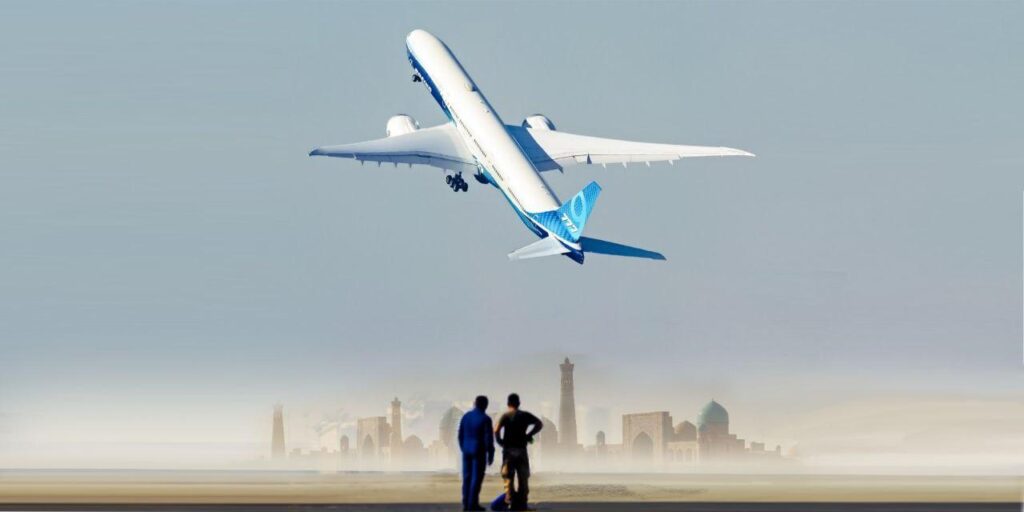
On November 6, 2025, Washington hosted the C5+1 summit, bringing U.S. President Donald Trump together with the leaders of Kazakhstan, Kyrgyzstan, Tajikistan, Turkmenistan, and Uzbekistan. The tone shifted from broad diplomacy to deliverable transactions, with officials emphasizing cooperation on critical raw materials. The timing signified a broader shift in supply chains away from China and Russia, and the discussion moved from general diplomacy to transactions that can be tracked and delivered. The private-sector track also accelerated. The B5+1 (“B” for “business”) platform is meant to carry follow-through on minerals, processing, logistics, and services. It complements state-to-state commitments by putting contract-ready work streams and policy dialogue in the same frame. Verification is simple: match U.S. and host-government readouts with company filings and ministry communiqués issued after the summit. Subsequent notices should specify instruments, values, financing, timelines, and the units responsible. What Was Signed Versus What Was Signaled The summit mixed firm orders with preliminary commitments. Uzbekistan Airways converted eight options for the Boeing 787-9 (covered by FAA Type Certificate Data Sheet T00021SE) into a firm order, bringing its total to twenty-two Dreamliners. That flows into the manufacturer’s backlog and starts financing and ground-side preparation. Tajikistan’s Somon Air announced up to four 787-9s and ten 737 MAX; that signals intent, with binding contracts and financing to follow. Engine families for the 787-9 are Rolls-Royce Trent 1000 TEN and GE Genx-1B, setting maintenance and training paths. Air Astana said it had selected up to fifteen 787-9s. Slot allocation and financing are next, along with sale-and-leaseback or operating-lease decisions. A parallel commercial package aimed to show that U.S.–Central Asia ties can move on a near-term clock, framed publicly through the Department of Commerce’s announced “C5+1 Deal Zone,” earmarked at “over $25 billion.” Rare earths and related inputs sat at the center of the talks. Aviation and other signings were presented as tangible outcomes. The substance rests with the underlying company agreements and national approvals, although the packaging usefully aggregates a single narrative for public consumption. Minerals were cast as the strategic core, even though many projects remain in the early stages. Public readouts emphasized supply-chain resilience and competition with China and Russia. For shipments into the European Union, the bottleneck remains the processing limits set by the EU Critical Raw Materials Act. Customs classification uses the Harmonized System (HS), a universal tariff code maintained by the World Customs Organization (WCO): tungsten falls under HS 8101, while rare-earth metals and their compounds are under HS 2805 and HS 2846. Bankability likewise depends on recognized industry disclosure rules for reporting mineral resources, which require standardized geology, sampling, and reserve estimates before serious financing proceeds. Wire services likewise underscored rare earths and closer cooperation along the value chain. Country Outcomes Kazakhstan. The most tangible non-aviation item was a tungsten venture at Northern Katpar and Upper Kairakty, with an indicated project scope of around $1.1 billion. A Letter of Interest (LOI) from the U.S. Export–Import Bank (EXIM) suggests a figure near $900 million on a 70/30 structure with...

Paul Kapur: “The United States’ Commitment to Central Asia Is Strong and Enduring”

WASHINGTON (TCA) — Assistant Secretary of State for South and Central Asian Affairs Paul Kapur reaffirmed Washington’s long-term commitment to Central Asia during remarks marking the 10th anniversary of the C5+1 partnership at the Kennedy Center hosted by the United States Department of State on November 6. Addressing an audience of officials, diplomats, and business leaders, Kapur said he was “honored to join an esteemed group” for the occasion. “I recently started my tenure as Assistant Secretary, and I’m particularly glad that I started as we celebrate the decade of C5+1 partnership,” he noted. Kapur, who oversees U.S. policy toward the region and serves as Secretary Marco Rubio’s chief advisor on Central Asia, is a veteran academic who has taught at the Naval Postgraduate School and Claremont McKenna College, and previously served on the State Department’s Policy Planning Staff during the first Trump administration. He opened his remarks by thanking the Kennedy Center and Ambassador Rick Vernell for hosting the event, as well as Special Envoy and Ambassador Sir Jim Gore and Deputy Secretary of State Chris Landau “for everything that they did, which included lots of diplomacy, many days and hours on the road.” He also recognized Senator Steve Daines “who’s done so much to support and promote ties” between Central Asia and the United States, and expressed appreciation to Central Asian delegations who “traveled a long way to be here.” “As we mark this anniversary, I want to reiterate that the United States is committed to this region, and that commitment is strong and enduring,” Kapur said. “Under President Trump’s and Secretary Rubio’s leadership, we’re elevating the C5+1 partnership as a priority — a strategic priority and an economic priority.” He said the partnership is already producing results in trade, investment, and innovation. “We’re making tangible progress toward increased trade and investment in areas ranging from aviation to cybersecurity to agriculture, and we’re ensuring a secure energy future for each of our countries,” he said. Kapur emphasized that economic ties are only part of the picture. “As we advance prosperity, we also promote peace,” he stated. “The United States remains committed to supporting each C5 country’s independence, sovereignty, and territorial integrity, protecting borders and strengthening security cooperation, both bilaterally and through the C5+1.” Reflecting on the partnership’s first decade, Kapur cited initiatives such as the C5+1 Critical Minerals Dialogue, the B5+1 Business Dialogue, training networks for regional law enforcement and border security, and English-language programs for young professionals. He also highlighted efforts to protect the region’s cultural heritage through historical preservation and law enforcement cooperation to combat antiquities trafficking. “Although we’re celebrating the future today, it’s important to remember that our new initiatives are built on a deep foundation of cooperation over the past decade,” he said. “As we elevate and modernize our collective efforts, C5+1 countries and the United States are increasingly prepared to deliver innovative regional solutions to our most pressing global problems.” He concluded with a personal message to Central Asian partners. “To my Central...

Sen. Daines: Central Asia Key to U.S. Strategic and Economic Future

Washington, D.C., November 6, 2025 — At the 10th-anniversary forum of the C5+1 platform — which brings together the United States and the five Central Asian nations (Kazakhstan, Kyrgyzstan, Tajikistan, Turkmenistan, and Uzbekistan) — ministers from the C5 countries and leading business figures from the region and the United States gathered to mark a decade of cooperation. The event was co-hosted by the U.S. Department of State and the U.S. Department of Commerce, underscoring Washington’s growing focus on regional economic and strategic engagement. U.S. officials played key roles throughout the program. Senator Steve Daines chaired a high-level panel discussion alongside Sergio Gor, U.S. Special Envoy for South and Central Asian Affairs; S. Paul Kapur, Assistant Secretary of State for South and Central Asian Affairs; Howard Lutnick, Secretary of Commerce; Christopher Landau, Deputy Secretary of State; William Nitt, Under Secretary of Commerce; and Richard Grenell, Special Presidential Envoy. During the forum’s investment-focused “Deal Zone,” Daines underscored what he described as Central Asia’s growing role in U.S. foreign policy, energy security, and technology supply chains — calling the region “one of the world’s great opportunities for the future.” His remarks reflected both optimism and a sense of urgency about expanding ties. “There are few parts of the world that offer the opportunity that Central Asia does,” he said. “Closer ties between our nations can bring greater economic opportunity to millions of people and secure some of the West’s most vulnerable supply chains.” According to Daines, the United States has already made significant progress through initiatives such as the C5+1 platform, the appointment of a Special Envoy for Central Asia, and the Critical Minerals Dialogue, alongside expanded trade missions and commercial partnerships. Together, he said, these efforts “provide the necessary forums through which the United States and Central Asia can build the capacity and trust necessary for long-term cooperation.” The tenth anniversary also served as a platform for outlining the economic and strategic priorities that will define the next phase of U.S.–Central Asia engagement. Central Asia’s Resource Potential Daines highlighted what he described as the region’s abundant resources — saying the five Central Asian nations “represent over 31 billion barrels of oil reserves, 250 trillion cubic feet of gas reserves, and over 40 percent of global uranium production.” “As we look to a new day for Europe, one wherein the continent is not dependent on a bellicose adversary for energy supplies,” he said, “Central Asian nations can be the partners of the future — providing consistent flows of resources necessary for baseload power without the concern that those energy imports will be weaponized.” He added that, even years after Russia’s invasion of Ukraine, the U.S. continues to import uranium from Russia, which he called a practice with “profound national security implications.” Central Asia, by contrast, “could provide a more reliable source of the element necessary to the development of artificial intelligence, data-centers, and other energy-intensive industries.” Critical Minerals and the Tech Economy Daines also emphasized the region’s strategic role in the global technology...