• KGS/USD = 0.01144 0%
  • KZT/USD = 0.00202 0%
  • TJS/USD = 0.10448 -0.19%
  • UZS/USD = 0.00008 0%
  • TMT/USD = 0.28490 0%
  • KGS/USD = 0.01144 0%
  • KZT/USD = 0.00202 0%
  • TJS/USD = 0.10448 -0.19%
  • UZS/USD = 0.00008 0%
  • TMT/USD = 0.28490 0%
  • KGS/USD = 0.01144 0%
  • KZT/USD = 0.00202 0%
  • TJS/USD = 0.10448 -0.19%
  • UZS/USD = 0.00008 0%
  • TMT/USD = 0.28490 0%
  • KGS/USD = 0.01144 0%
  • KZT/USD = 0.00202 0%
  • TJS/USD = 0.10448 -0.19%
  • UZS/USD = 0.00008 0%
  • TMT/USD = 0.28490 0%
  • KGS/USD = 0.01144 0%
  • KZT/USD = 0.00202 0%
  • TJS/USD = 0.10448 -0.19%
  • UZS/USD = 0.00008 0%
  • TMT/USD = 0.28490 0%
  • KGS/USD = 0.01144 0%
  • KZT/USD = 0.00202 0%
  • TJS/USD = 0.10448 -0.19%
  • UZS/USD = 0.00008 0%
  • TMT/USD = 0.28490 0%
  • KGS/USD = 0.01144 0%
  • KZT/USD = 0.00202 0%
  • TJS/USD = 0.10448 -0.19%
  • UZS/USD = 0.00008 0%
  • TMT/USD = 0.28490 0%
  • KGS/USD = 0.01144 0%
  • KZT/USD = 0.00202 0%
  • TJS/USD = 0.10448 -0.19%
  • UZS/USD = 0.00008 0%
  • TMT/USD = 0.28490 0%

Viewing results 637 - 642 of 1304

EDB and Kazakhstan Join Efforts for Water Investment

EDB and Kazakhstan Join Efforts for Water Investment The Eurasian Development Bank (EDB) has signed a memorandum of cooperation with Kazakhstan’s Ministry of Water Resources and Irrigation (MWRI). Ruslan Dalenov, Vice Chairman of the EDB Management Board, and Bekniyaz Bolat, MWRI First Deputy Minister, formalized this partnership during a ceremony in Astana on December 13th. The memorandum aims to establish long-term, mutually beneficial collaboration focused on mobilizing investment and grants for joint water and irrigation projects. “We are committed to jointly developing sustainable infrastructure solutions that will support important water-related projects and contribute to overall economic growth,” said Dalenov. The parties intend to actively cooperate in financing investment projects and exchange expertise through participation in workshops, conferences, and other events. The EDB is currently implementing the Central Asian Water and Energy Complex mega-project based on research and projections on the most effective ways to comprehensively develop the sector. Bank analysts have conducted studies such as Investment in the Water and Energy Complex of Central Asia, Regulation of the Water and Energy Complex of Central Asia, and Efficient Irrigation and Water Conservation in Central Asia. The latter outlines ten practical steps for preserving irrigated land potential and promoting water conservation, including four recommendations for adoption at a regional level and six at a national level. These measures are designed to conserve enough water annually to support sustainable development. The EDB has also identified projects to cater to the region’s electricity and water needs. The Bank is financing the construction of the 100 MW Kulanak HPP in the Kyrgyz Republic. Additionally, the Bank is evaluating several projects aimed at enhancing the region’s water and energy infrastructure.

Kazakhstan to Reduce Dependence on Water from Neighboring Countries

Issues of modernizing water infrastructure and improving the water resources management system were discussed at a meeting of the Water Council of Kazakhstan chaired by Prime Minister, Alikhan Smailov, A post on the PM’s official website states. Minister of Water Resources and Irrigation, Nurzhan Nurzhigitov reported that Kazakhstan has 102.3 km3 of water, 54% of which is formed within the country, and the remaining 46% coming from neighboring countries. The annual consumption by economic sectors is about 25 km3 of water, of which 65% is used for agriculture, and 25% for industrial needs. To ensure the country's water security and solve the problem of shortages, a draft Comprehensive Plan for the Development of Water Resources for 2024-2030 has been developed. It provides for a number of urgent measures for the construction and reconstruction of reservoirs, and the reconstruction of hydraulic structures and irrigation systems. Implementation of the plan will increase available water resources by 3.7 cubic kilometers, and the area of irrigated land to 2.2 million hectares, as well as reduce annual losses of irrigation water by 3 cubic kilometers. In 2024-2026, it is planned to begin construction of 20 new reservoirs with a volume of 2.4 cubic kilometers in nine regions. This will increase the area of irrigated land by 250,000 hectares and reduce Kazakhstan’s dependence on neighboring countries for its water supply by an average of 25%. “We must annually introduce water-saving technologies on 150,000 hectares of irrigated lands. Now, implementation is carried out on 40-50,000 hectares per year. At the same time, in the southern regions where there is the greatest water shortage, the volume of implementation is the smallest,” said Smailov.

28 Citizens of Kazakhstan Evacuated from Gaza Strip

According to the representative of the Embassy of Kazakhstan in Egypt, 28 citizens of Kazakhstan have been evacuated from the Gaza Strip to Egypt. According to preliminary data, there are still estimated to be ten Kazakhstan nationals trapped there. “Regarding their evacuation, everything depends on the current military situation, and on whether they will be able to reach Egypt," said Sanjar Ualikhanov, Adviser to the Embassy of Kazakhstan in Egypt. Oksana Helles, a citizen of Kazakhstan who had been living in Palestine addressed the situation: “Recently, we had been living in the Gaza Strip. My husband is still there, and I take this opportunity to ask for help so that he can also come to me and reunite our family. He works as a doctor, and I also worked as a nurse. We had five children, and about two weeks ago my daughter was killed; she was 19-years-old and six months pregnant. She died along with her husband, his nephews and parents.” “I am a Palestinian, but I studied in Kazakhstan, graduated from a medical university there, and married a Kazakh, so I’m also a citizen of Kazakhstan,” said another evacuee, Elyanakh Akhmet. “Since the war began, it’s been a frightening ordeal for us. We had been building our lives for so many years, and everything was destroyed in an instant.” All the evacuees expressed their great gratitude to the President of Kazakhstan, Kassym-Jomart Tokayev, the Ministry of Foreign Affairs, the Embassy of the Republic of Kazakhstan in Egypt, and asked for further help.

Recent murder in Kazakhstan draws attention to domestic violence and gender discrimination

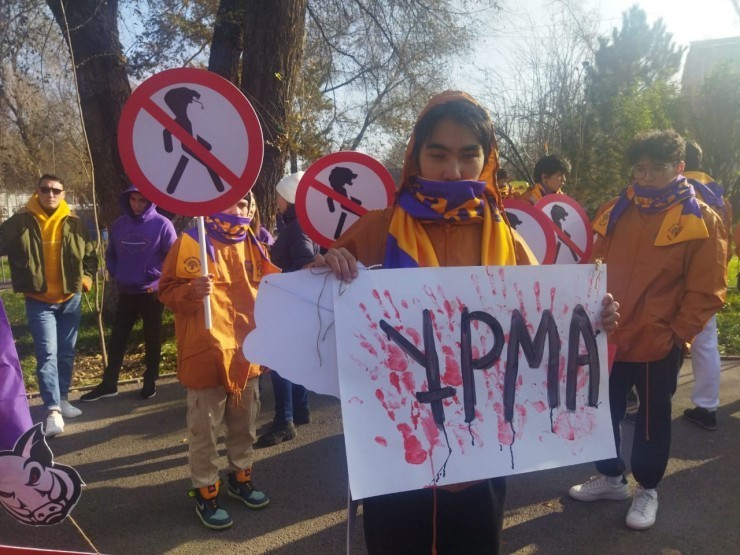
A very public tragedy in Kazakhstan put on display domestic violence at its worst. A quarrel in a restaurant in Astana on the evening of November 8th is reported to have resulted in the death of Saltanat Nukenova, the 31-year-old wife of Kuandyk Bishimbayev. Bishimbayev, who served as Minister of National Economy under former President Nazarbayev, was detained on the same day for suspected murder and remains under arrest awaiting trial. On November 11th, Saltanat was buried in Pavlodar. This appalling incident highlighted the urgent need for stronger protections against domestic violence. An authorized rally was held in Almaty in late November. Around 200 participants came out onto the square behind the Sary Arka cinema, holding posters and chanting slogans against domestic violence. The event was organized by a public movement called Zhana Adamdar and the attendees mostly included young people and students from the movement. Relatives of Saltanat Nukenova also took part. The participants wanted to raise awareness about fighting any manifestation of violence against women and children. Most of the attendees were dressed in the same style, and many of them had scarves with the inscription “Say no to the animal world,” which was also the title of the rally. Speakers at the event detailed the most resonant cases of violence in recent times while the organizers of the rally held a small flash mob and arranged an installation with mannequins in cages with animal masks on them. A minute of silence was observed in honour those who died as a result of violence. Progress in protecting women What proceeded this public tragedy hopefully presents a silver lining. A month later, on December 8, Kazakhstan's current President Kassym-Jomart Tokayev signed a Decree to strengthen human rights with concrete steps towards preventing violence and promoting gender equality. The Decree instructs Kazakhstan’s government to take systematic measures to promote equal rights and opportunities in all spheres of society, as well as to overcome all forms and manifestations of gender discrimination. The decree also encompasses legislation to deter domestic violence and promotes equal rights and safety for both men and women in the Republic of Kazakhstan, as endorsed by UN Security Council resolution 13251. It further involves legislative measures to tighten criminal liability in cases of domestic violence, which have now been implemented. These measures aim to hold perpetrators accountable and ensure that victims can get justice. Additionally, offenders of domestic violence may be required to undergo comprehensive psychological correction as part of their rehabilitation process. The Decree also asks for creating specialized units within the Ministry of Internal Affairs staffed with female officers, who can enhance the effectiveness of combating domestic violence. While the timing of the Decree coincided with the aftermath of Saltanat’s death, there are signs that these steps may have already been in the works. President Tokayev had voiced concerns about domestic violence before the current headlines emerged. At a meeting in the Ministry of Internal Affairs in June 2023, for example, he had affirmed that “comprehensive...

Green Pitching Event at COP28 Focuses on Central Asia’s Sustainable Future

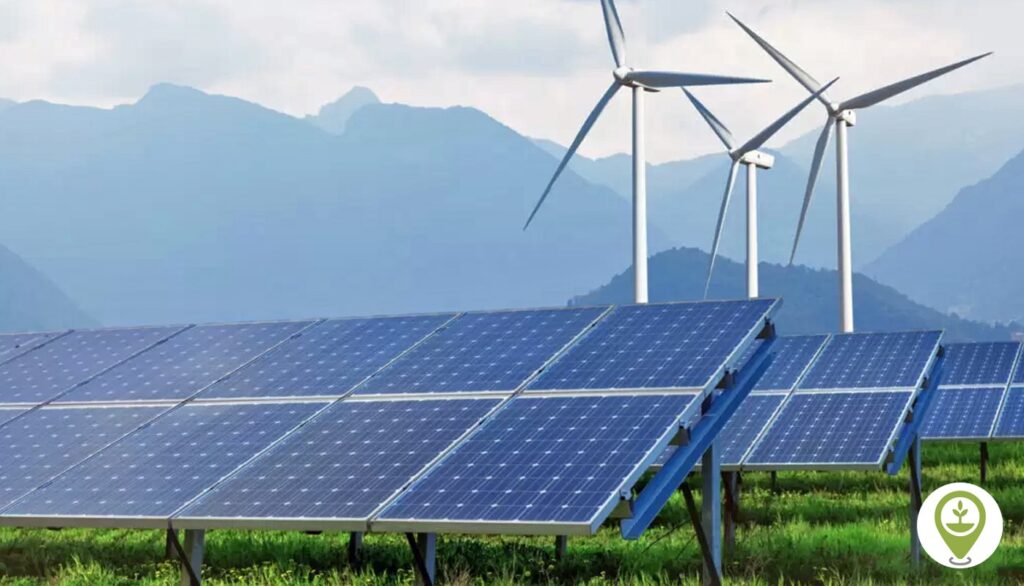
As reported on the United Nations Development Programme (UNDP) website, the UNDP in Kazakhstan organized a Green Projects Pitching Event for the countries of Central Asia, which aimed to spotlight innovative and sustainable initiatives across the region, showcasing a collaborative commitment to green growth and climate resilience. The 28th United Nations Climate Change Conference, or COP28, kicked off on November 30th and continues through to December 12th in Dubai, United Arab Emirates, with a growing urgency to increase action for meaningful change. The countries of Central Asia are presenting a common regional position on the most pressing climate issues at global scale, adopting the cooperative approach: Five countries – one region – one vote. As part of a region particularly vulnerable to the effects of climate change, the Central Asian nations are actively participating in the COP28 climate policy negotiations, advocating for commitments to reduce emissions, achieve carbon neutrality, and secure access to climate finance for the region. “The climate crisis knows no borders; it is a challenge that transcends individual nations,” said Nuri Ozbagdatli, UNDP Climate Change Specialist for Europe and Central Asia. “Success in addressing this global issue requires collective action. Together, the global community must pool our expertise, resources, and innovation to tackle climate change comprehensively, ensuring a sustainable future for all. In the countries of Central Asia, we strongly believe in the vast potential offered by the region's nature, population, and especially its youth. These factors form crucial elements in our joint endeavors to confront and overcome the challenges posed by climate change." The event was opened by the Ministers of Ecology from three Central Asian countries: Kazakhstan, Kyrgyzstan, and Uzbekistan. "Achieving a substantial reduction in greenhouse gases requires significant financial investment,” said Yerlan Nyssanbayev, Minister of Ecology and Natural Resources of Kazakhstan, in his welcoming speech. “The strategy of low-carbon development adopted by Kazakhstan this year estimates a net investment of US$610 billion in low-carbon technologies. At the same time, the importance of climate financing, which helps societies and economies build resilience and adapt to the impacts of climate change, cannot be overstated."

Government Buys ArcelorMittal Termirtau for $286 Million

The Minister of Industry and Construction of the Republic of Kazakhstan, Kanat Sharlapayev, announced at a briefing that after eleven rounds of negotiations, the purchase of Arcelor Mittal Temirtau has been completed, Kazinform has reported. Divulging the details of the deal, Sharlapayev stated that “$286 million is the cost of two fully functioning enterprises. In addition, ArcelorMittal will not make any claims against the Government of Kazakhstan. The agreement was reached within the legal framework, in full compliance with international law.” Against a backdrop of ongoing incidents at ArcelorMittal Temirtau JSC, in August of this year, President of the Republic of Kazakhstan Kassym-Jomart Tokayev pointed out serious violations by the company. The Head of State stated that consequences for the enterprise to remain in the Kazakh market were not excluded for AMT. At the time this statement was made, the government was already negotiating with the owners of ArcelorMittal Temirtau on the possible withdrawal of the company from the metallurgical plant. These talks began after the tragic accident that occurred on November 3rd 2022 at the Lenin Mine, a subsidiary of AMT. As a result of these intensive negotiations, on December 9th 2022, a “Standstill Agreement” was signed, which allowed the authorities to evaluate and audit the enterprise. During the negotiations, ArcelorMittal requested $3.5 billion, which did not correspond to the calculations of international consultants. “This became one of the main reasons for the protracted negotiation process,” Sharlapayev said. “Our goal was to purchase the plant at a fair price without incurring costly and protracted international litigation. The urgency and acceleration of the negotiations were also dictated by the need to prevent the shutdown of the enterprise. The agreement between the Government of Kazakhstan and ArcelorMittal can be called a mega-deal, which is of exceptional importance to our country. We have avoided a lot of risks faced by the governments of other countries,” the minister stressed. Sharlapayev also announced three key elements of the deal: - The state has reduced the value of assets from $3.5 billion to $286 million; - Not a single tenge was spent from the state budget on the implementation of the transaction; - The new investor undertakes an obligation to the parent company, ArcelorMittal, to repay a short-term loan of $250 million and a long-term loan of $450 million over four years.