• KGS/USD = 0.01144 0%
  • KZT/USD = 0.00212 0%
  • TJS/USD = 0.10456 0.19%
  • UZS/USD = 0.00008 0%
  • TMT/USD = 0.28490 0%
  • KGS/USD = 0.01144 0%
  • KZT/USD = 0.00212 0%
  • TJS/USD = 0.10456 0.19%
  • UZS/USD = 0.00008 0%
  • TMT/USD = 0.28490 0%
  • KGS/USD = 0.01144 0%
  • KZT/USD = 0.00212 0%
  • TJS/USD = 0.10456 0.19%
  • UZS/USD = 0.00008 0%
  • TMT/USD = 0.28490 0%
  • KGS/USD = 0.01144 0%
  • KZT/USD = 0.00212 0%
  • TJS/USD = 0.10456 0.19%
  • UZS/USD = 0.00008 0%
  • TMT/USD = 0.28490 0%
  • KGS/USD = 0.01144 0%
  • KZT/USD = 0.00212 0%
  • TJS/USD = 0.10456 0.19%
  • UZS/USD = 0.00008 0%
  • TMT/USD = 0.28490 0%
  • KGS/USD = 0.01144 0%
  • KZT/USD = 0.00212 0%
  • TJS/USD = 0.10456 0.19%
  • UZS/USD = 0.00008 0%
  • TMT/USD = 0.28490 0%
  • KGS/USD = 0.01144 0%
  • KZT/USD = 0.00212 0%
  • TJS/USD = 0.10456 0.19%
  • UZS/USD = 0.00008 0%
  • TMT/USD = 0.28490 0%
  • KGS/USD = 0.01144 0%
  • KZT/USD = 0.00212 0%
  • TJS/USD = 0.10456 0.19%
  • UZS/USD = 0.00008 0%
  • TMT/USD = 0.28490 0%

Viewing results 535 - 540 of 966

First Kazakh Woman Reaches the Summit of Everest

Anar Burasheva, the first woman from Kazakhstan to climb Mount Everest, did a little dance on her descent. “My heart is on this mountain,” Burasheva said on Instagram after reaching the peak. She and two other Kazakh climbers, along with a support team of four Sherpas, made it to the top on Sunday after a five-day trip from base camp in Nepal. The other Kazakh mountaineers are Maksut Zhumayev, a mountain training instructor in the Kazakh military who was making his third Everest ascent, and Almir Kymbatbaiuly. “Congratulations to Anar Burasheva, the first Kazakh woman to conquer the highest mountain peak in the world. Scaling 8,848 meters above sea level, Mount Everest - an incredible achievement,” Erzhan Kazykhan, a Kazakh presidential adviser on foreign affairs, said on X. Kazakhstan’s defense ministry also congratulated the Kazakh climbers, whose ascent was organized by Seven Summit Treks, a Nepali expedition company that specializes in Himalayan climbs. Burasheva has climbed peaks in Kazakhstan and abroad, and is also a long-distance runner. Lucia Janičová also summited Everest on Sunday, becoming the first Slovakian woman to do so. Seven Summit Treks assisted her, as well. The company’s senior guide for the ascent was Kami Rita Sherpa, who logged his 29th trip to the summit.

Nationwide Survey on Domestic Violence in Kazakhstan Publishes Results

A large-scale statistical analysis on domestic violence in Kazakhstan was conducted by three professors from Karaganda Medical University: Saule Musabekova, Ksenia Mkhitaryan and Hamida Abdukadirova. The study, conducted between 2019 and 2022, covered 14,342 women between the ages of 18 and 75 from 14 regions of Kazakhstan. The questionnaire included questions about health, children, partners, violence and its consequences, financial independence, and cases of sexual abuse in childhood. The study showed that the main victims of domestic violence in Kazakhstan are women (more than 77.9%). Next on the list are children (17.52%), elderly people (3.5%) and men (less than 1.1%). It is important to note that not all victims seek help from the police or hospitals. Therefore, there may be many more victims. According to the results of the study, the most vulnerable age group is women from 40 to 49 years (41.46%) and from 30 to 39 years (37.80%). Victims of domestic violence were most often unemployed women or those with low levels of education, with two or more children, and economically dependent on their husbands. Most of the victims of violence were from urban areas (63%). It was also found that violence against women is committed by strangers in only 12.2% of cases. In 87.8% it is committed by men with whom the victims are in a close relationship. Almost all of them are intimate partners of the victims (in 95-98% of cases). Half of the women interviewed stated that their intimate partners had attacked them while they were pregnant or raising young children. The forms of systematic violence varied. The most common were physical violence, experienced by 78% of respondents; psychological violence, experienced by 21% of respondents; sexual and physical violence, 16%; economic violence, 7%; and regular sexual violence, 6% of respondents. More than half of the respondents (57%) also stated that over the past year they have faced one of the above forms of abusive behavior more than once (from 2 to 8 times). Almost all cases of violence against women (98.2%) occurred when the abuser was intoxicated. Other factors cited by female researchers were economic problems and male unemployment. Incidents of violence most often occurred at home in the evening and at night (91%). Two-thirds of women (66%) said they had suffered at least one injury after partner violence. The study also took into account physical and sexual abuse of women by men with whom they were not in an intimate relationship. In 92%, the abusers were family members, friends and coworkers, and only 8% were unknown men. The researchers noted that Kazakhstan only formally supports the main international commitments to gender equality. Domestic violence and general tolerance to it persist in the country. "Gender roles and cultural norms are clearly expressed in some regions of Kazakhstan: in the south of the country, educated women often do not look for work outside the home because of the priority of domestic duties, and attempts to restrict women in their choice of occupation are quite common. Thus,...

Kazakhstan Secures Almost Billion Cubic Meters of Irrigation Water from Uzbekistan

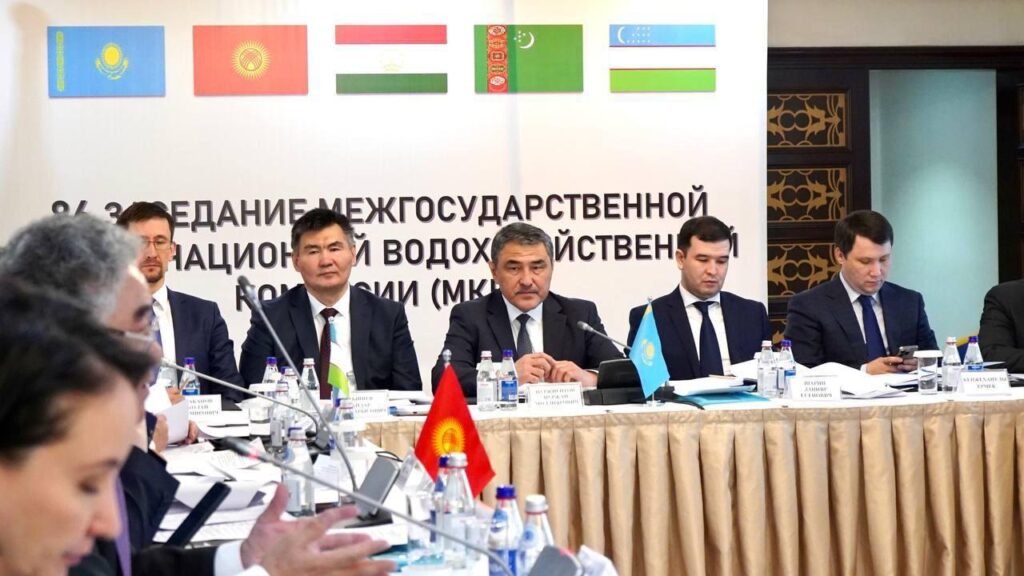
Kazakhstan is set to receive 922 million cubic meters of water from Uzbekistan via the Dostyk interstate canal during this year's irrigation season. According to a report issued by the Kazakh Ministry of Water Resources and Irrigation on 13 May, the matter was determined in an Agreement by the Interstate Water Coordination Commission of Kazakhstan, Kyrgyzstan, Tajikistan, Turkmenistan, and Uzbekistan. In addition, the parties formally approved the joint operation of the Naryn-Syr Darya cascade of reservoirs scheduled until 30 September. It was announced that the Shardara reservoir in the Turkestan region of southern Kazakhstan currently holds 4.8 billion cubic meters of water. The Toktogul reservoir on the Naryn river in upstream Kyrgyzstan, which releases water for irrigating fields in the south, has so far amassed 8 billion cubic meters of water. During the meeting, a draft agreement was also created ‘On the creation of a mechanism for water and energy cooperation between the countries of Central Asia.’ Kazakhstan’s Minister of Water Resources and Irrigation Nurzhan Nurzhigitov commented, “Our priority now, is to collect and send flood water to the Caspian Sea, Lake Balkhash, Kamysh-Samar lakes, and from the Ulytau region to lakes in the Kyzylorda region. But it is also important to provide water to the southern regions of Kazakhstan. And in this matter, water diplomacy is very important.”  

Launch of Flights Between Almaty and Nukus

From 1 June, Uzbekistan Airways will begin operating regular flights between Almaty in Kazakhstan and Nukus, the main city of Uzbekistan’s north-western Karakalpak Autonomous Region. Flights on a 174-seat A320 aircraft, will operate twice a week, on Wednesdays and Saturdays. In welcoming the move, the Ministry of Transport of Kazakhstan said that the new air route would greatly enhance the development of trade, economic and business cooperation between Kazakhstan and Uzbekistan. The introduction of the flights will also benefit tourism, making it easier and quicker to visit the region’s renowned Savitsky Museum, home to one of the world’s best collections of Soviet art; the Muynak Ship Cemetery on the fast-disappearing Aral Sea, and the ancient city of Mizdakhan. The total number of international flights from Kazakhstan now stands at 567 per week on 121 air routes, including direct flights to 28 countries.  

Kuandyk Bishimbayev Given 24 Years in Prison — But Kazakhs Ask How Long He Will Really Serve

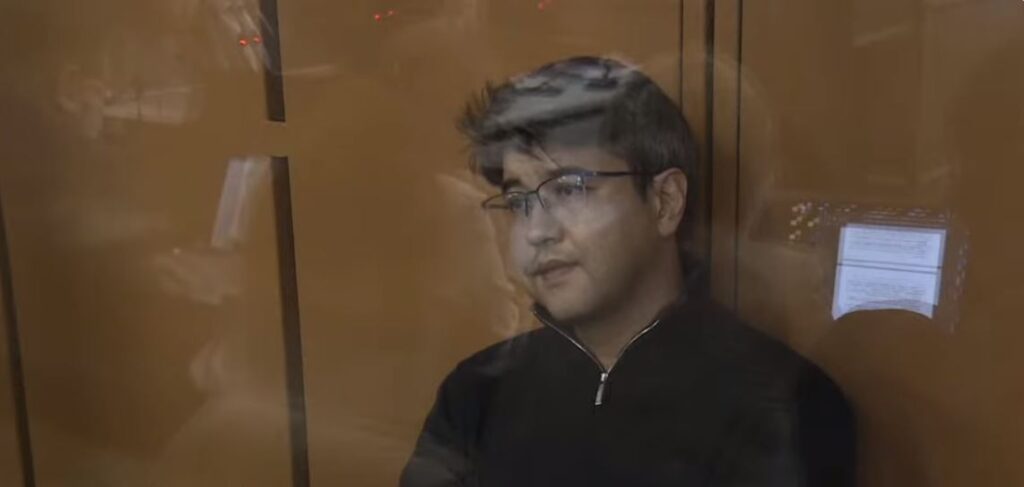
On May 13, Kazakhstan’s former Minister of National Economy Kuandyk Bishimbayev was sentenced to 24 years in prison for the torture and murder of his common-law wife Saltanat Nukenova in November 2023. While the length of the sentence is a victory for advocates against gender-based violence, both within Kazakhstan and in the many parts of Europe where the trial was also followed closely, many Kazakhs feel that it is still too early to say that justice has been done. In an open discussion that is rare in Central Asia, many citizens are posting their concerns on social media that the Nazarbayev-era official will find a way to get out of prison early: there is already speculation that Bishimbayev, a former member of the country’s elite, will leverage his political connections to secure an early release – or be recognized as terminally ill. Attempting to quell these fears, state prosecutor Aizhan Aimaganova has said that under Kazakhstani law, Bishimbayev will be able to apply for parole only after serving 16 years, two-thirds of his sentence – and only then with the consent of Saltanat Nukenova’s family, guided by her brother, Aitbek Amangeldy. Saltanat Nukenova's murder has shown that civil society is very much alive in President Kassym-Jomart Tokayev’s Kazakhstan. As previously reported, shortly after her death in November last year, a public movement called Zhana Adamdar organized an authorized rally in Almaty to raise awareness about violence against women and children. Yesterday, on the day of the sentencing, supporters of another Kazakh feminist movement, Feminita, protested in Almaty, Kazakhstan's biggest city. The group is demanding life imprisonment for Saltanat Nukenova’s murderer. "We do not agree with this sentence; [Bishimbayev] should sit in prison for life. He will come out sooner anyway – we urge you never to be silent: if you have the desire and will for it, resist," Vlast.kz quoted Feminita co-founder Zhanar Sekerbaeva as saying. The spokesperson for the Astana court where Bishimbayev was sentenced, Alma Yesymova, has commented that he has received the maximum possible sentence for the crimes he was found guilty of: murder and torture. "The punishment was imposed for committing a particularly grave crime – murder. The sanction for this is a maximum of 20 years of imprisonment. And by partial addition of terms [Bishimbayev] was given four more years for torture. Under the law the very maximum sentence is 25 years, while he was given 24 years," Yesymova said at a press conference after the trial. The trial itself drew criticism from Kazakhstan’s legal professionals. Lawyers and human rights activists are unsatisfied with how both the prosecution and the defense were conducted. Following Nukenova's death, President Tokayev signed a Decree in December 2023 to improve human rights and the rule of law, including by promoting gender equality, combating any form of domestic violence and enhancing the performance of the criminal justice system (which, among other things, involved increasing penalties for perpetrators of domestic violence). The human rights components of the President’s reform agenda was...

Learning English: A Growing Trend in Kazakhstan

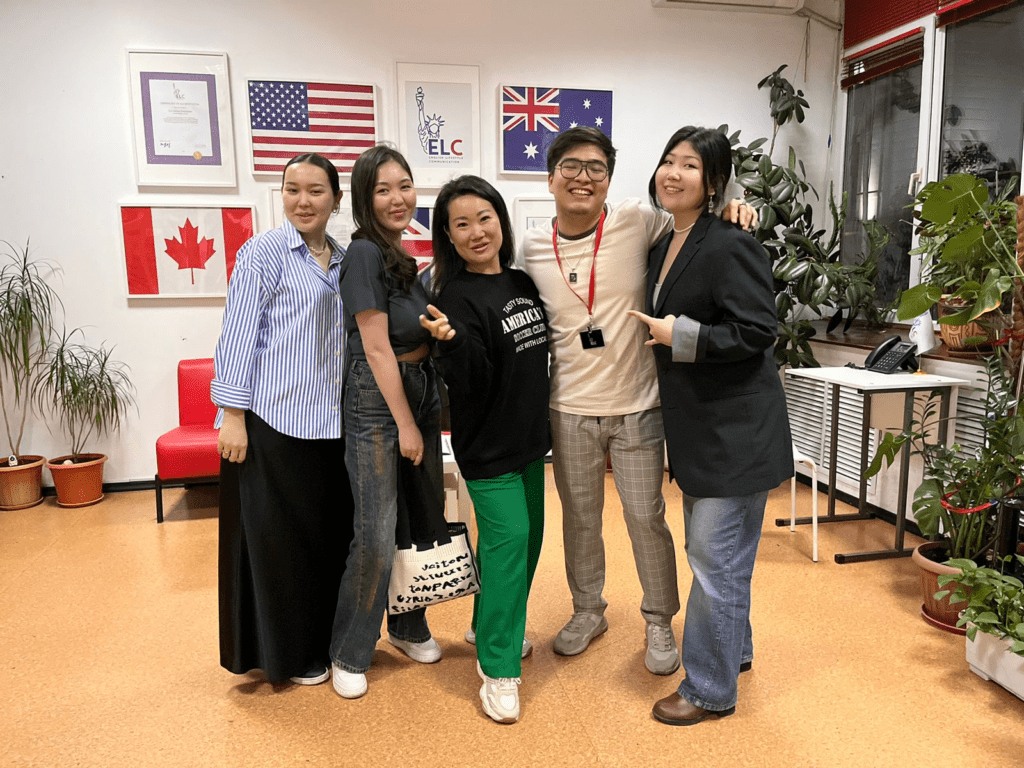
In 2023, the international company Education First conducted a survey to assess the level of English language proficiency in 113 countries. Ranked 104th, proficiency in Kazakhstan was deemed startlingly low. This year however, the situation is set to change with a growing trend to embrace the English language. What are the reasons behind this and what factors have contributed to the increased interest in English? TCA talked to young teacher and polyglot, Sanzhar Uvashev to learn more.   TCA: How would you rate the level of English language skills among the younger generation in Kazakhstan today? Uvashev: I would state that the level of English proficiency amongst our youth alone is at six out of ten. However, parents, increasingly aware of its importance, are investing in English courses, and teenagers themselves are reaching out, wanting to learn the language. It’s also worth noting that courses at one of the best universities in Kazakhstan, Nazarbayev University, are taught almost entirely in English.   TCA: What factors, in your opinion, are contributing to this growing interest in learning English? Uvashev: American pop culture plays a very big role, particularly memes and popular TV shows. Netflix, for example, dubs TV series into Russian less and less often. As a consequence, I’ve noticed that among my friends, almost everyone watches either in the original language or with subtitles. Anglicisms are fast becoming integral to everyday conversations, especially in Almaty, so much so that it’s now impossible to imagine conversing without using English phrases.   TCA: Can you describe the main changes or trends in English language learning among students over the last few years? Uvashev: Over the past few years, many people have become more proactive in learning English in order to go abroad. We also we have more tourists, so communication with foreigners on our soil adds to the level of interest.   TCA: What are the main advantages of English language skills for young people in Kazakhstan today? Uvashev: English opens up opportunities for young people wishing to go abroad. In addition, learning a new language expands boundaries, making people more tolerant and open-minded.   TCA: What difficulties do students face in learning English and how can they be overcome? Uvashev: Even though many of us know English, it’s not our first means of communication. As a result, everyone has problems practicing their language skills and many find it hard to overcome their shyness.   TCA: What, in your view, are the most effective methods of learning English, especially with reference to Kazakh culture and language? Uvashev: To my mind, exposure to pop culture, engaging with videos that match the interests of students, and playing video games are the most effective and modern methods of learning English. But the most universal of all, of course, is practice in speaking the language.