• KGS/USD = 0.01144 0%
  • KZT/USD = 0.00193 -0%
  • TJS/USD = 0.10858 0.09%
  • UZS/USD = 0.00008 0%
  • TMT/USD = 0.28571 0%
  • KGS/USD = 0.01144 0%
  • KZT/USD = 0.00193 -0%
  • TJS/USD = 0.10858 0.09%
  • UZS/USD = 0.00008 0%
  • TMT/USD = 0.28571 0%
  • KGS/USD = 0.01144 0%
  • KZT/USD = 0.00193 -0%
  • TJS/USD = 0.10858 0.09%
  • UZS/USD = 0.00008 0%
  • TMT/USD = 0.28571 0%
  • KGS/USD = 0.01144 0%
  • KZT/USD = 0.00193 -0%
  • TJS/USD = 0.10858 0.09%
  • UZS/USD = 0.00008 0%
  • TMT/USD = 0.28571 0%
  • KGS/USD = 0.01144 0%
  • KZT/USD = 0.00193 -0%
  • TJS/USD = 0.10858 0.09%
  • UZS/USD = 0.00008 0%
  • TMT/USD = 0.28571 0%
  • KGS/USD = 0.01144 0%
  • KZT/USD = 0.00193 -0%
  • TJS/USD = 0.10858 0.09%
  • UZS/USD = 0.00008 0%
  • TMT/USD = 0.28571 0%
  • KGS/USD = 0.01144 0%
  • KZT/USD = 0.00193 -0%
  • TJS/USD = 0.10858 0.09%
  • UZS/USD = 0.00008 0%
  • TMT/USD = 0.28571 0%
  • KGS/USD = 0.01144 0%
  • KZT/USD = 0.00193 -0%
  • TJS/USD = 0.10858 0.09%
  • UZS/USD = 0.00008 0%
  • TMT/USD = 0.28571 0%
22 December 2025

Viewing results 85 - 90 of 145

Two-Dimensional Outlook Characterizes Western Media Response to SCO Summit

The Western media’s binary response to the latest Shanghai Cooperation Organization (SCO) summit in Astana creates an unnecessary – and perhaps unintentional – “us-versus-them” dichotomy. Characterizing the SCO as the “anti-NATO” alliance where China, Russia and Iran come together, this style of coverage makes no mention of the evident efforts of the majority of post-Soviet states to balance Russia’s decades-long influence in the region. It is also notable that the same outlets serving up this black and white coverage are not even in attendance at the summit, preferring to take aim from abroad. Central Asian states cannot escape the realities of their geography and have to largely rely on Russia and China for their economic prosperity. At the same time, their future independence requires that they are a respected part of the international rules-based order as well as on their increased contribution to global supply chains. Kazakhstan’s recent democratic reforms are in direct contrast to the authoritarian image cast on so-called “anti-NATO” countries. Armenia has announced plans to quit Russia’s Collective Security Treaty Organization (CSTO) military alliance. Generally, the countries in the region have – with different degrees of enthusiasm – implemented a multi-vector foreign policy, including following international sanctions against Russia and issuing statements supporting the “territorial integrity of Ukraine.” Uzbekistan’s courts even went so far as to convict a citizen for joining Russian troops fighting in Ukraine. Those looking to force an antiquated one-size-fits-all Cold War paradigm on Central Asia will ultimately be frustrated. The ongoing SCO event in Astana is bringing together a mainly Eastern-centric group of leaders speaking about deeper cooperation among the Organization’s members. While the Western press may simply decry this gathering as anti-Western, the fact that Central Asia stood in support of international sanctions against Russia and stayed neutral in the conflict with Ukraine, much to the chagrin of Vladimir Putin and his retinue, shows the region holds more shades of grey than stark black and white. Central Asia cannot be expected to fall entirely into the orbit of Western or Eastern leaning powers. The region’s republics will, and should, aim to be aligned with both. Arguably, the West, Russia, and China may all be disappointed in the end, but that outcome may well be in the best interests of the Central Asian states.
SCO Summit in Astana: Correspondents from China Global Television Network, Times of Central Asia Discuss Upcoming Meeting

National leaders and other dignitaries from over 20 countries will be in the Kazakh capital of Astana this week for the annual summit of the Shanghai Cooperation Organization (SCO). The Times of Central Asia will be covering the SCO Summit live on 3 and 4 July from the city’s Palace of Peace and Reconciliation. The SCO is a political, security and economic alliance in the wider Eurasia region. This year’s Summit host Kazakhstan was a founding member of the Organization in 2001, alongside China and Russia, and its Central Asian neighbors Kyrgyzstan, Tajikistan and Uzbekistan. The last time the Summit was held in Astana, in 2017, India and Pakistan became full members. There are currently nine full member states, four observer states, and 14 dialogue partners, covering half of the world’s population, and almost a third of global GDP. This year's Summit will have significant implications for regional and global affairs. It is likely to produce initiatives aimed at reducing trade barriers, and promoting investments between SCO member states. High on the agenda will be the Belt and Road Initiative (BRI) – a crucial framework for enhancing connectivity and economic ties between China and its Central Asian partners. Other anticipated outcomes include new initiatives on climate change and sustainable development, as well as strengthened cultural and educational exchanges. Upon the initiative of Kazakhstan’s President Kassym-Jomart Tokayev, 2024 has been named the SCO “Year of Ecology”. Ahead of the Astana Summit, The Times of Central Asia’s senior editor Jonathan Campion spoke with an anchor from China Global Television Network, Mr Zhong Shi, about the role of the Shanghai Cooperation Organization plays in the Central Asia region. Their talk can be viewed in full in the videos below. In response to The Times of Central Asia’s question about what makes the SCO different from other alliances that the countries of Central Asia are aligned with, Mr Zhong explained that: “The SCO has been truly effective in combatting what we call the three enemies of all members, namely terrorism, extremism and separatism. There have been joint military drills conducted to enhance the coordination among armed forces”. Listen to Mr Zhong’s full response below: [video width="1920" height="1080" mp4="https://timesca.com/wp-content/uploads/2024/06/fullscreen-Zhong-Shi-answer-2-questions.mp4"][/video]   [video width="1920" height="1080" mp4="https://timesca.com/wp-content/uploads/2024/06/tw0-windows-Zhong-Shi-answer-2-questions.mp4"][/video] In turn, Mr Campion gave The Times of Central Asia’s perspective on the upcoming Summit. Asked about the impact that the Belt and Road Initiative has had on Central Asia, he replied: "Central Asia is evolving as a land bridge component to the Belt and Road Initiative linking China to the Caspian Sea. We’re seeing that investments in transport infrastructure are unlocking the region’s vast natural resources. With the world making a green transition, Kazakhstan stands out, as it has an abundance of critical materials – or green metals as they are known – that are used in the components of green technologies.” Listen to Mr Campion’s full response below: [video width="1920" height="1080" mp4="https://timesca.com/wp-content/uploads/2024/06/Jonathon-answer-Q2.mp4"][/video]   [video width="1920" height="1080" mp4="https://timesca.com/wp-content/uploads/2024/06/Jonathon-answer-Q3.mp4"][/video]  

Kazakhstan: Preconceived Notions and Changed Minds

When I received the email stating that I had received a fellowship to move to Almaty, Kazakhstan, to teach English for a year, I nearly fell out of my office chair in Midtown Manhattan. I worked in a market research company fresh out of college but knew I needed to do something more exciting in my early 20s. I began studying Russian when I was 13 years old. I’m unsure what the exact catalyst for my language endeavor was. Still, coupled with my Ukrainian ancestry, Putin’s annexation of Crimea, and the Sochi Olympics, it seemed like a no-brainer to me. At this point in my life, I lived outside of Boston, Massachusetts, and began taking Russian classes on Saturdays in Brookline to satiate my desire to learn. After a year of classes, I enrolled in a Russian language immersion camp in Bemidji, Minnesota, for three summers. Following that, I received a grant from the US State Department to immerse myself in the culture for a summer in Narva, Estonia. I knew where and what I wanted to study after graduating high school. I started my studies at the Elliott School of International Affairs at George Washington University in Washington, DC, declared a major in international affairs with a minor in Russian language and literature, and never looked back. After graduation, my plans were in the air. I had been looking into opportunities to move to Russia or Ukraine, but this was now off the table due to the war. I worked in New York to get sorted, earn money, and start a new chapter of my life. At some point in April 2023, I received an email from a fellowship I had applied for in October 2022. I was initially placed on the waitlist, but I was notified that I had been accepted for the 2023-2024 cohort to relocate to Almaty, Kazakhstan. “Oh my god,” I said at my desk. My coworker asked me what had happened. I said, “I’m moving to Kazakhstan. “Kazakhstan, like Borat’s Kazakhstan?” she asked. [caption id="attachment_19278" align="aligncenter" width="370"] Horses graze along the way to Furmanov Peak – Almaty, KZ[/caption] Preconceived notions After the excitement had settled and my family and friends were informed of my plans, questions began to arise. “Why Kazakhstan?” “Is it safe there?” “Is that next to Serbia?” “Does the Taliban rule Kazakhstan?” It is shocking how little most Americans know about the 9th largest country on the planet. Spanning two continents with nearly 20 million people, most Americans only know Kazakhstan from Sasha Baron Cohen’s 2006 film, Borat, and nothing more. When they hear the word “Kazakhstan,” they picture a backward and socially undeveloped post-communist country in which people commute by donkey carts, are misogynistic, and are openly antisemitic. While the depiction of Kazakh culture is inherently incorrect, the message is stuck, and the film has become synonymous with Kazakhstan in the American mind. However, most Americans probably can’t find it on the map. I explained, “Kazakhstan is in Central Asia,...

Alternative Transport Routes in Kazakhstan: Potential and Current Opportunities

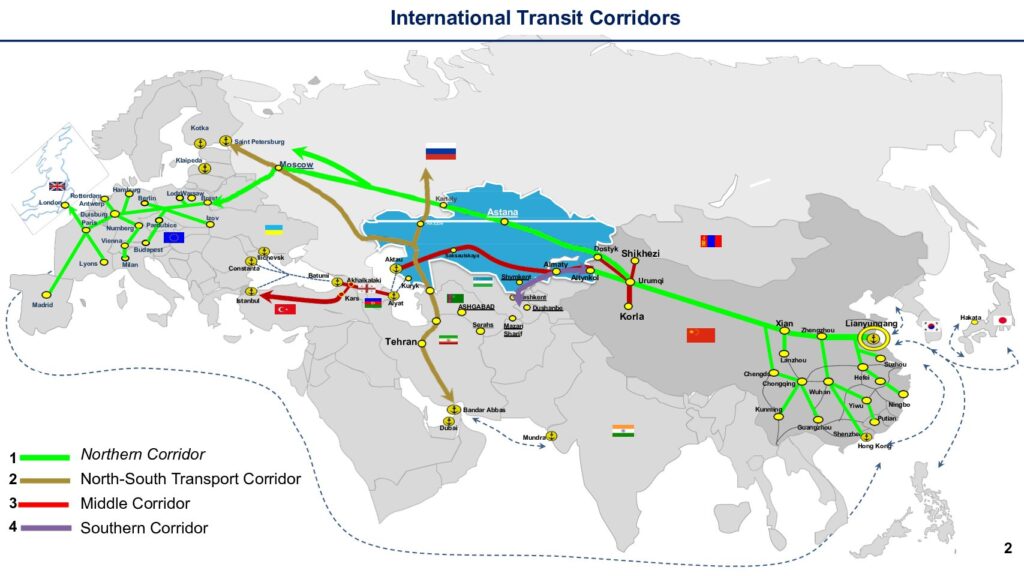
Kazakhstan's President Kassym-Jomart Tokayev has ordered alternative transportation and shipping routes to be drawn up and supply routes to be diversified. Amid ongoing geopolitical shifts, routes passing through Kazakhstan's territory are already seeing relatively high freight flows. Still, to develop them, further measures are needed to enhance international logistics cooperation and increase efficiency along the entire length of the transport corridors. The country's deputy minister for transport Maksat Kaliakparov kindly agreed to answer some questions from The Times of Central Asia. TCA:  Not so long ago, Kazakhstan Temir Zholy (KTZ) announced the launch of a project to create a digital corridor as part of the Trans-Caspian International Transport Route (TITR) with the company Global DTC Pte Ltd. What countries are to be integrated into this project? Can a similar digital trade corridor be considered for the International North-South Transport Corridor (INSTC)? MK: As you know, on August 16, 2022, KZT and the Singaporean company PSA concluded a memorandum according to which one of the identified areas for cooperation is developing a digital trading corridor (DTC). Towards this, a multimodal DTC has been developed. Using this platform, three container trains were sent on the route from Xi'an (China) to Absheron (Azerbaijan) as a test run. Integration with the railway systems of Kazakhstan and Azerbaijan has been carried out. Currently, the process of integration with Georgian systems is underway. Overall, the DTC platform allows for: entering into online contracts with freight forwarding companies; seeing and receiving transportation tariffs from logistics companies; tracking the location of containers along all routes; getting customs status based on transit declarations when crossing borders along the route, etc. This year, it is also planning to launch the commercial operation of a container tracking service in Kazakhstan, Azerbaijan, and Georgia, and it is also planning to be integrated with a Chinese logistics operator. In addition, the Tez Customs platform has been developed. It is part of DTC, created to automate the customs clearance process of railway transit freight on the route China-Kazakhstan-Central Asia/Europe. Tez Customs allows for: automating the process of customs transit clearance at the Kazakhstan-China border; reducing the time of customs procedures (from 4-8 hours to 30 minutes); tracking the status of transit declarations and freight until final departure from the territory of Kazakhstan. Meanwhile, a similar DTC for the INSTC is being considered within the cooperation framework with the UAE company Abu Dhabi Ports. TCA: As part of the development of the INSTC, the railway administrations of Kazakhstan, Russia, and Turkmenistan are planning to create a joint venture (JV). Tell us about the plans for how it is to be formed. How will shares in the JV be allocated between the countries? MK: Yes, indeed, for the further development of the eastern branch of the INSTC, the participating countries are working to create an equal-term JV between KTZ Express, Russian Railways Logistics, and the Transport and Logistics Center of Turkmenistan. Today, the railway administrations of Russia, Kazakhstan, Turkmenistan, and Iran are creating a favorable tariff...

Eurasian Connectivity Comes One Step Closer at the 2024 CAMCA Forum in Bishkek

The wider Eurasia region took another step towards cooperation and connectivity last week, as the 10th annual CAMCA Regional Forum was held in Bishkek. CAMCA – standing for Central Asia, Mongolia, the Caucasus and Afghanistan – is an initiative to accelerate dialogue between governments, private enterprises and media figures from these ten nations. Organized by the Washington, D.C.-based Central Asia-Caucasus Institute and the Rumsfeld Foundation, this year’s Forum – the first such event to take place in Kyrgyzstan – featured over 300 delegates across its two days, and presented insights from over 70 speakers. Attendees came from 25 countries in total. Professor Frederick Starr, the Central Asia-Caucasus Institute’s chairman, used his opening address to call on the countries of the region to start preparing for a future within a cohesive international bloc. Dr Starr reasoned that Russia and China, imperial powers that have traditionally had a controlling presence in Central Asia, may see their global influence wane in the coming decade. This would give the countries of Central Asia, and their neighbors, more space to create projects that serve their economies directly. A leading CAMCA regional project is the ‘Middle Corridor’ trade route, which bypasses Russia to transport goods more efficiently between Europe and China. Discussions are also taking place concerning the creation of single business and tourist visas for the whole Central Asia region. The importance of collaboration between countries in the Caucasus and Central Asia to mitigate the impact of climate change has never been so great. Addresses by senior members of the Kyrgyz government highlighted the progress that Kyrgyzstan has made since the administration of president Sadyr Japarov began its work in 2021. The country’s deputy prime minister Edil Baisalov reported that Kyrgyzstan is on track to double its GDP to $30 billion by 2030, while the minister for digital development, Nuria Kutnaeva, spoke about the rapid digitalization of the country’s government services.  In a noticeably warm and collaborative atmosphere, the event nonetheless highlighted the barriers that prevent the ten countries from forming a tangible ‘CAMCA’ space in the present. A key goal is the harmonization of their legislation and policy directions; however, no delegates from Tajikistan could travel to Bishkek for the Forum, as otherwise solid relations between Tajikistan and Kyrgyzstan are still strained by a dispute over their common border. Likewise, Armenian voices were also absent this time, in light of several of the sessions featuring Azerbaijani speakers and talking points. The event featured only one guest from Turkmenistan.  Even in these conflicts, however, Central Asian diplomacy is at work. The conflict on the Kyrgyz-Tajik border, mainly in Tajikistan’s Vorukh district, is being resolved through negotiations between the two countries’ governments, which would have been unthinkable even five years ago. Meanwhile, Kazakhstan is acting as a mediator between Baku and Yerevan in the aftermath of the war in Nagorno-Karabakh. Other topics on the agenda included security priorities for Central Asia, digital innovation in business, cooperation with Afghanistan, transitions in global energy markets, and infrastructure projects...

Decolonial Futurism: A Focus on Kazakhstan’s Pavilion at the 60th Venice Biennale

Kazakh artists have traditionally been marginalized in the global art scene due to political intricacies and a complex cultural identity. With historical influences and colonization by both Russia and China, Kazakh artists are now carving out a unique artistic identity and sharing it with international audiences. The Kazakh pavilion "Jerūiyq: Journey Beyond the Horizon" at the 60th International Art Exhibition of the Venice Biennale, from April 20 to November 24, represents a major milestone in changing perceptions of Kazakh art. Staged in the Naval Historical Museum, the exhibition reinterprets the ancient legend of Jerūiyq, drawing inspiration from Kazakh myths and the visionary journey of the 15th-century philosopher Asan Kaigy. The word "kaigy" means "pain" in Kazakh, symbolizing the nation's traumatic encounters with modernity's darker aspects: the devastating famine of the 1930s, the craters left by nuclear tests in Semey, the shrinking of the Aral Sea, and the wounds inflicted on the Kazakh landscape. The exhibition traces the evolution of Kazakh utopian imagination from the 1970s to today through artists’ visions of ideal worlds, where their utopian imagination merges with the artistic movement of "decolonial futurism." On behalf of TCA, Naima Morelli interviewed curator Anvar Musrepov on the concept and significance of Kazakhstan's participation in the Venice Biennale. TCA: How did the idea for the Kazak pavilion “Jerūiyq: Journey Beyond the Horizon” evolve? A.M: In our curatorial research, we found that the theme of utopia and futuristic imagination has concerned several generations of Kazakhstan's artists since the 1970s. Using this as a starting point, we decided to establish, in chronological order, a collection of works by multiple generations of artists. Divided by decades, the collection manifested a wave of Kazakh futurism, including themes of spirituality, cosmism, nomadism, and utopian ideas. This in turn, will help formulate a term to comprehensively describe and unite all these intuitions that have concerned Kazakh artists in different historical periods. [caption id="attachment_18933" align="aligncenter" width="522"] Sergey Maslov, "Baikonur" at the Venice Biennale [/caption]   TCA: The exhibition’s title alludes to the ancient legend of Jerūiyq. What is it about and  how have you interpreted it? A.M: Jeruiq is an ancient legend about a utopian land that according to many myths, was sought by Asan Kaigy, advisor to the first Kazakh khans Zhanibek and Kerey. Legend describes it as a land that has fermented, a place where time has stopped, a land full of vividness, devoid of disease or longing. We found in this ancient Kazakh legend, an ideal metaphor to unite all the intuitions presented in the exhibition and manifest the chronology of post-nomadic futuristic imagination. If established, the definition of this unique phenomenon, could become a movement in Kazakh art. TCA: What can you tell us about the philosopher Asan Kaigy? A.M: Asan Kaigy is a quasi-historical character who features in Kazakhstan’s rich oral tradition where history and memory are passed down from mouth to mouth. Every region of Kazakhstan has local legends about miracles performed by Asan Kaigy. One such legend says that he found...