• KGS/USD = 0.01144 0%
  • KZT/USD = 0.00193 -0%
  • TJS/USD = 0.10858 0.09%
  • UZS/USD = 0.00008 0%
  • TMT/USD = 0.28571 0%
  • KGS/USD = 0.01144 0%
  • KZT/USD = 0.00193 -0%
  • TJS/USD = 0.10858 0.09%
  • UZS/USD = 0.00008 0%
  • TMT/USD = 0.28571 0%
  • KGS/USD = 0.01144 0%
  • KZT/USD = 0.00193 -0%
  • TJS/USD = 0.10858 0.09%
  • UZS/USD = 0.00008 0%
  • TMT/USD = 0.28571 0%
  • KGS/USD = 0.01144 0%
  • KZT/USD = 0.00193 -0%
  • TJS/USD = 0.10858 0.09%
  • UZS/USD = 0.00008 0%
  • TMT/USD = 0.28571 0%
  • KGS/USD = 0.01144 0%
  • KZT/USD = 0.00193 -0%
  • TJS/USD = 0.10858 0.09%
  • UZS/USD = 0.00008 0%
  • TMT/USD = 0.28571 0%
  • KGS/USD = 0.01144 0%
  • KZT/USD = 0.00193 -0%
  • TJS/USD = 0.10858 0.09%
  • UZS/USD = 0.00008 0%
  • TMT/USD = 0.28571 0%
  • KGS/USD = 0.01144 0%
  • KZT/USD = 0.00193 -0%
  • TJS/USD = 0.10858 0.09%
  • UZS/USD = 0.00008 0%
  • TMT/USD = 0.28571 0%
  • KGS/USD = 0.01144 0%
  • KZT/USD = 0.00193 -0%
  • TJS/USD = 0.10858 0.09%
  • UZS/USD = 0.00008 0%
  • TMT/USD = 0.28571 0%
22 December 2025

Viewing results 2089 - 2094 of 3375

Success of Kazakhstan’s JobEscape Start-up

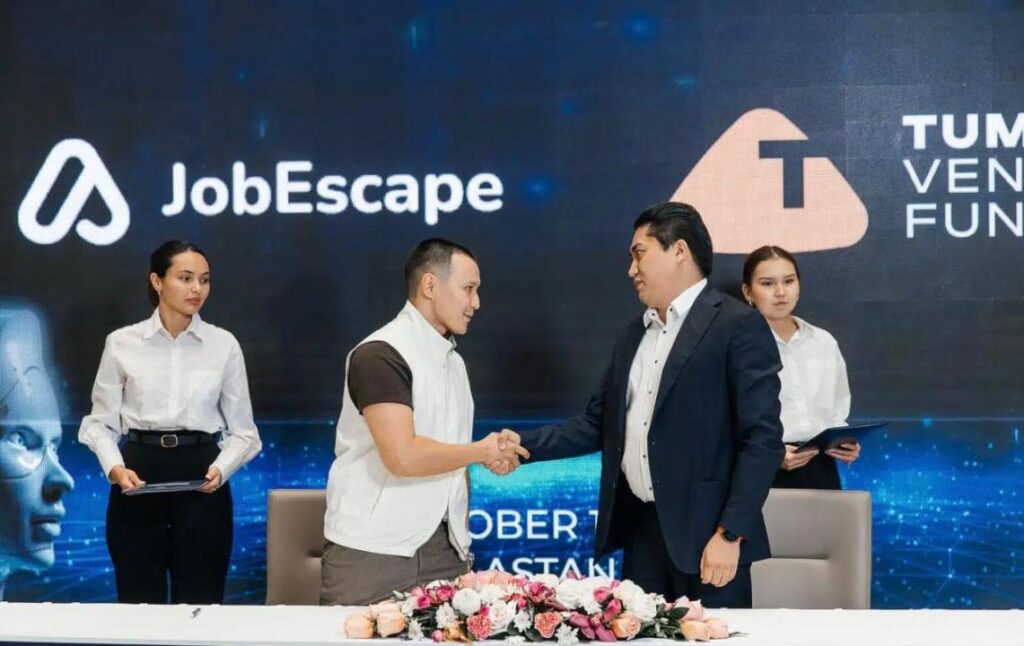
Kazakhstan’s largest venture fund, Tumar Venture LP, whose key investors are the World Bank and the Kazakh Ministry of Digital Development, Innovation and Aerospace Industry, has invested a further 250 thousand US dollars in the Kazakh start-up JobEscape. As announced by the Ministry of Digital Development on 17 June, the total investment in the project now stands at 450 thousand US dollars. JobEscape is a platform that facilitates the acquisition of new skills required to start a freelancing career, through the provision of solutions unique to freelancers and career changers, access to training and a wide range of AI tools. A global project, JobEscape has users from the USA, Canada, Australia, and European countries. Regarding funding, Aslan Sultanov, CEO of Tumar VF, stated: “We invested in JobEscape in the last round and have seen the project grow from literally $10,000 in monthly revenue to almost $1 million in annual revenue. Seeing this dynamic rise, we are confident that the start-up has the potential to grow into a billion-dollar company with roots in Kazakhstan. We are pleased to support the team in creating such a global initiative.” Similarly encouraged by the platform’s development, Miras Sovetov, CEO and co-founder of JobEscape, said: “At the moment, the company’s annual revenue is already close to $1 million. The goal is to grow to US$6 million in 2025. The product is now being widely used in Western markets due to the rapid development of products in the field of AI. Investments in this round will help the company increase its customer base and increase the number of AI tools on the platform. Investors from the UAE and Azerbaijan are already entering the project, which confirms its competitiveness in the global market. The next step will be raising money from American funds for further growth and potential exit (sale of the start-up).”    
Kazakhstan Set to Develop Halal Market

From 4 to 12 June, over 100 certification and accreditation specialists from Kazakhstan attended a training seminar on Halal standards in Astana. Over the duration of the course, participants received training on Halal requirements and OIC/SMIIC international standards set by international experts in Halal accreditation and certification. In her address, Zhanna Esenbekova, Chairperson of the Technical Regulation and Metrology Committee of the Ministry of Trade and Integration of Kazakhstan, emphasized the importance of national legislation adapted to ISO SMIIC standards for Kazakhstan’s economy as well as the need for trained specialists to promote and monitor compliance with Islamic requirements and standards. “Halal standards are receiving increasing attention worldwide and the areas of Halal standardization are expanding. Not so long ago, Halal concerned only a few types of everyday products, but today Halal has expanded its boundaries to areas such as transport and logistics, finance and credit, tourism and hospitality, clothing and footwear production, restaurant business and many others,” reported Esenbekova. One of the seminar’s lecturers, international expert Emre Kırıcıoğlu, added: “Today, the Halal market has over 1.8 billion consumers worldwide and a turnover of 2 to 5 trillion dollars, with regard to Halal financing. Kazakhstan has a reputation for self-sufficiency in food supply. Local meat, grain and vegetables are fine in quality and grown under favourable conditions. Given the profile of a large sector of the population, your country is well positioned to compete in international markets in products acceptable by Islam.”  

Kazakhstan and Central Asia Present Investment Opportunities to Swedish Parliament

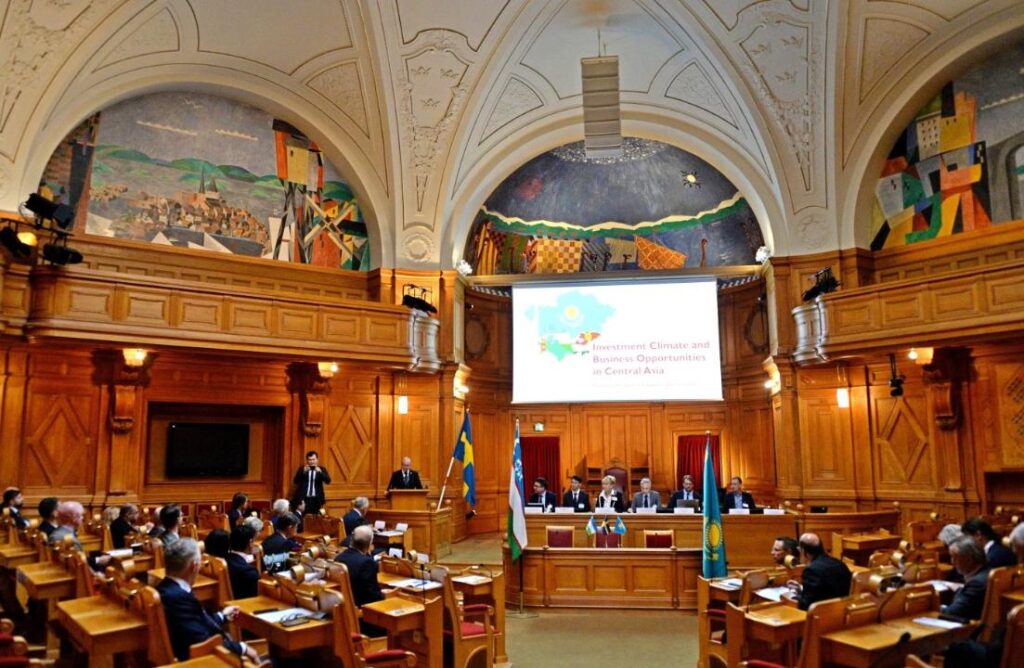
The first business seminar on the investment climate and business opportunities in Kazakhstan and Central Asia was held last week in Stockholm, Sweden. As reported by Kazakhstan’s Foreign Ministry, the event was attended by Chairman of the Sweden–Central Asia Friendship Group of the Riksdag (Swedish Parliament) Bjorn Soder, Ambassador of Uzbekistan to Sweden Nodir Ganiev, Ambassador of Sweden to Kazakhstan Ewa Polano, Ambassador of Sweden to Uzbekistan Tomas Danestad, Chairman of the Swedish Chamber of Commerce for Eurasia Heinz Sjogren, and representatives of Swedish ministries and large companies. Speaking at the event, Bjorn Soder noted the strategic importance of enhancing cooperation between Sweden’s and Central Asia’s public and private sectors. Attention was drawn to Central Asia’s huge potential for strengthening trade and economic relations with Sweden, and the limitless prospects for expanding investment partnership. Ewa Polano and Tomas Danestad shared their views on the dynamic development of Central Asia, emphasizing that Kazakhstan and Uzbekistan are the “core-countries” of the region. Referencing growing competition in the region, the two ambassadors called on the Swedish business community to invest in Central Asia, as well as expand its presence in the region. Representative of Scania AB, Fredrik Wijkander, outlined the Swedish company’s presence in Kazakhstan where it has been operating since 2007. In 2023, the assembly of Scania trucks was launched in Saran, in the Karaganda region, and in 2024, Scania AB set up Scania Central Asia as an independent business unit in the region with its head office in Almaty. Fredrik Wijkander said that despite the high competition from Chinese automakers, the Swedish company will continue to strengthen its presence in Central Asia and expand production. To this effect, he confirmed plans for the assembly of trucks and buses, and establish local production in Kazakhstan.    

Dreaming of Paris, Fighting for Power: Electricity in Central Asia

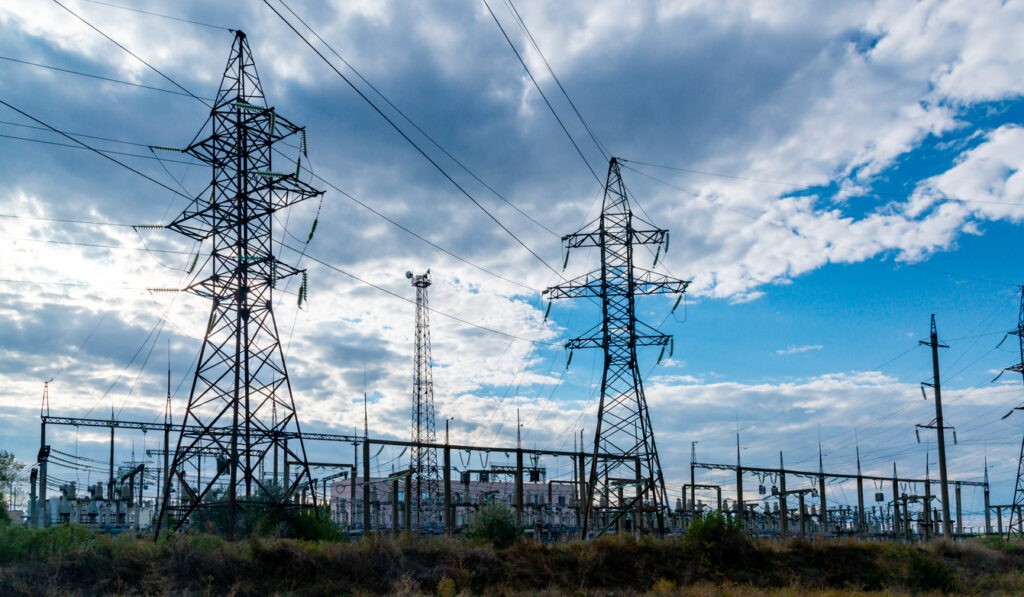
The COP28 UN Climate Change Conference in December 2023 highlighted the important role of developing countries – which include the Central Asian republics – in reducing dependence on fossil fuels thanks to the use of cleaner, renewable energy sources. Indeed, Central Asia is believed to have something to offer the world in the fight against climate change, being home to numerous sources of clean energy, including solar, wind, and hydropower.   The "electricity ring" Last year, fossil fuels accounted for 95% of the total energy supply in the five Central Asian countries, according to the UN. To meet their commitments under the Paris Agreement and the transition to a low-carbon and sustainable energy system, the region will need to make a giant leap from fossil fuels to renewable energy sources. The main issue is that this transition must be made by different electrical grids across Central Asia, most of which are linked to the Central Asian Power System (CAPS). CAPS, also known as the "electricity ring," is a joint power transmission network connecting Uzbekistan, Tajikistan, Turkmenistan, Kyrgyzstan, and some southern parts of Kazakhstan. It was created in 1960, with the aim of ensuring the reliable transmission of electricity and steady cooperation between the republics. The energy systems of these regions are united into a single structure, which allows for parallel operation even when individual sections of the grid go down, meaning that if one part of the ring goes down, the other parts continue to function, improving reliability and efficiency. This system plays an important role in ensuring energy security and promoting cooperation and interaction. The creation and maintenance of any power system requires coordinated work by all participants. In the past, some countries temporarily withdrew from CAPS for various reasons, but in most cases, they sought to resume cooperation and their link to the “electricity ring.”   Blackout On January 25, 2022, consumers in the ring experienced a blackout. The lights went out almost instantly in the south of Kazakhstan (the city of Almaty, as well as Turkestan, Kyzylorda, Almaty and Zhambyl regions), in Kyrgyzstan (the cities of Bishkek and Osh and the Issyk-Kul region) and Uzbekistan (the city of Tashkent, the Fergana Valley and Syr Darya, Jizzakh, Samarkand, Navoi and Kashkadarya regions). The widespread power outage paralyzed transportation, shut down important social infrastructure, and spurred popular discontent in the three countries affected. The Kazakhstani pundit Petr Svoik, a former professional power engineer who ran a thermal power plant (TPP), described the blackout as an unprecedented event, noting, however, that the technology worked perfectly and that the sudden loss of 1,500 MW of electricity did not lead to any major consequences. The Kazakhstani energy system consists of two insufficiently connected parts – north and south. The north is actually a continuation of the Russian power system, part of the Russian “energy bridge” - though, of course, it also has importance for the whole of Kazakhstan - whilst the south is part of the Central Asian ring. Looking at the...

Controversial Petition on “LGBT Propaganda” Passes Threshold for Consideration in Kazakhstan

A petition against so-called “LGBT propaganda” has received more than 50,000 signatures, meaning Kazakhstan’s Ministry of Culture and Information must consider it. However, a number of experts believe that restrictions on the gay community would damage Kazakhstan’s image. In addition, the petition’s authors are known for their controversial initiatives.  The Kazakhstan Parents' Union is the author of the petition “We are Against Open and Concealed LGBT Propaganda in the Republic of Kazakhstan,” which was published on the official E-Petition.kz portal. According to Article 90-4 of the Administrative Procedural Code, the government must consider a petition with 50,000 signatures. A working group including interested parties, government agencies, and public associations will be created. The consideration of official petitions are a relatively recent innovation. So far, only three have collected the required number of signatures. The first came in the wake of the Nukenova murder at the hands of a disgraced former minister.  It was considered by the Kazakhstan president himself and brought about landmark legislation on domestic violence. The decision to allow public input via petitions is seen as a sign of the fulfillment of President Tokayev's promise of a more engaging and aware "listening state." Kazakhstan has seen repeated attempts to include in various legislative acts such a ban on promoting “nontraditional relations.” However, these amendments were not adopted, though numerous Mazhilis (lower chamber of parliament) deputies and public figures spoke out in favor of them. Nevertheless, there have been cases in Kazakhstan where media products containing what is deemed “homosexual content” did not reach the market. For example, in 2022, the former Minister of Culture and Information, Dauren Abaev, announced that, "In response to numerous requests from citizens and the media, I inform you, the animated film Lightyear will not be shown in Kazakhstan." Officially, however, the ministry did not prohibit the screening of the Hollywood animation in cinemas. According to rumors, distributors themselves canceled showings in response to the public outcry. Also, in January 2024, a website for LGBT people was blocked in Kazakhstan. The site, among other things, had materials to help young people answer questions about their sexual orientation. “During monitoring of the internet resource selftanu.kz, a violation of the law was identified related to the posting of information harmful to the health and development of children,” the Ministry of Culture stated in justifying blocking the site. The head of the group pushing the current petition, Bagila Baltabaeva, stated that, “Same-sex love is being openly forced on our children. It is forced [on them] in bookstores, on TV screens, and on smartphones. Young people openly spread [information about] and promote their unhealthy relationships. Thus, stealthily and subtly, new standards of sexual relations are taking shape among young people. In parallel, it is promoted that traditional values are relics of the past, a sign of backwardness. Therefore, for fear of criticism, many remain silent. And those who work up the courage and speak out against LGBT propaganda are branded as retrogrades and conservatives.” This is not the...

Kazakhstan and U.S. Focus on Strengthening Trade and Investment Cooperation

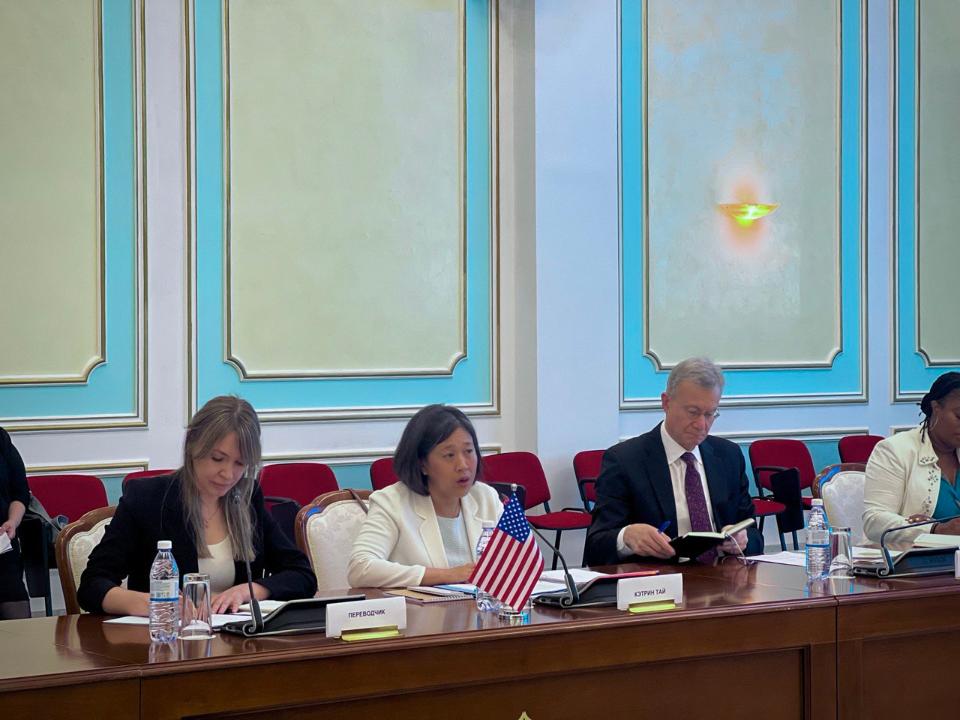
On 14 June, in Astana, Minister of Trade of Kazakhstan Arman Shakkaliev met U.S. Trade Representative Katherine Tai to discuss key areas of cooperation between the two countries. As reported by the Kazakh Ministry of Trade and Integration, the USA is among Kazakhstan’s ten largest trading partners. With bilateral trade turnover demonstrating a steady growth, Kazakhstan is ready to increase non-resource exports of 90 commodities worth over $770 million to the U.S. During the meeting, Kazakhstan's trade minister mooted cancelling the Jackson-Vanik amendment, which restricts trade relations between the two countries, and expressed hope for an imminent decision by the U.S. Congress on the issue. “We count on the soonest positive outcome of the work on the cancellation of the Jackson-Vanik amendment, which will give a new impetus to the development of trade and economic relations between our countries,” said Shakkaliev. He also noted the important role of the Generalized System of Preferences (GSP) of the United States in strengthening bilateral trade and economic relations. For its part, Kazakhstan is ready to undertake necessary work to resume the application of the USA GSP. Trade Representative Katherine Tai spoke optimistically on the development of trade relations and strengthening economic ties between the United States and Kazakhstan. After remarking that the extension of the USA GSP program will be considered by the US Congress next year, she confirmed her readiness to assist Kazakhstan in this matter.